From ads to merch, we're sharing four video monetization strategies to turn your passion into profit—on your terms.
Expand for key takeaways:
You're making great video content that you're passionate about, and it's time to make money doing the thing you love. Or maybe you’re already in the weeds of turning viewership into income and want to find new ways to maximize your revenue potential.
No items found.
There are plenty of paths you can take, and (great news here) you’re not beholden to a single one. You can mix and match different strategies, experiment with what works for your content and audience, and adjust as you grow.
Below, we break down some of the most popular monetization strategies among video creators, and offer a glimpse into how Spotify can support your journey.
Dynamically-inserted ads
Advertising, a classic that can be traced back to the golden age of radio, remains the most straightforward path to monetization. It’s simple: when your audience watches ads before, during, or after your content, you earn money. Once you're set up, this income usually scales with your audience. Initial considerations
What works for your show format and audience? This is a question you’ll have to ask yourself when considering any monetization strategy. All of them maywork for you—it’s just a matter of adapting them to your unique situation.
For instance, where will you fit ads into the content itself? Do your videos naturally create moments for breaks? Many creators find success with quick transitions like "Before we dive into today's topic..." or "Coming up next..." Some plan their episodes around natural break points, separating distinct segments or stories. Others bookend their content with ads to keep the main viewing experience uninterrupted.
You might start with pre-roll ads only, and test audience response before introducing mid-roll breaks. Or experiment with longer ad segments at natural show breaks instead of multiple shorter interruptions. As you test, pay attention to episode retention metrics and audience feedback—they'll tell you what works until you find the sweet spot.
One thing to keep in mind is having your content appeal to potential advertisers. Focus on keeping your language advertiser-friendly while staying true to your voice. Review your advertising platform’s brand safety guidelines to ensure your content is monetizable while keeping your personality front and center.
It may also be important to find a platform that gives you control over which ads appear alongside your content. If so, look for features like category exclusion that allow you to filter out advertiser categories that don't align with your values or brand. This level of customization can ensure that the ads your audience hears complement rather than clash with your content, helping to protect your authenticity while still maximizing monetization opportunities.
Making it happen
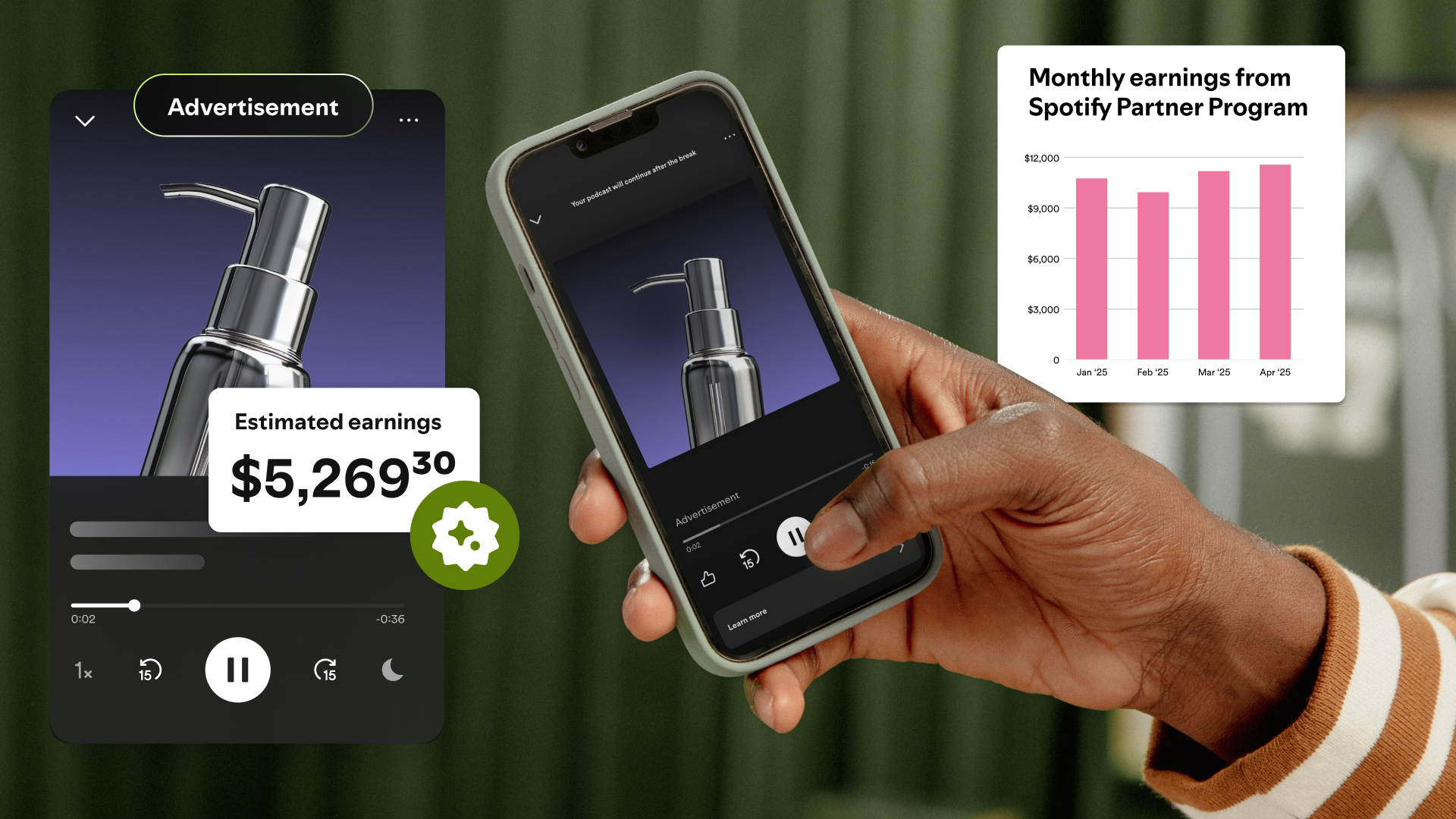
In order to take advantage of ads, you need to find a platform that supports advertising on your behalf. For example, with Spotify’s enterprise solution, Megaphone, you have the option to dynamically insert ads through your own direct sales or the Spotify Partner Program. With Spotify for Creators, you can monetize with dynamically inserted ads Spotify, through the Spotify Partner Program, which makes it easy to get started, and even offers ways for eligible video creators to earn revenue even if their content is streamed without dynamically inserted ads. You can start monetizing in two ways:
Earn with ads. Spotify works directly with thousands of global advertisers. Ads are targeted to your show's audience and optimize delivery so your audience is served the right message, at the right time.
Premium video revenue. Spotify Premium subscribers in select markets who stream your content will experience your videos without dynamic ads. And for those streams, instead of ad revenue, you earn payouts from Spotify based on how much Premium users stream your content. It's a win-win: audiences get an uninterrupted experience, and you get paid.
Learn more about the program and eligibility criteria here.
Sponsorships
With host-read sponsorships, you actively partner with brands to promote products or services within your content. Unlike advertising, sponsorships allow you to maintain creative control over how promotional content is integrated.
Initial considerations
The golden rule of sponsorships is that they should feel less like ads and more like natural extensions of your content. Think along the lines of a cooking show promoting funny, customizable aprons, or a tech reviewer partnering with a password manager they've been using for years.
If you’re dreading the sin of “awkward product placement,” you can learn a thing or two from creators in your genre. Pay attention to how they handle sponsored segments—the delivery style, the transitions, and how they make promotional content feel natural. You’ll find quite a few styles you can experiment with:
Dedicated segments where you demonstrate a product in action
Behind-the-scenes looks at how you use a sponsor's service
Creative integrations that make the sponsor part of your show's running jokes
Tutorial content showing your audience how to get the most value from a product
However you decide to structure your sponsored segments, just make sure you provide value beyond the promotional message. You want to make the sponsored content feel like a service to your viewers rather than just an advertisement.
Audiences who trust your recommendations and see you as an authority are more likely to respond positively to sponsored content. But with this trust comes responsibility—recommending products that don't align with your audience's interests or values or not disclosing a sponsor relationship can damage your credibility. So be prepared to be selective and clear about which brands you partner with.
Making it happen
Just like you curate your content, curate the brands you’re willing to work with. Before moving forward with any partnership, consider:
Content alignment: Does this product or service naturally fit into your show?
Audience value: Will your viewers actually benefit from learning about this?
Brand reputation: Do their values align with yours and your audience's?
Long-term potential: Could this grow into an ongoing partnership?
A framework like this helps you shortlist partners to approach or evaluate the brands that come to you. This way, you can build partnerships that work for everyone—your audience gets value, brands get authentic promotion, and you maintain the trust you've worked so hard to build.
When you're ready to pitch, keep in mind that sponsorships aren't limited to your video content. You have a lot to offer potential partners, including visual product placement, featured spots in your show notes, mentions in your email newsletter, and social media shoutouts.
Paint the full picture of what the partnership can look like, and illustrate your reach with data (e.g. viewer demographics, social media engagement, and newsletter subscribers).
Before you agree to anything, take time to actually use the products. Test them out, make sure they’re everything they’re cracked up to be. It’s the only way you’ll be able to share genuine experiences and avoid promoting something that underwhelms your fans (or worse, damages their trust in you).
Sponsorships can evolve as your show does, and experienced creators often find new ways to make these relationships more valuable for everyone involved. Once you've established your fair share of successful deals and have a feel for what works with your audience, here's how to take things to the next level:
When approaching new sponsors or renewing deals, share stories of how previous partnerships performed. Did your audience gush about a product in the comments? Did they use your promo code at high rates? Real results can help you negotiate better terms for upcoming partnerships.
The best sponsorships are often long-term partnerships where both sides grow together. Check-in with your sponsors regularly, not just when the contract is up. Share audience feedback and brainstorm ways to make future promotions even better.
If you know other creators in your space, think about approaching bigger brands together. You can offer sponsors a larger combined audience, which might open doors to partnerships that weren't available to you solo.
Subscriptions
Subscriptions create a direct connection between you and your most engaged viewers. They help you build a dedicated community while generating predictable monthly income.
Initial considerations
Subscriptions can work for almost any type of content—you just need to be realistic about what you can consistently deliver without burning out.
As a general rule of thumb, subscribers will expect regular, exclusive content that goes beyond what's freely available. But that doesn't mean you need to double your workload. You might start with ad-free versions of your regular videos, subscriber-exclusive segments, or record some behind-the-scenes footage while you're working.
Think about what makes your content special. Do you offer unique insights? Help viewers solve specific problems? Create a community around shared interests? These are the elements that can shape your subscription content—what you create, how you structure your tiers, and what price points make sense for your audience.
Making it happen
You’re likely familiar with the typical subscription model, where creators use a tiered system. The cheapest tier offers some benefits non-subscribers don't get, and perks increase with each price point. Don't feel pressured to create multiple tiers, though. Plenty of creators find success with a single membership level that offers just the right mix of benefits.
A tiered model can look something like this:
Basic tier: Early access to videos and ad-free viewing
Mid-tier: Exclusive bonus content and behind-the-scenes material
Premium tier: Direct access through Q&A sessions or a private community
Your free content should showcase your value, while subscriber content can have a more VIP feel. For example, you can share "premium" versions of your regular episodes, extended cuts, bonus segments, and supplementary materials like worksheets or guides.
But your perks don’t have to be only about tangible content. Given how heavily subscriptions capitalize on the relational aspect, you can tap into community-building opportunities as well. Consider offering:
Private discussion spaces where members can connect
Subscriber-only live events, streams, or watch parties
Exclusive Q&A sessions where you answer their burning questions
Early access to new projects or series
Behind-the-scenes peeks at your creative process
Want to monetize through subscriptions? Spotify can help you get started by integrating your existing membership platform (like Patreon or Substack) directly on Spotify. Your subscribers get seamless access to exclusive content while you build a sustainable income stream.
Merch
Merchandise lets you extend your content into the physical world, and gives viewers a way to literally wear their support on their sleeve. Plus, it creates a tangible connection between you and your audience, fostering a sense of community as fans recognize fellow supporters in the wild.
Initial considerations
Your fans love your content, but how do you know what merch will inspire them to add to cart? It’s because they love you that they want products that truly capture your essence. Maybe that’s an inside joke that only your regular viewers would get or a design element that's become synonymous with your show.
This also implies understanding your audience and their buying habits. What's their lifestyle like? What do they value? Would they gravitate toward premium products or value-oriented items? These preferences matter because they will inform what you ultimately decide to create and sell, and at what price point.
If you still haven’t quite nailed the strong visual elements or catchphrases, it’s always a good time to start:
Listen for expressions that naturally (and often) come up in your content. You might already have a catchphrase and not even be aware of it.
Design segments that could become signature parts of your show, in the same vein that late-night TV shows have recurring bits that everyone knows and loves.
Keep track of moments that get your community excited, such as comments where viewers quote you, the timestamps they share, and the jokes they reference again and again.
Put thought into your set design and filming environment. A well-designed space looks great on camera, but if it’s distinct enough, it also creates visual elements you can incorporate into your merchandise.
Quality matters here probably more than with any other monetization strategy. If someone buys your merch, they're trusting you enough to spend money on something physical. That item becomes a reflection of your brand, and poor quality can damage the connection you've built with your audience.
Making it happen
First, you need to figure out the nuts and bolts of the business. The easiest way is to partner with fulfillment services that handle:
Production
Packaging
Warehousing and storage
Inventory management
Return management
Payment processing and point of sale (POS) systems
Yes, this route will impact your profit margins. But unless you have the capacity and know-how to manage these aspects on your own, you’re better off outsourcing the logistics.
However, make sure you spend enough time researching potential partners before you make a final decision. Read reviews, get input from other creators, and ask about companies’ protocols around quality control (not just for the products, but also the packaging, shipping materials, and the overall unboxing experience).
Once you have your production pipeline sorted, resist the urge to create a full collection right away. Start small, with a curated selection of two or three core products that truly represent your brand and are relevant to your fans. It’ll be your proof of concept—a way to understand what your audience actually will buy, not just what they say they'll buy. When demand spikes, you can start carrying inventory for your bestsellers while keeping newer or seasonal items on-demand.
Apparel is often the first association when you think of merch, but consider unique items that connect directly to your content. For example:
A cooking show might offer custom spice blends or branded cutting boards with engraved measurement guides
Tech reviewers could create cable organizers or desk accessories that solve problems they've discussed in their show
Travel content creators might develop packable, multi-purpose items that their audience would use on trips
Fitness shows could design workout journals with their signature routines or custom water bottles with motivational timestamps
Gaming creators might develop limited-edition controller skins or strategy guide notebooks for popular games they cover
Then comes the fun part: the launch. You’ll want to time this strategically and capitalize on moments when your audience is already excited (like follower milestones or the anniversary of your show). These natural high points in your creator journey are the perfect backdrop for introducing merchandise—your community is primed to celebrate with you, and what better way than by snagging the first-edition merch drop?
Start earning with Spotify
Whether ads are your cup of tea or merch sounds more appealing, making money doing what you love is within reach. You don’t have to follow just one path—mix, match, and find what works for you. Your content has value, and it’s time to start earning from it.






%20(1).jpg)


.jpg)

