Hiring a podcast producer: When and how to grow your show team
May 6, 2024
Ready to hire a show orpodcast producer and grow your team? Let's unravel the insights and strategies you need to take this step.
Expand for key takeaways:
You made it. You invested months, perhaps years, into weaving content that resonates, tells a story, and builds a community. Now, you’re at a pivotal moment, contemplating the next big leap to turn your show or podcast from a passion project to a professional powerhouse.
No items found.
Hiring a podcast producer might sound like a luxury. But as your show grows, it becomes a natural step to take. Producers can be your partners in strategy, helping you navigate the waters of audience expansion, brand partnerships, and content innovation.
Let’s unravel the insights and strategies you need to take this next step confidently.
The role of a show or podcast producer
Different producers have different skill sets. When you’re ready to expand and commit to the expense of hiring a team, take a beat to think about all the tasks you’ve been tackling on your own. Then, consider which are less appealing to you or where your skills might be lacking.
What would you like to outsource first to free up more time for the parts of being a creator you love? Maybe you need someone who excels at audio or video editing or a social media/marketing expert. If you’ve been podcasting for years, you might already have people handling these aspects but need extra help booking guests or strategizing for the long term.
A show or podcast producer can do some, a combination, or all of these things. You have to decide what the right fit means for you. Some of the top skills a producer can bring to the table include:
Creative direction: Producers shape the narrative and tone of your show so that each episode aligns with your vision while captivating the audience. With a keen eye for compelling narratives, they guarantee your podcast delivers meaningful and memorable stories.
Technical expertise: From audio production to video editing, they can take over the technical aspects, elevating your show or podcast's audio and video quality to professional standards.
Content strategy: Producers are at the helm of your content calendar. They strategize topics, get in touch with guests, are on top of trends, and find opportunities for series or special segments that charm new audiences and deepen the loyalty of existing fans.
Audience development: Producers analyze listener and viewer data and feedback to understand what works and what doesn’t. They use the information to fine-tune your content and marketing strategies so that you continuously deepen audience engagement.
Monetization and partnerships: Whether it's sponsorships, ads, subscriptions, or merchandise, producers explore new revenue streams to make your show or podcast financially sustainable.
Tip: If you host with Spotify for Creators, you can now simplify your workflow by granting your producer direct access to your show on our platform. To get started, simply navigate to your hosted show or podcast’s “Settings” tab and find “Manage Team.” As the show owner, you’ll be able to set precise permissions, ranging from admin access for trusted team members to publishing episodes on your behalf and restricted view-only access to your show’s analytics. Either way, you have full control over who has access to what parts of your show and your process.
Signs you’re ready to hire a show or podcast producer
If you’re at a point where you think you need a production team, that’s a good sign. It’s an indicator of growth and potential for even greater success. If you’re not 100% sure, there are a few warning signs to look out for.
Your audience is growing, but so is your to-do list
You've hit your stride with listeners and viewers tuning in regularly, and perhaps you're seeing some revenue. However, the workload to keep everything running smoothly is becoming overwhelming. You're scriptwriting, recording, editing, marketing, booking guests, and more.
While seeing your audience numbers climb is rewarding, the tasks can become unsustainable. A podcast producer can shoulder many of these responsibilities, so you’re free to concentrate on creative content and connecting with your audience.
Quality control is becoming a challenge
Maintaining top-notch quality becomes harder as you add more episodes, interviews, and possibly sponsors. We’re not just talking about audio or video clarity but also content consistency, creativity, guest preparation, and overall episode structure.
A producer's expertise in these areas guarantees that your show remains a high-quality product, episode after episode.
Strategic planning takes a backseat
It's easy to get caught in the cycle of producing content without stepping back to strategize for the future. When you’re so busy with everything else, you don’t have the mental space to think ahead.
There are many ways to monetize your show or podcast, from sponsorships to merchandise, live events, subscriptions and premium content. However, identifying and managing these opportunities requires time and expertise—and even if you have the latter, as your show grows, you’re likely short on the former.
A producer can take on this role and develop monetization strategies that align with your show or podcast brand and audience, ensuring a steady revenue stream that doesn’t compromise the integrity of your content.
The feedback loop with your audience is lagging
Audience engagement is key to your show's longevity and relevance. As your listener base expands, so does the volume of feedback and interaction, from social media comments to email inquiries.
You might find that managing this feedback loop has become a full-time job in itself. A producer can help you keep this connection alive, make your audience feel heard, suggest new ways to engage them, and apply these insights to your content planning.
You’re ready to scale up
Perhaps you're considering increasing your episode frequency, introducing new formats, or launching spin-off shows. These are exciting prospects, but they also require additional resources and meticulous planning that a one-person team can’t fully take on.
A show or podcast producer can manage these expansions, from the scheduling logistics to the nuances of content differentiation.
Where to find your new creative partner
Plenty of channels are available to let people know you’re on the lookout for a show or podcast producer. You can cast a wide net and announce your search across platforms to increase your chances of finding someone qualified. Tap into:
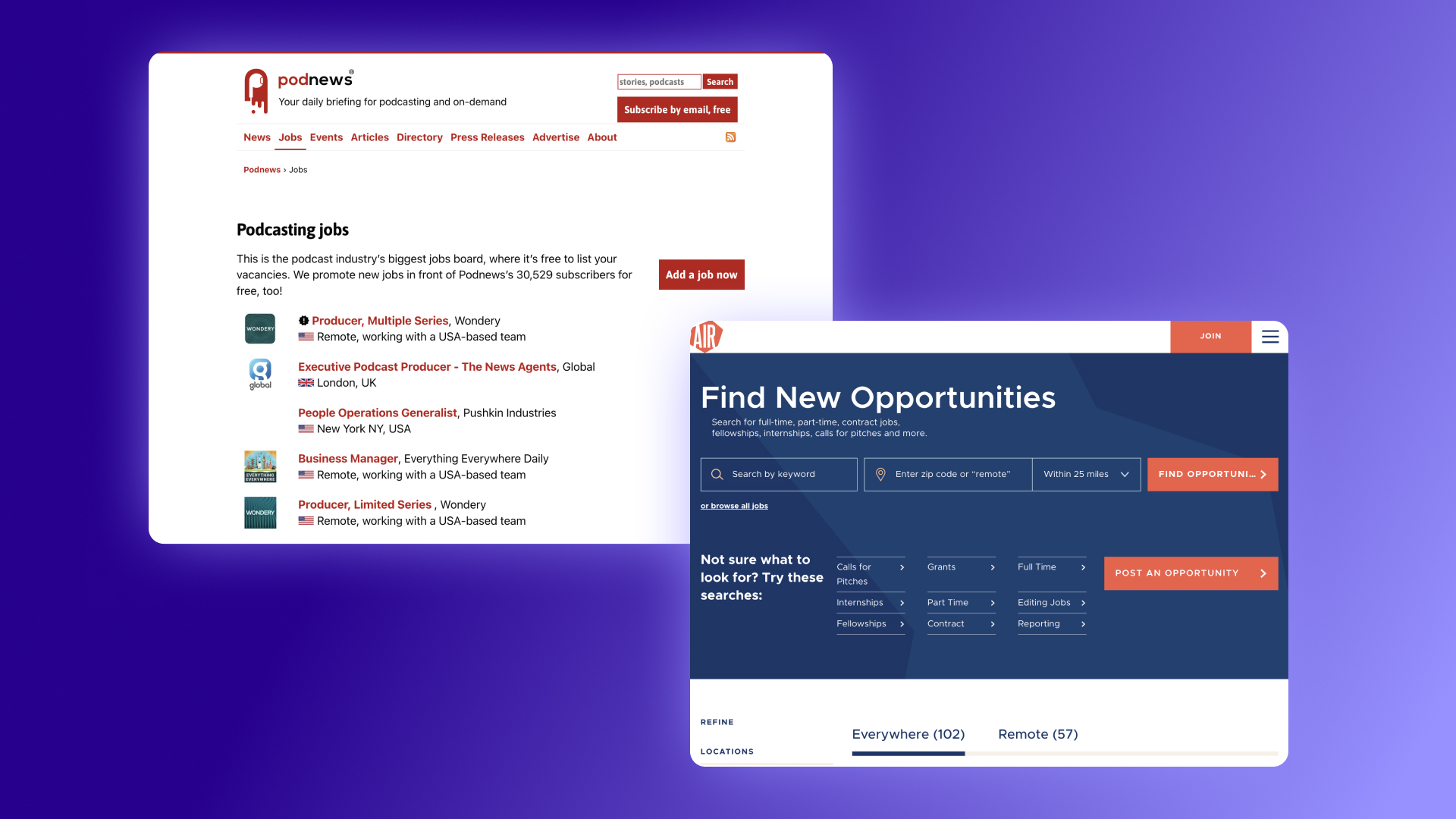
Industry job boards like Podnews and AIR, as well as general job boards such as Indeed.
Directories like POC in Audio (a directory of people of color who specialize in audio around the world)
Industry communities like The Podcast Academy, and She Podcasts (a supportive community for female podcasters with learning and consulting resources.)
Podcasting meetups, conferences, and workshops.
Referrals from fellow creators.
Your social media channels. Your listeners and viewers are your biggest supporters, after all. They might know the perfect person for the job or even be the right fit themselves!
When crafting the job posting, be specific about what you’re looking for. Producers can wear a lot of hats, so go back to that initial process of thinking about what tasks you’re really ready to outsource or share. Then, clearly outline those responsibilities, required skills, and desired experience. Plus, remember to include information on work arrangements (e.g. remote or in-person), expected hours, and compensation range.
Pro tip: if you’re not sure what the compensation range looks like for a role like this, check out this resource from Air Media. It includes a guide to rates, a day rate calculator, and an insightful write-up on how to conduct compensation research.
Hiring the right fit: What to look for in a show or podcast producer
The right podcast producer is both an artist and a technician. As you look to secure the perfect match for your show and long-term goals, zero in on these key qualities:
Technical expertise: Command over the technical aspects of post-production, particularly video and audio editing skills, is non-negotiable.
A knack for creativity: A keen creative eye (and ear!) for storytelling, episode structuring, and content innovation.
Strategy-first mindset: An understanding of the broader podcasting landscape. Your producer should have skills in audience growth, analytics, and monetization strategies, and be on top of the latest trends and tools in podcasting.
Organizational and communication skills: You need a producer who will streamline operations and make your life easier, not harder. Whoever you bring on board should be able to manage schedules, guests, resources, and workflows efficiently and on time.
Passion for the craft: Look for someone with a genuine enthusiasm for audio and video shows and a drive to explore new ideas. Bonus points if they love your niche and could talk about it for hours.
Interviewing your candidates
Just because someone looks good on paper, it doesn’t mean they’re the right person for the job. Hence, the interview.
Asking the right questions will help gauge a candidate’s skills and alignment with your vision and work ethic. It will also reveal whether their communication style and personality fit well with your team's culture (or the culture you want to establish as you grow your podcast team.)
Here are a few talking points to help get you started:
Experience and background
Can you share your experience with show or podcast production, including any specific genres, formats, or types of shows you've worked with?
Describe a podcast project you're particularly proud of and your role in its success.
Technical skills
What video and audio editing software are you most proficient in? Do you have expertise in sound design, mixing, and mastering? How do you like to collaborate on the edit — via script or in the audio/video tool?
How do you ensure the best audio and video quality, especially when dealing with remote interviews or less-than-ideal recording conditions?
Creative process
How do you approach content planning and podcast episode structuring?
Can you give an example of a creative challenge you faced in a similar role and how you overcame it?
What was your biggest or most difficult guest to book, and how did you do it?
Strategic thinking
How do you measure the success of a show or podcast, and what metrics do you focus on to grow the audience?
How have you positively impacted (or grown) the audience size of a show you've worked on, and what strategies did you employ?
Organizational skills
How do you manage deadlines and make sure that all aspects of podcast production stay on schedule? What project management tool do you like to use to streamline collaboration?
Can you describe a time when you had to juggle multiple projects and how you prioritized your tasks?
How would you define your communication style? What’s your preferred way of collaborating with other people on your team?
Passion and alignment
Why are you interested in working on this show, and how do you see yourself contributing to its vision?
What shows or podcasts do you enjoy, and what trends in audio and video are you excited about?
Once you have a shortlist of candidates, you can ask for additional resources to help you make the final decision. Consider requesting:
Access to their portfolio or specific episodes they've produced. This will give you a tangible sense of their style, quality, and versatility.
References from previous clients or collaborators to get insights into their work ethic, reliability, and impact on previous projects.
A paid trial project, such as editing a short segment or planning a new episode, for a hands-on demonstration of their skills.
Monitor the success of your partnership
Welcoming a show or podcast producer to your team is just the start of an exciting journey. Once they're on board, the real work of making sure the partnership thrives begins.
Keep tabs on the important metrics—how your audience is growing, if they're engaging more, and whether you're seeing a better financial return. Look within as well. Are you focusing more on the things you love about podcasting? Do you feel more excited to work and overall less stressed than before?
Don't forget the softer side of things, like what your listeners and viewers are actually saying. If you’re getting great feedback from the audience, that's a big thumbs up to the value your producer is adding, and a hint that your podcast is on its way to even bigger things.
Staying on top of these numbers and feedback, and keeping the lines of communication wide open with your producer, will keep your collaboration fresh and focused.
In the end, it's all about working together to ensure your show or podcast keeps growing sustainably and that you continue to love the process — now, you just have a little extra help to manage it all.





%20(1).jpg)


.jpg)

