Distributing, promoting, and repurposing your show or podcast content allows you to extend your creativity beyond your typical format. You can find fresh ways to showcase your episodes through written, visual, and audio content on different channels.
The creator’s guide to making a show or podcast newsletter
April 17, 2023
Consider these best practices for how to create a show or podcast newsletter to help grow your audience.

Expand for key takeaways:


No items found.
An email newsletter is an impactful and versatile tool to promote your podcast. Through emails, you can spotlight memorable moments and expand on episodes with supplemental content that gives deeper insight and context.
Nicole Bassolino is a creator who uses an email newsletter to amplify her podcast episodes once they publish and share bonus content and material. Her podcast, “recipes for life,” examines experiences, choices, and other life lessons framed around family recipes. Discover how she connects deeper with her audience and expands on ideas with her podcast newsletter. Plus, draw inspiration for your own newsletter from some of her email examples.
What is a show or podcast newsletter?
A show or podcast newsletter is an email you send subscribers to promote episodes and other content related to your podcast on a regular, consistent basis. Ultimately, the purpose of a podcast newsletter is to grow your audience and build your brand. But it’s also a way to strengthen connections with listeners and viewers and enhance their experience and connection with your show.
Why should you start a newsletter for your show or podcast?
A podcast newsletter increases your show’s exposure and engagement. It encourages your subscribers to listen to or watch newly released—and older—episodes and follow and rate your show on their listening platform. The more followers you have, the more potential there is for your show to be shared, leading to a flywheel of growth.
It’s also an opportunity to build a community around your podcast so you both gain new listeners and create loyal ones. Nicole says, “Having a second outlet to connect to my audience has been a lot of fun” and notes that it’s “a more meaningful way to connect to listeners that goes beyond just tuning into an episode.”
You can use the written word to send your newsletter subscribers personalized messages, add follow-up thoughts on discussions from episodes, and cover any additional ideas or relevant news that didn’t make it to the show or podcast.
Best practices for show newsletters
If you’re just launching your show or podcast newsletter or want to rejuvenate your existing one, consider these top factors that will help it run smoothly and generate the best results.
Plan and communicate the added value of your podcast newsletter
Creating a podcast newsletter has various advantages for you, but what’s in it for subscribers? Nicole says it’s important to “communicate the value of signing up.” She advises letting subscribers know what additional content they’ll receive and “what they’ll get from the emails that they don’t get from just listening to the show.”
Pitch all the details and benefits of your newsletter in a section or landing page on your podcast website where you have your email signup form. List what kind of content and perks subscribers can expect. Those might include funny behind-the-scenes videos and bloopers, complementary content like playlists, photography, additional reading material and links, or anything else.
Maintain a consistent frequency
Plan to send emails on a regular basis to ensure value for your subscribers and keep the momentum going in a way that complements your podcast episode release cadence. Make sure it’s a cadence you can realistically and reliably keep up. It shouldn’t be so often that it is a work overload or turns off subscribers, but also not too sparse so subscribers lose interest.
A steady approach is to send an email each time you release an episode and build that into your production process, as Nicole does. “I produce episodes every other week and send an email when a new episode drops.”
Set up automations
Email automations have a lot of important benefits, like creating efficiency, personalization, and arguably the best—making your job easier. Many email marketing tools enable automated emails. Once you’ve launched the newsletter on your platform of choice, you can then set up an automation trigger and a corresponding email to automatically send to your subscriber base whenever the trigger is activated.
For example, you can use automated emails to send welcome emails whenever a new subscriber signs up. Or, you can wish subscribers a happy birthday based on the optional personal information they submitted through the newsletter signup form.
Nicole sends a welcome email to each new subscriber, which includes an intro to her podcast. It also includes links to the first episode, where they can check out and follow her show, share the podcast online, and other pertinent information.
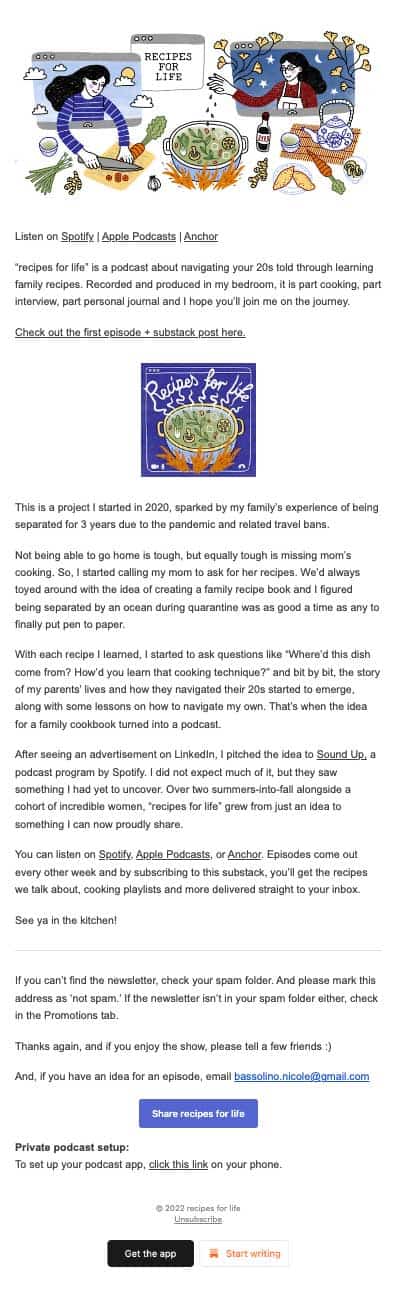
Streamline the process with templates
Templates are another convenient email feature that simplifies the creation process. They make it so you don’t have to design each email from scratch. With templates, you can build out the bones of the email and then fill in the body content for each message.
Some components you might include in a template are:
- A header image
- Your podcast logo or cover art
- Distinct sections
- Images and photography
- Button for subscribers to share your show or podcast
- Information to sign up for your podcast subscription
Promote your podcast newsletter to grow subscribers
Once you know what content you want to include and start sending emails, promote your newsletter to grow your subscriber list. Make it easy for your audience to discover and sign up for your newsletter. Post sign-up forms on your website home page, a separate landing page, and anywhere else on your website where it makes sense.
Also, post a link to subscribe in your social media bios and mention it in your podcast episodes. Whenever you direct people to subscribe, explain why they should and what value they’ll get from it.
Remember to promote it to the people you already know. Nicole’s advice is to start by sharing it with your friends and family and encourage them to pass it on to their networks. “I’m convinced word-of-mouth remains one of the more influential ways to grow your audience, so do not be shy about asking people to help you spread the word,” she says.
She also notes the power of cross promotion and collaborations with other podcasts, writers, and creatives to increase your newsletter visibility.” One way to use your newsletter is to highlight other people and shows or podcasts that your audience would find interesting in exchange for a promotion in their newsletter. These partnerships are mutually beneficial because you’re introducing each other’s work to a new audience, which means potential new listeners and viewers.
Ideas and examples of content to include in your newsletter
Your podcast newsletter is an open, flexible space to keep your listeners updated and engaged with your show. It’s a distribution channel and a separate platform to explore different ways of expressing yourself and communicating with your listeners. There are plenty of ways to use this space—here are some key ones to consider.
New episode notifications
The primary purpose of show or podcast newsletters for many creators is to alert subscribers when a new episode releases. Nicole says, “The ability to deliver something straight to their email inbox also offers a gentle reminder when new episodes come out.”
New episode notifications keep your podcast top of mind for subscribers and encourage them to listen or watch. As you can see in the examples below, Nicole embeds new episodes in her emails so subscribers can easily listen directly from the newsletter.
Supplemental content that adds value
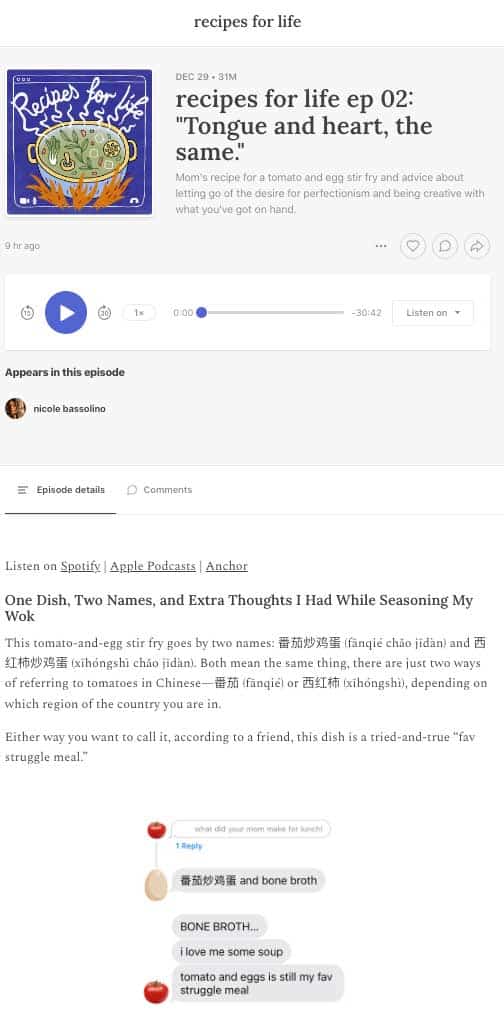
Newsletters are the perfect place to deliver supplemental content that doesn't make sense for the show or podcast format, but builds upon the topics you discuss in episodes. For example, Nicole includes the recipes that dictate each “recipes for life” episode in her emails. You can also include anecdotes and interactions that reveal a deeper backstory, like snippets of in-person or digital conversations.
In the example below, Nicole shares a text message exchange about the meal featured in one of her episodes above the recipe. This adds a personal touch for her subscribers and helps them get to know her better.

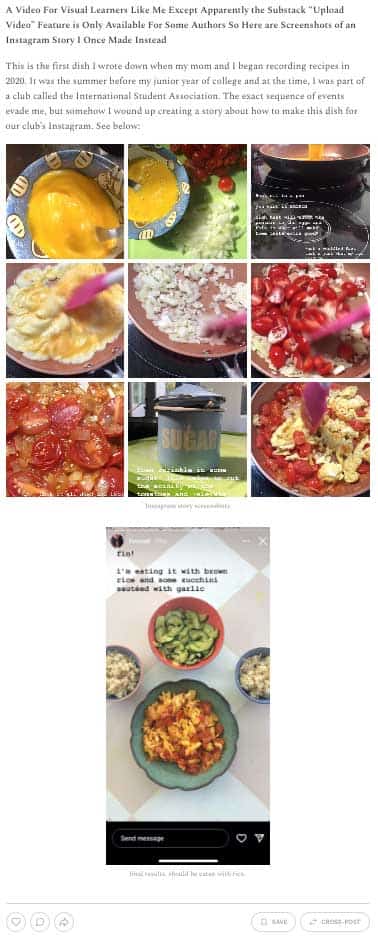
Visual content like photos and videos are great ways to enhance emails. The following example shows a “recipes for life” email that shows a recipe tutorial and individual photos of each step.
You can also add links for subscribers to further explore subjects, people, organizations, and other news related to your podcast discussions and guests.
Upcoming episodes and guests teasers
In addition to promoting new episodes and episodes from your back catalog, you can get subscribers excited about future episodes.
Use your emails to tease upcoming guests and topics they can look forward to. If you’ve already recorded those episodes, you can post notable soundbites, video, and photos from recording sessions to build interest and anticipation.
Test and track emails for the best results
The possibilities and capabilities of podcast newsletters are expansive, so you can play around with plenty of different types of content and strategies.
Leverage A/B testing to discover which emails perform the best based on different subject lines, delivery days and times, types of content, etc. Test different versions and analyze the results using email analytics to get the most out of your podcast newsletters.
Use these tactics to make a podcast email marketing plan that’s streamlined, complements your show, and helps grow your audience.
Feeling inspired?
Unlock your show’s full potential on Spotify: download the optimization playbook
November 5, 2025
Text Link
Amplifying your show on Spotify with automatic transcripts, chapters, and more
September 9, 2025
Text Link


From 1K to 10K to 100K followers: What 4 creators learned from their growth journey
March 31, 2025
Text Link
How shows are using short-form video clips to drive podcast discovery on Spotify
March 25, 2025
Text Link


How creators are building their fan community on Spotify with podcast comments
September 16, 2024
Text Link

2024 Podcast Trends Tour: What creators can learn about monetization and growth
May 22, 2024
Text Link


%20(1).jpg)


.jpg)
SIMILAR CONTENT

