A comprehensive guide to getting more loyal listeners for your podcast.
Expand for key takeaways:
It’s no surprise the question we receive most often from podcasters is, “How do I grow my audience?” You’ve spent time and effort planning and creating your first episodes, or maybe you’ve already built up a solid catalog. But you might be lacking an audience size to match the quality of your podcast. If so, you’re not alone. Putting your podcast out there is a major first step—not to mention a great accomplishment.
But word of mouth alone will only get you so far. To get your podcast in front of more people, you have to take the necessary steps to reach them.
We put together these tips for growing your podcast audience—because whether you’ve had a show for a while or are just starting out, everyone’s story deserves a chance to be heard.
No items found.
Target your specific audience
Before you commit to any particular growth strategy, try to narrow down your audience. While you may be thinking, “My podcast is for everyone!” keep in mind the key to growing your listeners is tofind your niche. Rather than casting a wide net, pinpoint the unique value your podcast brings to the world and consider the audience who is most likely to listen to (and benefit from) your show.
The more specific your topic is, the easier it will be to identify and appeal to your audience. For example, the “Growing Up Halal” creators speak to a very specific community that they identify with: young Muslim-American women who feel they don’t have an adequate platform or representation.
Similarly, Angela Belt’s podcast, “The Mood Board,” focuses on the “intersection of race, culture, and interior design”—a concept very specific and unique to her interests and identity.
If your show switches topics, genres, and tones, you may want to narrow your focus in order to attract consistent listeners.
Research your podcast audience
In what part of the world do they live? What are their interests? What other podcasts do they listen to? Spotify for Creators’ built-in analytics can help you track down demographic data and trends with your current listeners—dig as deep as you can to put yourself in the mind of your audience.
Do your own research to find out where your listeners are most active online. Do they use social media platforms? Do they follow particular hashtags or subreddits? Figuring out where your audience already engages will help you learn where and how to reach them. You can start by asking your listeners on Spotify via our polls feature.
It’s also helpful to keep your podcast's mission and format in mind. If your show aims to educate or inform, especially with a business-focused approach, your audience might be more active on professional platforms like LinkedIn or through email. In this case, a newsletter can be particularly effective in reaching them (more on that later!)
On the other hand, if your podcast is geared toward entertainment or pop culture, platforms like TikTok or Instagram might be more effective. They’re ideal for reaching audiences who want to be entertained and stay up to date with the latest trends.
Your Spotify Wrapped for Creators is another window into your audience and how they engage with your podcast. Every year, we share valuable insights into:
How many dedicated fans you have who tune in to the majority of your episodes
Your most popular episode across the board
Your top listening countries
The most popular times when your audience listens to or watches your podcast
What other music and podcast genres your audience enjoys
This kind of rich data allows you to give your fans more of what they want and personalize the experience every step of the way—whether it’s by reverse-engineering the success formula of your most popular episodes, exploring current events in your top countries, or dipping your toes into new genres.
Prime your show for discoverability on Spotify
Our 2023 Fan Study revealed that Spotify is the third most popular way people discover new podcasts. With over 600 million users browsing our platform, there are a lot of potential new fans out there—you just need to help them find you.
We’re always evolving how creators can optimize their show page to be discovered. For instance, you can:
Designate a “Best Place to Start,” the episode you feel is the ideal introduction to your show.
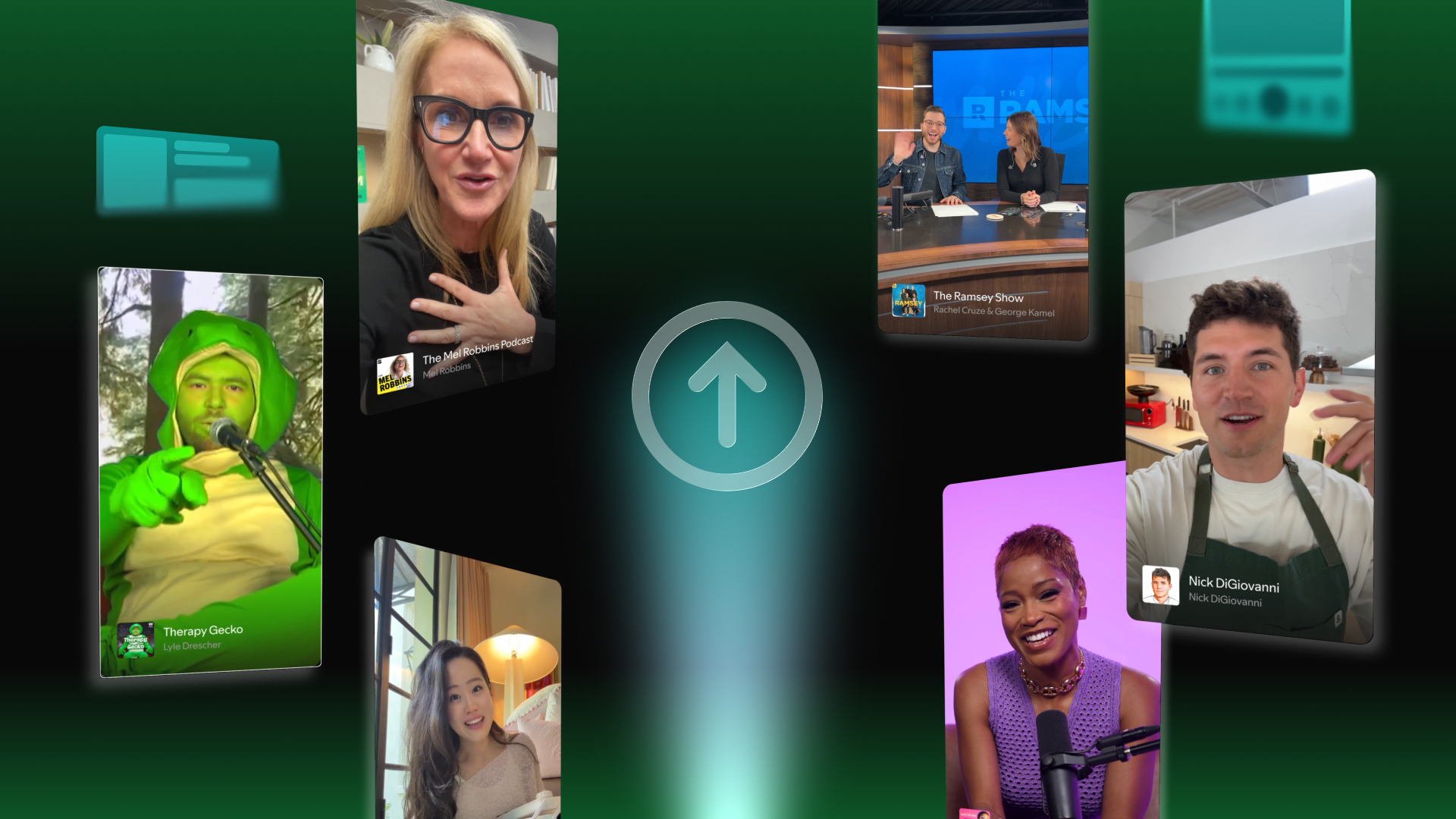
Upload short video clips promoting your episodes that can then be recommended across Spotify to hook potential new fans, get your show discovered, and immediately drive interest into consumption of your long-form episodes.
Offer Spotify users a glimpse into your personality with “Host Recommendations” —whether it’s a playlist of songs, podcast episodes, an audiobook, or other content related to you or your guests.
Customize video thumbnails or cover art for each of your episodes to make sure you’re looking your best across Spotify’s mobile, desktop, and TV apps.
Complement your audio with video content
With video podcasts on Spotify, you can opt to record entire episodes as videos, so your audience can watch and listen to your podcast. This way, you can reach more people with more ways to consume your show. They may want to get to know you better by watching your episodes front and center on their screen or having it play in the background while they multitask.
Truth is, video is becoming an increasingly popular way of consuming content—and that includes podcasts. From a creator perspective, adding video to your Spotify repertoire comes with plenty of benefits:
It adds a face to the name and helps your fans build a deeper connection with you.
You can reach the over 170 million Spotify users who have watched a video podcast (that’s a lot of potential new fans!).
Once you create video for Spotify, you can easily clip it to use as content on other platforms, allowing for potential virality.
The number of monthly active Spotify users watching video podcasts has grown by 40% year-over-year, and the number of podcasters publishing videos on Spotify has grown nearly 70% over the past year. There’s no time like the present to adopt this growing trend and expand your reach.
The good news is that if you publish video on other platforms, whether you just dabble or you're a pro, you're already equipped to reach Spotify users who prefer visuals with their podcasts.
If you haven’t dipped your toes into video waters, consider turning on the camera when you hit “record” on a new episode. It doesn’t have to be a flashy production (your phone is more than enough to get you started), and you can easily generate more content without overwhelming your workflow.
Reach new audiences by uploading clips on Spotify
Another way to get started with video and to help you reach new audiences on Spotify and across social media is experimenting with short, video clips that promote your episodes. These vertical video clips are a great way to give your audience a taste of what your show and that particular episode is all about. Think about the most interesting, funny, or engaging part of your episode to identify the moments that will make your clips stand out.
While clips can help drive engagement on your social channels, you can also upload them directly on Spotify. Clips on Spotify can help you reach new audiences on the platform that they are already using to watch or listen to their next favorite show. You’ll be able to see clips displayed on your show page (look for the rectangle below your show’s cover art) and they can be recommended across various places in our app including the Home and Podcasts feed, Browse, and the Now Playing View.
Remember these best practices when considering what clips you want to upload to Spotify:
You are limited to one clip per episode so choose the clip that does the best job of summarizing what someone might expect to see when watching your full-length episode
Clips must be 90 seconds or less so make sure to quickly hook potential viewers by jumping into the most engaging part of the conversation
Clips look best when recorded in the 9:16 vertical format so make sure to adapt your clips for the best viewing experience
Clips are now available in beta to creators in select markets. Check out our help center article for more details and head to the episode details page to get started.
For those looking for tools to help create clips, Riverside can help automatically pick out the best moments of your recording to produce bite-sized clips. And if you are not ready to jump into video head-first quite yet, you can also upload customized audiograms to give potential listeners a taste of your episodes. Tools like Headliner offer creators a simple solution for those looking to create audiograms to promote their podcast across their social channels.
Connect with your listeners
Once you’ve identified your audience, it’s time to connect with them. Some platforms might deserve more attention than others, depending on who you’re trying to cater to. Connecting with your fans starts with getting the word out on any and all channels where you can reach them.
By creating opportunities for listeners to engage with your show, you can foster a sense of community that’s rewarding to be a part of and builds a dedicated following. For example, the “Teenager Therapy” podcast does an excellent job of speaking to their community of other young people with similar experiences, challenges, and questions.
On social media
Did you know that 42% of people discover new podcasts through channels like TikTok, Instagram, and LinkedIn? Social media is pretty much mandatory if you want to spread the word about your show to as many people as possible. Plus, it’s a free outlet to continuously promote your content and engage directly with your fans.
Follow these tips to get the most out of your podcast marketing on social media:
Tailor your content to each platform and its intended audience. Each platform brings a unique flavor to the table, so it’s important that you’re serving up the kind of content people expect from each channel. For example, Instagram is great for sharing eye-catching visuals, while X is the place for quick updates and real-time chats.
Mix it up. Keeping your content fresh and exciting is key to drawing in audiences. Play around with audiograms, behind-the-scenes shots, video snippets, memorable quotes, and episode teasers. The idea is to entertain and provide value, making it easy for your followers to share and talk about your podcast.
Don’t be afraid to share the best bits. You’ll be tempted to share content that just teases. But what if we told you you shouldn’t be afraid to give the gold away? Lenny Rachitsky, the product marketing genius behind “Lenny’s Podcast,” has learned that “no one has time to fall for your tease. Once people see the gold you have, they'll go seek you out. Do this with fun clips, or key quotes, or simply writing out the most interesting or surprising takeaway from the episode.”
Use hashtags. Hashtags are your best friends when it comes to getting discovered. Do some homework to find out which topics are trending in your niche and use them to help new fans find your content.
Keep the conversation going. Respond to comments, ask questions, and spark conversations. Little actions like these make your listeners feel valued and give you great feedback on what they enjoy about your podcast.
Analyze and adjust your social media strategy. Keep an eye on your social media metrics to see what’s working and what’s not. Track engagement rates, follower growth, and other key stats to tweak your strategy and ensure you’re always improving and staying relevant.
Looking for channel-specific advice and more insightful tips on using social media? Read the full article.
Through your website
Creating a website for your podcast is another way your audience can discover your show, listen to episodes, and learn more about you and your creative process. Adding a blog to your website can add even more value—it’s a space where you can dig deeper into background information on guests and explore episode topics even further.
Blog content can also give your audience an inside look into your production process and how you select topics and interview subjects.A website dedicated to your podcast will also help potential listeners find you online when they search for terms related to your show.
The more content you have with your podcast’s name and keywords related to your topics, the more it will help to improve your site’s rankings on search engines. Linktree (the OG “link in bio” tool) can further enhance your online presence. It consolidates all your important links in one place and makes it easier for your audience to find and engage with your content across social media platforms.
With an email newsletter
Email newsletters create a direct link between you and your audience. Plus, they’re a lot easier to write and share than a podcast episode. Lenny Rachitsky advises creators to invest in building an email list, as it’s “possibly the most powerful owned channel out there.” Here are a few ideas to help you get started with email marketing:
Promote your newsletter on your podcast, social media, and website. Offer incentives like exclusive podcast content, early episode access, or giveaways to encourage sign-ups. Remember, every subscriber is a potential fan.
Share engaging and varied content to keep your readers excited. Mix in episode summaries, guest stories, listener shout-outs, and sneak peeks of upcoming episodes. The goal is to provide value and create a sense of community around your podcast.
A well-designed newsletter is easier to read and more enjoyable. Use a clean layout with plenty of white space, and make sure it’s mobile-friendly. Include eye-catching images and use your podcast’s branding to make it instantly recognizable.
Finding the right balance for how often you send your newsletter is important. Too frequent, and you might overwhelm your subscribers; too rare, and they might forget about you. Test different frequencies and see what works best for your audience, whether it’s weekly, bi-weekly, or monthly.
Keep an eye on your newsletter’s performance with metrics like open rates, click-through rates, and subscriber growth. Use this data to tweak your content, design, and sending schedule.
Using Spotify for Creators' interactivity features
Here’s a little food for thought: In a recent study we conducted among audiences, 73% of people said they are interested in finding more opportunities to interact with their favorite podcast hosts. We’re willing to bet you want to hear from your fans as much as they want to hear from you, which is why we created interactivity features like polls and comments.
Comments allow your fans to express themselves directly on your episodes. We love this feature because it lets you like and reply to each individual comment, creating a personalized engagement that builds strong, long-lasting connections. The fact that interactions happen right where your audience is listening /watching is an important stepping stone in building a vibrant community around your podcast.
To make the most of comments, let your audience know you want to hear from them. Encourage them to share their thoughts, questions, feedback, and whatever else is on their mind.
With polls, you can source inspiration from your listeners and get a glimpse into their pain points, preferences, and unmet needs. Michael Tucker of “Beyond the Screenplay” explains how the team uses polls to help them make decisions about the future of the show: “When we’re weighing options (like which movie trilogy should we cover next), it’s been great to let our listeners share what they are most excited about via polls.”
Implement SEO best practices on episode titles and descriptions
One of the best ways to get your show discovered and make a strong impression on potential listeners is to write compelling episode titles and descriptions. Try to keep it short and sweet (two to three sentences max) but preview the topics you'll be discussing throughout the episode.
Include specific keywords that will grab your audience's attention and, more importantly, ensure your show appears in relevant search queries when potential listeners are looking for content. Use names of guests, timely trends, breaking news, or places to make your episodes more searchable.
Remember, the end goal is to convince potential listeners to press "play" so try to pique their interest and leave them wanting more instead of trying to summarize your episode!
Learn more about how to get your podcast SEO right
Cross-promote with other podcasts
There are millions of podcasts on Spotify alone, and every creator wants to grow their audience, no matter how many listeners they have. Use your fellow creators as a resource and create a network to support each other.
Connect with like-minded creators and those with podcasts that complement your own. Give them a shoutout on social media and introduce your listeners to them in episodes. Chances are they will return the favor.
To get started with cross-promotion, consider these specific actions:
Join podcasting communities: Participate in podcasting groups on social media platforms like Facebook, LinkedIn, or Reddit. These communities are great for networking and finding potential collaboration opportunities.
Reach out directly: Send a friendly email or message to creators you admire, introducing yourself and your show. Explain why you think a collaboration would be mutually beneficial and propose specific ideas for cross-promotion—like a guest spot or collaborative content (see the next bullet).
Create collaborative content: Consider co-hosting a special episode or creating a mini-series with another podcaster. This not only helps in sharing audiences but also provides fresh content for both of your shows.
Welcome a guest
A podcast guest can be a great way to expand your audience. Guests can be friends, experts in a field, or someone you’ve always dreamed of talking to. Encourage your guests to promote the podcast episodes they’re on, which will help you tap into their followers.
Make it easier for them to promote you by giving them a mini press kit with assets they can easily post, like suggested copy, a link to the episode, your awesome cover art, an interesting quote from the interview, and a special photo from the recording session.
Remember to celebrate past guests’ accomplishments. When something big happens for them, congratulate them publicly, and reshare their episode so it all ties back to your show.
Build ratings for your podcast
Your podcast rating gives your show credibility and social proof—both of which are effective ways to attract new listeners. Rack up those five stars by directing listeners to rate your podcast wherever you can: on your main show page, in your individual episode pages, on your website, in emails, and on social media.
Don’t forget to use your episodes as well. Ask for ratings directly, ideally at the beginning or end, when listeners are most engaged. A simple request and a brief explanation of how it helps your show can go a long way.
With the new Spotify for Creators'mobile app, you get notified as soon as your show makes it to a Spotify chart. Sharing this accomplishment with your fans shows the tangible value of supporting you and might encourage those who haven’t left ratings to do so.
Create a trailer
Podcast trailers are an easy way to hook new listeners by giving them a sneak preview of what your show is all about. Creating a trailer is also a chance to pinpoint the unique value of your podcast and to practice pitching your show under concise constraints.
Set your goals and track how you’re meeting them
What does success mean to you? What metrics are important to you? They could be quantitative, like your subscriber count or your number of total episode plays. Or maybe they’re qualitative, like a high rating or an engaged listenership.
Determine your baseline of success and grow your audience with that intention in mind. If your idea of success is to monetize your show, you might grow your audience toward a particular monthly ad income. If you want to know how your show impacts your listeners, your strategy might include outreach and engagement. Spotify for Creators' built-in analytics dashboard makes it easy to measure and visualize your podcast performance, and if your show is on Spotify, you can find additional insights about those listeners.
No matter what your podcast audience goals are, remember, sustained growth requires time and effort. It might be a while before your podcast takes off, and that’s okay. With a positive attitude and consistent promotion, you can begin to convert more fans. When in doubt, remember why you got started in the first place. Your podcast is something to be proud of whether you have one or one million listeners.





%20(1).jpg)


.jpg)

