Dmitry on Tech
By Dmitry Noranovich
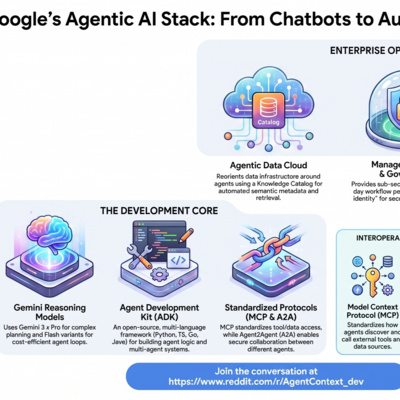
The Complete Guide to Google's Agentic AI Stack
Google's agentic AI stack has evolved into a comprehensive system designed to transition simple chatbots into sophisticated, autonomous enterprise workflows. The architecture is centered around Gemini models and the open-source Agent Development Kit (ADK), which provides the tools necessary to manage reasoning, memory, and multi-agent collaboration. To ensure interoperability and security, the stack utilizes standardized protocols like MCP and A2A alongside an enterprise platform layer for governance and observation. Data integration is handled through the Agentic Data Cloud, which allows agents to interact with complex datasets as first-class participants. Furthermore, the system supports long-running agents by maintaining durable states, allowing tasks to persist over multiple days. This integrated ecosystem aims to provide a robust, production-ready environment for deploying scalable and reliable AI agents in professional settings.
The podcast was generated by Gemini Notebook.
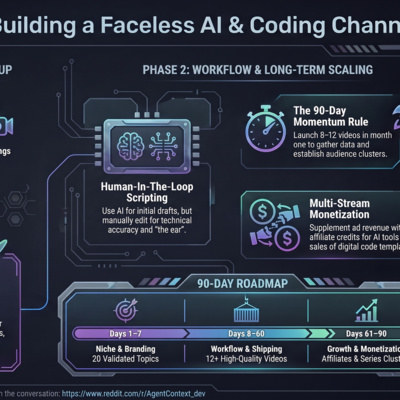
The 2026 Blueprint for Faceless AI Coding Channels
This guide outlines a strategic framework for launching a faceless YouTube channel focused on coding, machine learning, and artificial intelligence in 2026. The approach emphasizes using AI-driven tools like Claude and ElevenLabs to automate scriptwriting and narration while maintaining educational integrity through original screen recordings. By targeting specific niches such as Python automation or model debugging, creators can build a sustainable brand that adheres to YouTube’s monetization policies against repetitive content. The blueprint provides a 90-day roadmap for production, advising users to prioritize technical accuracy and unique insights over mass-produced output. Ultimately, the source highlights how high-demand technical topics can be converted into passive income without the need for on-camera presence.
The podcast was generated by Gemini Notebook.
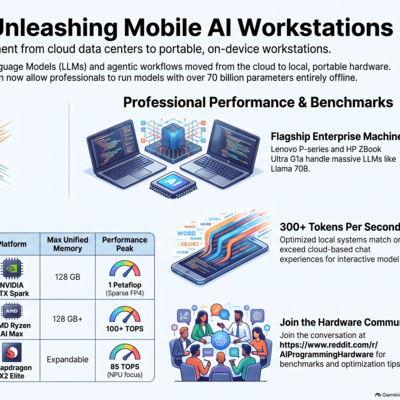
Freedom from the Cloud: How 2026 Mobile Workstations Brought Giant AI Models to Your Backpack
In 2026, mobile AI workstations transitioned from niche prototypes to mainstream professional tools, allowing developers, researchers, and creators to run massive artificial intelligence models entirely on-device and offline. This shift is powered by high-bandwidth unified memory architectures (ranging from 64 GB to 128 GB or more) and advanced chips like NVIDIA's RTX Spark superchip and AMD's Ryzen AI Max series, which solve traditional VRAM limits to support local execution of models with up to 120 billion parameters. Top manufacturers-including Lenovo, HP, Dell, and Microsoft-alongside smaller Amazon vendors offering highly portable mini PCs, are delivering these hardware configurations to support private coding agents, local simulations, and offline video editing. While early adopters face hurdles like steep pricing ($3,000 to $6,000 for high-end laptops), thermal throttling near 100 °C, and high battery consumption, this hardware shift signals a profound migration of personal computing into the era of private, portable supercomputing.
The podcast was generated by Gemini Notebook.
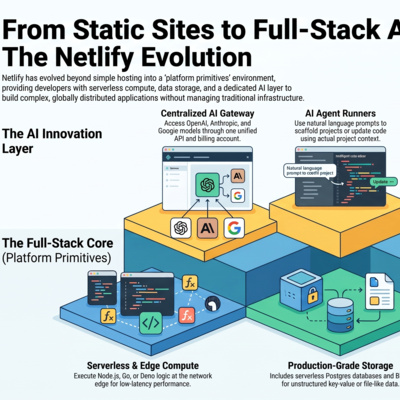
From Static Sites to Full-Stack AI Apps on Netlify
Netlify has transformed from a simple hosting service into a comprehensive development platform for building full-stack, AI-powered web applications. The sources describe how the platform provides essential primitives, including serverless functions, edge computing, and integrated databases, to eliminate the need for traditional infrastructure management. Developers benefit from a unified workflow that features automatic Git-based deployments, live preview environments, and instant rollbacks for enhanced collaboration. A significant focus is placed on new AI-oriented capabilities, such as Agent Runners and a centralized AI Gateway, which simplify the integration of large language models. The platform remains framework-agnostic, supporting popular tools like Next.js and Astro while ensuring global performance through its edge network. Ultimately, these resources illustrate how Netlify handles the entire application lifecycle, allowing teams to prioritize code and product innovation.
The podcast was generated by Gemini Notebook.
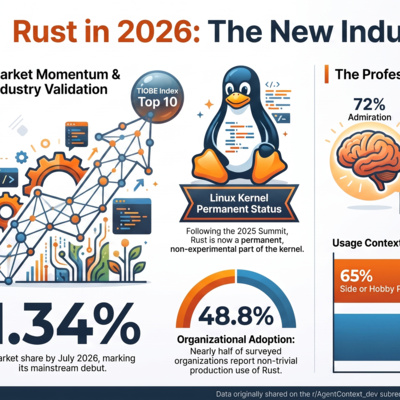
The Future of Rust: Primary Language Potential in 2026
The Reddit post examines the status of the Rust programming language in 2026, noting its transition from a niche tool to a top-tier industry standard. While major technology corporations and the Linux kernel have adopted it for its memory safety and performance, the language still faces hurdles like a steep learning curve and slow compilation times. The text highlights a paradox where Rust is the most admired language among developers, yet it remains less common than Python or JavaScript for general tasks. High salaries and strong demand characterize the job market, although finding experienced talent remains a significant challenge for many organizations. Ultimately, the source suggests that choosing Rust as a primary language depends on balancing long-term software reliability against the need for rapid initial development. It concludes that Rust has matured into a production-ready powerhouse that excels in systems and security-critical infrastructure.
The podcast was generated by Gemini Notebook.
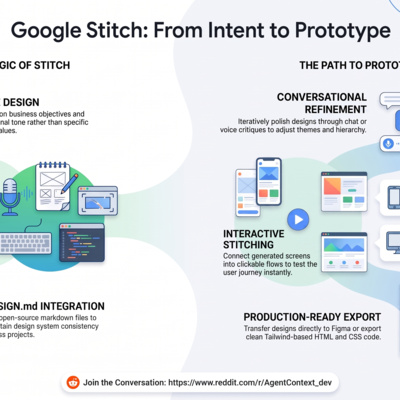
From Prompt to Prototype: Mastering Google Stitch Design
The Reddit post describes Google Stitch, an experimental AI-native design tool developed within Google Labs. It introduces a concept known as "vibe design," which allows users to generate high-fidelity mobile and web interfaces by describing the desired emotional tone and business intent. The platform utilizes Gemini models to process diverse inputs, including natural language prompts, sketches, screenshots, and voice commands. A key feature is the DESIGN.md format, an open-source markdown specification that maintains consistency by documenting design tokens and rules. While the tool is currently a powerful asset for rapid prototyping and early ideation, it is intended to complement, rather than replace, traditional professional design software. Ultimately, the podcast serves as a comprehensive guide for navigating the platform's infinite canvas, interactive features, and export workflows.
The podcas was created by Gemimi Notebook.
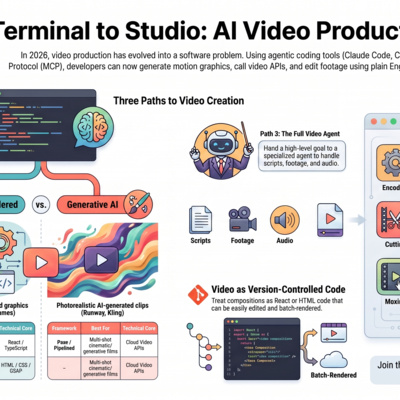
The Terminal Video Studio: AI-Driven Production Workflows
By 2026, AI coding agents like Claude Code and Codex have evolved into sophisticated video production studios accessible directly through the terminal. These tools allow users to bypass traditional editing software by using natural language commands to manage complex workflows involving scriptwriting, motion graphics, and voiceovers. Production typically follows three distinct paths: code-based rendering for consistent graphics, single AI clip generation, or fully automated pipelines that assemble multi-shot films. To function effectively, these agents rely on a suite of external dependencies such as FFmpeg, Node.js, and specialized Model Context Protocol servers. This technological shift transforms video creation into a software-driven task, enabling creators to iterate on high-quality content through a conversational interface. Ultimately, the terminal has become a powerful creative hub that lowers the barrier to entry for professional visual storytelling.
The podcast was generated by Gemini Notebook.
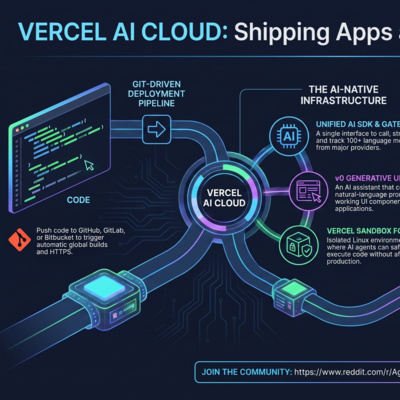
Vercel AI Cloud: Building the Future of Intelligent Applications
The Reddit post details the transformation of Vercel into an AI Cloud platform designed for the seamless deployment of full-stack applications and autonomous agents. By integrating a Git-driven workflow with specialized Fluid compute and an AI SDK, the infrastructure allows developers to ship code and manage complex AI workloads with minimal operational overhead. The platform supports a vast array of frameworks and languages, offering features like instant previews, edge middleware, and isolated sandboxes for safe agent execution. Furthermore, the content highlights how collaborative tools and automated UI generation through v0 are accelerating the modern software development lifecycle. Ultimately, these sources illustrate a shift toward framework-aware infrastructure where artificial intelligence is treated as a first-class citizen in the cloud.
The podcast was generated by Gemini Notebook.
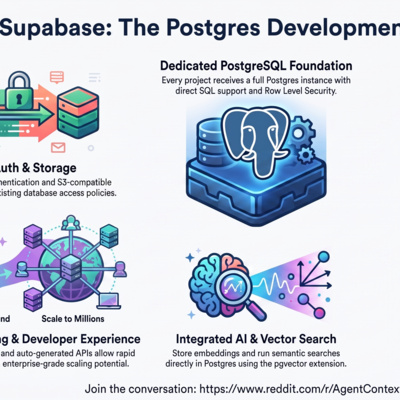
Mastering the Postgres Development Platform with Supabase
The article serves as a comprehensive guide to Supabase, an open-source development platform designed as an alternative to Firebase. It details how the system leverages PostgreSQL to provide a robust database foundation while eliminating traditional backend management complexities. Key features highlighted include automated APIs, user authentication, and real-time data synchronization, all secured through integrated Row Level Security. The source also explains advanced capabilities like vector search for AI and serverless edge functions for custom logic. Ultimately, it describes a versatile environment that supports developers through CLI tools and modular libraries to build scalable modern applications.
The podcast was generated by Gemini Notebook.
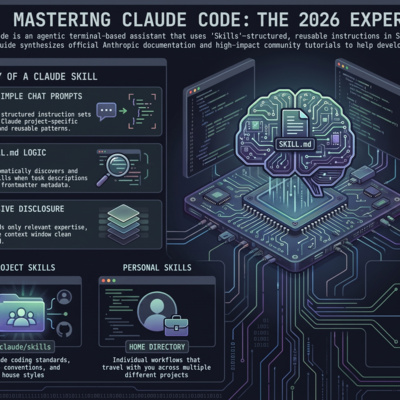
Mastering Claude Code Skills for Expert Developer Workflows
This Reddit post highlights the evolution of Claude Code, an agentic tool from Anthropic that operates directly within a developer's terminal to manage complex programming tasks. The text emphasizes the importance of Skills, which are reusable, structured instructions that allow the AI to learn specific team standards and specialized workflows once and apply them automatically. To help users master this technology, the source curates a list of authoritative YouTube tutorials ranging from official Anthropic explainers to deep dives by community experts. These educational resources cover essential topics such as progressive disclosure, the creation of project-specific "brains" via markdown files, and methods for reducing repetitive prompting. By leveraging these videos, engineers can transform the AI from a simple chatbot into a genuine collaborator that adheres to strict testing and design conventions. Ultimately, the source serves as a comprehensive guide for developers looking to integrate automated, high-quality coding practices into their 2026 workflows.
The podcast was created by Gemini Notebook.
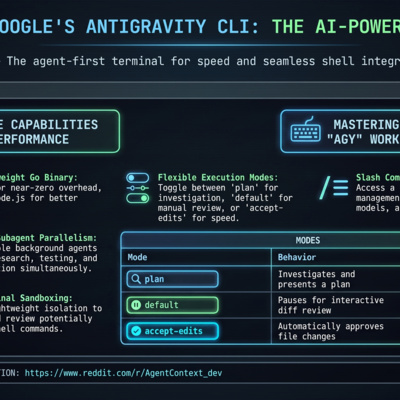
Mastering Google’s Antigravity CLI: The Terminal AI Agent Guide
The article describes Antigravity CLI, an agent-first development tool introduced by Google in 2026 to succeed the Gemini CLI. Built as a lightweight Go binary, this terminal-native agent allows developers to manage complex coding tasks like multi-file editing, tool calling, and subagent orchestration directly within their shell. It is designed to prioritize speed and efficiency for users in remote or keyboard-driven environments, sharing a core intelligence engine with the broader Antigravity platform. Key features include secure command execution via sandboxing, persistent conversation history, and a transparent review system for approving code changes. Ultimately, the sources frame the tool as a bridge between high-level AI reasoning and the technical precision of terminal-centric workflows.
The podcast was generated by Gemini Notebook.
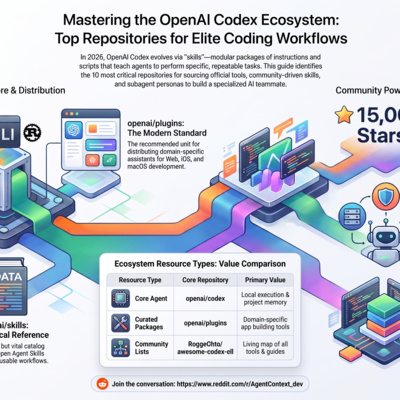
Elite Coding Workflows: Top GitHub Repositories for OpenAI Codex Skills
This Reddit post highlights the evolution of OpenAI Codex into a sophisticated local agent that uses modular "skills" to automate complex programming tasks. These skills are reusable packages of instructions and scripts that allow the AI to learn specific team conventions, debugging rituals, and deployment workflows. The guide explores ten essential GitHub repositories, including official OpenAI tools and community-curated lists, that provide the foundation for these elite workflows. By integrating these resources, developers can transform the AI from a simple autocomplete tool into a specialized teammate capable of managing entire application domains. The ecosystem encourages a shift toward process design, where engineers use standardized plugins and subagents to maintain consistency across large-scale projects. Ultimately, these sources provide a roadmap for mastering AI-assisted development through open-source collaboration and structured knowledge sharing.
The podcast was generated by Gemini Notebook.
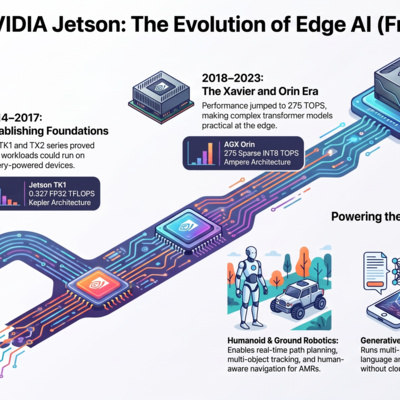
From Kepler to Blackwell: A Decade of Edge AI Evolution through the NVIDIA Jetson Family
The article traces the ten-year evolution of NVIDIA Jetson, a family of compact, power-efficient system-on-module (SoM) platforms designed to deliver high-performance computing, computer vision, and CUDA-accelerated AI directly to edge devices. Beginning in 2014 with the Kepler-architecture Jetson TK1, the hardware lineup expanded through the Maxwell TX1 and Pascal TX2 generations, before making a landmark leap in 2018 with the Volta-powered Xavier series, which first brought Tensor Cores to the edge. In 2022-2023, the Ampere-based Orin platform drastically increased compute capacity, making local generative AI, vision transformers, and lightweight large language models viable on edge form factors. The culmination of this trajectory is the 2025 Thor series, featuring NVIDIA's Blackwell architecture, which delivers up to 2,070 FP4 sparse TFLOPS of AI performance specifically optimized for complex "physical AI" deployments such as humanoid robotics. Anchored by a unified, generationally consistent software environment powered by the JetPack SDK, the Jetson ecosystem enables developers to scale their applications seamlessly from low-cost educational kits up to highly sophisticated, server-class autonomous systems deployed in robotics, healthcare, smart cities, and industrial automation.
The podcast was generated by Gemini Notebook.
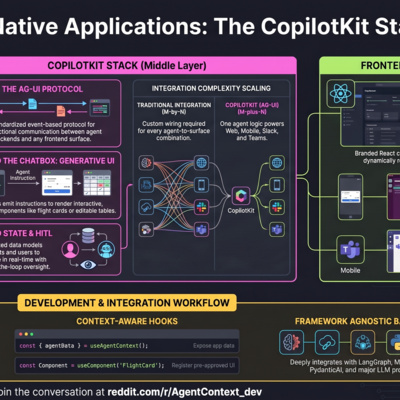
The Complete Guide to Agentic Applications with CopilotKit
CopilotKit is an open-source framework and frontend stack designed to integrate AI agents directly into existing applications rather than relying on separate chat windows. By utilizing the AG-UI protocol, it standardizes how agents interact with user interfaces across various platforms like React, mobile apps, and Slack. Key features include generative UI, which allows agents to render interactive components, and shared state, which enables real-time collaboration between the user and the AI. The toolkit also supports human-in-the-loop workflows, ensuring that critical actions remain under user control through approvals and edits. Compatible with major agent frameworks like LangGraph and CrewAI, it is trusted by global companies to create deeply embedded AI experiences. Ultimately, the framework simplifies the complex process of connecting backend intelligence to production-ready frontend environments.
The podcast was generated by Gemini Notebook.
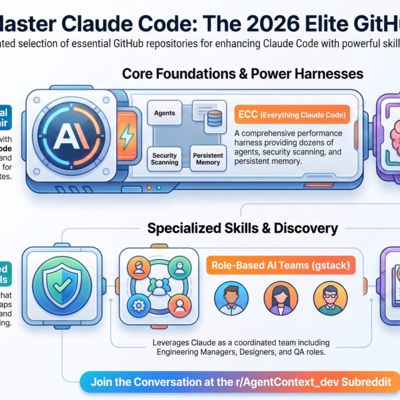
The Top 10 GitHub Repositories for Claude Code Skills
This article highlights the evolution of Claude Code, an agentic terminal-based assistant, into a sophisticated platform powered by modular "skills" that provide deep domain expertise. Developers utilize specific GitHub repositories to access official Anthropic templates, comprehensive community harnesses like ECC, and disciplined engineering frameworks like Superpowers. These resources allow for automated workflows, systematic debugging, and the coordination of specialized multi-agent teams rather than simple chat interactions. By integrating these curated skills, software engineers can enforce high coding standards, optimize token usage, and maintain project context across long development cycles. Ultimately, the text illustrates how a robust ecosystem of repositories has transformed AI from a reactive tool into a reliable engineering partner for professional software development.
The podcast was generated by Gemini Notebook.
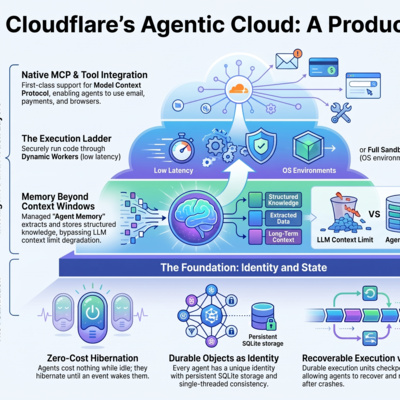
Cloudflare's Agentic Cloud: The Complete Platform for AI Agents
Cloudflare’s Agentic Cloud represents a comprehensive shift from basic chatbots to autonomous AI systems capable of independent decision-making and task execution. By leveraging its existing global edge network, the company provides a specialized infrastructure that allows these agents to hibernate at zero cost when inactive while maintaining persistent state. Key innovations include Durable Objects for consistent identity, a unified inference layer for flexible model switching, and advanced memory services that manage long-term knowledge without overwhelming context windows. The platform also features a secure execution ladder for running model-generated code safely and integrates with the Model Context Protocol to connect agents with real-world tools. This ecosystem aims to turn complex AI workflows into scalable, durable, and cost-effective serverless applications.
The podcast was generated by Gemini Notebook.
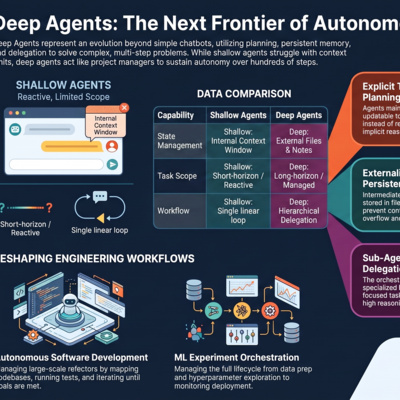
Deep Agents: Powering Long-Horizon Autonomy
The Reddit post outlines the emergence of deep agents, a sophisticated category of artificial intelligence designed for long-horizon autonomy in complex fields like software engineering and machine learning. Unlike basic chatbots, these systems utilize explicit planning, persistent external memory, and the delegation of tasks to specialized sub-agents to solve intricate problems. By moving operational data out of the immediate context window and into structured file systems, they avoid the focus loss common in simpler models. Industry leaders like LangChain and NVIDIA frame this shift as an architectural evolution that allows AI to manage multi-step projects, such as codebase refactoring or experimental research, over extended periods. Ultimately, these tools function as autonomous project managers that amplify human productivity by handling the technical minutiae of sustained workflows.
The podcas was generated by Gemini Notebook.
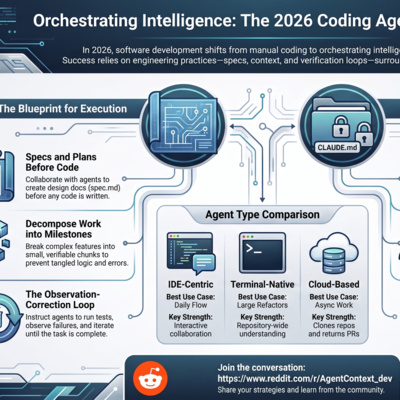
Orchestrating Intelligence: Best Practices for Agentic Code Development in 2026
The Reddit post outlines the shift toward agentic code development as a primary software engineering paradigm for 2026. These advanced AI agents function as autonomous teammates capable of planning, executing, and refining complex technical tasks with minimal human intervention. To maximize productivity and minimize risks like logic errors, the text advocates for rigorous engineering practices, such as creating detailed specifications and persistent context files. Success in this era depends on human oversight, where developers transition from writing lines of code to orchestrating sophisticated AI systems through structured feedback loops. Ultimately, the source emphasizes that while agents amplify output, architectural strategy and critical review remain essential human responsibilities.
The podcast was generated by Gemini Notebook.
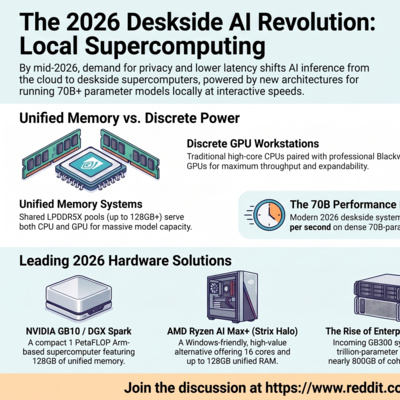
The Rise of Local Power: How 2026 Democratized the Deskside AI Supercomputer
In 2026, personal AI supercomputers transitioned from a futuristic concept to accessible retail hardware, enabling users to run 70-billion-parameter or larger models locally to address cloud costs, latency, and data privacy concerns. This deskside revolution is driven by two main architectural paths: unified-memory platforms like NVIDIA’s GB10 Grace-Blackwell and AMD’s Ryzen AI Max+ "Strix Halo" that share high-speed system memory, and traditional hybrid towers utilizing discrete professional cards like the NVIDIA RTX PRO 6000 Blackwell for massive dedicated VRAM. Throughout late 2025 and 2026, these systems became widely accessible through retail channels like Amazon, featuring compact units from makers like Beelink and ASUS alongside upcoming, high-end enterprise deskside systems based on the NVIDIA GB300. Despite trade-offs like soldered memory and developing software ecosystems, these quiet local workstations have successfully restored user control and predictability by bringing frontier-level model inference directly to a single desk.
The podcast was generated by Gemini Notebook.
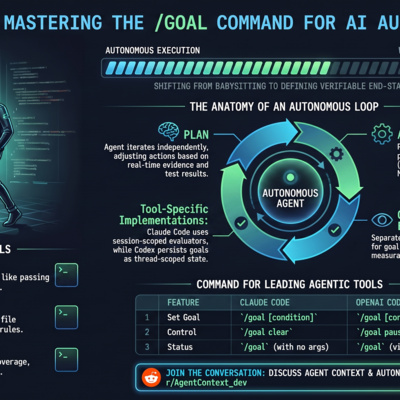
Beyond the Prompt: AI Coding with the Goal Command
The Reddit post details the emergence of the /goal command, a transformative tool that shifts AI coding assistants from reactive chat interfaces into autonomous agents. Unlike traditional prompts that require constant human supervision, this command allows developers to establish verifiable objectives and success criteria, enabling the AI to work independently across multiple turns. Currently implemented in platforms like Claude Code and OpenAI Codex, the system uses an evaluator model to judge progress and determine when a task is officially complete. By focusing on measurable outcomes rather than step-by-step instructions, this technology facilitates long-running, unattended software development tasks such as code migrations and automated testing. Ultimately, the podcast highlights a significant leap in developer leverage, where the human role evolves from a micro-manager to a high-level architect of defined end states.
The podcast was generated by Gemini Notebook.
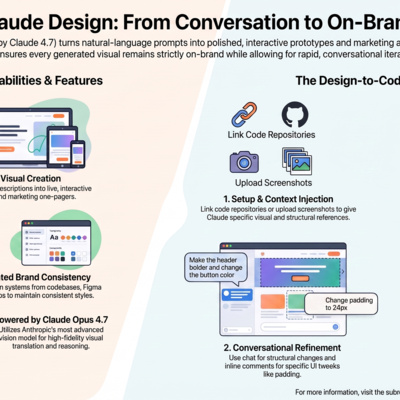
Mastering Claude Design: The Complete AI Prototyping Guide
Claude Design is an AI-powered platform released by Anthropic that transforms conversational language into professional visual prototypes, presentation decks, and marketing collateral. Powered by the Claude Opus 4.7 model, the tool utilizes a live canvas where users can generate and refine work through direct edits or chat-based feedback. A standout feature is its ability to ingest existing design systems from codebases or style guides, ensuring that every generation automatically adheres to a company's specific brand identity. This technology bridges the gap between conceptual ideas and functional mockups, allowing for seamless handoffs to engineering teams via Claude Code. While it does not replace high-end creative software, it significantly accelerates the early-to-mid stages of the design process for marketers, founders, and product managers. Overall, the source serves as a comprehensive guide for mastering the tool’s ecosystem, from initial setup to advanced collaborative workflows.
The podcast was generated by Gemini Notebook.
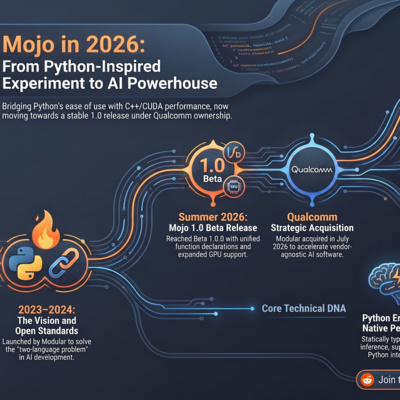
Mojo 2026: From Python Roots to AI Systems Language
As of mid-2026, the Mojo programming language has transitioned from an experimental concept to a functional systems language optimized for AI hardware. Created by Modular and led by Chris Lattner, the language aims to bridge the gap between the usability of Python and the high-level performance of C++ or Rust. Recent milestones include the launch of Mojo 1.0 beta, which introduces advanced features like a static memory model without a garbage collector and specialized GPU programming capabilities. While originally envisioned as a full Python superset, its current focus has shifted toward high-performance kernels and hardware-agnostic infrastructure. Following an acquisition by Qualcomm, the project maintains a roadmap to open-source its compiler later in 2026 to foster a broader developer ecosystem. These updates highlight Mojo's growing role in production-level artificial intelligence and its ongoing maturation as a specialized computational tool.
The podcast was generated by Gemini Notebook.
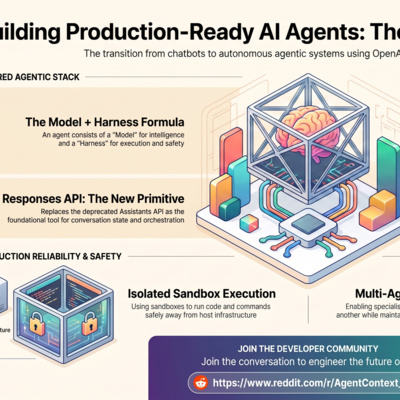
Building Production-Ready AI Agents with OpenAI
The article outlines the transition from simple chatbots to autonomous AI agents capable of reasoning, using tools, and collaborating. OpenAI has developed a comprehensive agentic stack that includes the Responses API for core interactions and the Agents SDK for building production-ready systems. This ecosystem utilizes the Model Context Protocol (MCP) to standardize how agents connect to external data and services. Developers are encouraged to move away from deprecated features, like the Assistants API, toward code-based workflows that offer better observability and control. To ensure reliability, the text emphasizes the use of sandboxed environments and strict safety guardrails when agents perform real-world actions. Ultimately, these resources provide a roadmap for creating scalable and secure multi-agent systems that can handle complex, long-running tasks.
The podcast was generated by Gemini Notebook.
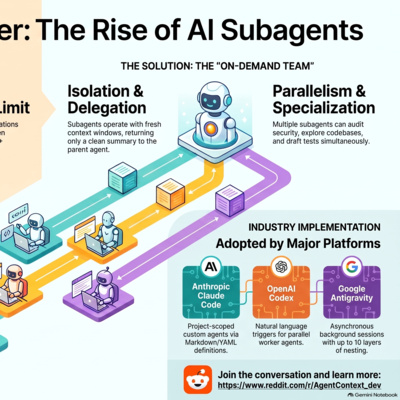
Beyond the Solo Coder: Scaling Software Teams with AI Subagents
The Reddit post explores the transition from single AI tools to multi-agent systems that function as digital development teams. To combat context pollution, where excessive data degrades an AI's performance, developers are utilizing subagents to handle specialized, isolated tasks. These autonomous entities operate with their own fresh context windows, reporting concise summaries back to a central orchestrator to maintain a clean workflow. Major platforms like Claude Code, OpenAI Codex, and Google Antigravity have already integrated these patterns to enable parallel processing and specialized roles. While this approach increases token costs and coordination complexity, it significantly improves reliability when navigating large codebases. Ultimately, this shift allows programmers to act as managers of AI teams rather than solo assistants.
The podcast was generated by Gemini Notebook.
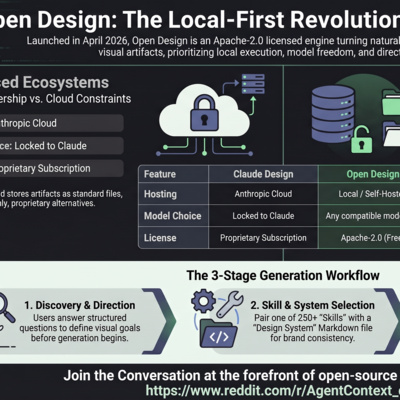
Mastering Open Design: The Open-Source Claude Design Alternative
The article details the rise of Open Design, a powerful open-source alternative to Anthropic’s proprietary visual prototyping tool, Claude Design. While the original Claude Design allows users to transform text prompts into interactive artifacts within a closed cloud environment, Open Design provides a decentralized, local-first experience. It operates as an orchestration layer that integrates with various coding-agent CLIs and models, allowing users to maintain full ownership of their data and files. The ecosystem relies on customizable SKILL.md and DESIGN.md files to ensure visual consistency and professional results across diverse project types like dashboards and slide decks. Ultimately, the source highlights a significant shift toward open-source design engines that offer flexibility, cost savings, and unrestricted model choice.
The podcast was generated by Gemini Notebook.
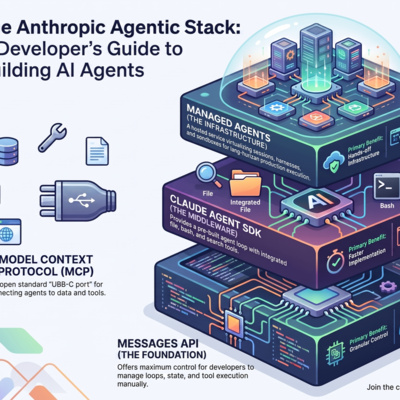
The Anthropic Agentic Stack: Building Production AI Agents
The Reddit post details the Anthropic Agentic Stack, a comprehensive framework designed to help developers build sophisticated and autonomous AI agents. Central to this ecosystem is the Model Context Protocol (MCP), an open standard that allows models to seamlessly connect with external data and tools. The documentation outlines various implementation layers, ranging from the foundational Messages API for manual control to Managed Agents for fully hosted, automated execution. Key capabilities such as computer use, which allows Claude to interact with desktop interfaces, and multi-agent orchestration patterns are highlighted as vital components for production-grade systems. Additionally, the text describes scaffolding harnesses that manage state and recovery to ensure reliability during complex, long-running tasks. Ultimately, these resources serve as a technical guide for engineers transitioning from basic chat interactions to engineering autonomous software systems.
The podcast was generated by Gemini Notebook.
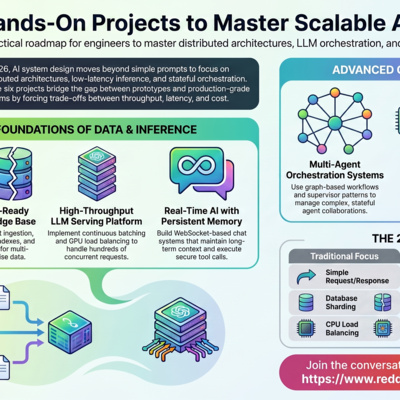
Top 10 Hands-On Projects for Scalable AI System Design
The Reddit thread outlines a comprehensive roadmap for mastering scalable system design through ten hands-on artificial intelligence projects. These initiatives range from building production-ready RAG pipelines and high-throughput inference platforms to developing complex multi-agent orchestration systems. The guide emphasizes that modern engineering requires moving beyond traditional backends to address challenges like GPU-heavy environments, low-latency inference, and probabilistic system observability. By constructing these real-world applications, developers can learn to manage distributed training, real-time persistent memory, and multi-tenant security constraints. Ultimately, the text serves as a practical guide for engineers aiming to architect reliable and efficient AI infrastructure in a rapidly evolving technological landscape.
The podcast was created by Gemini Notebook.
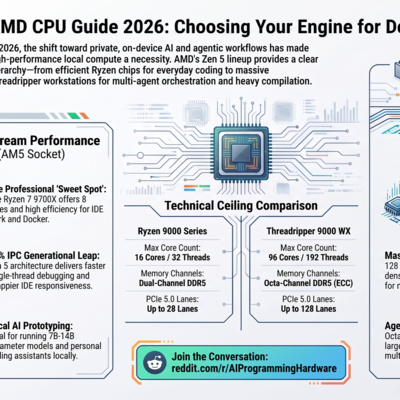
Navigating the 2026 AMD Ecosystem: From Mainstream Development to High-Performance Local AI Workstations
The article outlines the 2026 landscape for AMD Ryzen and Threadripper processors, emphasizing their critical role in local AI and agentic workflows driven by rising cloud costs and privacy concerns. Built on the Zen 5 architecture, which offers an average 16% instructions-per-clock improvement, the lineup scales from the Ryzen 7 series "sweet spot" for professional developers to the Threadripper PRO 9995WX featuring 96 cores for extreme parallel tasks. While mainstream Ryzen chips effectively handle daily coding and smaller AI models in the 7B-to-14B range, the Threadripper platforms provide the octa-channel memory and 128 PCIe 5.0 lanes necessary for massive datasets and dense multi-GPU configurations. Ultimately, the transition to these high-end workstations allows engineers to maintain data privacy and efficiency while managing intensive compilation and multi-agent orchestration locally.
The podcast was generated by Gemini Notebook.
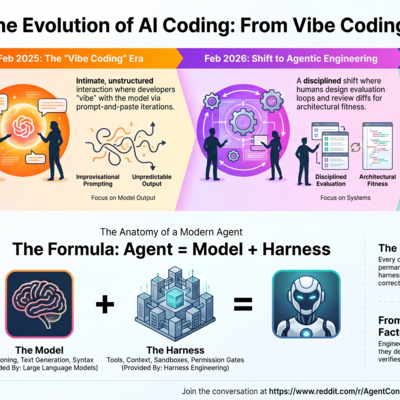
The Evolution of AI Coding: From Vibes to Harnesses
The article outlines the evolution of AI-assisted programming, tracing its development from informal "vibe coding" to the rigorous discipline of harness engineering. Initially, developers relied on intuitive, conversational interactions with models, but they soon encountered limitations regarding reliability and scalability. To address these flaws, the industry shifted toward agentic engineering, which emphasizes human-led architectural oversight and structured evaluation loops. This maturation culminated in the concept of the agent harness, a system that combines the model's reasoning with external tools, sandboxes, and verification hooks. By 2026, the focus transformed from merely using smarter models to building durable environments that programmatically prevent errors and ensure consistent performance. Ultimately, the role of the software engineer has transitioned from writing manual code to designing the infrastructure that manages autonomous AI agents.
The podcast was generated by Gemini Notebook.
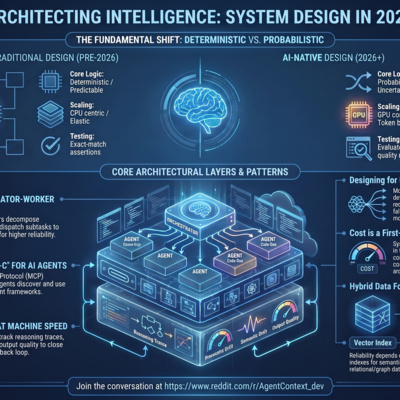
Architecting Intelligence: System Design in the AI Era 2026
By 2026, system design has transitioned from traditional deterministic models to probabilistic architectures that prioritize the integration of large language models and autonomous agents. Modern engineers must now focus on uncertainty management, using specialized patterns like semantic caching, hybrid retrieval-augmented generation, and model routers to maintain reliability and cost efficiency. This shift requires a layered approach where data context, orchestration, and governance serve as fundamental pillars rather than secondary additions. Emerging standards, such as the Model Context Protocol, are standardizing how these intelligent systems interact with external tools and resources. Ultimately, professional success in this era depends on viewing AI as a first-class citizen within observable, evolvable frameworks rather than a simple feature update. This evolution ensures that systems remain resilient despite the inherent unpredictability and high compute costs of advanced machine intelligence.
The podcast was generated by Gemini Notebook.
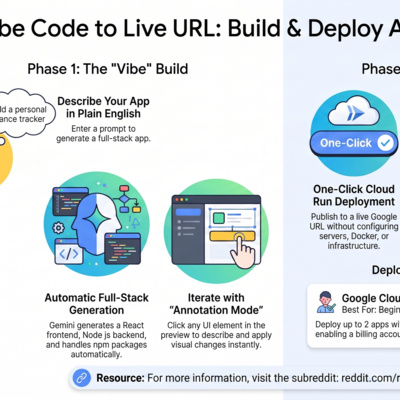
Vibe Code to Live URL: Google AI Studio Guide
The Reddit post outlines the revolutionary "vibe coding" workflow using Google AI Studio and Cloud Run to build full-stack applications through natural language descriptions. This modern approach allows both novices and experts to generate React-based frontends and Node.js backends rapidly, bypassing traditional infrastructure hurdles like manual server configuration or Docker setup. Users can refine their projects using Gemini-powered agents that interpret chat instructions, visual annotations, and even voice commands to update code in real time. Beyond prototyping, the guide details how to deploy apps to live URLs with one click, utilizing Google’s managed services to handle scaling and security. The podcast further showcases a growing community ecosystem, featuring real-world examples ranging from financial trackers to healthcare tools. Ultimately, this documentation emphasizes the democratization of software development by shifting the focus from technical syntax to creative vision.
The podcast was generated by Gemini Notebook.
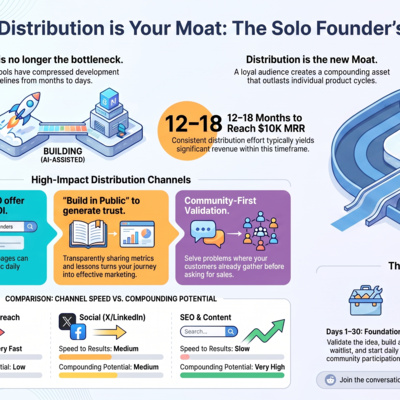
Distribution is Your Moat: Solo Founder Strategy 2026
The article explores the shift in software entrepreneurship where efficient distribution has become a more critical competitive advantage than the act of coding itself. In an era where AI tools have dramatically accelerated product development, solo founders must treat audience building and marketing as core technical features rather than afterthoughts. The sources highlight successful strategies from prominent indie hackers who utilize "building in public" and community engagement to foster trust and long-term growth. Key distribution methods discussed include SEO content, direct outreach, and leveraging specialized platforms like Product Hunt to gain initial traction. Ultimately, the material serves as a strategic roadmap for 2026, emphasizing that sustainable micro-SaaS success depends on establishing a reliable pipeline to reach customers. These principles suggest that owning a distribution channel serves as a vital "moat" that protects a small business from increasing market saturation.
The podcast was generated by Gemini Notebook.
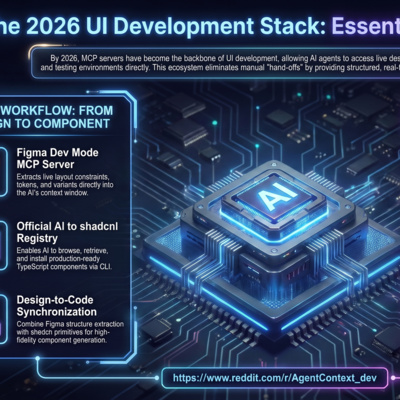
The Future of UI Development: Top MCP Servers for 2026
The article explores the Model Context Protocol (MCP) ecosystem in 2026, highlighting how these servers have revolutionized UI and frontend development. By acting as a bridge between AI assistants and external tools, MCP servers allow for the direct extraction of Figma design data, the retrieval of live component libraries like shadcn, and the automation of visual testing through Playwright. The article details a future workflow where developers combine multiple specialized servers to generate production-ready code and interactive previews with high precision. Beyond technical implementations, the sources also list various community discussions and niche applications ranging from SEO tools to personal finance management. Ultimately, the podcast illustrates a shift toward context-aware software engineering where AI agents use structured data to bridge the gap between design and implementation.
The podcast was generated by Gemini Notebook.
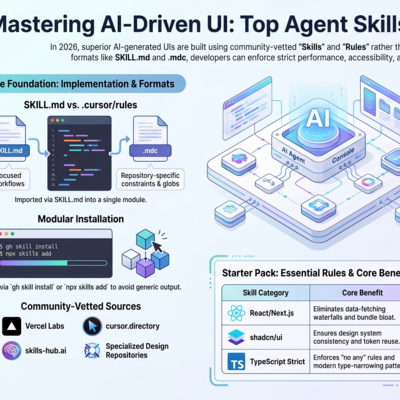
Top UI Agent Skills and Cursor Rules for 2026
This Reddit post outlines a collection of high-quality agent skills and Cursor rule patterns optimized for user interface development in mid-2026. The source highlights a shift away from generic prompting toward installing specialized, community-tested configuration files like SKILL.md and .mdc to improve AI coding performance. Key focus areas include React and Next.js best practices, strict TypeScript standards, and rigorous accessibility enforcement. Additional guidelines target "anti-slop" design aesthetics and performance optimization to ensure interfaces are both polished and efficient. By leveraging these modular rules, developers can guide AI agents to produce production-grade code that maintains consistent styling and modern technical standards. These living resources are sourced from prominent platforms such as Vercel Labs, GitHub, and specialized design communities.
The podcast was generated by Gemini Notebook.
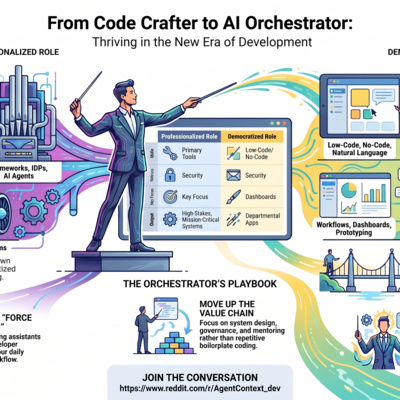
From Code Crafters to AI Orchestrators
The Reddit post explores the shift in software development from manual code creation to AI orchestration, driven by the rise of generative AI and low-code platforms. This transition creates a divide between democratized roles, where non-technical "citizen developers" build simple applications using automation, and professionalized roles that require deep architectural and security expertise. To remain competitive, software engineers must move beyond basic programming to become strategic enablers who manage complex systems and oversee AI-driven workflows. By mastering these new tools and focusing on high-level system design, professionals can avoid commoditization and unlock higher career value. Ultimately, the podcast argues that AI is not replacing developers but is instead elevating the profession into one defined by oversight, integration, and leadership.
The podcast was generated by Gemini Notebook.
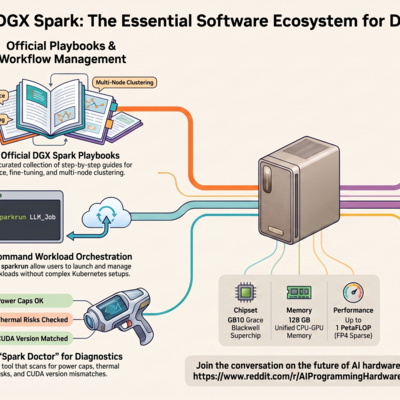
The Ultimate 2026 Guide to DGX Spark: Top Open-Source Repositories for Desktop AI Supercomputing
The NVIDIA DGX Spark, powered by the GB10 Grace Blackwell Superchip, serves as a breakthrough desktop AI supercomputer capable of running massive models up to 405B+ parameters through local, private inference and fine-tuning. To maximize this hardware, a robust open-source ecosystem has emerged, providing researchers with essential tools like the official playbooks for step-by-step workload orchestration and dgx-spark-bench for reproducible, realistic agentic benchmarks. High-performance serving is supported by specialized builds such as vllm-gb10, while orchestration tools like sparkrun allow for one-command management of multi-node clusters without needing Slurm or Kubernetes. From end-to-end training projects like "Nanochat" to diagnostic utilities like spark-doctor, these community-driven repositories democratize serious AI research by transforming a compact machine into a fully capable professional lab.
The podcast was generated by Gemini Notebook.
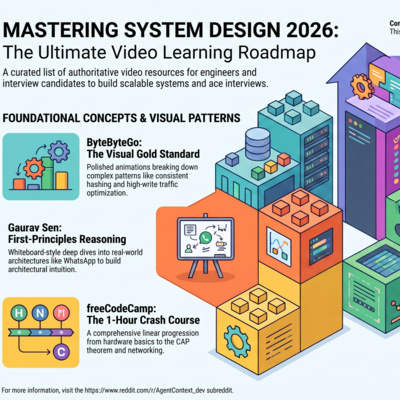
Top 10 Essential System Design Tutorials for 2026
The article outlines a curated selection of educational resources focused on mastering system design for engineering roles and interview preparation in 2026. It highlights the importance of moving beyond basic coding to understand complex architectures, including microservices, event-driven systems, and AI-specific frameworks. The source features several top-rated YouTube channels and courses, such as ByteByteGo and Gaurav Sen, which use visual aids and real-world case studies to explain critical trade-offs. These tutorials cover essential topics like scalability, latency, and database sharding to help professionals build reliable software at a global scale. Additionally, the podcast offers practical advice on how to effectively use these videos to develop the architectural intuition required by major technology firms. The overview concludes with a list of supplementary links and community discussions regarding various engineering disciplines and career paths.
The podcast was generated by Gemini Notebook.
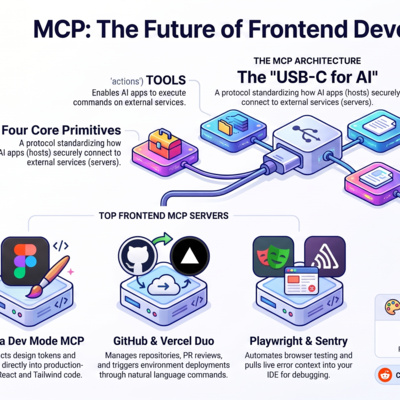
Top MCP Servers for Frontend Developers in 2026
This article describes the Model Context Protocol (MCP), an open standard designed to link AI coding agents with external data and development tools. By acting as a universal connector, MCP servers allow AI assistants to directly interact with platforms like Figma, GitHub, and Vercel to automate the entire software lifecycle. The text highlights how this technology eliminates manual context-switching by giving AI "eyes and hands" to manage codebases, deployments, and design systems. It provides a curated list of essential servers for frontend developers, ranging from browser automation with Playwright to error monitoring through Sentry. Ultimately, the podcast frames MCP as a transformative framework that moves AI assistance from simple chat prompts to autonomous, integrated workflows.
The podcast was generated by Gemini Notebook.
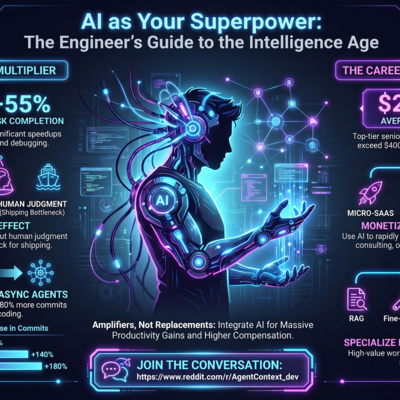
AI as Your Superpower: The AI-Empowered Engineer's Roadmap
This Reddit post highlights how artificial intelligence acts as a powerful catalyst for software developers and machine learning engineers rather than a replacement for their expertise. By integrating agentic tools and foundation models, technical professionals can achieve massive productivity gains, significantly increasing their output and speeding up routine tasks like debugging and documentation. While manual coding becomes more automated, the text emphasizes that human judgment, architectural oversight, and strategic problem-solving remain essential for delivering reliable products. Beyond improving daily workflows, mastering these technologies opens pathways to higher salaries, specialized emerging roles, and diverse entrepreneurial ventures. Ultimately, the author argues that the most successful engineers will be those who proactively adapt to this intelligence age by turning AI into a personal force multiplier.
The podcast was generated by Gemini Notebook.
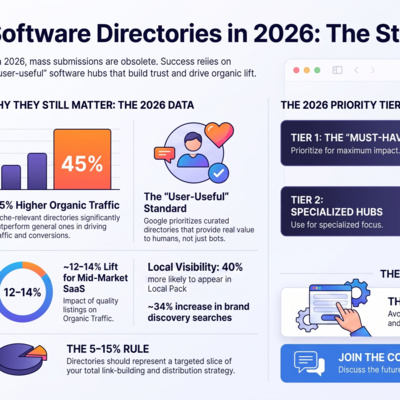
Software Directory SEO Strategy 2026: The Data-Driven Guide
The Reddit post evaluates the effectiveness of directory submissions for software products in 2026, concluding that they remain a valuable SEO tool when used selectively. While mass submissions to generic sites are now obsolete, listed placement on high-quality, niche-specific platforms like G2 or Product Hunt provides essential referral traffic and trust signals. Data suggests that these targeted listings can boost organic growth by improving link diversity and brand discovery for emerging SaaS companies. Experts recommend focusing on approximately 10 to 30 authoritative directories rather than seeking high volume. This strategic approach ensures that software products gain visibility with high-intent buyers while avoiding penalties associated with low-quality link schemes. Ultimately, the podcast frames directories as a foundational element that accounts for a small but meaningful portion of a modern digital marketing strategy.
The podcast was generated by Gemini Notebook.
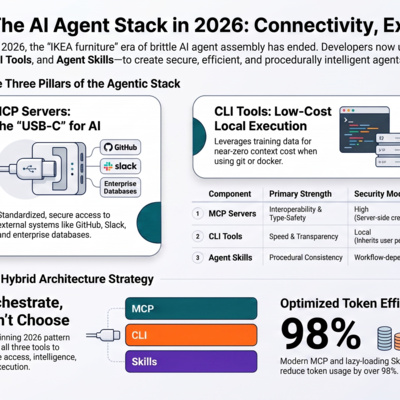
The AI Agent Stack in 2026
The Reddit post outlines the projected AI agent stack in 2026, focusing on the synergy between three core technologies: Model Context Protocol (MCP), CLI tools, and Agent Skills. MCP servers act as a standardized interface for secure access to external data and SaaS platforms, while CLI tools leverage an agent's existing training to execute local terminal commands efficiently. Agent Skills function as portable instruction manuals that teach agents specific organizational workflows and procedures. Rather than choosing a single method, the text advocates for a hybrid architecture where these layers handle different responsibilities to maximize reliability and security. By 2026, successful AI implementations will use MCP for connectivity, Skills for procedural intelligence, and the CLI for lightweight execution.
The podcast was generated by Gemini Notebook.
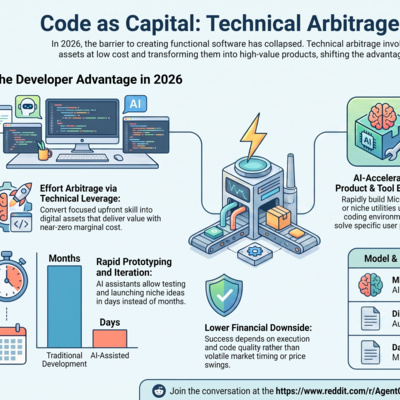
Code as Capital: Arbitrage Strategies for Software Developers in 2026
The Reddit post explores the concept of code as capital, focusing on how developers and machine learning engineers can build sustainable wealth by 2026. Rather than selling their time for wages, technical professionals are encouraged to use AI-assisted automation to create, acquire, and improve high-value digital assets. The post outlines several specific methods for this type of arbitrage, including launching niche software tools, automating the flipping of digital properties, and enhancing existing APIs with custom intelligence layers. By leveraging technical expertise and modern AI tools, engineers can exploit gaps in effort and information to generate recurring income. This strategy emphasizes asset ownership and the ability to scale solutions with near-zero marginal costs. Ultimately, the text presents a roadmap for converting specialized skills into controllable digital property that delivers long-term financial value.
The podcast was generated by Gemini Notebook.
The Desktop AI Revolution: Exploring NVIDIA's DGX Spark and Its Partner Ecosystem
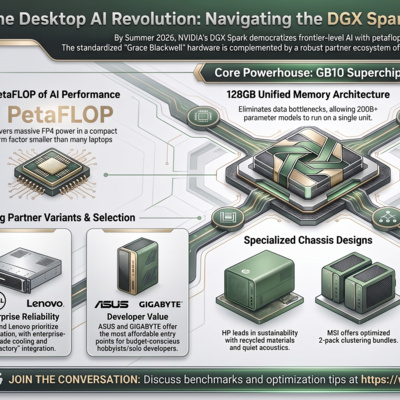
In summer 2026, NVIDIA's DGX Spark revolutionized local AI development by introducing a desktop-sized "personal AI supercomputer" powered by the GB10 Grace Blackwell Superchip. Featuring 128 GB of unified memory and up to 1 petaFLOP of AI performance, the system empowers users to run massive AI models with up to 200 billion parameters locally without relying on expensive cloud services, thereby ensuring data privacy and eliminating API costs. Instead of keeping the technology proprietary, NVIDIA opened the platform to ecosystem partners-including ASUS, Dell, HP, Lenovo, and GIGABYTE-who have released customized variants. These partner models maintain the identical core computing hardware and NVIDIA DGX OS software stack, but differentiate themselves through unique chassis designs, cooling solutions, storage capacities, and varying levels of enterprise support. Ultimately, the DGX Spark ecosystem democratizes frontier-level AI computing, making highly capable, localized AI infrastructure accessible for solo developers, researchers, and large enterprises alike.
The podcast was generated by Gemini Notebook.
The 2026 Software Launch Playbook
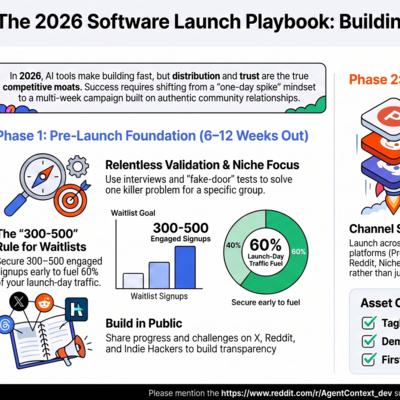
The Reddit post outlines a comprehensive strategy for launching software in the year 2026, specifically tailored for solo developers and independent creators. It emphasizes that a successful debut is no longer a one-day event but a coordinated, multi-week campaign focused on building genuine relationships. Founders are encouraged to validate their ideas early and cultivate an engaged waitlist before moving to a multi-channel distribution phase. The guide highlights that while AI has made building products faster, establishing trust and authentic connections remains the most significant competitive advantage. By stacking various platforms like Product Hunt, Reddit, and Indie Hackers, makers can sustain long-term momentum beyond the initial release spike. Ultimately, the article argues that consistency and transparency are the keys to thriving in an increasingly crowded digital marketplace.
The podcast was generated by Gemini Notebook.
MCP Servers: The USB-C Standard for AI Software Development
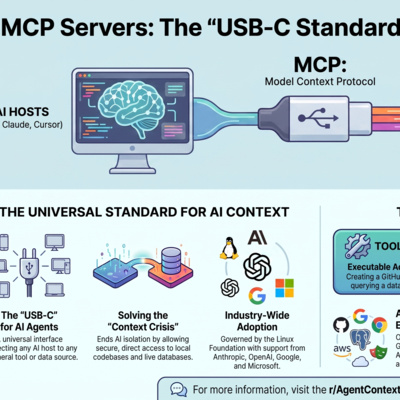
The Model Context Protocol (MCP) acts as a universal interface that bridges the gap between artificial intelligence and external data sources. Similar to how USB-C standardized hardware connections, MCP provides a consistent framework for AI agents to securely access local files, databases, and APIs without custom code for every platform. This ecosystem utilizes a three-tier architecture consisting of hosts, clients, and servers to facilitate real-world interactions like running tests or managing deployments. Developers can leverage existing servers for tools like GitHub and Postgres or build their own using specialized software development kits. By providing dynamic context, MCP transforms isolated language models into collaborative assistants capable of understanding a project's specific environment. Ultimately, this protocol streamlines the software development workflow by making AI tools more interoperable and secure.
The podcast was generated by Gemini Notemook.
From Coder to Capitalist: Mastering Strategic Leverage in 2026
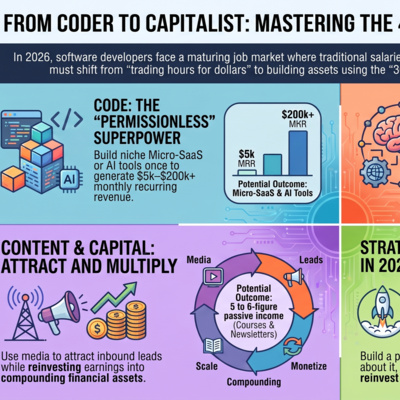
The reddit post centers on a strategic shift for software developers in 2026, moving away from traditional employment toward a model of financial leverage. By utilizing code, content, capital, and labor, engineers can multiply their earnings and create passive income streams rather than simply trading time for a salary. This framework highlights how AI tools act as a force multiplier, allowing individuals to build micro-SaaS products and digital assets with unprecedented speed. Accompanying Reddit discussions reflect a broader community interest in career transitions, the value of coding bootcamps, and the evolving role of developers in an AI-driven market. Ultimately, the podcast suggests that the most successful tech professionals will prioritize asset ownership and personal branding to achieve long-term wealth.
The podcast was created by Gemini Notebook.
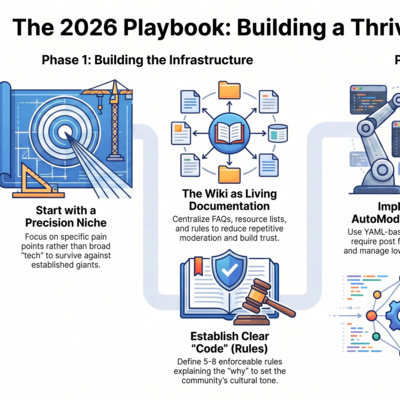
The Complete 2026 Playbook for Building Reddit Tech Communities
The Reddit post primarily features a comprehensive strategic guide for establishing and managing a high-quality technology community on Reddit in 2026. This "playbook" details essential steps for success, including niche selection, technical configuration, and the implementation of automated moderation tools like AutoModerator. Beyond this central guide, the sources include various Reddit community snapshots that highlight diverse interests ranging from software engineering and music festivals to space exploration and personal productivity. These snippets illustrate the platform's role as a hub for specialized discussions, where creators and enthusiasts gather to share knowledge and project updates. Together, the materials emphasize that long-term community sustainability depends on clear rules, consistent engagement, and providing genuine value to members.
The podcast was generated by Gemini Notebook.
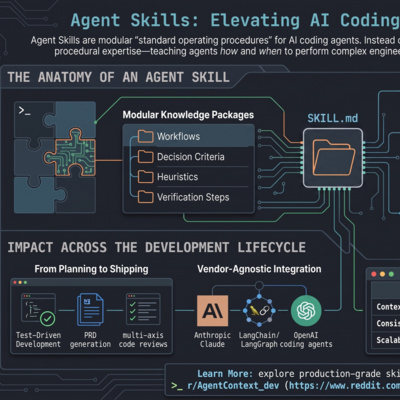
Agent Skills for Production-Grade AI Software Development
This Reddit post explores the emergence of agent skills, a modular framework designed to provide AI coding agents with high-level engineering expertise and disciplined workflows. Unlike traditional prompts that can overwhelm an AI’s memory, these skills use progressive disclosure to load detailed instructions only when specific tasks require them. By packaging procedural knowledge, verification steps, and industry best practices into reusable units, developers can transform general-purpose models into reliable, production-grade collaborators. The sources detail the technical anatomy of these skills, their integration into major AI frameworks, and their ability to enforce senior-level standards throughout the software development lifecycle. Ultimately, the transition toward a skill-based architecture is presented as a vital step in making autonomous AI more consistent and efficient for complex technical projects.
The podcast was generated by Gemini Notebook.
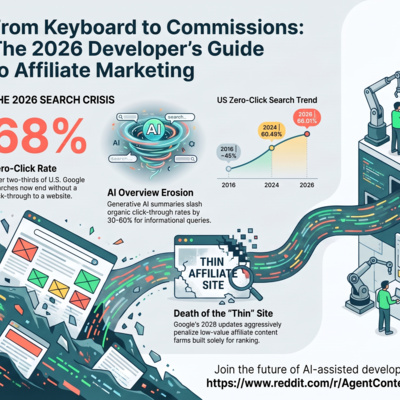
The Developer’s Playbook for Affiliate Marketing in 2026
The Reddit post examines the shifting landscape of affiliate marketing for software developers in 2026, highlighting how artificial intelligence has transformed search engine results. While traditional, low-quality review sites are failing due to zero-click searches and AI-generated summaries, the source argues that technically skilled creators still possess a significant competitive edge. Developers can succeed by building high-performance websites and offering authentic, data-driven content that search engines and users value. The text emphasizes a move toward experience-backed authority and traffic diversification as essential strategies for generating recurring income. Ultimately, it frames affiliate sites as a viable, high-leverage business for those willing to prioritize depth and technical excellence over simple automation.
The podcast was generated by NotebookLM.
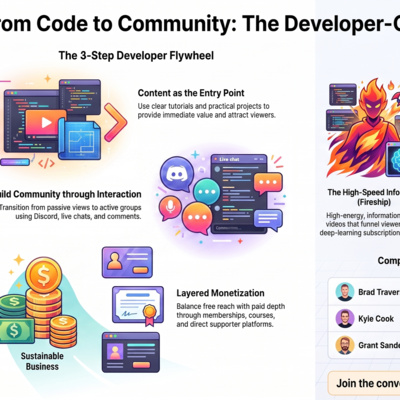
Developer to Founder: Turning Content into Communities
This Reddit post explores how modern software developers and educators are transforming traditional content creation into robust, profitable businesses by prioritizing community engagement over simple instruction. Through detailed case studies of figures like Brad Traversy, Kyle Cook, and ThePrimeagen, the source illustrates a successful transition from providing free tutorials to establishing structured learning hubs and interactive ecosystems. These creators utilize a layered monetization strategy that balances platform ad revenue and sponsorships with direct supporter funding via Patreon and premium course memberships. Common success factors include maintaining authenticity, using technical skills to build custom learning tools, and fostering deep relationships through Discord servers and live interactions. Ultimately, the sources suggest that the most sustainable path for technical creators involves building loyal audiences that participate in a collaborative exchange of value.
The podcast was generated by Gemini Notebook.