


Unearthing Adult Learning: Seven Philosophies That Shape Your "Aha!" Moments
Philosophical Foundations of Adult Education
Teach Like a Champion: The Art of Artisan Teaching and Its Unsung Techniques
Teach Like a Champion: Techniques for Student Success
Finding Peace in Adversity: Boethius's Timeless Guide to Navigating Life's Storms
The Consolation of Philosophy: A Guide to Wisdom and Virtue

We Should All Be Feminists Deep Talk
Chimamanda Ngozi Adichie's We Should All Be Feminists, originating as a TEDxEuston talk in 2012 and published as an ebook in 2014, explores Adichie's personal journey to understanding and embracing the term feminist. Through anecdotes and observations, she highlights societal gender biases and expectations she has encountered in Nigeria and elsewhere. Adichie redefines feminism as a belief in the equality of the sexes and encourages both men and women to challenge traditional gender roles for a more equitable and authentic world. The text also provides publication details and biographical information about the author.

Man's Search for Meaning Deep Talk
The provided text consists primarily of excerpts from Viktor Frankl's Man's Search for Meaning, a book that recounts his experiences in Nazi concentration camps and introduces his psychotherapeutic approach, logotherapy. Frankl's narrative in the first part describes the psychological experiences of prisoners, including shock, apathy, and the search for meaning even in extreme suffering. The second part outlines the principles of logotherapy, which emphasizes the human will to meaning as a primary motivational force and a source of resilience in the face of adversity. The text also includes a preface and postscript reflecting on the book's impact and further developing the concept of finding meaning in all circumstances, including suffering, guilt, and death, ultimately advocating for a tragic optimism.
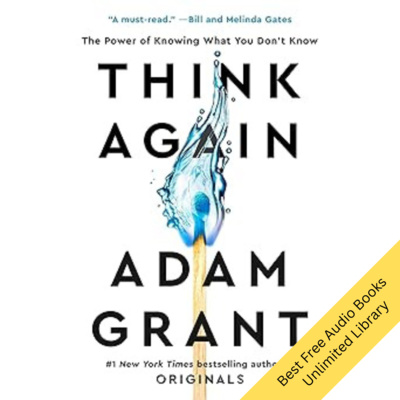
Think Again Deep Talk
Adam Grant's Think Again explores the importance of rethinking our knowledge and opinions in a rapidly changing world. The book emphasizes the benefits of adopting a more flexible, scientific mindset, encouraging readers to question their assumptions and be open to revising their beliefs based on new evidence. Grant discusses various cognitive biases that hinder rethinking, such as the first-instinct fallacy and the Dunning-Kruger effect, and offers strategies for cultivating intellectual humility and embracing the joy of being wrong. Furthermore, the text examines how to facilitate rethinking in interpersonal interactions, addressing effective communication techniques and the value of constructive conflict.
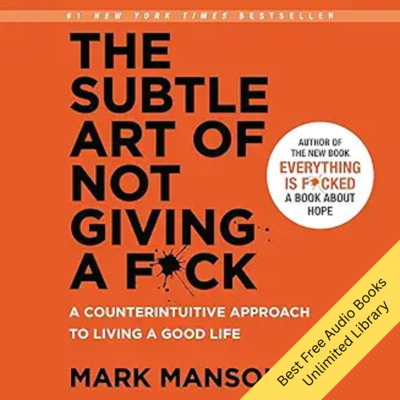
The Subtle Art of Not Giving a F*ck Deep Talk
Mark Manson's "The Subtle Art of Not Giving a Fuck" offers a counterintuitive approach to self-help. It argues that choosing what not to care about is more important than trying to be positive all the time. The book explores themes of responsibility, the value of suffering, and the importance of embracing failure and uncertainty. Manson challenges conventional societal values and encourages readers to prioritize meaningful values that are within their control. Ultimately, it suggests that accepting life's inevitable difficulties and our own mortality is key to a more fulfilling existence.
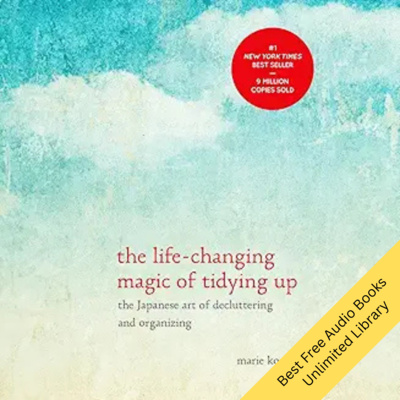
The Life-Changing Magic of Tidying Up Deep Talk
Marie Kondo's The Life-Changing Magic of Tidying Up explores a unique method for decluttering and organizing one's home. The book advocates for a category-by-category approach to tidying, emphasizing the importance of discarding items that do not "spark joy." Kondo details specific techniques for folding clothes, storing items, and dealing with various categories of possessions like books, papers, and sentimental objects. Ultimately, the book presents tidying as more than just cleaning; it's a transformative process that can lead to a more joyful and clutter-free life by changing one's relationship with their belongings and understanding what truly matters.
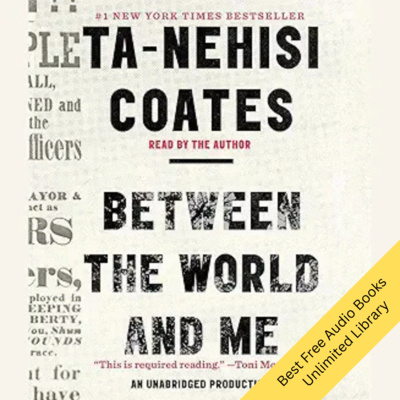
Between the World and Me Deep Talk
Ta-Nehisi Coates' Between the World and Me is a non-fiction work exploring the realities of being Black in America. Written as a letter to his teenage son, the book grapples with the historical and contemporary manifestations of systemic racism and its impact on Black bodies. Coates reflects on his own experiences growing up in Baltimore, his time at Howard University, and the pervasive fear and violence that shape Black life. He critiques the American Dream as being built upon the oppression of Black people and examines the psychological and physical toll of racism. Through personal narrative and historical analysis, Coates offers a powerful and unflinching examination of race, identity, and the ongoing struggle for equality.
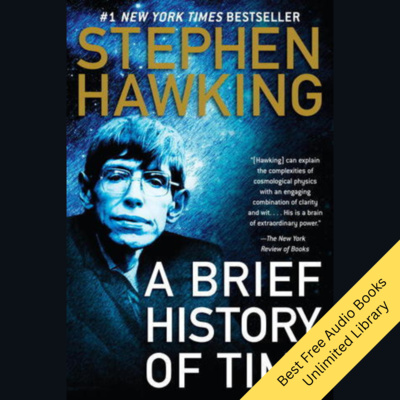
A Brief History of Time Deep Talk
Stephen Hawking's "A Brief History of Time" aims to make complex cosmological concepts accessible to a general audience. The book traces the evolution of our understanding of the universe, beginning with historical models and progressing to modern theories of relativity and quantum mechanics. It explores fundamental questions about the origin, nature, and fate of the universe, including topics like the Big Bang, black holes, and the possibility of time travel. Hawking discusses the inherent limitations of our current theories, particularly at singularities, and introduces concepts like the no-boundary condition as potential resolutions. Furthermore, the text examines the interconnectedness of space and time, the behavior of light, the fundamental forces, and the role of quantum phenomena at both microscopic and cosmic scales. The author also touches upon philosophical implications, such as the anthropic principle and the arrow of time, ultimately seeking a unified theory of everything.
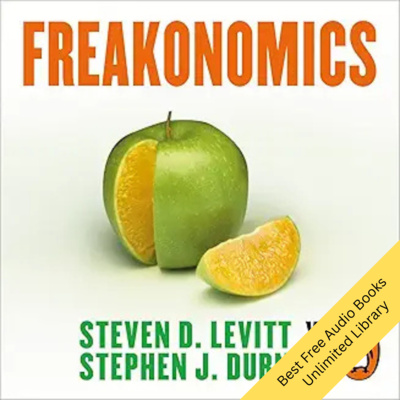
Freakonomics Deep Talk
Freakonomics by Steven Levitt and Stephen Dubner uses economic principles to explore unconventional aspects of everyday life. The authors analyze incentives, behaviors, and hidden truths in areas ranging from crime and education to parenting and naming conventions. By examining data and asking unexpected questions, the book challenges conventional wisdom and reveals the often surprising underlying forces that shape our world. Topics investigated include the economics of drug dealing, the truth behind real estate agents, cheating in various professions, and the factors that actually influence children's success. Ultimately, Freakonomics encourages a fresh perspective on how the world really works, moving beyond superficial explanations to uncover the often counterintuitive realities.
keepSave to notecopy_alldocsAdd noteaudio_magic_eraserAudio OverviewmapMind Map

Stiff Deep Talk
Stiff explores the various, often unexpected, ways human cadavers have been utilized after death throughout history and in modern times. From surgical practice and forensic research to automotive safety testing and the study of decomposition, the book examines the complex and sometimes macabre relationship between the living and the dead in the pursuit of knowledge and progress. Roach also investigates historical and contemporary practices surrounding death, including embalming, body donation, and even medicinal cannibalism, revealing the often bizarre and fascinating intersection of science, culture, and mortality.
The Tipping Point Deep Talk
Malcolm Gladwell's The Tipping Point explores the phenomenon of social epidemics, arguing that ideas, trends, and behaviors spread like viruses through a population. The book posits that these trends reach a "tipping point" where they suddenly explode in popularity, often due to the influence of specific types of people: Connectors, who have vast social networks; Mavens, who possess and share valuable information; and Salesmen, who are persuasive communicators. Gladwell examines various case studies, from the drop in New York City's crime rate to the resurgence of Hush Puppies shoes and the spread of teen smoking, to illustrate how seemingly minor factors and the actions of a few key individuals can lead to significant societal shifts. Furthermore, the text discusses the "stickiness factor" of ideas and messages, emphasizing the importance of making information memorable and actionable for it to propagate effectively.
Outliers Deep Talk
Malcolm Gladwell's Outliers examines the factors that contribute to extraordinary success, arguing that achievement is rarely solely the result of individual talent or effort. Through diverse examples like the Beatles, Bill Gates, and professional hockey players, the book explores how birthdate, upbringing, cultural background, and the opportunities afforded by these elements significantly shape one's path to becoming an "outlier." The text also investigates societal structures and hidden advantages, such as the impact of demographic luck, cultural legacies in fields like mathematics, and the importance of meaningful work, contrasting the experiences of individuals with immense talent but lacking opportunity with those who, through a combination of circumstances, achieve remarkable feats. Ultimately, Outliers suggests that success is less about innate genius and more about the confluence of personal history and societal advantages.
Blink Deep Talk
Malcolm Gladwell's Blink explores the power and perils of thin-slicing, our ability to make rapid judgments and decisions with minimal information. Through diverse examples, the book illustrates how our unconscious mind often processes information quickly and accurately, leading to insightful "blink" moments. However, Gladwell also examines instances where these snap judgments can be flawed due to biases, overwhelming information, or a lack of crucial context, demonstrating the importance of understanding and, at times, overriding our initial instincts. The text further investigates how expertise and experience can hone our rapid cognition, enabling more effective intuitive decision-making in various fields, from art to emergency medicine.
The Anthropocene Reviewed Deep Talk
John Green's The Anthropocene Reviewed is a collection of personal essays where the author evaluates various facets of the human-centered planet on a five-star scale. Drawing upon diverse subjects ranging from pop culture and historical events to scientific concepts and everyday experiences, Green blends personal anecdotes with insightful observations, reflecting on humanity's impact and finding moments of wonder and connection amidst the complexities of our time. The essays often weave in historical context and scientific understanding to explore the nuances of seemingly ordinary topics, revealing deeper meanings about our existence.

Think Like a Monk Deep Talk
Jay Shetty's "Think Like a Monk" (2020) explores how ancient monastic wisdom can be applied to modern life to achieve peace and purpose. The author, a former monk, argues that adopting a "monk mindset" – characterized by detachment, focus, and service – is accessible to everyone, regardless of their background or lifestyle. The book guides readers through three stages: letting go of external influences and internal obstacles, cultivating positive growth through intention and self-discovery, and finally, giving back to the world with gratitude and service. Shetty uses personal anecdotes, practical exercises, and insights from his monastic training to illustrate how to manage the mind, overcome negativity, cultivate intention, discover one's purpose (dharma), and develop meaningful relationships while detaching from the ego. Ultimately, the book offers a pathway to a more mindful, meaningful existence by training the mind in the principles practiced by monks.

Guns, Germs, and Steel: The Fates of Human Societies Deep Talk
Jared Diamond's Guns, Germs, and Steel: The Fates of Human Societies investigates the environmental and geographical factors that have shaped the divergent historical trajectories of human societies across different continents over the past 13,000 years. Diamond systematically explores how variations in factors such as the availability of domesticable plants and animals, disease ecologies, and continental axes influenced the development of agriculture, technology, writing, and political organization. Through numerous examples and comparative analyses, the book challenges race-based explanations for historical inequalities, arguing instead for the primacy of ultimate environmental causes in shaping human history. The inclusion of chapter titles, figures, tables, and an index provides a comprehensive overview of the book's structure and key themes, while a reading group guide invites further exploration of its central arguments and methodologies.
Four Thousand Weeks: Time Management for Mortals Deep Talk
Oliver Burkeman's "Four Thousand Weeks: Time Management for Mortals" challenges conventional productivity advice, arguing that our limited lifespan necessitates a radical shift in how we relate to time. The book posits that trying to optimize and control every moment paradoxically leads to increased anxiety and a feeling of emptiness. Instead, Burkeman suggests embracing our finitude by consciously choosing what to neglect, settling for "good enough," and focusing on activities inherently meaningful rather than solely on future outcomes. He explores how modern society's obsession with efficiency and distraction intensifies our time pressures, advocating for practices like patience, single-tasking, and synchronizing with others to rediscover a more fulfilling existence within our limited four thousand weeks. Ultimately, the book encourages accepting our temporal constraints as a pathway to a richer and more present life.
Thinking, Fast and Slow Deep Talk
Daniel Kahneman's "Thinking, Fast and Slow" explores the dual systems that govern human thought: System 1, which is fast, intuitive, and emotional, and System 2, which is slower, more deliberative, and logical. The text examines how these systems interact and often lead to predictable biases and errors in judgment and decision-making. Kahneman introduces numerous cognitive biases, such as the availability heuristic, anchoring effect, and loss aversion, illustrating how they influence our perceptions and choices in various contexts. He discusses the implications of these findings for fields like medicine, finance, and public policy, highlighting the difference between experienced well-being and the remembering self. The work also touches upon the nature of expertise, the illusion of understanding, and strategies for mitigating cognitive biases to improve rational thinking. Ultimately, the book provides a comprehensive overview of the psychology behind our intuitive and deliberate thought processes and their impact on our lives.
Invisible Women Deep Talk
Invisible Women by Caroline Criado Perez, meticulously exposes the pervasive gender data gap, revealing how a world designed around male data and perspectives disadvantages and often endangers women. The author argues that this unintentional yet systemic bias manifests in various aspects of life, from flawed safety measures and misdiagnosed health conditions to skewed urban planning and discriminatory technology. Perez demonstrates how the historical and ongoing exclusion of female data and experiences leads to policies, products, and research that fail to account for or actively harm women. Ultimately, the book calls for a fundamental shift in data collection and analysis to create a more equitable world that truly considers the needs and realities of all genders.
Quiet Deep Talk
Susan Cain's "Quiet: The Power of Introverts in a World That Can't Stop Talking" challenges the societal preference for extroversion, arguing for the unrecognized strengths and contributions of introverts. The book explores how Western culture's "Extrovert Ideal" undervalues traits like introspection, sensitivity, and independent thought, often leading introverts to feel inadequate. Cain uses research, historical examples like Rosa Parks, and observations of modern environments like Harvard Business School and Tony Robbins' seminars to illustrate the power of quiet leadership and creativity. The text examines the biological and cultural roots of introversion and extroversion, highlighting the benefits of each personality type and advocating for a more balanced and inclusive society. Ultimately, "Quiet" encourages introverts to embrace their natural tendencies and empowers everyone to appreciate the value of a less talkative approach in a noisy world.

A Short History of Nearly Everything Deep Talk
Bill Bryson's A Short History of Nearly Everything is a wide-ranging exploration of the history of science, aiming to make complex topics accessible to a general audience. The book covers subjects from the Big Bang and particle physics to the formation of the Earth, the evolution of life, and the history of human understanding of these phenomena. Bryson highlights key scientific discoveries, the personalities behind them, and the often surprising and circuitous routes to knowledge. He emphasizes the vastness of the universe, the intricate nature of life, and the remarkable journey of scientific inquiry, often with humor and engaging anecdotes. The text acknowledges the limits of current scientific understanding and the many mysteries that still persist.

Autism Out Loud: Life with a Child on the Spectrum, from Diagnosis to Young Adulthood Deep Talk
Hosted on Acast. See acast.com/privacy for more information.

The Anxious Generation: How the Great Rewiring of Childhood Is Causing an Epidemic of Mental Illness Deep Talk
Hosted on Acast. See acast.com/privacy for more information.
Atomic Habits: An Easy & Proven Way to Build Good Habits & Break Bad Ones by James Clear Deep Talk
Hosted on Acast. See acast.com/privacy for more information.
The Let Them Theory: A Life-Changing Tool That Millions of People Can’t Stop Talking About by Mel Robbins Deep Talk
Hosted on Acast. See acast.com/privacy for more information.

Fight: Inside the Wildest Battle for the White House by Jonathan Allen and Amie Parnes Deep Talk
Hosted on Acast. See acast.com/privacy for more information.

Abundance By Ezra Klein and Derek Thompson Deep Talks
Hosted on Acast. See acast.com/privacy for more information.

Principles of Psychology, Vol. 2 | Key Concepts
Hosted on Acast. See acast.com/privacy for more information.

James' Principles of Psychology Vol 1
Hosted on Acast. See acast.com/privacy for more information.

Talks to Teachers on Psychology
Hosted on Acast. See acast.com/privacy for more information.

Ziglar's Little Instruction Book | Inspiration and Wisdom
Hosted on Acast. See acast.com/privacy for more information.

Tripping over the Truth | Metabolic Theory Overturning Cancer Paradigm
Hosted on Acast. See acast.com/privacy for more information.

The Effective Teacher | First Days of School & Beyond
Hosted on Acast. See acast.com/privacy for more information.

Mindfulness | An Eight-Week Plan for Peace in a Frantic World
Hosted on Acast. See acast.com/privacy for more information.

Elizabeth Taylor | Fame, Scandal, and Hollywood's Evolution
Hosted on Acast. See acast.com/privacy for more information.

The Book of Virtues | Stories and Principles
Hosted on Acast. See acast.com/privacy for more information.

Excellent Sheep | The Miseducation of the American Elite
Hosted on Acast. See acast.com/privacy for more information.

When Things Fall Apart | Heart Advice for Difficult Times
Hosted on Acast. See acast.com/privacy for more information.

Waking Up | Spirituality Without Religion
Hosted on Acast. See acast.com/privacy for more information.

Discipline with Dignity
Hosted on Acast. See acast.com/privacy for more information.

The Doctor and the Soul
Hosted on Acast. See acast.com/privacy for more information.

Man's Search for Meaning
Hosted on Acast. See acast.com/privacy for more information.

The Seducer's Diary | Erotic Failure and Immortalized Love
Hosted on Acast. See acast.com/privacy for more information.

Childhood and Society | An Exploration of Ego Development
Hosted on Acast. See acast.com/privacy for more information.

Tribe | Loyalty, Belonging, and the Human Quest for Meaning
Hosted on Acast. See acast.com/privacy for more information.

Tools of Titans | Tactics, Routines, and Habits of Billionaires, Icons, and World-Class Performers
Hosted on Acast. See acast.com/privacy for more information.

The 4-Hour Workweek
Hosted on Acast. See acast.com/privacy for more information.

Thucydides | The Peloponnesian War
Hosted on Acast. See acast.com/privacy for more information.