
The Meaningful Shit Show
By Vincent
In a world full of selfishness, blaming and scapegoating, I aim to inspire inner work with deep topics and insights on emotion regulation, personal development, psychology (DBT), philosophy and the trauma growth/healing process.



🃏 The Only Card Reading I Trust: Find Your Core Values | Ep. 26
What do you actually value — and how much of that list was chosen for you?
In this episode, Vincent works through the Life Compass Cards, a values card sort by Denver therapist Joanne Steinwachs, LCSW: sorting the deck, pulling out the shoulds, narrowing to 7 core values, then 3, then 1. He then scores how fully he's living each value, separates fear-based from attraction-based values, and explores why you can't max out every value at once.
Covers: core values exercise, values clarification, personal values list, self-discovery, healthy egoism, and why awareness alone can be curative.This is a visual episode — watch it on YouTube or see the photos on Substack.
Life Compass Cards: https://lifecompasscards.com
Companion episode — Ep. 1, The Value of Values: https://tms.show/1
OUTLINE
00:00 Intro
00:53 Life Compass Cards
01:23 Sorting: important vs. not important
02:51 Pulling out the shoulds
03:37 Very, kind of, a little important
05:23 Down to 7 values
07:41 My top 3
08:35 The one value
09:36 Scoring each value out of 10
10:47 Fear-based vs. attraction-based values
13:58 Values as RPG stat points
17:11 Why this matters
19:58 Healthy egoism
21:41 Final takeaways
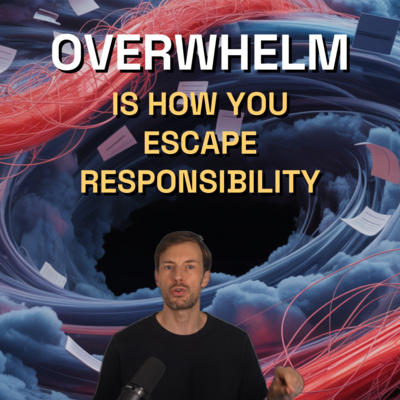
🫨 Overwhelm Is How You Escape Responsibility | Ep. 25
Is your overwhelm always something that happens to you, or can it sometimes become a way to avoid responsibility?
In this episode, Vincent explores the difference between genuine, nervous-system overwhelm and the kind of overwhelm we unconsciously manufacture to escape discomfort, risk, procrastination, or the possibility of failure.
The episode covers the stress cycle, allostatic load, self-deception, self-sabotage, owner vs. victim thinking, mindfulness, Wise Mind, distress tolerance, emotion regulation, and why action is often the antidote to overwhelm.
References include Burnout (ISBN 978-1984806734), Waking the Tiger (ISBN 978-1556432330), Mindsight (ISBN 978-0553386394), Solving the Procrastination Puzzle (ISBN 978-1608681525), A Liberated Mind (ISBN 978-0735214002), Spiritual Bypassing, and No Bad Parts (ISBN 978-0593415720), as well as Sirois and Pychyl's 2013 paper (DOI 10.1111/spc3.12011), Akbari et al.'s 2022 meta-analysis (DOI 10.1016/j.jcbs.2022.03.007), and Maier and Seligman's “Learned Helplessness at Fifty” (DOI 10.1037/rev0000033).
00:00 The meditation that sparked the episode
01:32 Genuine overwhelm and completing the stress cycle
02:05 Overwhelm as self-deception and avoidance
02:54 Self-sabotage, procrastination, and short-term relief
04:23 Catching the ego in the act
07:31 Overwhelm as a learned habit
10:41 Building tolerance for discomfort and taking action
10:42 Mindfulness and Wise Mind
12:02 Distress tolerance for genuine overwhelm
13:45 Emotion regulation for manufactured overwhelm
18:26 Awareness, responsibility, and reaching your potential
23:19 Final takeaways
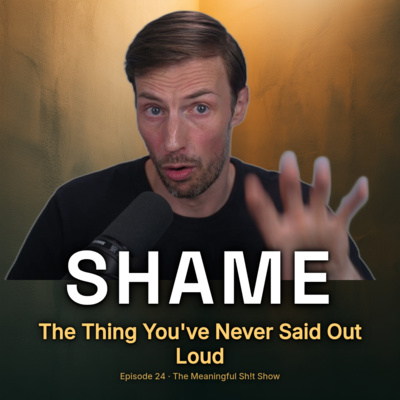
🫥 Shame: The Thing You've Never Said Out Loud | Ep. 24
Is there something you've never said out loud? Something you decided a long time ago nobody could ever know?
That's shame. And DBT has a surprisingly concrete framework for working through it.
In this episode I walk through Emotion Regulation Handouts 6, 11, and 13 — what shame actually is, how it differs from guilt, why they feed each other, and the two questions that determine your path forward. Your answers put you in one of four boxes, each with a completely different set of instructions.
I also get personal. More personal than usual. Because the antidote to shame is saying it out loud to one safe person — and I share what happened when I finally did.
Topics covered:
- Shame vs guilt — body, words, and action urges
- The integrity gap — what chronic hiding actually costs
- Four combinations of justified/unjustified shame and guilt
- Opposite action — what it is and what it isn't
- How to find your safe person
- My own story
Timestamps: (0:00) Hook: Is there something you've never said out loud? (0:31) Welcome + disclaimer (1:29) What shame actually is (DBT definition) (4:57) Why shame is devastating (7:22) You become a structural liar (8:56) Shame spreads (generational trauma) (10:29) Guilt vs shame (13:01) How guilt and shame feed each other (14:08) My personal story (16:43) The two questions (Handout 11) (17:55) Neither justified (survivor's guilt) (19:30) Guilt justified, shame not (cheap dopamine) (21:20) Shame justified, guilt not (this podcast) (22:58) Both justified (the hardest one) (25:45) Opposite action (27:44) Finding your safe person (31:17) How it played out for me (32:14) Close: The wall was just a wall
References: DBT Emotion Regulation Handouts 6, 11 & 13 | Bessel van der Kolk — The Body Keeps the Score | Episodes 3, 13 & 23
Disclaimer: I am not a licensed therapist. If you're in crisis, please reach out to a professional or crisis line.
TMS.show/24
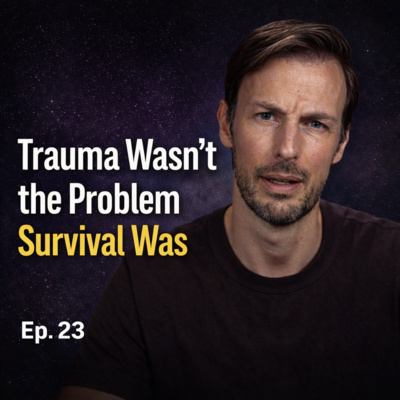
🧠 Trauma Wasn’t the Problem — Survival Was | Ep. 23
Trauma is not pathology.
It is biology.
In this episode, I map early loss, neglect, and survival strategies onto the neuroscience of trauma, attachment, addiction, and integration.
(00:00) Trauma as Biology, Not Pathology
(02:53) The Architecture of Survival
(03:34) Early Loss, Co-Regulation, and Turning Inward
(07:00) Betrayal Trauma and the Day/Night Child
(10:30) Addiction as Regulation (Pornography as a Survival Strategy)
(14:10) Post-Traumatic Growth and the Survival Facade
(20:30) Gratitude vs. Toxic Positivity
(23:24) The Green Square / Red Circle
(26:32) Kintsugi: Healing Without Erasing the Past
(27:31) Outro + Related Episodes
Rather than framing trauma responses as dysfunction or personal failure, this episode treats them as intelligent adaptations wired into the nervous system in response to overwhelming threat.
We explore:
Early attachment, loss, and the role of co-regulation
Betrayal trauma and dissociation
Addiction as a logical form of nervous-system regulation
Post-traumatic growth and the survival facade
Integration as the movement from fragmentation to coherence
Gratitude beyond toxic positivity
The “Green Square / Red Circle” framework for holding harm and growth simultaneously
This is a personal episode, grounded in neuroscience, developmental psychology, and trauma research.
Healing here is not about erasing the past or reframing harm.
It is about integrating what happened into a coherent, embodied life.
Related Episodes
Breaking Habits: The Real Deal on Addiction and Recovery
https://tms.show/13
How Nihilism, Absurdism, and Existentialism Made Me Happier
https://tms.show/14
The Gift of Rock Bottom | Kierkegaard, Nihilism & Radical Acceptance
https://tms.show/20
Sources referenced
Copley, L. (2025). Using Gratitude & Happiness in Trauma-Informed Therapy. PositivePsychology.com
D’Amore Mental Health. Toxic Positivity vs. Genuine Gratitude
Freyd, J. J. (1996). Betrayal Trauma: The Logic of Forgetting Childhood Abuse. Harvard University Press
Janoff-Bulman, R. (2006). Schema-Change Perspectives on Posttraumatic Growth. In Handbook of Posttraumatic Growth
Perry, B. D., & Szalavitz, M. (2006). The Boy Who Was Raised as a Dog. Basic Books
Tedeschi, R. G., & Calhoun, L. G. (2006). The Foundations of Posttraumatic Growth. In Handbook of Posttraumatic Growth
Tronick, E. (2007). The Neurobehavioral and Social-Emotional Development of Infants and Children. W. W. Norton & Company
van der Kolk, B. A. (2014). The Body Keeps the Score. Viking

👉🔥 Redefining Manhood: Escaping the “Man Box” and Healing Male Pain | Ep. 22
In this episode of The Meaningful Shit Show, Vincent unpacks the stories we inherit about masculinity — and the quiet damage they cause.
(00:00) Introduction: the question and the thesis
(01:45) Open the Man Box
(18:32) Porn is the classroom
(22:27) Hookup culture, alcohol, and consent gray zones
(27:46) Red Pill & hypergamy: the “graduation speech”
(31:08) Male pain and covert depression
(41:27) Friendship crisis, loneliness, and suicide risk
(47:44) A path forward: what to do instead
(55:30) Undefining masculinity: practices (language, ego, sex ethics)
(01:16:55) Closing: go do the work
From the “man box” that teaches boys to numb their hearts, to the porn scripts that confuse conquest with connection, to the loneliness men rarely admit out loud.
Through honesty, psychology, and DBT tools, we’ll explore:
How culture wires disconnection into male identity
The link between porn, ego, and emotional avoidance
Why Red Pill ideology sells fear, not strength
How to trade performance for presence — in work, sex, and love
This isn’t about shaming men.
It’s about undefining masculinity — loosening the armor, and walking a path where connection replaces control.
Reflection prompt:
What story did you inherit about being a man — and what story are you actually living?
Distilled truths:
The man box sells safety, but it costs your soul.
Performance without presence is hollow.
What we call strength is often just untreated pain.
Listen everywhere: Spotify | Apple Podcasts | YouTube
Follow @TheMeaningfulShitShow
#Masculinity #ToxicMasculinity #MenHealing #DBT #Mindfulness #TheMeaningfulShitShow
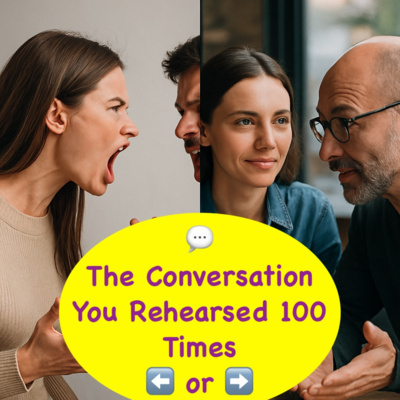
🗣️ Interpersonal Effectiveness: DEAR MAN & GIVE in Real Life | Ep. 21
🧠 “I said the right thing — so why did it still go wrong?”
Sometimes you do everything “right.” You’re clear. You’re calm. You use the skill.
And the conversation still goes off the rails.
This episode dives into two core DBT tools — DEAR MAN and GIVE — and dissects what they really look like in real relationships. Not just in theory, but through raw, personal stories and scene-by-scene analysis of emotional breakdowns in film.
We go deep into:
The devastating café scene from Beautiful Boy — and how it shows a DEAR MAN collapse
GIVE failures in The Break-Up — where both characters lose the connection, the objective, and their self-respect
Real-life examples from a running group confrontation and a co-working space standoff
Why even “perfect” communication can backfire if it’s ungrounded, mistimed, or driven by fear
This isn’t about technique. It’s about survival, honesty, and learning how to walk out of a conversation without abandoning yourself.
🎧 Bring your overthinking brain and a pen. And maybe tissues. This one hits close to home.

The Rock Bottom is Honest: On Despair, Meaning & Rebirth
Sink first, then rise.
In this solo episode, I unpack a haunting metaphor about drowning and survival, and connect it to how we experience emotional rock bottom.
With insight from Kierkegaard, Nietzsche, and DBT, we explore how sometimes — the fall is the path.
This isn’t about glorifying suffering. It’s about recognizing that when everything falls away, we get to decide what truly matters.
⚠️ Includes a note on addiction and the myth of ‘needing’ rock bottom to change.
#019 🔥 Beyond the Buzzword: Mindfulness That Actually Makes Sense 🧠✨
🤯 Mindfulness isn’t what you think! No woo-woo, no endless meditations—just real, practical tools to help you focus, reduce stress, and take control of your mind.
In this episode, we break down:
✅ The “What” Skills – What you actually do to be mindful 👀
✅ The “How” Skills – The mindset that makes it work ⚡
✅ Wise Mind vs. Emotional Mind – Finding that perfect balance ⚖️
✅ The Deep Stuff – Why mindfulness really matters 🌌
🎙️ Whether you love mindfulness or think it’s overhyped, this episode will change the way you see it.
💬 Comment below: What’s one moment today where you were fully present?
🔔 Subscribe for more deep, no-BS conversations!
#Mindfulness #DBT #SelfImprovement #Awareness #MentalHealth

#018 - CHOOSE YOUR PAIN: The Key to Growth, Discipline & Freedom 🔥💡
🔥 Pain is inevitable—but suffering is optional. In this episode, I break down the key difference between pain and suffering and why choosing your pain intentionally leads to a stronger, more fulfilling life. 💪💡 💭 Inspired by: ⚔️ Stoic wisdom – "The pain is not due to the thing itself, but to your estimate of it." 🧘 Buddhism's Four Noble Truths – Suffering comes from craving, but we can rise above it. 🧠 Polyvagal Theory – How our nervous system navigates stress and rest. We all face choices: 🔥 The pain of discipline vs. the pain of regret 😞 ⚡ The pain of stepping out of your comfort zone vs. the pain of stagnation 🏋️♂️ 💬 The pain of setting boundaries vs. the pain of resentment 🚪 🎭 The pain of being honest vs. the pain of living a lie 🤐 Rather than avoiding pain or numbing it with distractions 🍕🍷📺, embrace it, plan for it, and build a life where the pain you choose serves your growth. Because if you don’t choose your pain, pain will choose you. ⚡ CHOOSE YOUR PAIN. PLAN FOR IT. BUILD IT INTO YOUR ROUTINE. ⚡ 👇 What’s a pain you’re choosing today? Drop it in the comments! 🔔 Subscribe for more deep dives into personal growth, psychology, and mindset! 🚀
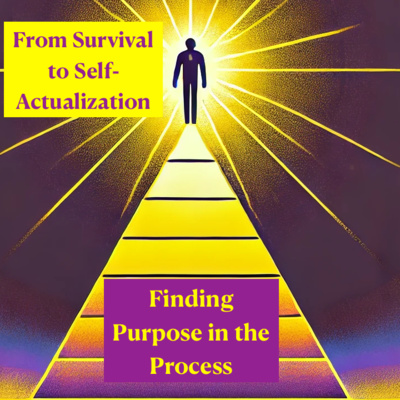
#017 - From Survival to Self-Actualization: Finding Purpose in the Process
🌟 In this episode, we dive deep into the concept of "loving the process" and why it's essential for personal growth and fulfillment. 🔑 Drawing inspiration from Maslow's pyramid of needs, we explore the journey from survival to self-actualization 🧗♂️, emphasizing how embracing the process—not just the outcome—leads to long-term satisfaction. 💪✨
💡 What You'll Learn:
- 🏔️ Maslow’s hierarchy and the path to self-actualization
- 🛠️ Breaking free from societal expectations
- 🔄 The art of micro-changes and habit-building
- 🎯 Creating intrinsic motivation to stay on track
- 📋 Tools and tips for consistency and mindfulness
🔥 Whether you're chasing fitness goals, exploring creative passions 🎨, or working on personal development, this episode is packed with practical advice to help you stay motivated and find purpose in the process. 🚀
🎧 Tune in now and transform your journey!
💬 Don’t forget to like 👍, subscribe 🔔, and share 📤 if this episode inspires you! 💖
#SelfActualization #Motivation #LovingTheProcess

#016 - Authenticity Unmasked: Acting Techniques for Real Life
Authenticity is about being true to yourself and others, embracing your feelings without judgment or suppression. In acting, the Meisner Technique exemplifies this through exercises like repetition and emotional preparation, which focus on staying present and honest in the moment. These practices challenge actors to engage deeply with their emotions and scene partners, fostering connection and authenticity.
In life, authenticity starts with self-awareness. It means acknowledging your feelings and how you feel about them (meta-feelings), staying present without forcing or avoiding emotions, and aligning your actions with your values. This self-honesty is essential for personal sovereignty—being true to yourself regardless of others’ opinions.
Interpersonally, authenticity involves setting boundaries and communicating honestly while maintaining relationships and respecting others. Tools like the STOP method (Stop, Take a breath, Observe, Proceed) and Viktor Frankl’s idea of the pause between stimulus and response help navigate these moments mindfully.
Ultimately, authenticity is both liberating and uncomfortable. It requires vulnerability, self-reflection, and a willingness to be seen as you truly are. Whether in acting or life, the practice of authenticity leads to deeper connections, personal growth, and a more meaningful engagement with the world.

Drastically improve your life by setting boundaries
🎬 Boundaries: The Key to Self-Respect | YouTube Summary
🛑 What are boundaries? – Acts of self-love, not control! They protect our well-being & relationships.
⚡ Why they matter:
✅ Define core values
✅ Prevent burnout & resentment
✅ Strengthen connections
🔥 How to set & hold them:
• Be clear & firm 💬
• Enforce consequences 🚧
• Boundaries aren’t convenient—they’re necessary 🏗️
• Show them through actions, not just words 👏
📌 Real-life examples:
💡 Saying no to negativity
💔 Navigating dating & substances
💰 Protecting financial health
❤️ Setting sexual boundaries
✨ Final message: Love yourself. Set boundaries. Live authentically. 🚀
How Nihilism, Absurdism and Existentialism made me happier
In this episode, Vincent dives into some history and details about the nihilist, absurdist and existentialist points of view and talks through personal anecdotes how these philosophies unlocked more happiness for him.
Breaking Habits: The Real Deal on Addiction and Recovery
In this episode, Vincent delves into the intricate relationship between distress tolerance, addiction, and the practical applications of Dialectical Behavior Therapy (DBT) techniques. Anchoring the conversation in personal anecdotes and a deep dive into the mechanisms of addiction – from its psychological underpinnings to the societal implications – Vincent offers a comprehensive exploration of how addiction operates as both a disease and a behavioral pattern. Through the lens of DBT, he unpacks various strategies, such as dialectical abstinence, community reinforcement, and the concept of 'urge surfing', blending theory with relatable examples. The episode stands out for its candidness, as Vincent shares his own journey and battles with addiction, underscoring the importance of community, self-awareness, and alternative paths to rebellion as tools for recovery. Vincent wraps up with a reflection on the broader societal norms and the personal steps one can take towards a life of meaningful engagement beyond addiction.
How to accept, believe in and love yourself (and why!)
I talk about the why we would accept, believe in and love ourself. I talk about why that why is important, using the following framework:
- You believe the goal, or the pursuit thereof, is valuable and is worth continuous investment.
- You believe you're worthy of pursuing this goal.
- You believe the continuous investment and the process you are following moves you closer to achieving the goal.
and of course, how to actually do it:
- Self Care
- Awareness / mindfulness
- Accountability
- Planning (and handling unstructured time)
- Build Mastery
Thanks for tuning in!
A Brief Introduction To The Meaningful Sh!t Show
In a world full of selfishness, blaming and scapegoating, I aim to inspire inner work with deep topics and insights on emotion regulation, personal development, psychology (DBT), philosophy and the trauma growth/healing process.
I aim to share my own perspective, which I think is valuable because I have personally benefited from a podcast giving me the exact right message I needed at the time. I remember how influential that was, what an enormous growth that unlocked. I hope to be this for someone.
After all, sometimes you don't need the wise guru's perspective, they are too advanced and not relatable, or not in a practical sense. You don't need your friend's perspective, she is not advanced enough, too relatable. Or these people may not have the specific trauma wound you have, such as family death early in life or childhood neglect, which are wounds for me.
For some of you, my perspective and teaching is exactly what you need. Listening to my content is only step one, it's up to you to explore and embody some of the theory I talk about. All I can do is open you up and interest you.
Although I've spent hundreds and thousands of hours reading self-help books, going therapy (group and individual), listening to seminars, going to retreats, contemplating on my own, meditating, doing yoga, working out, improving myself, journaling, failing over and over again, my journey is far from over, and I'm a practitioner, not a seasoned master.
The title you ask? It's a pun. Life is meaningful, but is hard and has ups and downs and it's messy. One could say.. it's a shit show. But it's... THE meaningful shit show, the only we get to star in. So yeah, the show title refers to life. It's also a show about meaningful shit. I thought it was clever..
So if you are excited to learn about some of these topics, from the perspective of me, Vincent, a European living in the United States, walking him own path and burning through his own karma? I invite you to dive in!

Emotional regulation: Effectiveness, a philosophical inquiry (or; rant)
The long, ranty version of episode 9
Mastering Emotion Regulation: Unlocking the Power of DBT's Effectiveness Skill
We discussed Emotion Regulation skills, specifically Checking the Facts, Opposite Action and Problem Solving.
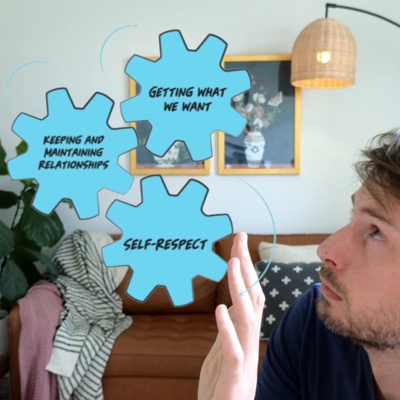
Let's add another important skill to our toolbox: Effectiveness.In this episode, you will see hear me argue that that most Emotional Urges have selfish objectives that are not important in the grand scheme of things and other aspects, such as connections (relationships) and self respect (life purpose) are often more important (but not always!).
Use DBT's Effectiveness to align your actions with your highest self!
DBT's Distress Tolerance Pt2: Reality Acceptance Skills (Radical Acceptance)
DISCLAIMER The contents of this podcast are educational. I am not formally licensed in any way. If you are currently experiencing distress or crisis, please reach out to a licensed mental health professional for support.Last episode, we learned how not make things worse when encountering a crisis.
After doing that, we've now contained the crisis, which is a great start! Today we will talk about the second and last part of the Distress Tolerance module from DBT: Reality Acceptance! How does radically accepting reality help us to actually address our problems?
References:
DBT Skills Training: Manual, Marsha M. Linehan
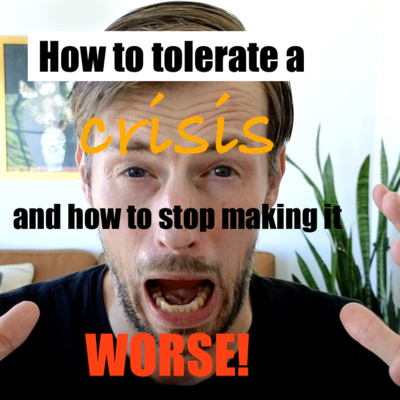
DBT's Distress Tolerance Pt1: Crisis Survival (Don't Make It Worse!)
DISCLAIMER The contents of this podcast are educational. I am not formally licensed in any way. If you are currently experiencing distress or crisis, please reach out to a licensed mental health professional for support.
Do you often fly off the handle and unintentionally hurt people around you, emotionally or physically? Or do you sink in a swamp of sorrows and out of overwhelm and depression let damage accrue by not acting? Do you avoid severe problems by procrastination and indecision? Or does this apply to anyone you know? Then I've got great news for you. It sounds like you need a higher tolerance for crisis and distress. A tolerance doesn't mean we're problem solving anything quite yet - we're just learning how to tolerate being in a distressed state with a neatly organized, sharpened set of tools we know how to use well. Today we will talk about the first part of the Distress Tolerance module from DBT: Crisis Survival. References: DBT Skills Training: Manual, Marsha M. Linehan
Seven Ways of Harnessing the Power Of Dopamine, Serotonin, Endorphins & Oxytocin
Today, we'll explore the four molecules associated with happiness. We'll see what that model can teach us, and we'll land on seven practices for maintaining a balance that allows happiness to arise. We also discuss ways of corralling your reward center to do your bidding, instead of the other way around.
References
Dopamine
- https://my.clevelandclinic.org/health/articles/22581-dopamine
- https://www.health.harvard.edu/mind-and-mood/dopamine-the-pathway-to-pleasure
- Fifty years of dopamine research
Endorphins
- https://my.clevelandclinic.org/health/body/23040-endorphins
- Endorphins: The brain’s natural pain reliever
- https://doi.org/10.1016/0301-0511(95)05118-T
- https://doi.org/10.1016/j.neulet.2003.12.019
- https://doi.org/10.1016/0301-0511(95)05118-T
- Release of Endomorphin Hormone and Its Effects on Our Body and Moods: A Review
- https://doi.org/10.1371/journal.pone.0274331
- https://doi.org/10.1001/archpsyc.1977.01770220061006
- https://www.researchgate.net/profile/Entedhar-Sarhat/post/what_hormones_are_released_during_pain/attachment/5b4e6c0d4cde265cb64fc318/AS%3A649507758960640%401531866125064/download/Release+of+Endomorphin+Hormone+and+Its.pdf
- https://www.snexplores.org/article/sunlight-makes-pleasure-chemical-body
Serotonin
- https://my.clevelandclinic.org/health/articles/22572-serotonin
- https://www.ncbi.nlm.nih.gov/pmc/articles/PMC4494274/
Oxytocin

Emotion regulation and the (para)sympathetic nervous system
- Effects of cold stimulation on cardiac-vagal activation in healthy participants: randomized controlled trial
- https://themovementparadigm.com/how-to-map-your-own-nervous-sytem-the-polyvagal-theory/
- https://counsellinghongkong.com/2021/10/16/polyvagal-theory/
- https://www.ncbi.nlm.nih.gov/pmc/articles/PMC5859128
- https://www.ncbi.nlm.nih.gov/pmc/articles/PMC3108032/
Emotion Regulation pt2: Reduce Emotional Vulnerability
Today, we talk about the less immediate skills that are required to not get lost in emotion mind.
Where last time, we talked about the proverbial fire extinguisher which allows us to douse the flames of emotional reactivity, today we talk about how we can cultivate skills in life that prevent fires from breaking out in the first place.
Realize: both are needed. Today, we take care of the latter: building resilience.
We'll talk about:
- Accumulating Positive Experiences (A)
- Building Mastery (B)
- Coping Ahead (C)
- Self care - Physical Illness, Eating Balanced, Avoid Mood-Altering Substances, Sleep, Exercise (P.L.E.A.S.E.)
- Nature
References:
- DBT Skills Training Handouts and Worksheets (page 247 and further)
- The Real Happy Pill - Anders Hansen
- The Nature Fix: Why Nature Makes Us Happier, Healthier, and More Creative - Florence Williams
- Exercise and Gene Expression
- Physical activity and self-esteem: testing direct and indirect relationships associated with psychological and physical mechanisms
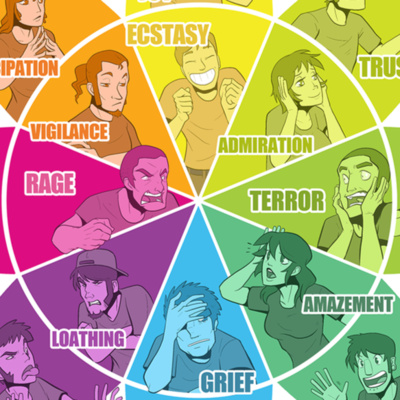
Emotion Regulation pt1: Understanding and Influencing Emotional Responses
Do you, or does someone you know, struggle with emotion regulation?
- Do you/they suffer from severe consequences from emotion outbursts? Such as DUIs, fights, lost relationships, estranged children, loss of job?
- Are you/they prone to victim thinking vs owner thinking?
- Do you/them self-medicate or self soothe with compulsive behavior? Like drinking, drugs, porn, not leaving the house for days, not being able to hold down a job, etc.
If so, this episode may be very advantageous to you, so you can learn how you handle difficult emotions in a skillful, deliberate way!
References:
- Emotion wheel
- DBT Skills Training Handouts and Worksheets (page 209 and further)

How do beliefs work?
What are beliefs? Where do they come from? How do they relate to values, goals, attitudes and behaviors? How do make my beliefs work for me instead of the other way around? All these questions will be addressed in today's episode!

The Value of Values
Vincent talks about the value of values
Resources mentioned in the episode
- https://opportunity.ucdavis.edu/sites/g/files/dgvnsk2741/files/inline-files/values-based-decision-making_1.pdf
- https://www.mindtools.com/a5eygum/what-are-your-values
- https://sakai.ohsu.edu/access/content/group/Kathlynn_Tutorials/public/Value%20Card%20Sort%20Exercise%20-%20Storyline%20output/story_html5.html
- https://lifecompasscards.com
- https://marklooi.medium.com/summary-of-kahnemans-thinking-fast-and-slow-3d1c2ea0e6a