
the-shiv / interviews
By the-shiv

Chris Walker | Vietnam Sourcing Expert | RE: Apparel manufacturing Vietnam + rising fuel prices
Vietnam-based factory sourcing consultant Chris Walker discusses how rising oil prices and the Middle East crisis are affecting apparel manufacturing, transport costs, polyester pricing, and factory profit margins.He argues that consumers ultimately care about price above all else, forcing retailers, brands, factories, and suppliers across the supply chain to absorb higher costs rather than pass them on.The interview also explores why Vietnam continues attracting manufacturing orders despite global uncertainty, why China is still dominant in manufacturing capacity, and why Vietnam is viewed by many buyers as an attractive place to do business.Topics discussed include:* Polyester and synthetic fibre price increases* Oil prices and shipping costs* Pressure on factory profit margins* Vietnam vs China manufacturing demand* Apparel sourcing trends* Consumer price sensitivity* Why Vietnam continues attracting buyers* Vietnamese government and business culture

John Gardner | CEO Optimum Hospitality | RE: Iran War + Vietnam hotels and resorts impact
This interview covers how rising fuel costs are affecting Vietnam’s tourism and hospitality sector, based on on-the-ground insights from hotel and resort operators.The discussion covers a slowdown in long-haul European demand, declining Korean arrivals, and the uneven ability of resorts to replace lost international guests.Domestic tourism is holding up, with Vietnamese travellers opting for local trips over overseas travel despite higher fuel costs.Airlines and transport operators are adjusting capacity, while resorts are responding with packages and incentives to attract demand.Higher fuel prices are also feeding through to construction costs, slowing or pausing new hotel and real estate developments in areas such as Phu Quoc, Da Nang, Saigon, and Hanoi.The conversation also looks at shifting demand patterns, including a recent lift in Australian visitors, and expectations for how long current pressures may persist.This interview is based on industry conversations and reflects operator sentiment rather than official data.Topics covered:Vietnam tourism trendsFuel price impact on travelHotel and resort performanceDomestic vs international demandConstruction and development delaysRegional travel dynamics
Nuno Ribeiro | Tourism & Hospitality Expert | RE: Vietnam tourism + energy crisis + sustainability
Interview with Dr. Nuno Ribeiro on how global energy shocks are shaping Vietnam’s tourism industry.The discussion covers rising fuel costs, airline capacity decisions, and why travel demand tends to shift rather than collapse during economic downturns.It explores Vietnam’s reliance on regional markets like China, South Korea and India, alongside signs of caution in investment and domestic tourism.The conversation also compares Vietnam’s growth-focused model with Denmark’s value-driven tourism strategy, including differences in workforce development, salaries, and talent retention.Sustainability is a major theme, with insights into enforcement, carrying capacity, and lessons from Denmark’s policy-led approach.The interview closes with concerns over overtourism, the lack of national capacity studies, and the need for greater public awareness of tourism’s economic, social and cultural impact in Vietnam.

Interview w/Ngoc (Lily) Nguyen | HAP Commodities Consulting, Vietnam Southern Region Sales Manager
This discussion covers how the Iran–Hormuz conflict is affecting the coffee sector in Vietnam, with higher oil prices driving up logistics costs and putting pressure on traders’ margins.It also examines current price trends, where global supply expectations—particularly from Brazil—are weighing on prices while farmers continue holding inventory in hopes of a rebound.The conversation highlights a growing disconnect between farmers and buyers, with expectations failing to align and transactions slowing as a result.It further explores rising fertiliser costs, tightening global supply, and the impact this is having on production expenses during a key stage of the crop cycle.Finally, it looks at how farmers are responding, noting that despite margin pressure, most are holding stock and maintaining production given coffee’s long-term nature and limited short-term alternatives.

Interview w/Hao Qiu, Founder, Fair Farm Vietnam RE: Vietnam coffee industry impacts Iran War
The discussion covers how global factors, including Brazil’s crop outlook and Middle East disruptions, are influencing coffee prices through shifting demand and higher logistics costs.It outlines the structural challenges of commodity coffee, where farmers are exposed to volatile international pricing despite stable production costs, and why some producers are moving into specialty segments.The conversation also examines how fixed contracts are squeezing margins across the supply chain, particularly as transport and fertiliser costs rise.It highlights growing pressure on farmers, alongside efforts to shift towards more sustainable production models to reduce input costs and improve resilience.Finally, it looks at longer-term trends, including the potential rise of robusta and liberica as more climate-resilient crops and emerging areas for future investment in Vietnam’s coffee sector.

Interview w/Timen ter Meulen Swijtink, Managing Director, Collective Company RE: VN Coffee industry
This interview looks at how the Middle East crisis is affecting Vietnam’s coffee sector, with early impacts seen in higher logistics costs and potential risks to fertiliser supply if disruptions continue.It also covers coffee pricing, including how companies are using contracts to manage volatility, and the pressure rising costs have placed on margins across the supply chain.The conversation explores how Vietnam’s coffee industry is evolving, with stronger relationships between roasters and farmers and a shift towards higher-quality production.It also looks at domestic demand, tourism-linked consumption, and the opportunity to develop Vietnamese-style coffee further within the hospitality sector.Finally, it highlights how younger farmers and closer feedback between producers and consumers are driving rapid improvements in coffee quality across Vietnam.
Interview w_Vicente Nguyen, Chief Investment Officer, Asia Frontier Capital on Vietnam inflation outlook
This interview with Vicente Nguyen, Chief Investment Officer at Asia Frontier Capital, covers inflation risks as fuel prices surge, with CPI already around 4.6 percent and pressure if it exceeds 5 percent.Examines the government’s 10 percent growth target against a more realistic 7 to 8 percent outlook amid the Middle East conflict.Discussion of monetary policy constraints, including limited scope to expand credit and the priority of inflation control.Insights on Vietnam’s structural shift toward productivity-led growth, including administrative reforms and improved tax collection efficiency.Analysis of rising state budget surpluses and their role in funding large-scale infrastructure investment.Breakdown of infrastructure as a growth driver, including highways, rail, and long-term energy projects.Context on global risks, including energy market volatility and spillover effects on Vietnam and the broader region.
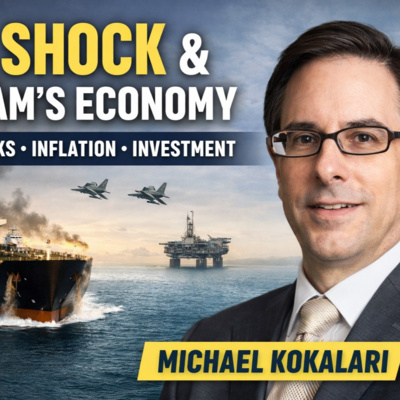
Interview w/Michael Kokalari (Chief Economist VinaCapital) RE: Oil Shock, Growth Risks & Vietnam
In this interview, Michael Kokalari discusses how escalating tensions in the Middle East and disruptions in global energy flows could impact Vietnam’s economy, markets, and investment outlook.He explains why the duration of supply disruptions — particularly through the Strait of Hormuz — is the key variable, and why a prolonged blockage could trigger a shock worse than COVID and the Global Financial Crisis combined.The conversation covers Vietnam’s macro outlook, including potential gross domestic product growth impacts, inflation pressures, interest rate dynamics, and the role of fuel subsidies in stabilising the economy.
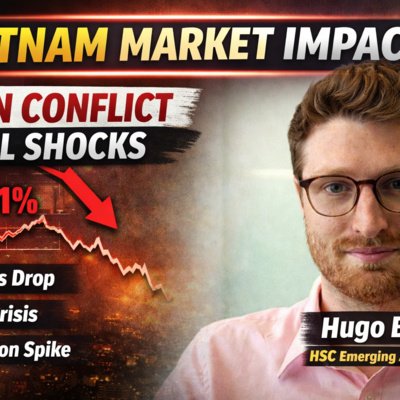
Vietnam Markets React to Iran Conflict | Hugo Bosch (HSC's Emerging Asia podcast)
In this interview, Hugo Bosch, host of HSC’s Emerging Asia podcast, discusses how escalating tensions in the Middle East are impacting Vietnam’s stock market, energy sector, and broader economy.We cover the immediate market reaction to the Iran conflict, including an approximately 11 percent drop in the VN-Index over the past month, and how sentiment has evolved since.Hugo breaks down second-order effects, from rising fuel and jet costs hitting aviation and travel, to inflation pressures and shifting portfolio strategies in a volatile environment.The conversation also explores Vietnam’s fuel supply situation, government intervention measures, and how the current crisis differs from the shortages seen in 2022.

Interview w/ Thanh Le, Founder Coin98 RE: Vietnam Crypto Exchange Viability / January 27, 2026
Thanh Le, founder of Coin98, discusses his path into crypto, Vietnam’s evolving digital asset regulations, and how his firm is repositioning amid tighter oversight.
Le entered crypto in 2017 after a career in engineering, founding Coin98 in 2018 and growing it into a major crypto wallet and developer ecosystem with around 10 million global users. He describes recent engagement with Vietnamese authorities as the country formally recognises crypto as a new asset class.
Following the immediate implementation of Resolution 5 in late 2024, Coin98 stopped serving Vietnamese users to ensure compliance amid uncertainty around licensing for non-custodial wallets. In response, the company formed a joint venture with G-Group, parent of lender F88, creating G98 as its Vietnam-facing entity while applying for required licences.
Le outlines expectations that Vietnam will license only five domestic exchanges, each facing high capital requirements, and explains why G98 plans to act as an infrastructure and services partner rather than a standalone exchange. He argues Coin98’s advantage lies in experience, talent, and networks rather than balance sheet size, making partnerships with banks and licensed exchanges more likely.
The discussion covers likely impacts on users, including asset migration from international exchanges, reduced over-the-counter trading, and a gradual compliance period. Le expects most Vietnamese users to adapt, despite short-term frustration and some exits from the market.
He also addresses prospects for a VND stablecoin, cross-border payments, and foreign participation, framing Vietnam’s approach as “positively conservative” and comparable to the gradual liberalisation of e-wallets. Le remains optimistic, positioning regulation as a foundation for broader fintech development and greater mainstream adoption over the next three to five years.