The Space Show
By Andrew Rennie for the Space Association of Australia


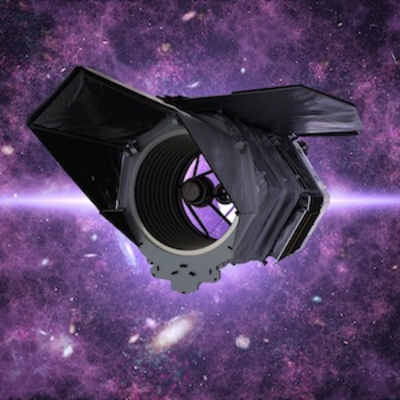
2026.09.09 | The Nancy Grace Roman Space Telescope – Part 4
On The Space Show for Wednesday, 9 September 2026:
Automated space object identification using RMIT's Robotic Optical Observatory (ROO) Telescope
An interview at the November 2025 Australian Space Research Conference with Cody Jeynes, an undergraduate student at RMIT University, Melbourne.
Descriptions of the Roman's Wide Field Camera and Coronagraph, and the role of STScI and IPAC in handling, storing, and distributing the data sent by the telescope.
Turn Back Time:
* Fifty-five years ago, in 1971, Lunokhod 1 was still trundling across the Moon
* Fifty years ago, the Raduga 2 communications satellite was launched
* Seventeen years ago, the European Southern Observatory (ESO) began using its new survey telescope, VISTA.
(Inserts RM, VOA, ESO)
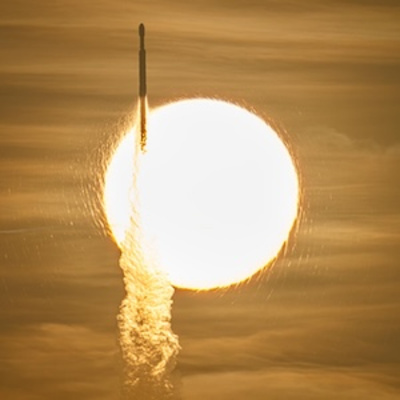
2026.09.02 | The Nancy Grace Roman Space Telescope – Part 3
On The Space Show for Wednesday, 2 September 2026:
(Episode artwork credit: NASA/John Kraus)
Roman Space Telescope Launched
Roman Space Telescope description and launch; origins of the telescope; commissioning process. (Audio inserts courtesy GSFC, KSC)
Ukraine strikes the Soyuz rocket and Rassvet satellite factory.
Turn Back Time
Luna 18 orbits the Moon ahead of a failed landing attempt and reports on the status of Lunokhod 1. (Audio inserts from Radio Moscow, BBC)
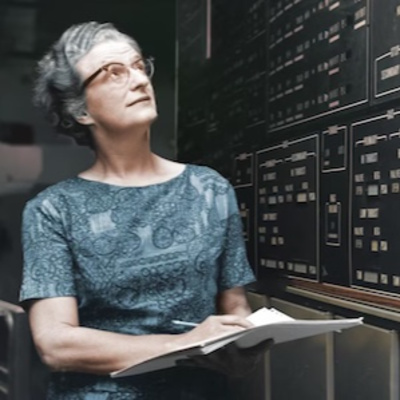
2026.08.12 | The Nancy Grace Roman Space Telescope – Part 1
On The Space Show for Wednesday, 12 August 2026:
The Fellowship of the Telescopes — The Great Space Telescopes:
The Nancy Grace Roman Space Telescope is ready for launch
Ask NASA:
* About the Roman Space Telescope
Turn Back Time:
* Gemini 10 and Lunar Orbiter 1
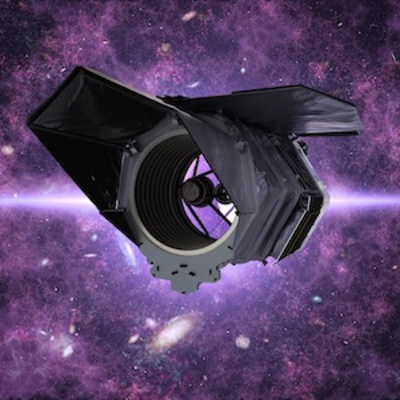
2026.08.26 | The Nancy Grace Roman Space Telescope – Part 2
On The Space Show for Wednesday, 26 August 2026:
Space Show News:
* Astronomers from the University of Southern Queensland have led research into the discovery of an Earth-sized extrasolar planet, HD 137010 b, likely colder than Mars.
Planet HD 137010 b is 150 light-years away from Earth and orbits a Sun-like star.
* Neuman Space demonstrates ND50 propulsion system in orbit
* China’s Chang’e 7 launch delayed.
The Chang'e 7 mission to the South Pole region of the Moon, and the postponement of Monday's launch with Angelo Di Grazia, Committee Member, Space Association of Australia
(Recorded at the Space Association of Australia, Bentleigh)
The Roman Space Telescope with Jason Hylan, Flight Segment and Observatory Manager, Roman Space Telescope, Goddard Space Flight Center, Maryland.
(Audio inserts courtesy GSFC)
Turn Back Time:
* The Luna 11 lunar orbiter
* Luna 24 lunar regolith sampler
* Voyager 2 Saturn flyby and interstellar mission, featuring Saturn findings commentary by Ed Stone, Voyager Project Scientist.
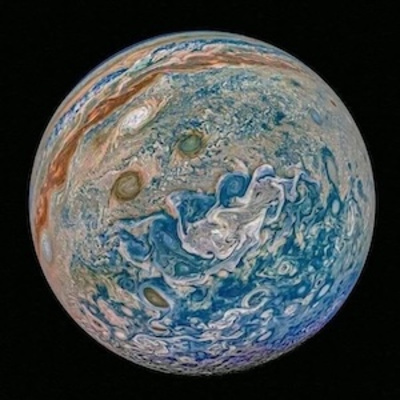
2026.08.05 | Juno at Jupiter: Science results briefing
On The Space Show for Wednesday, 5 August 2026:
Turn Back Time:
* Marking the 15th anniversary of the launch of the Juno spacecraft to Jupiter with a science results briefing from project scientists at the 2025 European Geophysical Union conference. (Courtesy EGU)
Space Show News:
* Swift Reboost Mission in Trouble: A progress report on the progress of the Swift astrophysical satellite reboost mission as the LINK craft encounters serious problems.
Remembering Gherman Titov:
* The 65th anniversary of Gherman Titov's Vostok 2 full-day flight.
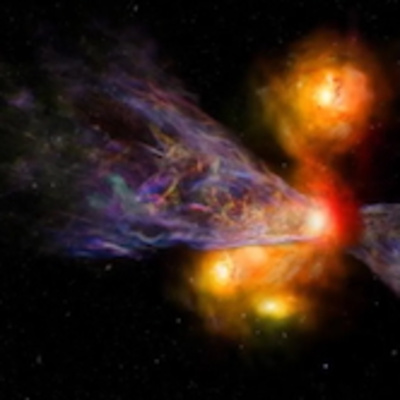
2026.07.29 | The wind that kills galaxies
On The Space Show for Wednesday, 29 July 2026:
Space Show News: Astronomers have discovered a galaxy-killing wind that may explain why there are far more massive dead galaxies than expected in the early universe.
The Melbourne Space Program student satellite project, ACRUX-2, at Melbourne University - Part 2
Aymeric Fabre, Team Lead, Power System, ACRUX-2, at the Melbourne Space Program, presents the electric power subsystems on the ACRUX-2 satellite. (Recorded at Melbourne University, 2022 August 25)
Observing geostationary satellites with the Robotic Optical Observatory and using AI modelling at RMIT University.
The Space Show is in conversation with Riley Webster, an undergraduate student at RMIT University, Bundoora.
Turn Back Time: The Warkworth Ground Station opened on 1971 July 17, allowing live television into New Zealand from overseas for the first time.
The Karman Project: Building a cooperative future in space - Part 4
The views and recollections of:
- Katherine Bennell (Capability, Robotics, Automation, Australian Space Agency, Adelaide)
- William Gerstenmaier (Vice President, Mission Assurance, SpaceX)
- Prateep Basu (Co-founder and CEO, SatSure)
- Thomas Pesquet (Astronaut, European Space Agency)
- Karen Hitschke (Board member, Yunus Social Business Investor).
2026.07.22 | Melbourne Space Program: ACRUX-2 and the Management of Ambiguity
On The Space Show for Wednesday, 22 July 2026:
The Melbourne Space Program student satellite project, ACRUX-2, at Melbourne University.
The Melbourne Space Program has the mission of developing future technology leaders by selecting highly talented university students and delivering an unparalleled learning experience through complex technology projects.
The speakers are:
- Patrick Grave, CEO, Melbourne Space Program, University of Melbourne
- Maxwell Jones, ACRUX-2 Team Lead
- Nadun Udawela & Antony Thomas, Communications Subsystem team
- Shazin Saifullah, Systems Engineer
- Daniel Digby, Team Lead, Computer Subsystems
- Ahmed Al-Dulimi & Sophia Chiang, Camera & Earth Observation Systems
- Viki Huang, Chassis & Deployment team
(Recorded by The Space Show at the University of Melbourne, 25 August 2022)
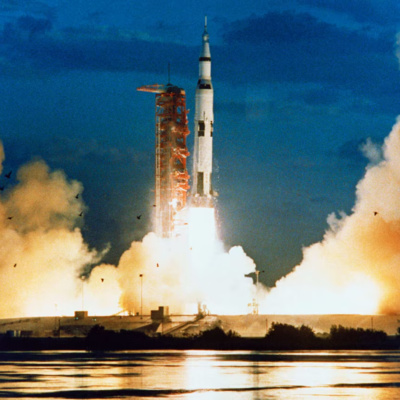
2026.07.15 | Vale Derryn Hinch: 9/02/1944 – 10/07/2026
On The Space Show for Wednesday, 15 July 2026:
Remembering Derryn Hinch: Friend of the Space Association of Australia
To mark the death of Derryn Hinch in Melbourne at age 82, a playing of the recording of his commentary of the launch of Apollo 11, almost 57 years to the day.
Space Show News:
Soyuz MS29 launches to the International Space Station
Australian Space Industry 2026 – Part 2:
* Cocos Island tracking station to support Gaganyaan spaceflights.
* Gilmour Space appoints Pam Melroy to its board of directors.
* Starfish Space's Otter Pup 2 satellite to use Gilmour Space's Elara Sat MMS-1 satellite as a rendezvous and proximity operations target.
* Fleet Space to use its Exosphere platform to help French Government agency BRGM make an inventory of France's subsurface mineral resources.
Rocket Lab:
* Rocket Lab uses its Electron rocket to launch the Victus Haze satellite for the U.S. Space Force in a record brief time.
* Rocket Lab to buy Iridium Communications Incorporated; Electron to launch the TSIS-2 satellite and two PolSIR satellites for NASA in 2027, and later the Aspera and LOXSAT craft.
Kamo'oalewa & Torifune:
* China's Tianwen 2 spacecraft has reached the asteroid Kamo'oalewa for a sampling mission.
* Japan's Hayabusa 2 has made a high-speed pass of asteroid Torifune whilst en route to asteroid 1998 KY26.
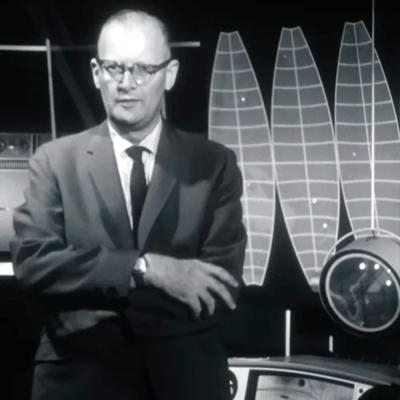
2026.07.08 | The Sky is the Limit: Arthur C. Clarke speculates on the uses of satellites in mass communication + The Karman Project – Part 3
On The Space Show for Wednesday, 8 July 2026:
Space Show News: Swift Boost Mission Launched
NASA has contracted Katalyst Space of Flagstaff, Arizona, to boost the altitude of its sinking Neil Gehrels Swift Observatory. Swift is NASA’s astrophysics multitool, capable of quickly observing a wide range of cosmic objects in visible, ultraviolet, X-ray, and gamma-ray light.
Update: On-Orbit Checkouts in Progress for Mission to Boost NASA’s Swift satellite.
The Western Australian Optical Ground Station with Sascha Schediwy, International Centre for Radio Astronomy, Perth
On September 11 2021, the University of Western Australia finished installing the first space laser optical ground station in the Southern Hemisphere and named it the Western Australian Optical Ground Station (WAOGS). It is only the first in a planned network of optical ground stations across Australia and New Zealand. (Recorded at a meeting of the Space Association of Australia in Melbourne)
Turn Back Time:
* The Sky is the Limit — A fascinating 1966 panel discussion on the use of satellites in mass communication, moderated by Rex Keating and featuring Arthur C. Clarke, Dr Leonard Jaffe of NASA and Prof. N. I. Krikikoff, from the Institute of Radio Telecommunications in Moscow.
The panel discusses the then-nascent age of satellite communications and makes several predictions about the future of telecommunications that prove quite accurate. (Courtesy UNESCO)
* Soyuz 21 — In 1976, the Soyuz 21 mission was terminated early due to human health factors. (Audio inserts courtesy VOA, BBC and NZBC)
The Karman Project: Building a cooperative future in space - Part 3
- The recollections of William Gerstenmaier (Vice President, Mission Assurance, SpaceX) about STS 1
- Katherine Bennell (Capability, Robotics, Automation, Australian Space Agency, Adelaide) about discovering the Earth
- Jean-Jacques Dordain (former Director-General, ESA) on space as a common good
- Sera Markoff (Member, Event Horizon Team, University of Amsterdam) on the Event Horizon Telescope.

2026.07.01 | The Karman Project: Building a cooperative future in space – Part 2
On The Space Show for Wednesday, 1 July 2026:
Plans to launch the LINK satellite to reboost the Swift astrophysics satellite into a higher orbit. Launch delayed until tomorrow. (Inserts courtesy GSFC)
NASA has contracted Katalyst Space of Flagstaff, Arizona, to boost the altitude of its sinking Neil Gehrels Swift Observatory. Swift is NASA’s astrophysics multitool, capable of quickly observing a wide range of cosmic objects in visible, ultraviolet, X-ray, and gamma-ray light.
A first-of-its-kind mission, a robotic servicing spacecraft called LINK, built by Katalyst Space, will launch into orbit aboard a Northrop Grumman Pegasus XL rocket attached to the belly of the company’s Stargazer aircraft.
After launch, LINK will attempt to rendezvous with, grapple, and slowly raise Swift’s altitude over several months, preventing it from re-entering Earth’s atmosphere later this year. If this daring mission is successful, it will be the first time a commercial robotic mission has captured a NASA spacecraft that is both uncrewed and not originally designed for servicing in space.
Swift observations:
NASA’s Neil Gehrels Swift Observatory is a satellite that studies gamma-ray bursts, the most powerful explosions in the universe, and other cosmic objects and events. Swift houses three multi-wavelength telescopes, collecting data in visible, ultraviolet, X-ray, and gamma-ray light.
* The Andromeda Galaxy (M31)
* Black hole snack attack
Turn Back Time: Proton 3 satellite
The 60th anniversary of the launch of the Soviet Union's Proton 3 scientific satellite by the new Proton launch vehicle. (Insert courtesy VOA)
The Karman Project: Building a cooperative future in space – Part 2
The views of Ke Wang (Co-founder & Operations Director, The Karman Project) and Rogel Mari Sese (Astrophysicist, The Philippines).
Listen to The Karman Project - The Space That Makes Us Human here: https://open.spotify.com/episode/3wPiS151Xuz2RKTWlhSg4P

2026.06.24 | The Karman Project: Building a cooperative future in space – Part 1
On The Space Show for Wednesday, 24 June 2026:
Conversations at the Australian Space Research Conference:
* Capturing the first signal from Waratah Seed 1, the ride-share payloads aboard, and funding by the New South Wales Government with Patrick Oppel at CUAVA, School of Physics, Sydney University.
* The CUAVA 1, CUAVA 2 and Waratah Seed 1 satellites; funding CUAVA; collision avoidance using micro-thrusters with Xuelieng Bai, Satellite Engineer at CUAVA, School of Physics, Sydney University.
The Karman Project: Building a cooperative future in space – Part 1
The Karman Project is a non-profit foundation promoting peace and security in space through strategic international cooperation.
The project aims to unite global decision-makers to drive urgent, collaborative action for a sustainable and peaceful future in space — recognising the core role of international cooperation in securing the space sector's prosperity and Earth's critical reliance on it.
The organisation fosters trust, cooperation and independent dialogue among global leaders in tech, science, business, politics, the arts, and people in the space industry who want to make a positive impact on space.
This episode features comments from the following:
- Katherine Bennell (Australian Space Agency)
- Hélène Huby (Co-founder & Chair, The Karman Project)
- Hannah Ashford (Director, The Karman Project)
- Feng Yan (Founder & CEO, Spacety)
- Chris Boshuizen (Co-founder, Planet)
- Jonathan Hofeller (Vice-President, Starlink, SpaceX).
Listen to The Karman Project - The Space That Makes Us Human here: https://open.spotify.com/episode/3wPiS151Xuz2RKTWlhSg4P
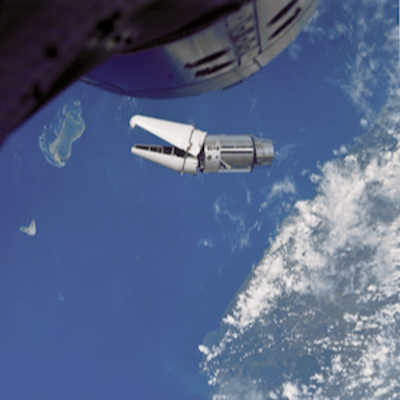
2026.06.17 | Turn Back Time: Gemini 9 and the ‘Angry Alligator'
On The Space Show for Wednesday, 17 June 2026:
Australian Space Research Conference:
* Iron Making on Mars with Dr Deddy Nababan, Postdoctoral Fellow at CSIRO Mineral Resources and a Swinburne University alum.
* Studying the Sun with balloons launched by a student team with Joseph George, Monash High Altitude Balloon team, Monash University, Clayton.
Artemis Lunar Science:
Artemis II — Looking for electrostatic levitation of lofted Lunar dust and impact flashes
Artemis I — The early results of BioSentinel with Dr Sergio Santa Maria, Principal Investigator of Space Bio Sciences at the NASA Ames Research Centre.
Lunar Science in the Artemis Era: The Space Show series in which we discuss the scientific investigation of the Moon and its environment in the Artemis era. (Episode 01 is here: https://open.spotify.com/episode/22gtgYHWhm9fJNJnaPJVw5)
Turn Back Time:
* Gemini 9 and the ‘Angry Alligator'. (Inserts courtesy VOA)
* The OGO 3 satellite launched. (Insert courtesy VOA)
* An Able-Star rocket stage explosion becomes the first major space debris event with 321 tracked pieces.
* United Nations 'Moon Treaty' negotiations begin. (Inserts courtesy VOA)
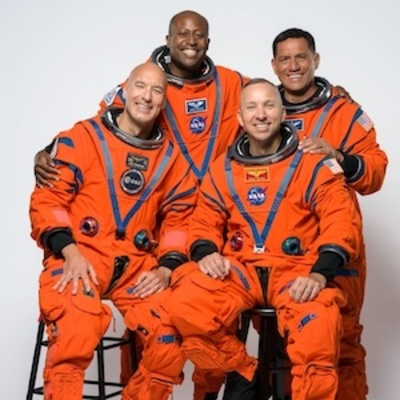
2026.06.10 | Artemis III: Apollo 9 Redux
On The Space Show for Wednesday, 10 June 2026:
Artemis III mission profile and crew unveiled:
During Artemis III, the agency’s SLS (Space Launch System) rocket will launch the Orion spacecraft and its crew from NASA’s Kennedy Space Center in Florida to low Earth orbit. After Orion's systems are checked out, the spacecraft will, for the first time, demonstrate rendezvous and docking capabilities with test versions from one, or both, American commercial human landing systems in development by Blue Origin and SpaceX.
Artemis III crew assignments are as follows:
* NASA astronaut Randy Bresnik, Commander
* ESA (European Space Agency) astronaut Luca Parmitano, Pilot
* NASA astronaut Andre Douglas, Mission Specialist
* NASA astronaut Frank Rubio, Mission Specialist.
The speakers at the announcement include: Jared Isaacman (NASA Administrator), Jeremy Parsons (Acting Assistant Deputy Associate Administrator, Artemis Program Manager), John Couluris (Senior Vice President, Lunar Permanence, Blue Origin), Jessica Jemsen (Integration Vice President, Customer Operations, SpaceX), Nicola Fox (Associate Administrator, Science Mission Directorate, NASA) and Joseph Aschbacher (Director General, ESA). (Inserts courtesy JSC, ESA)
Australian Space Research Conference:
* Space debris; IADC Committee; Australia tracking debris; and impacts with Gillian Altham, Civil Space Monitoring Team, Australian Space Agency, Adelaide.
* Radiation resilience in Trichoplax adhaerens (P53 homologue tumour depressor gene) with Jennifer Tinker, Honours Student at the La Trobe Institute for Molecular Science, La Trobe University, Bundoora.
2026.06.03 | The Andy Thomas Space Foundation
On The Space Show for Wednesday, 3 June 2026:
The Andy Thomas Space Foundation with the Chair of the Foundation, Peter Nikoloff:
* What the Foundation is and what its aims and activities are.
* The 19th Australian Space Forum being organised for 21-22 July 2026, Adelaide, South Australia.
* The Kids In Space educational programme in primary schools.
* Nova Systems.
Space Show News:
* Blue Origin’s New Glenn rocket explodes on the launch pad at Cape Canaveral Space Force Base.
* Announcement of contract awards for NASA's Moon Base program; and how the explosion might affect the Moon Base mission schedule. (Inserts courtesy 6News, ABC, NASA)

2026.05.27 | China in Space: China's ten-year plan, and the growth of commercial launch services
On The Space Show for Wednesday, 27 May 2026:
Space Show News: Shenzhou 23
The launch of Shenzhou 23 and Hong Kong's involvement.
China in Space:
China's ten-year plan for space, and the growth of commercial launch services. (Inserts courtesy CGTN)
Turn Back Time: Surveyor 1
The Surveyor 1 soft landing on the Moon, and preparations for the Gemini 9 mission. (Inserts BBC, VOA, NZBC)

2026.05.20 | Monash High Powered Rocketry: Pushing the boundaries of space technologies
On The Space Show for Wednesday, 20 May 2026:
Space Show News: Australian Space Industry 2026 — Part 1
* Spiral Blue's first international LiDAR sale to Lodestar in the United Kingdom
* QuantX Labs on TEMPO
* Neuman Space's ND-25 propulsion system on CarbSAR.
Also, a giant sunspot on the far side of the Sun was observed by the Solar Orbiter and the Perseverance Rover on Mars.
SMILE and Psyche:
The China-ESA satellite SMILE (Solar-wind Magnetosphere Ionosphere Link Explorer) has been launched, and the asteroid mission Psyche has had its trajectory changed by passing close to Mars. (Inserts courtesy ESA, JPL)
Monash HPR: Pushing the boundaries of space technologies
The Space Show in conversation with Johson Zheng, Project Lead and Bavreet Ubhi, Propulsion Vice Lead, of Monash High Powered Rocketry, Monash University.
Monash High Powered Rocketry (or MHPR) is a student team at Monash University revolutionising student rocketry in Australia by developing innovative space technologies, fostering collaboration, and igniting passion in future generations through outreach.
With a team of over 100 members, MHPR actively competes in both the International Rocket Engineering Competition (IREC) and Australian Universities Rocketry Competition (AURC). The design and manufacturing of almost all components of these rockets is done in-house by students, including all airframe components and many flight computers.
Monash HPR is developing, manufacturing and testing a hybrid rocket engine using paraffin and liquid oxygen.
Turn Back Time: The 60th anniversary of the launch of Europa 1 F-4 from Woomera.
2026.05.13 | Extraterrestrial Life — Could We Cope?
On The Space Show for Wednesday, 13 May 2026:
Space Show News: The Australian Federal Budget — An analysis of the space and astronomy sections of the 2026 Federal Budget.
Extraterrestrial Life - Could We Cope?
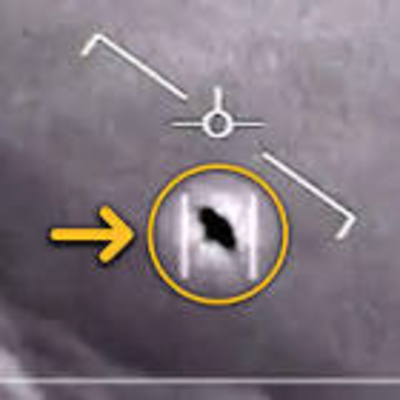
The US government has released a first batch of 160 previously classified files on alleged UFO sightings and alien life. The files include a 1947 report of "flying discs" and a photo of "unidentified phenomena" taken from the Moon's surface during the Apollo 12 lunar mission in 1969.
In light of these releases, we’ll first hear comments from President Trump, then a fascinating retrospective discussion, largely philosophical in nature, between the New Zealand astronomer and television presenter Peter Read and Professor Alan Forbes of Wellington's Victoria University on how humanity might cope with the discovery of extraterrestrial life. (Inserts Fox News, WH and NZBC)
The Andy Thomas Space Foundation:
Nicola Sasanelli (Adjunct Professor and then Chief Executive Officer, Andy Thomas Space Foundation, Adelaide) on the formation and purposes of the Foundation. (Recorded by The Space Show at a meeting of the Space Association of Australia, South Melbourne)
A preview of the China-ESA satellite SMILE (or Solar-wind Magnetosphere Ionosphere Link Explorer), which is due to be launched on 19 May 2026.
SMILE is a collaborative satellite mission between the European Space Agency (ESA) and the Chinese Academy of Sciences (CAS) designed to study how the solar wind interacts with Earth's magnetic shield.
2026.05.06 | Artemis II: A shared moment, especially for younger audiences
On The Space Show for Wednesday, 5 May 2026:
YouGov polls about the Artemis 2 circumlunar mission and Apollo 11 lunar landing
One in six Australian adults watched the Artemis II launch live, and many still believe in the value of space exploration.
In the wake of the Artemis II launch, new research from YouGov reveals that space exploration continues to capture the imagination of Australians, offering not just a moment of awe, but a reminder of what global collaboration can achieve.
The study found that more than half of Australian adults (54%) watched footage of the Artemis II launch, either live or after the event. Notably, one in six (16%) tuned in live, equating to nearly 3.5 million Australians experiencing the launch in real time. In total, more than 11.5 million Australians engaged with the mission in some form.
The launch proved particularly compelling for younger generations. Nearly one in four (24%) Gen Z adults watched the event live, followed by 17% of Millennials, highlighting the enduring appeal of space milestones among younger audiences.
Space Show News: Voyager 1
Due to declining power, an instrument on Voyager 1 is to be shut down ahead of major changes on both Voyager spacecraft.
Turn Back Time: Mars Odyssey
The 25th anniversary of the launch of the 2001 Mars Odyssey mission.
2026.04.22 | How the Vengeance Weapon Two (V-2) first took flight in New Mexico
On The Space Show for Wednesday, 22 April 2026:
Turning Back Time
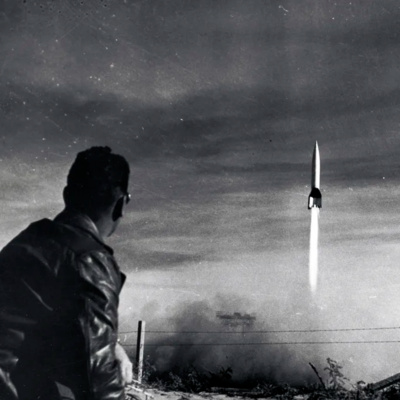
80 years since the first test launch of a V-2 rocket from American soil:
At 2:47 on the afternoon of Tuesday, 16 April 1946, a captured Nazi V-2 missile ascended into the sky from the U.S. Army's new White Sands Proving Ground in south-central New Mexico. It didn't get very far. The guidance system failed, a fin came off, and the rocket—after reaching an altitude of only 3.4 miles—crashed in the desert.
65 years since Yuri Gagarin became the first human in space:
On 12 April 1961, at 6:07 am UTC, the Vostok 3KA-3 (Vostok 1) spacecraft was launched from Baikonur Cosmodrome. Aboard was Yuri Gagarin, the first human to travel into space.
45 Years since the first flight of the Space Shuttle:
On 12 April 1981, the world's first reusable spacecraft, the Space Shuttle Columbia, was launched from Kennedy Space Centre, beginning the STS-1 mission. Commander John Young & pilot Robert Crippen strapped into the most complex machine ever built, with no test run or uncrewed test flight, and made history.
35 years since the launch of the Gamma-ray Observatory:
On 5 April 1991, the Compton Gamma-ray Observatory (CGRO) was launched aboard the Space Shuttle Atlantis from the Kennedy Space Center.
2026.04.15 | 76th International Astronautical Congress 2025 - Part 5
On The Space Show for Wednesday, 15 April 2026:
2025 International Astronautical Congress (IAC), Sydney:
"If you want to go fast, go alone; if you want to go far, go together.”
Part 2 of an astronaut panel discussion marking 25 years of continuous human presence on the International Space Station.
The astronauts are:
- Julie Payette (moderator) — Canadian engineer, scientist and former astronaut who served as the 29th Governor General of Canada from 2017 to 2021.
- Yi So-yeon — South Korean astronaut and biotechnologist who became the first South Korean to fly in space.
- Koichi Wakata — Japanese engineer and an astronaut working for Axiom Space after retiring from JAXA.
- Andreas Mogenson — Danish engineer and ESA astronaut who is best known for being the first Dane to fly in space.
- Alper Gezeravcı — a military pilot and the first Turkish astronaut who flew to the International Space Station with Axiom Mission 3 (Ax-3).
- Andrew Feustel — American/Canadian NASA astronaut and geophysicist who most recently served as commander on the International Space Station for Expedition 55 and 56.
2026.04.08 | 76th International Astronautical Congress 2025 - Part 4
On The Space Show for Wednesday, 8 April 2026:
Space Show News: Artemis II update
2025 International Astronautical Congress (IAC), Sydney:
- Lessons learned at Gilmour Space with Adam Gilmour, CEO and co-founder of Gilmour Space Technologies
- A conversation between the head of the Australian Space Agency (ASA), Enrico Palermo, and the President of the Japan Aerospace Exploration Agency (JAXA), Dr Hiroshi Yamakawa.
- Part 1 of an astronaut panel discussion marking 25 years of continuous human presence on the International Space Station. The astronauts are:
- Julie Payette (moderator) — Canadian engineer, scientist and former astronaut who served as the 29th Governor General of Canada from 2017 to 2021.
- Yi So-yeon — South Korean astronaut and biotechnologist who became the first South Korean to fly in space.
- Koichi Wakata — Japanese engineer and an astronaut working for Axiom Space after retiring from JAXA.
- Andreas Mogenson — Danish engineer and ESA astronaut who is best known for being the first Dane to fly in space.
- Alper Gezeravcı — a military pilot and the first Turkish astronaut who flew to the International Space Station with Axiom Mission 3 (Ax-3).
- Andrew Feustel — American/Canadian NASA astronaut and geophysicist who most recently served as commander on the International Space Station for Expedition 55 and 56.
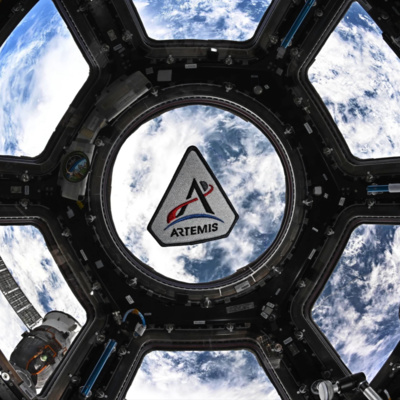
2026.04.01 | Looking back at the Earth from space
On The Space Show for Wednesday, 1 April 2026:
Space Show News:
* Artemis II mission poised to launch.
Lunar Astronomy
Dr Martin Elvis, Senior Astrophysicist at the Centre for Astrophysics at Harvard & Smithsonian, speaking at the 2025 International Astronautical Congress (IAC) in Sydney, Australia.
Lunar Geology
Dr Walter Kiefer of the Lunar and Planetary Institute responds to the Moon hoax conspiracy by explaining how lunar geology counters it.
Looking back at the Earth from space
On the eve of the Artemis II mission, astronaut Tracy Caldwell Dyson reflects on looking back at the Earth from the cupola of the International Space Station.
2026.03.25 | Ignition: NASA Unveils Initiatives to Achieve America’s National Space Policy
On The Space Show for Wednesday, 25 March 2026:
The announcement of a major change in direction and focus for NASA with Jared Isaacman, NASA Administrator. (Courtesy NASA HQ)
Policy as a compass for Australia's lunar future with Jeremy Kruckel, a member of the Space Association of Australia.
The lunar discoveries of LRO
A summary of the achievements of the Lunar Reconnaissance Orbiter since its launch in 2009. (Courtesy GSFC)
Turn Back Time: Luna 10
Sixty Years ago, Luna 10 became the first craft to be placed into orbit around the Moon, and how a 'swifty' was pulled on the Communist Party Congress.
Should spacefarers have their appendix removed before a long-duration mission? Also, reflections on the lack of aerospace medical training in Australia with Dr Rowena Christiansen, Medical School, University of Melbourne.

2026.03.18 | Closing the Loop: An Excremental History of the Space Age
On The Space Show for Wednesday, 18 March 2026:
Artemis II Mission Update: Read the latest update here.
Post-Shuttle Changes to the Kennedy Space Center (KSC)
As preparations are being made for the launch of Artemis II by the second Space Launch System (SLS) rocket from the Kennedy Space Center, we pop back to 2014 when Mike Bolger (Program Manager, Ground Systems Development and Operations, KSC, Florida) described the ground infrastructure changes being made in preparation for the SLS and commercial operators, and Chris Crumbly (Manager, Space Launch System Payload Integration and Evolution, Marshall Space Flight Center, Huntsville, Alabama) set out the status of the Space Launch System. (Inserts courtesy KSC)
Stools in Space: An Excremental History of the Space Age
The answer to every child's (everyone’s?) question about human spaceflight provided by: Walter Cunningham (Apollo 7 astronaut), Jim Lovell (Gemini 7 & 12 and Apollo 8 & 13 astronaut), Richard Scheuring (NASA Flight Surgeon), Wally Funk (Mercury 13 candidate and Blue Origin NS-16 commercial spaceflight participant), and David Munns (researcher).
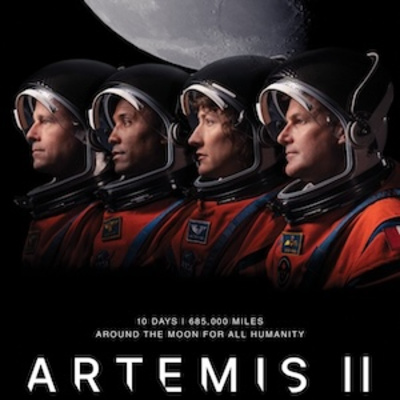
2026.03.11 | Artemis II Crew Briefing
On The Space Show for Wednesday, 11 March 2026:
Artemis II Crew Briefing — 24 September 2025
In anticipation of their forthcoming historic flight, the four members of the Artemis II crew discuss their planned mission around the Moon and answer questions from the media. (Inserts courtesy JSC)
Turn Back Time: 60th Anniversary of Gemini 8
The story of the near-disastrous flight of Gemini 8 is told via a series of contemporary recordings "as it happened". (Inserts courtesy NZBC, VOA and ABC)
Precursor audio: Recordings from the NZBC, VOA and Andrew Rennie, describing the visit to Australia and New Zealand by astronauts Frank Borman and Wally Schirra soon after their Gemini 7 and Gemini 6 space missions. Also, some of Andrew's photos of the event.

2022.12.21 | 50th Anniversary of Apollo 17 - Part III: On the Shoulders of Giants
On The Space Show for Wednesday, 21 December 2022:
50th Anniversary of Apollo 17 - Part III: On the Shoulders of Giants
Gene Cernan, Harrison Schmitt and Jim Lovell in conversation with journalist Phil Rogers at Chicago’s Adler Planetarium on 13 November 2012.

2026.03.04 | Dart AE hypersonic demonstrator — Hypersonix Launch Systems
On The Space Show for Wednesday, 4 March 2026:
Dart AE hypersonic demonstrator by Hypersonix Launch Systems
The launch of Queensland's Hypersonix Launch Systems Dart AE hypersonic aircraft on a modified Rocket Lab Electron (HASTE) rocket. (Inserts courtesy HLS, Rocket Lab)
Space Show News:
* Update on Artemis II launch delay.
* Changes to the Artemis program: NASA revises plans for future Artemis missions, updates architecture and cancels upgrades to SLS
Lost Armstrong:
Bemoaning the fact that there is no definitive photograph of Neil Armstrong standing on the Moon.
Turn Back Time:
Sixty years ago, Cosmos 110 carried two dogs into the Van Allen radiation belt; Intelsat decided to use geostationary satellites; Venera 2 and Venera 3 reached Venus; and Gemini 8 was being prepared for an ambitious flight. (Inserts courtesy NZBC, BBC, VOA, Radio Australia, Radio Moscow)
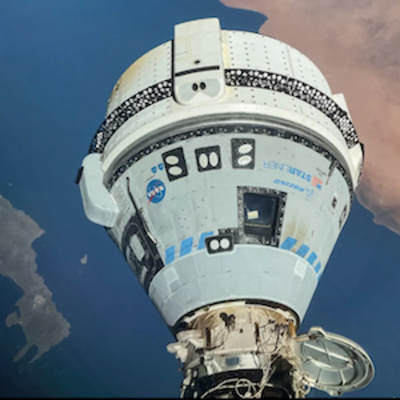
2026.02.25 | NASA Releases Boeing CST-100 Starliner Report on Crewed Flight Test Investigation
On The Space Show for Wednesday, 25 February 2026:
Space Show News:
Artemis II's second launch delay
After a successful wet-dress rehearsal, the Artemis II launch has been delayed at least until April by a helium flow problem in the Interim Cryogenic Upper Stage. The Space Launch System (SLS) has been moved back to the Vehicle Assembly Building in Florida for inspection and repairs.
NASA Releases Boeing CST-100 Report on Crewed Flight Test Investigation
NASA Administrator Jared Isaacman describes the report on the problems with the Boeing CST-100 Starliner spacecraft and gives an assurance that it will not fly with a crew until it is certified safe.
The Space Show in conversation with:
- Zac Warton, Team Co-lead of Monash Nova Rover of Monash University, Clayton, discussing the NOVA Rover competition, funding, rover improvements, sideways driving, and promoting women's involvement.
- Assoc. Prof. Daniel Eddington-Mitchell, Department of Mechanical and Aerospace Engineering's Shock Laboratory at Monash University, Clayton, discussing resonance in rocket nozzles.
- Qibin Xu, PhD Student at the University of New South Wales, Sydney, discussing satellite signal processing in progressive integrity evaluation.
2026.02.18 | 76th International Astronautical Congress 2025 - Part 3
On The Space Show for Wednesday, 18 February 2026:
Space Show News:
On 27 November 2025, AtSpace, a Brisbane-based rocket manufacturer, entered the rocketry record books by successfully launching their Australian-made A01 rocket higher than any other Australian commercial rocket has gone before.
Private spacecraft will give NASA's Swift space telescope an orbital boost
Arizona-based Katalyst Space Technologies has scored a contract to raise the altitude of NASA's Neil Gehrels Swift Observatory, which has been losing altitude due to atmospheric drag.
IAC 2025 Opening Ceremony — Part 3
Historical memories from Paul Scully-Powers, Katherine Bennell-Pegg and Roger Franzen, and the presentation of the IAF World Space Award to the Chang'e 6 Team. (Inserts courtesy IAC & CGTN)
Space Show News:
Landslides on the Moon
Turn Back Time: Arrokoth
New Horizons team members Alan Stern, Cathy Olkin, Carly Howett and Jeff Moore respond to reporters' questions on the day after the 2019 January 1 flyby of the Kuiper Belt asteroid Arrokoth. (Courtesy JHU)
2026.02.11 | 76th International Astronautical Congress 2025 - Part 2
On The Space Show for Wednesday, 11 February 2026:
Turn Back Time: Voyager 2 at Uranus
Ed Stone, Project Scientist, describes the findings of Voyager 2 at Uranus, 40 years ago. (Insert courtesy JPL)
Perseverance rover status update
The status of the Perseverance rover, and future plans for exploration and rock sample collection with Steve Reid, Jet Propulsion Laboratory, Pasadena, California (Courtesy AGU)
IAC 2025 Opening Ceremony - Part 2
The remarks of Australian Governor-General Ms Sam Mostyn AC, and historical memories from Kerrie Dougherty, Owen Mace, John Saxon and Gordon Pike from the opening ceremony. (Inserts courtesy IAC)
2026.02.04 | Ensuring American Space Superiority: A New U.S. Space Policy Directive
On The Space Show for Wednesday, 4 February 2026:
The Space Show is in conversation with Angelo Di Grazia, a Committee member of the Space Association of Australia.
*******
Space Show News —
The Artemis II launch has been delayed by at least one month due to a hydrogen leak during a wet dress rehearsal.
*******
Ensuring American Space Superiority: A new U.S. space policy directive —
On 18 December 2025, President Trump signed an executive order entitled Ensuring American Space Superiority – essentially the new cornerstone of U.S. National Space Policy.
Key highlights:
- Moon missions accelerated — Americans back on the lunar surface by 2028 (with Artemis), with the first pieces of a permanent lunar outpost established by 2030.
- Space nuclear power push — Deploy reactors in orbit and on the Moon, including a surface reactor launch-ready by 2030.
- National security focus — Build next-gen missile defence tech (including space-based) by 2028, develop strategies to detect/counter threats (even nuclear weapons in orbit) all the way out to cislunar space, and make the military space architecture more resilient and commercial-friendly.
- Commercial boom — Aim to pull in an extra 50 billion dollars of private investment by 2028, ramp up launch cadence, replace the ISS with private stations by 2030, and reform acquisitions to favour fast, commercial solutions.
- Organisational changes — Revokes the old executive order re-establishing the National Space Council (first Trump administration/Biden administration), shifts coordination to the President's science advisor, and tweaks older policies on space traffic management.
*******
A word from the new NASA Administrator, Jared Isaacman —
On 19 December 2025, the newly appointed NASA Administrator addressed the agency's staff about his vision for the future of NASA and answered questions from members of the workforce.
2026.01.28 | SPECIAL: 40th Anniversary of the STS 51-L Space Shuttle Challenger Disaster
On The Space Show for Wednesday, 28 January 2026:
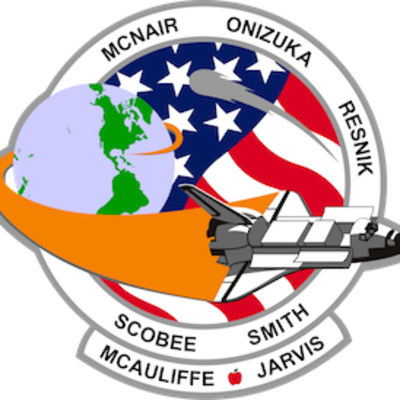
The 40th anniversary of the STS 51-L disaster that destroyed the Space Shuttle Challenger and killed seven astronauts on 28 January 1986.
STS-51-L would have been the 25th mission of the NASA Space Shuttle program. Tragically, the Challenger and her crew were lost in an explosion 73 seconds after liftoff from Kennedy Space Center Launch Complex 39B. After a lengthy investigation, the cause was determined to be an o-ring failure in the right solid rocket booster aggravated by extreme cold weather in Florida before the launch.
The mission was planned as the first Teacher in Space Project flight, in addition to observing Halley's Comet for six days and performing a routine satellite deployment.
The Challenger crew:
- Francis R. Scobee, Commander
- Michael J. Smith, Pilot
- Judith A. Resnik, Mission Specialist
- Ellison S. Onizuka, Mission Specialist
- Ronald E. McNair, Mission Specialist
- S. Christa McAuliffe, Teacher in Space
- Gregory B. Jarvis, Payload Specialist
2025.12.17 | 76th International Astronautical Congress 2025
On The Space Show for Wednesday, 17 December 2025:
Bill Nelson, Administrator, NASA and Pam Melroy, Deputy Administrator, NASA, speaking at the National Press Club in Canberra on 23 March 2023. The then Administrators answered questions from Press Club members. (Courtesy NPC)
Enrico Palermo, Head, Australian Space Agency, Adelaide
Welcome speech to the 2025 International Astronautical Congress in Sydney: Growth of the Australian space industry and agreements with the U.S. (NASA) and Europe (ESA). (Courtesy IAC)
Sean Duffy, Acting Administrator, NASA and Clay Mowry, President, International Astronautical Federation, in conversation at the 2025 International Astronautical Congress, Sydney:
Artemis; American leadership; commercial industry; lunar village; sustainability; NASA does exploration, not routine; and nuclear power on the Moon. (Courtesy IAC)
Turn Back Time: Pioneer 6 and its interplanetary siblings
The launch 60 years ago yesterday of Pioneer 6, along with the history of its siblings, Pioneer 7, Pioneer 8, Pioneer 9, and Pioneer E.
2025.12.10 | Conversations at the 24th ASRC 2025 - Part 3: HEO - Non-Earth Imagery
On The Space Show for Wednesday, 10 December 2025:
Conversations at the 24th Australian Space Research Conference 2025 - Part 3: HEO - Non-Earth Imagery
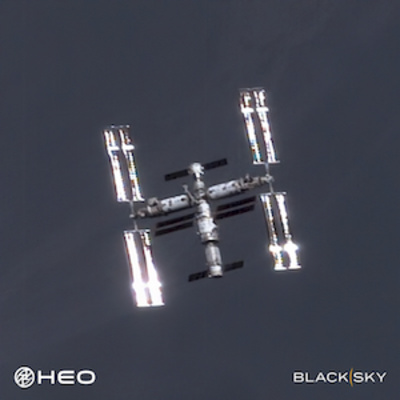
The Space Show in conversation with Hiranya Jayakody, Chief Technical Officer & Co-founder, HEO, Sydney.
Hiranya talks about the formation of HEO, its aims, rented and hosted cameras for imaging satellites, reasons for photographing satellites, and the asteroid Apophis mission.
Impulse Space and LEO Express 3
A report on the launch of the LEO Express 3 satellite carrying HEO's Holmes Mark 2 camera, a description of Impulse Space, and the vision of founder Tom Mueller for cargo delivery missions to the Moon.
Turn Back Time: Gemini Rendezvous - Part 2
Sixty years ago, Gemini 7 and Gemini 6A returned to Earth after a rendezvous in orbit. The story of the parody song "Hello Wally".
2025.12.03 | Conversations at the 24th ASRC 2025 - Part 2: SpIRIT on Orbit
On The Space Show for Wednesday, 3 December 2025:
SpIRIT on Orbit
Professor Michele Trenti (Principal Investigator, SpIRIT, University of Melbourne) describes the Hermes instrument on the SpIRIT satellite and its results.
(Conversation with The Space Show recorded at the 24th Australian Space Research Conference 2025)
[10.01.2024 SpIRIT in the Sky: The Space Show in conversation with Clint Therakam, Thermal Engineer, Melbourne Space Laboratory at the University of Melbourne, discussing the SpIRIT satellite, its experiments, and Clint’s role in the project]
EIRSAT-1: Ireland’s first satellite
A description of a similar gamma ray instrument on Ireland's first satellite, EIRSAT-1, and a reading of the poem “All Ways Home” (Gach Sli Abhaile) that was mounted onto the satellite.
Turn Back Time: Gemini Rendezvous
Sixty years ago, Gemini 7 and Gemini 6A made a rendezvous in orbit following the scrubbing of the Gemini 6 mission.
2025.11.26 | Conversations at the 24th Australian Space Research Conference 2025
On The Space Show for Wednesday, 26 November 2025:
Reflections on the 24th Australian Space Research Conference (ASRC) 2025
The ASRC is organised by the National Space Society of Australia, Mars Society Australia, and members of the Australian space research community.
The ASRC is the primary annual meeting for Australian space research. It welcomes researchers, engineers, educators, business and policy, and other workers from across the university, industry and government parts of the space sector and is not limited to Australian-based research or researchers.
Skykraft: Space-Enabled Air Traffic Management with Douglas Griffin, Chief Engineer at Skykraft.
Skykraft is an Australian Air Traffic Satellite Management System that delivers Air Traffic Management (ATM) services from space to serve the global market for air traffic surveillance and communications, especially over remote terrestrial and oceanic regions.
The Austronaut: Thomas Mueller
Austronaut workshops and programs equip participants with the fundamental knowledge and skills aligned with astronaut candidate preparation, whilst exploring how these skills can improve both professional and everyday performance to support ongoing success and fulfilment.
Next workshop — “Exploration: From the Inner World to Outer Space” with Australian polar explorer and private astronaut, Eric Phillips, Melbourne, 29 November 2025.
Register on Humanitix: https://events.humanitix.com/austronaut-exploration-mel
Use the discount code “Space_Show” to receive a 50% discount.
LinkedIn: Austronaut
Instagram: Austronaut.Space
Chris Boshuizen: An Australian spaceflight participant aboard Blue Origin’s New Shepherd (NS-22), in conversation with Blue Origin during preparations for NS-25.
X(Twitter): @cboshuizen
(Audio insert courtesy of Blue Origin)
2025.11.19 | Blue Origin’s New Glenn (NG-2) and NASA’s ESCAPADE
On The Space Show for Wednesday, 19 November 2025:
New Glenn (NG-2) Launches ESCAPADE
The launch of the twin ESCAPADE Blue and ESCAPADE Gold spacecraft towards Mars by the second New Glenn rocket. (Inserts courtesy GSFC, Blue Origin)
Turn Back Time
The bittersweet story of Venera 2, Venera 3 and Cosmos 96.
Shenzhou update
The Shenzhou 20 crew lands in Shenzhou 21, leaving the Shenzhou 21 crew awaiting the launch of Shenzhou 22 on November 25.
Kessler Syndrome — Part Two:
Tracking small debris; Kessler will start from smaller rather than larger objects; new detection techniques; policy issues; and the need for regulation. (Courtesy AGU)
SpIRIT update:
Melbourne University's SpIRIT satellite has completed its technology tests and is now collecting scientific gamma ray observations.
Planet Earth — Episode 73: Sentinel B
2025.11.12 | China’s Shenzhou-20 and Orbital Debris
On The Space Show for Wednesday, 12 November 2025:
Shenzhou-20 and orbital debris:
The launch of Shenzhou-21, debris impact on Shenzhou-20, and options for the continued crew exchange on Tiangong. (Inserts courtesy CGTN)
Turn Back Time — 1970-71:
The Luna 17 and Lunokhod 1 mission. (Inserts NZBC, Radio Moscow)
The Kessler Syndrome — Part One:
Topic and speakers' introduction; definitions; methodology in defining the hazards of space debris. (Courtesy AGU)
2025.11.05 | Ethilogical: The Ethics of Space Colonisation
On The Space Show for Wednesday, 5 November 2025:
The Ethics of Space Colonisation with Gordon Young, Principal at Ethilogical Consulting and Lecturer in Professional Ethics, School of Design, RMIT University, Melbourne.
(Recorded by The Space Show at a meeting of the Space Association of Australia in South Melbourne)
2025.10.29 | When the NASA Administrator invited Australia to “train and fly with us”
On The Space Show for Wednesday, 29 October 2025:
From The Space Show archives (1990):
NASA’s The Space Story: AMBLER — A six-legged rover for planetary exploration.
Come train and fly with us:
Bill Nelson, NASA Administrator & Pam Melroy, NASA Deputy Administrator, speaking at the National Press Club in Canberra on 23 March 2023. The then Administrators comment on their agency's activities, relationships with Australia and plans to return to the Moon. (Courtesy National Press Club)
iSpace:
Ahead of the failed Hakuto-R M2 landing on the Moon, employees of iSpace describe their work. (Inserts courtesy iSpace)

2025.10.22 | The Karman Project: The Space That Makes Us Human
On The Space Show for Wednesday, 22 October 2025:
The Karman Project: Building a cooperative future in space
The Karman Project is a non-profit foundation promoting peace and security in space through strategic international cooperation.
The project aims to unite global decision-makers to drive urgent, collaborative action for a sustainable and peaceful future in space — recognising the core role of international cooperation in securing the space sector's prosperity and Earth's critical reliance on it.
The organisation fosters trust, cooperation and independent dialogue among global leaders in tech, science, business, politics, the arts, and people in the space industry who want to make a positive impact on space.
The Space That Makes Us Human is a documentary film experience showcasing the mission, vision and voices of The Karman Project. It shifts into focus The Karman Project’s efforts in connecting the leaders of tomorrow to create a positive impact in space and transport this message to a global audience.
This episode features comments from Katherine Bennell (Australian Space Agency), Hélène Huby (Co-founder & Chair, The Karman Project), Thomas Pesquet (Astronaut, ESA), William Gerstenmaier (Vice President, Mission Assurance, SpaceX), Karen Hitschke (Board member, Yunus Social Business), Chris Boshuizen (Co-founder, Planet), Jonathan Hofeller (Vice-President, Starlink, SpaceX), Sera Markoff (Member, Event Horizon Project, University of Amsterdam), Jean-Jaques Dordain (former Director General, ESA) and Prateep Basu (Co-founder & CEO, SatSure).
Marking what would have been the 75th birthday of astronaut Ronald McNair, who died in 1986 during the launch of STS 51-L, Space Shuttle Challenger.
2025.10.15 | How to train your astronaut
On The Space Show for Wednesday, 15 October 2025:
How to become an astronaut with Rose Tasker at the Moon Village Association, Deakin Edge, Melbourne.
European Space Agency (ESA) astronaut Andreas Mogensen
Born in Copenhagen, Denmark and selected as an ESA astronaut in 2009, Andreas completed extensive training in spacecraft operations, spacewalks, and extreme environment missions, including ESA CAVES and NASA NEEMO underwater missions. He has served as European liaison officer to NASA’s Johnson Space Center and participated in ESA’s Pangaea field science training.
Andreas has logged two spaceflights: the 10-day ‘iriss’ mission to the ISS in 2015, and the 2023 ‘Huginn’ mission on SpaceX Crew-7, where he became the first non-US pilot of the Crew Dragon and later the longest-serving European commander of the International Space Station.
NASA The Space Story: ROSAT (ROentgen SATellite) was an X-ray observatory developed through a cooperative program between Germany, the United States, and the United Kingdom.
The Chandra X-ray Observatory is the world's most powerful X-ray telescope. It has eight-times greater resolution and is able to detect sources more than 20-times fainter than any previous X-ray telescope.
NASA The Space Story: Fast Auroral SnapshoT (FAST or Explorer 70) was a NASA plasma physics satellite, and the second spacecraft in the Small Explorer program (SMEX). FAST was designed to observe and measure the plasma physics of the auroral phenomena which occur around both of Earth's poles.
Planet Earth - Episode 72:
* Carbon Emissions: Europe’s Regional Carbon Cycle Assessment and Processes project with Prof. Ana Bastos of the Max Planck Institute
* The Copernicus Earth Observation Program supports society by providing authoritative information about the past, present and future climate in Europe and the rest of the World.

2025.10.08 | World Space Week 2025: “Living in Space”
On The Space Show for Wednesday, 8 October 2025:
Kerrie Dougherty, Board Member, World Space Week Association
* International Space Week - its origin, local events & theme. (Recorded Deakin Edge, Federation Square, Melbourne, 2019)
* World Space Week theme for 2025 is "Living In Space”.
* Australia in Space by Kerrie Dougherty: This revised and updated edition of Space Australia tells the definitive story of Australia’s involvement with space activities, from the earliest rocketeers to the latest satellite projects.
Parker Solar Probe Perihelions - Part 2
* Parker Solar Probe Completes 25th Close Approach to Sun
* Mission scientists discuss the series of perihelion passes that brought the Parker Solar Probe as close as 6.1 million kilometres of the solar surface at a record setting speed of 687 000 km/h. (Inserts courtesy GSFC)
Bennu organics and the origins of life in the solar system
* The analysis of the samples of asteroid Bennu brought to Earth by the OSIRIS-REx spacecraft reveals the presence of organic chemicals. (Courtesy GSFC)
FUSE
* The FUSE astrophysics satellite, and the design of other satellites. (Courtesy GSFC)
Planet Earth - Episode 71
* Some Queensland projects use space technology to address environmental issues; the AIRS (Atmospheric InfraRed Sounder) on the Aqua satellite; and Agriculture and Climate Change (Inserts courtesy JPL, GSFC).
2025.10.01 | Integrity, Parker Solar Probe and Volcanism on Io
On The Space Show for Wednesday, 1 October 2025:
Artemis II Orion spacecraft named Integrity:
* The crew of Artemis II explain the naming of their Orion capsule. (Courtesy NASA)
Parker Solar Probe Completes 25th Close Approach to Sun:
* Mission scientists discuss the series of perihelion passes that brought the Parker Solar Probe as close as 6.1 million kilometres of the solar surface at a record setting speed of 687,000 km/h.
(Courtesy GSFC)
Juno at Jupiter: Io’s tidal response precludes a shallow magma ocean:
* Scott Bolton (Southwest Research Institute), Shannon Brown (Jet Propulsion Laboratory), Alessandro Mura (National Institute for Astrophysics, Italy) and Ryan Park (Jet Propulsion Laboratory), discuss the findings by the Juno spacecraft about the internal structure of Io and Jupiter.
(Courtesy American Geophysical Union and European Geophysical Union)
2025.09.24 | NASA confirms Artemis II crewed lunar orbital mission set for 2026
On The Space Show for Wednesday, 24 September 2025:
Artemis II crewed lunar orbital mission confirmed by NASA is set for 2026
The announcement that while the target launch date for Artemis II remains April 2026, NASA will attempt to bring that forward to February 2026, without compromising crew safety or mission success.
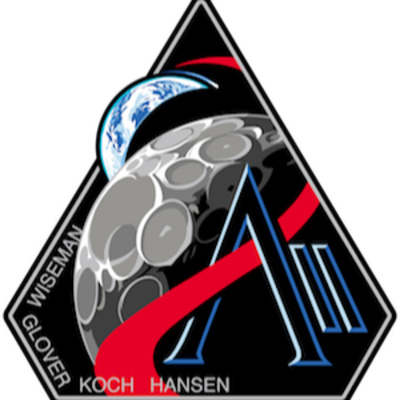
Four astronauts (Reid Wiseman, Commander; Victor Glover, Pilot; and Mission Specialists, Christina Koch & Jeremy Hansen) will venture around the Moon on Artemis II, the first crewed mission on NASA's path to establishing a long-term presence at the Moon for science and exploration through the Artemis program. The 10-day flight will help confirm systems and hardware needed for early human lunar exploration missions.
The mission builds on the success of the uncrewed Artemis I mission in 2022, and will demonstrate a broad range of capabilities needed on deep space missions. The Artemis II test flight will be NASA’s first mission with crew atop the SLS (Space Launch System) rocket and inside the Orion spacecraft.
(Audio inserts courtesy NASA)
Space Weather Trio
To be launched this evening at 21:30 AEST, details of the Curruthers, IMAP and the SWFO-L1 spacecraft, which will orbit Lagrange Point 1.
(Audio inserts courtesy of the Goddard Space Flight Center, Maryland)
Life on Mars?
The Perseverance rover has found evidence for traces of past life at Jezero crater on Mars, drawing attention to whether, and how, the rock samples collected by Perseverance will be returned to Earth for further analysis.
(Audio inserts courtesy of NASA)
Planet Earth — Season 6 | Episode 70
Some Queensland projects to use space technology to address environmental issues.
2025.09.17 | Event Horizon: Merging Black Holes and Gravitational Waves — Part 2
On The Space Show for Wednesday, 17 September 2025:
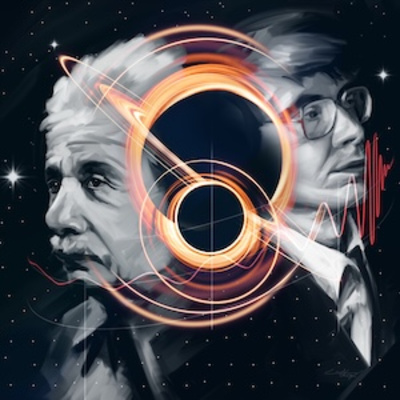
Merging Black Holes and Gravitational Waves - Part 2: The Hawking Black Hole Area Theorem Confirmation
This week, The Space Show is in conversation with Teagan Clarke, PhD candidate and a lead researcher in gravitational-wave astrophysics at the School of Physics and Astronomy, Monash University and the ARC Centre of Excellence for Gravitational Wave Discovery (OzGrav).
MONASH UNIVERSITY — MEDIA RELEASE
11 September 2025
Australian astrophysicists help prove Stephen Hawking’s landmark black hole prediction
A global team of astrophysicists, including Australians, has witnessed a collision between two black holes that was so loud, they were able to use it to test and prove Stephen Hawking’s Theory of Black Hole Thermodynamics.
The event, observed by the LIGO, Virgo, and KAGRA collaborations, involved two black holes merging to form a single, larger one, strikingly reminiscent of the historic first detection in 2015.
The research has been published in Physical Review Letters: doi.org/10.1103/kw5g-d732
(Image credit: OzGrav - ARC Centre of Excellence for Gravitational Wave Discovery)
Turn Back Time:
Fifty-five years since the Soviet Luna 16 sample return mission to the Moon.
BONUS | Stephen Hawking's Black Hole Area Theorem Confirmed
Embargoed until Thursday, 11 September 2025:
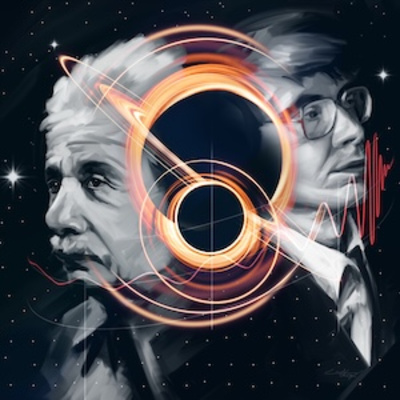
Prof. Eric Thrane, School of Physics and Astronomy at Monash University, explains the significance of the Hawking Black Hole Area Theorem confirmation in a Space Show exclusive.
MONASH UNIVERSITY — MEDIA RELEASE
11/09/2025 | 08:13 AM AEST
Australian astrophysicists help prove Stephen Hawking’s landmark black hole prediction
A global team of astrophysicists, including Australians, witnessed a collision between two black holes that was so loud that they were able to use it to test and prove Stephen Hawking’s Theory of Black Hole Thermodynamics.
The event, observed by the LIGO, Virgo, and KAGRA collaborations, involved two black holes merging to form a single, larger one, strikingly reminiscent of the historic first detection in 2015.
The research has been published in Physical Review Letters: doi.org/10.1103/kw5g-d732
(Image credit: OzGrav - ARC Centre of Excellence for Gravitational Wave Discovery)

2025.09.10 | Event Horizon: Merging Black Holes and Gravitational Waves — Part 1
On The Space Show for Wednesday, 10 September 2025:
Merging Black Holes and Gravitational Waves:
The Space Show is in conversation with Prof. Eric Thrane, School of Physics and Astronomy at Monash University, Clayton.
When scientists at the Laser Interferometer Gravitational-wave Observatory (LIGO) recently announced they had seen a bizarre pair of rapidly spinning black holes, the astrophysics community agreed it defied expectations — and may rewrite our understanding of the universe.
The announcement — “GW231123: A Binary Black Hole Merger” — describes unusually large black holes essentially smashing into each other. Each weighs more than 100 times more than our sun, and are spinning, where they would be expected to rotate more slowly, taking them to near the limits of what scientists understand to be physically possible.
The questions now are: How did these black holes form? Why are they so massive? And why are they spinning so fast?
2025.09.03 | Eric Philips: Australian Polar Explorer to Polar Orbiting Astronaut
On The Space Show for Wednesday, 3 September 2025:
Eric Philips: Australian Polar Explorer to Polar Orbiting Astronaut
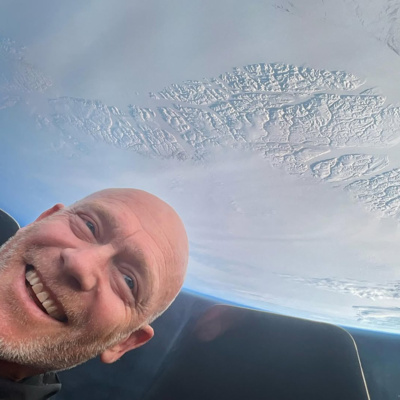
Eric Philips OAM (born 30 April 1962) is an Australian polar explorer, adventurer, polar guide and now private astronaut aboard the Fram2 mission.
To learn more about Eric Philips and the Fram2 mission, listen to our two-part special episodes of The Space Show from October 2024:
* 2024.10.02 | Fram2 Polar Mission — Part 1: One More Orbit
* 2024.10.09 | Fram2 Polar Mission — Part 2: Greenland & Polar Orbit
Planet Earth: Season 6 — Episode 69
The UK hosted the 26th UN Climate Change Conference of the Parties (COP26) at the Scottish Event Campus (SEC) in Glasgow on 31 October – 13 November 2021.
* 50th Anniversary of the Geostationary Operational Environmental Satellite (GOES) Program
Since 1975, NOAA's GOES Satellites have provided continuous imagery and data on atmospheric conditions and solar activity (space weather). They have even aided in search and rescue of people in distress. GOES data products have led to more accurate and timely weather forecasts and better understanding of long-term climate conditions.
* The Atmospheric Waves Experiment (AWE) on the International Space Station studies air glow caused by Atmospheric Gravity Waves.
* Global Precipitation Measurement or GPM Microwave Imager (GMI)
* Aerosols with Erika Podest, Carbon Cycle and Ecosystem Scientist at Jet Propulsion Laboratory
* Gavin Schmidt, Climate Scientist answers the question: How do we know what the climate of the Earth was like in the distant past?
Gavin Schmidt is a British climatologist, climate modeler and Director of the NASA Goddard Institute for Space Studies (GISS) in New York, and co-founder of the climate science blog RealClimate.

BONUS | The State of Space: My Perspective with Peter Beck, Rocket Lab
On The Space Show for Wednesday, 28 May 2025:
The State of Space: My Perspective
Sir Peter Beck, Rocket Lab Founder & CEO at the SmallSat Symposium, 4-6 February 2025, Mountain View, California.
Speaking from Auckland, New Zealand, Sir Peter Beck gives his personal views on the state of space in 2025, including launch vehicles, large constellations of satellites, funding, company failures, China, and his predictions for the international space industry in 2025.
(Courtesy SmallSat Symposium 2025 and Rocket Lab)