Overcommitted | Software Engineering and Programming Insights
By overcommitted.dev | Women in Tech and Tech Mentorship


Life Tech Stack | Developer Productivity Beyond Work
Engineers architect systems for work—but what about life? In this episode, Bethany, Brittany, and Erika reveal their personal tech stacks: the tools, habits, and sometimes deliberately low-tech strategies that power their daily routines, family life, and wellness. Discover how software engineer thinking applies to work-life balance, plus practical productivity systems you can steal for your own life.
Links
https://www.trustyduck.dev/posts/tech-stack-2025/
https://johnnydecimal.com/
https://github.com/ngerakines/jd
https://wisprflow.ai/
https://obsidian.md/
https://www.chezmoi.io/
https://www.amazon.com/Bose-QuietComfort-Cancelling-Headphones-Bluetooth
https://www.goodinside.com
https://www.readtangle.com/
https://www.sportsgossipshow.com/
https://www.wnycstudios.org/podcasts/classical-music-happy-hour
https://slate.com/podcasts/icymi
https://podcasts.apple.com/us/podcast/the-pragmatic-engineer/id1769051199
https://podcasts.apple.com/us/podcast/tech-brew-ride-home/id1355212895
Hosts
Overcommitted: https://overcommitted.dev
Bethany Janos: https://www.trustyduck.dev
Brittany Ellich: https://brittanyellich.com
Erika Eggemeyer: https://github.com/eggyhead
Content Creation, Craft, and Code: Inside Dreams of Code with Elliott Minns
Elliott Minns takes us inside Dreams of Code and his path from software engineer and manager to full-time content creator. He shares how he turns complex technical work into clear stories, balances depth with accessibility for a developer audience, and keeps craft at the center of the creative process. His latest project, a next-gen video editor built in Rust, brings those worlds together through technically ambitious work involving hardware, media encoding, and zero-copy performance.
The conversation also explores how ADHD shaped Elliott's career and creative process, what he learned from Dan Martell's "Buy Back Your Time," and why delegating to skilled humans still beats delegating to AI for some creative tasks. We dig into the economics and limitations of LLM-powered product features, how Elliott handles feedback from a technical audience, and why the ability to build software by hand still matters even as AI changes day-to-day development.
https://www.youtube.com/@dreamsofcode
https://www.buybackyourtime.com/
https://www.youtube.com/watch?v=WhjEL817Onw
https://www.youtube.com/@dreamsofautonomy
Hosts
Overcommitted: https://overcommitted.dev
Erika Eggemeyer: https://github.com/eggyhead
Bethany Janos: https://www.trustyduck.dev
Is Pair Programming Dead? | Code Quality & Engineering Culture Debate
Summary
This week on Overcommitted, Brittany, Bethany, and Erika try out a new format: instead of interviewing a guest, the three of them rate a running list of software engineering topics as overrated or underrated. They start with the fun stuff — dark mode, mechanical keyboards, standing desks, Vim, dotfiles — before moving into practices and process, where the real disagreements show up. Pair programming and code review as a quality gate both get contested, with opinions that have shifted noticeably since AI tools entered the picture.
From there the conversation covers stand-ups, sprint retros, story point estimation, 1:1s with managers, microservices, serverless, feature flags, software rewrites, vibe coding, and the myth of the 10x engineer, with each host landing in a different place on more than a few of them. It's a faster-paced, more opinionated episode than usual, and a good one for anyone who wants to hear three engineers who've worked together for years actually disagree on record.
Links
- Loop Engineering Blog Post: https://brittany-ellich.offprint.app/a/3mrjj34puva23-108-prs-in-eight-days-accidentally-discovering-loop-engineering
- Steve Yegge Blog Post: https://yegge.ai/essays/the-shape-of-things-to-come/
- Rewrites Talk: https://www.youtube.com/watch?v=fhlnan0dSUE&t=5s
- Sean Goedecke Article: https://www.seangoedecke.com/you-dont-have-to-be-smart-if-you-think-clearly/
Hosts
- Overcommitted: https://overcommitted.dev
- Bethany Janos: https://www.trustyduck.dev/
- Brittany Ellich: https://brittanyellich.com
- Erika Eggemeyer: https://github.com/eggyhead
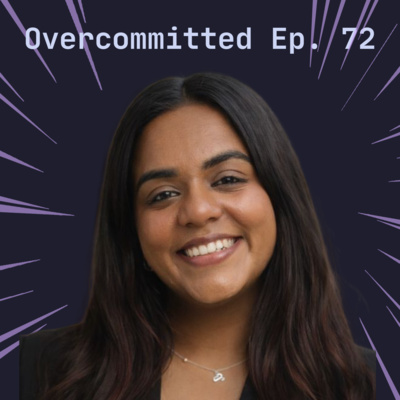
Starting a Software Engineering Career | Beating Imposter Syndrome in the AI Era with Sreya Sarathy
SummaryWhat does it look like to start a software engineering career right now, when AI has erased the "grunt work" that used to be how new grads learned? Brittany and Bethany sit down with Sreya Sarathy, a software engineer at Northwestern Mutual and 2025 UW–Madison grad (double major in computer science and data science), who spent her first year out of school running a free virtual panel series that drew 1,500+ registrations across speakers from Apple, Amazon, IBM, Starbucks, Ford, Deloitte, and GitHub.Sreya shares the Stack Overflow moment that broke her imposter syndrome spiral in college, why adding more to her plate cured her burnout instead of making it worse, how she built the early-career community she wished existed, and what it's like being handed advanced work as a new grad because AI now does the tasks juniors used to cut their teeth on. Plus: her product teardowns on Substack, what senior engineers can actually do to support early-career folks, and her dream of a low-pressure "optimize your life" hackathon.Links- Instagram - https://www.instagram.com/sreya.sarathy/- LinkedIn - https://www.linkedin.com/in/sreyasarathy/ - Substack - https://substack.com/@sreyasarathy- Website - https://sreyasarathy.com/- Designing Data-Intensive Applications - https://bookshop.org/p/books/designing-data-intensive-applications-the-big-ideas-behind-reliable-scalable-and-maintainable-systems-chris-riccomini/7dfa8afce8f3816e?ean=9781098119065&bkshp-astro=t- Don’t Make Me Think -https://bookshop.org/p/books/don-t-make-me-think-revisited-a-common-sense-approach-to-web-usability-steve-krug/d30340ad4751d00d?ean=9780321965516&bkshp-astro=tHosts:- Overcommitted: https://overcommitted.dev- Bethany Janos: https://www.trustyduck.dev/ - Brittany Ellich: https://brittanyellich.com
Closed That Tab: Agentic Identity, AI Security Incidents, and Loop Engineering
This week we're trying something new: Closed That Tab, a segment where each host shares one thing they finally read that was worth the time. Erika brings a post on agentic AI identity and delegation - covering why OAuth isn't quite enough for agents that accumulate permissions across a request lifecycle, and what transaction tokens (an IETF draft proposal) offer as a solution. Bethany covers Simon Willison's breakdown of the OpenAI security incident, where an eval harness escaped its sandbox by chaining zero-day vulnerabilities - and what responsible sandboxing and observability should have caught earlier. Brittany shares how she accidentally built a loop engineering system before knowing the term existed: a continuously running agent harness using git worktrees, sub-agents, and a memory file to close around 20 PRs a day, including self-healing flaky tests.
Links:
Erika’s Agentic AI Identity Read: https://khaledzaky.com/blog/delegation-is-the-real-identity-problem-in-agentic-ai
Bethany’s OpenAI CyberAttack Read: https://simonwillison.net/2026/Jul/22/openai-cyberattack
Empire of AI: https://bookshop.org/p/books/empire-of-ai-dreams-and-nightmares-in-sam-altman-s-openai-karen-hao
Brittany’s Loop Engineering Read: https://addyosmani.com/blog/loop-engineering/
Superpowers: https://github.com/obra/superpowers
Brittany’s Loop Engineering Blog post: https://brittany-ellich.offprint.app/a/3mrjj34puva23-108-prs-in-eight-days-accidentally-discovering-loop-engineering
Hosts:
Overcommitted: https://overcommitted.dev
Bethany Janos: https://www.trustyduck.dev/
Brittany Ellich: https://brittanyellich.com
Erika Eggemeyer: https://github.com/eggyhead
Open and Async Work | Remote Engineering Culture with Ben Balter
Learn how async-first communication transforms remote engineering culture and developer productivity. Ben Balter, open source governance expert, shares practical strategies for building transparent, documented workflows that help distributed teams collaborate without synchronous bottlenecks—and why this matters for engineers navigating complex project ownership.
Links
https://ben.balter.com/contact/
https://bsky.app/profile/ben.balter.com
https://open-and-async.com/
Hosts
Overcommitted: https://overcommitted.dev
Bethany Janos: https://www.trustyduck.dev/
Erika Eggemeyer: https://github.com/eggyhead
Building Terminal Graph, a Spatial Development Environment, with Caidan Williams
Caidan Williams put your terminals, browsers, editors, and AI agents on one infinite canvas. He joins Erika and Brittany to talk about Terminal Graph, the spatial development environment for macOS he built for himself first, and the self-taught path that took him from Minecraft mods at 13 to partner at a Seattle dev studio.
We get into the dataflow model that sets Terminal Graph apart, like piping a git diff straight into Claude Code or grepping a dev server's logs into a browser node. Caidan explains Blueprints, his approach to sharing a whole team workflow as a single file, and what it's like to run a product inside a holacracy with no bosses and no venture money.
Then he tells his career story. No college degree. A gap year spent applying to around 500 companies. Computer vision on dental and MRI images. Burnout, a layoff, and a cross-country move to Seattle with one duffel bag. His honest takeaway is that persistence, not raw talent, is what got him here.
If you build your own tools, wire agents into your workflow, or you're finding a non-traditional way into engineering, this one is for you.
Links
Terminal Graph: https://terminalgraph.com/
Caidan Williams: https://caidan.dev/
Tools mentioned
LazyGit: https://lazygit.dev/
Neovim: https://neovim.io/
Hosts
Overcommitted: https://overcommitted.dev
Erika Eggemeyer: https://github.com/eggyhead
Brittany Ellich: https://brittanyellich.com/
Follow Overcommitted so you don't miss next week's episode, and share it with an engineer who'd like it.
What VCs Want from Tech Talent | Engineering Careers with Melanie Nabar
What do investors actually look for in software engineers and tech founders? Melanie Nabar pulls back the curtain on what VCs see when evaluating engineering talent, sharing insider insights on career growth, technical credibility, and the skills that matter most when funding is on the line. Perfect for engineers ready to level up their career strategy.
Links
Melanie Nabar on LinkedIn: https://www.linkedin.com/in/melaniejordannabar/
Volition Capital: https://www.volitioncapital.com/
Hosts
Overcommitted: https://overcommitted.dev Bethany Janos: https://www.trustyduck.dev/ Erika Eggemeyer: https://github.com/eggyhead
Safety-Critical Software | System Reliability for Live Events with Lars Olson
Summary
What happens when a software bug stops a concert—or endangers a performer flying above the stage? System reliability takes on new meaning in live event tech. This week, Brittany and Erika talk with Lars Olson, full stack engineer at TAIT, about building safety-critical systems that power the world's biggest tours and theme parks. Lars shares how React and Rust meet real-world consequences, why error boundaries matter more than you think, and what production safety teaches us about code quality and engineering culture.
Links
- My Hometown Recipes - https://myhometownrecipes.com/
- Erik Lars Olson - LinkedIn - https://www.linkedin.com/in/eriklarsolson/
- Bluesky - https://bsky.app/profile/eriklars.bsky.social
- X - https://x.com/energyblazer
Hosts
- Overcommitted: https://overcommitted.dev
- Brittany Ellich: https://brittanyellich.com
- Erika "Eggyhead" Eggemeyer: https://github.com/eggyhead
Keeping Skills Sharp in the AI Age | Developer Productivity Essentials
As AI code intelligence tools reshape daily programming work, developer productivity and career growth depend less on speed and more on judgment. In this episode, we explore what skills actually matter when AI writes code—and why engineers need a new mindset about staying sharp. From code quality ownership to learning tactics, discover the practical skills that keep your value rising in an AI-native engineering world.
Links:
Math books: https://www.bravernewmath.com/
Crystal Bepis: https://crystalbepis.com/
GitHub Copilot App: https://github.com/features/ai/github-app
Hosts:
Overcommitted: https://overcommitted.dev
Bethany Janos: https://www.trustyduck.dev/
Brittany Ellich: https://brittanyellich.com
Erika Eggemeyer: https://github.com/eggyhead
Software Engineering in Production With Cameron Etezadi
What happens when coding becomes nearly free - but everything else in the software delivery process doesn't? Cameron Etezadi, CTO at LaunchDarkly, joins Erika, Brittany, and Bethany to talk about the gap between code that compiles and code that actually works in production. They cover vibe coding pitfalls, the release-observe-iterate loop, how AI is shifting engineers toward frontline manager behaviors, and why speed without control is a liability - not an asset. Cameron also shares how LaunchDarkly changed their intern interview process to reflect the AI era, what EU regulations mean for human accountability in AI-generated code, and why the classic two-pizza team is giving way to something much smaller.
Cameron Etezadi is the CTO at LaunchDarkly and brings experience scaling engineering organizations at Google, HashiCorp, and SAP. He's also a licensed flight instructor with ratings in fixed-wing, seaplane, helicopter, and gyroplane - and has logged over 400 skydives.
Show notes:
- Cameron on LinkedIn: https://www.linkedin.com/in/cameronetezadi
- LaunchDarkly: https://launchdarkly.com
- LaunchDarkly leadership page: https://launchdarkly.com/leadership/
- Rainier Flight Service bio: https://www.rainierflightservice.com/rainier-flight-staff/cameron-etezadi
Coding Interviews in the AI Era | Beyond LeetCode for Career Growth
Summary
Brittany's first weeks at Bluesky are reframing everything she thought about coding interviews. Career growth in tech still hinges on algorithm problems, but AI, remote work, and async development have fundamentally changed what actually signals engineering ability. Why do companies cling to LeetCode when software engineers now solve problems in decentralized, AI-augmented teams? We dig into what hiring should measure, why job-hunting feels unsettled, and how women engineers navigate visibility and advancement in the interview process.
Links
- How GitHub Engineers Learn New Codebases blog post: https://github.blog/developer-skills/application-development/how-github-engineers-learn-new-codebases/
- Diataxis: https://diataxis.fr
Hosts
- Overcommitted: https://overcommitted.dev
- Bethany Janos: https://www.trustyduck.dev/
- Brittany Ellich: https://brittanyellich.com
- Erika Eggemeyer: https://github.com/eggyhead
Why AI Coding Agents Keep Guessing | Context Gap & Code Intelligence with Dennis Pilarinos
Summary
Dennis Pilarinos has spent nearly two decades building developer tools at Microsoft Azure, AWS, and Buddybuild (acquired by Apple). Now CEO of Unblocked, he's tackling the critical problem holding back agentic AI development: context intelligence. Why do AI coding agents keep guessing? Because they lack the organizational and business context behind the code. In this episode, the Overcommitted hosts dig into how developers and AI agents can truly understand the "why" behind codebases, not just the "what"—and why this matters for code quality, productivity, and shipping reliable tools.
Links
- Dennis' email: dennis@getunblocked.com
- Unblocked: https://dub.sh/IeI82Vx
- Dennis on X: https://x.com/dennispilarinos
- Dennis on LinkedIn: https://www.linkedin.com/in/dennispi/
Hosts
- Overcommitted: https://overcommitted.dev
- Bethany Janos: https://github.com/bethanyj28
- Brittany Ellich: https://brittanyellich.com
- Erika Eggemeyer: https://github.com/eggyhead
Agentic AI Development | Shipping Real Tools with Sterling Chin
Summary
What does it actually look like to hand 90% of your workday over to an AI agent you built yourself?
Sterling Chin, founding DevRel at Inngest and creator of Marvin, an open-source AI chief of staff with nearly 1,000 GitHub stars, has been doing exactly that for months. In this episode, Sterling joins Brittany to talk through how Marvin works, why he built it, and what he's learned about the real friction points in AI adoption that most people don't talk about.
Sterling came into tech through a coding bootcamp after studying elementary education at BYU, landed at Postman where he led the R&D labs team, went viral on LinkedIn for posts about their AI assistant PostBot, and accidentally became a DevRel engineer because of it. Now at Inngest, he's the founding DevRel hire, and still building in public constantly.
Links
- Sterling's Website: https://sterlingchin.com/
- Sterling's LinkedIn: https://www.linkedin.com/in/sterlingchin/
- Sterling on GitHub: https://github.com/SterlingChin
- Sterling on Bluesky: https://bsky.app/profile/sterlingchin.bsky.social
- Sterling on Twitter: https://x.com/SilverJaw82
- Marvin: https://github.com/SterlingChin/marvin-template
- Sterling on YouTube: https://www.youtube.com/@SterlingChin
- Sterling on Substack: https://sterlingchin.substack.com/
- Web Dev Challenge Episode: https://www.youtube.com/watch?v=X2sEoZG8EIw&list=PLz8Iz-Fnk_eTkZvSNWXW_TKZ2UwVirT2M&index=17
- Inngest: https://www.inngest.com/
- AI Crimes in Production: https://ai-crimes-in-production.com/
Hosts
- Overcommitted: https://overcommitted.dev
- Brittany Ellich: https://brittanyellich.com
AI Code Quality: The New Software Engineering Bottleneck
AI is generating more code than ever, but most engineers aren't verifying it. Sonar Staff AI Researcher Joe Tyler shares breakthrough findings from his LLM Leaderboard research on code quality, the hidden "coding personalities" of different models, and why the real bottleneck in software engineering isn't writing code: it's securing and reviewing it. Discover the gap between developer distrust and actual verification practices, plus how to position yourself for the verification-first future of software development.
Topics: AI code quality, LLM research, software engineering careers, code verification, developer tools
Show links:
- Sonar LLM Leaderboard: https://www.sonarsource.com/the-coding-personalities-of-leading-llms/leaderboard/
- Sonarqube: https://www.sonarsource.com/products/sonarqube
- Sonarsweep: https://www.sonarsource.com/products/sonarsweep/
- Joe's LinkedIn: https://www.linkedin.com/in/joe-tyler-a668051b1/
- Latent Space: https://www.latent.space/
- Turing Post: https://www.turingpost.com/
- Nathan Lambert: https://substack.com/@natolambert
- Cameron Wolfe: https://substack.com/@cwolferesearch
- Sebastian Raschka: https://substack.com/@rasbt
- Andrew Ng: https://www.andrewng.org/
Design Engineering, Interviews & Job Search | Career Growth with Adam Argyle
Summary
Software engineering career moves don't have to be a lottery. In this episode, Adam Argyle breaks down why the technical interview process is fundamentally broken, how design engineering skills actually transfer across roles, and the tactical job search playbook that works today. Whether you're navigating a career pivot, re-entering the market, or just frustrated with the hiring gauntlet, this conversation cuts through the noise on what really matters for career growth and staying sane.
Links
- Adam’s Website: https://nerdy.dev/
- Adam’s CascadiaJS 2025 talk: https://www.youtube.com/watch?v=QW6GECIzvsw
- 10 powerful ways to use CSS variables article: https://nerdy.dev/custom-prop-categories
- Sizzle Rizzle: https://nerdy.dev/sizzle-rizzle
Hosts
- Overcommitted: https://overcommitted.dev
- Bethany Janos: https://github.com/bethanyj28
- Brittany Ellich: https://brittanyellich.com
- Erika Eggemeyer: https://github.com/eggyhead
Building the Decentralized Social Web: From Collective Social to OpenSocial
Brittany shares her journey building Collective Social - a Goodreads-style app for all kinds of media built entirely on the AT Protocol - and how it led her to create OpenSocial, a service that lets any app on the decentralized web share group functionality like book clubs. The episode covers the challenges of representing groups when the protocol has no native concept of group identity, using conference talk deadlines as motivation to ship side projects, and rating real-world systems on how well they'd work in a decentralized context. Erika also shares her experience building an interpreter in Go.
Show links:
- Brittany Ellich: https://brittanyellich.com
- Collective Social: https://collectivesocial.app
- OpenSocial: https://opensocial.community
- Collective Social on GitHub: https://github.com/collectivesocial
- "Representing groups in ATProto" blog post (Brittany's site)
- AtmosphereConf speaker profile: https://news.atmosphereconf.org/3mfpjx5luuc2m
- GitHub Blog - Build a Personal Organization Command Center with GitHub Copilot CLI: https://github.blog/ai-and-ml/github-copilot/build-a-personal-organization-command-center-with-github-copilot-cli/
- "The art of saying yes" blog post: https://brittanyellich.com/say-yes-do-all-the-things/
- "Living in the inflection point" blog post: https://brittanyellich.com/living-in-the-inflection-point/
- Nick Gerakines episode (EP19 - AT Proto, MCP, and Open Source): https://overcommitted.dev/ep-19-at-proto-mcp-and-open-source-with-nick-gerakines
- PDX ATProto talk: https://youtu.be/xFdak3HbDmM?si=rZoPfyYYoP2awADJ&t=2302
- AtmosphereConf talk: https://youtu.be/GVOywon3X-Q?si=yzKLfFNF8bzNT9-e
- The ATProto Store: https://atstore.fyi
- pdsls.dev: https://pdsls.dev
- Atmosphere Community: https://atmosphere.community
- npmx.dev: https://npmx.dev
- Tangled: https://tangled.io
- This is for Everyone by Tim Berners-Lee: https://www.goodreads.com/book/show/222376492-this-is-for-everyone
Topics: AT Protocol, Decentralized Social Media, Side Projects, Open Source, Software Engineering
There are no shortcuts | Craft & career growth with Salma Alam-Naylor
Summary
In this episode, Erika talks with Salma Alam-Naylor about software engineering craft, programming best practices, and why the long game beats shortcuts. As AI coding tools proliferate and everyone chases speed, Salma digs into deliberate practice, sustainable career strategies, and building genuine expertise that compounds over time. Perfect for engineers feeling burnout from the hype cycle.
Links
Salma’s website: https://whitep4nth3r.com/
2021 Jamstack Jammies (Community Creator Award) https://2021.jamstackconf.com/jammies/
Fat bear week website: https://explore.org/fat-bear-week
Hell.com wikipedia: https://en.wikipedia.org/wiki/Hell.com
Hosts
- Overcommitted: https://overcommitted.dev
- Erika (Eggyhead): https://github.com/eggyhead
Build Real Tools, Skip LeetCode: Systems Programming for Career Growth with John Crickett
Tech careers don't need to mean grinding LeetCode. In episode 57, John Crickett — 30+ year engineer, Coding Challenges creator (90K+ subscribers) — makes the case that programmer productivity skyrockets when you build real tools instead. We dig into why your own Redis, Git, or shell beats practice problems, how Coding Challenges went from $17 domain to viral sensation (1,500 signups in one weekend), and what it means to level up through systems programming.
Links
- Coding Challenges (Newsletter): https://codingchallenges.substack.com/
- Coding Challenges Website: https://codingchallenges.fyi
- From The Challenges - Git: https://codingchallenges.substack.com/p/from-the-challenges-git
- Will AI Kill Coding?: https://codingchallenges.substack.com/p/will-ai-kill-coding
- Using AI To Solve A Coding Challenge: https://codingchallenges.substack.com/p/using-ai-to-solve-a-coding-challenge
- Tech Lead Journal #178 — John Crickett: https://techleadjournal.dev/episodes/178/
- Confessions of a Data Guy — What Makes Great Engineers: https://www.confessionsofadataguy.com/decades-in-software-engineering-what-actually-makes-great-engineers-john-crickett/
- Coding Chats Podcast: https://open.spotify.com/show/59GU7gzyK2RdIDVkhNS2nt
- John Crickett on GitHub: https://github.com/johncrickett
- John Crickett on LinkedIn: https://uk.linkedin.com/in/johncrickett
- John Crickett on Bluesky: https://bsky.app/profile/johncrickett.bsky.social
- John Crickett on X: https://x.com/johncrickett
Hosts
- Overcommitted: https://overcommitted.dev
- Bethany: https://trustyduck.dev
Brittany Ellich: https://brittanyellich.com
Erika: https://github.com/eggyhead
Run Toward Something - Career Growth, Mentorship & Work-Life Balance with Dave Schwantes
Summary
Career growth through mentorship and work-life balance with Dave Schwantes, Senior Software Engineer at GitHub. Brittany and Dave explore why running toward meaningful work beats running from burnout, how mentorship became his primary form of engineering leverage, and what career happiness actually looks like across different life stages. From Instacart and Couchsurfing to building in-house bootcamps, Dave shares how sustainable engineering culture beats individual productivity hacks—and his take on how AI tools reshape what engineers really need to master.
Links
- Dave's personal site: https://dinosaurseateverybody.com
- Don't Break Prod (bite-sized career advice): https://dontbreakprod.com
- Grave Danger (Dave's spooky ska band) on Bandcamp: https://gravedangerskath.bandcamp.com
- Dave on Bluesky: https://bsky.app/profile/dorkrawk.bsky.social
- Dave on LinkedIn: https://www.linkedin.com/in/davidschwantes
- Dave on GitHub: https://github.com/dorkrawk
- Web Dev Challenge Episode: https://www.youtube.com/watch?v=X2sEoZG8EIw
- The Engineer Manager Pendulum article: https://charity.wtf/2017/05/11/the-engineer-manager-pendulum/
Host
- Overcommitted: https://overcommitted.dev
- Brittany Ellich: https://brittanyellich.com
Building Your Own Tech Career Path - Bootcamp, Teaching & Big Platforms with Sabrina Goldfarb
Summary
Sabrina Goldfarb rejected the tech career playbook. No CS degree, bootcamp instead, teaching before big platforms. Now an engineer on GitHub's Copilot team and instructor at Frontend Masters, she shares how methodical planning, patience, and trust in the process led to career growth most thought impossible. If you're considering a non-traditional path in software engineering, this episode proves there's more than one way to build a meaningful tech career.
Links
- Frontend Masters: Practical Prompt Engineering: https://frontendmasters.com/courses/prompt-engineering/
- Sabrina Goldfarb on LinkedIn: https://linkedin.com/in/sabrinagoldfarb
Hosts
- Overcommitted: https://overcommitted.dev
- Bethany Janos: https://github.com/bethanyj28
- Erika (Eggyhead): https://github.com/eggyhead
Building Bulletproof Systems: Warren Parad on Software Engineering for High Availability
Summary
In this episode of the Overcommitted Podcast, hosts Bethany and Erika sit down with Warren Parad, CTO and co-founder of Authress, a user authorization API built for reliability. Warren shares how his team stayed fully operational during the massive AWS US-East-1 outage in October 2025 using DNS failover and multi-region strategies, and what the delayed alert logs taught them about timestamp trust.
The conversation kicks off with a candid discussion on AI agents and critical thinking, whether managing multiple coding agents is really multitasking or just micromanagement, and what the trade-offs mean for early-career engineers. Warren traces his reliability-first mindset back to his roots in electrical engineering and healthcare IT, where late-night on-call pages through Citrix proxies and hospital billing systems shaped how he thinks about uptime today. The group also explores what it really takes to build a Five Nines organization and how hiring practices need to match the reliability culture you want. The episode wraps up with a round of Never Have I Ever: SRE Edition, featuring Friday deploys gone wrong, blaming DNS, and discovering outages from customer tweets.
Links
Authress, Warren's company, user authorization API for software makers. The product he's building and wants to plug.
Adventures in DevOps Podcast, Warren's podcast, co-hosted with Will Button. 300+ episodes on DevOps, engineering leadership, and cloud architecture.
How When AWS Was Down, We Were Not, Authress's blog post detailing their resilience strategy during the October 2025 AWS outage. Referenced in Theme 1 questions.
So You Want to Build Your Own Authorization?, Warren's article on why authorization complexity creeps up on teams. Referenced in Theme 2 questions.
An Interview With Warren Parad, CIAM Weekly, March 2025 interview covering Warren's views on CIAM, FedCM, and the future of authentication.
FedCM, Browser Native Auth (Adventures in DevOps Episode), Adventures in DevOps episode diving into FedCM and why authentication should move from user-land to kernel-land.
Warren Parad on LinkedIn, Warren's LinkedIn profile.
Warren Parad on Bluesky, Warren's Bluesky profile.
Warren Parad on GitHub, Warren's GitHub profile, includes Authress repos, OpenAPI Explorer, and other open-source work.
Authress Knowledge Base, Technical articles from the Authress team on auth, security, and infrastructure.
Warren Parad, Personal Site, Warren's personal website.
Hosts
Scaling Search Engineering at DoorDash: From Monoliths to Custom Search Engines with Satish Saley
Summary
In this episode of Overcommitted, Satish Saley, a senior software engineer with extensive experience on DoorDash's search platform team, discusses scaling search systems at a hyper-growth company. This conversation dives deep into software engineering challenges and software development strategies that impact programmer productivity and career growth. Satish details two major engineering transformations: rebuilding the search indexing pipeline with Kafka, Flink, and Elasticsearch, and later replacing Elasticsearch with a custom search engine based on Apache Lucene, which significantly improved performance and reduced costs.
The episode also explores the complexities of migrating off monoliths, securing leadership buy-in for technical rebuilds, and why respecting legacy systems is crucial in engineering culture. Additionally, the hosts share personal stories of database pivots and conclude with a confessional segment on technical decisions that didn't age well. This episode is packed with insights for software engineers and tech professionals interested in the intersection of technology, scaling, and work life balance.
Links
- Satish Saley on LinkedIn: https://www.linkedin.com/in/satish-saley-65527525/
- Conway's Law: https://en.wikipedia.org/wiki/Conway%27s_law
- Build Faster Indexing with Apache Kafka and Elasticsearch: https://careersatdoordash.com/blog/open-source-search-indexing/
- Introducing DoorDash's In-House Search Engine: https://doordash.engineering/2024/02/27/introducing-doordashs-in-house-search-engine/
Hosts
- Overcommitted: https://overcommitted.dev
- Bethany Janos: https://github.com/bethanyj28
- Brittany Ellich: https://brittanyellich.com
Overcommitted After One Year: Insights on Software Projects, Growth, and What's Next
Summary
In this special one-year anniversary episode of Overcommitted, Brittany, Erika, and Bethany reflect on their journey from a small accountability group to a thriving weekly podcast and community of over 160 software engineers. They discuss their experiences within the software development lifecycle, the challenges of maintaining programmer productivity, and the evolution of their engineering culture. Listeners will hear candid stories about mastering interview skills, handling the complexities of production admin, and navigating promotional efforts. The episode also highlights the podcast's unexpected role as a valuable networking tool for remote workers in tech careers. Looking ahead, the hosts share exciting plans including new panel-format episodes, community events, and automation initiatives. Closing with affectionate roasts in their first-ever Overcommitted Superlatives, this episode offers both insight and entertainment for anyone passionate about software projects and sustainable work-life balance in tech.
Links
- Episode 1 - Imposter Syndrome: https://overcommitted.dev/imposter-syndrome-in-software-engineering/
- Overcommitted Discord Server: https://discord.gg/d9gZyYuqKd
- Computer systems: A programmer's perspective: https://www.amazon.com/Computer-Systems-Programmers-Perspective-3rd/dp/013409266X
Hosts
- Overcommitted: https://overcommitted.dev
- Bethany Janos: https://github.com/bethanyj28
- Brittany Ellich: https://brittanyellich.com
- Erika Eggyhead: https://github.com/eggyhead
AI as a Power Up, Not Autopilot: Craig Dennis on Boosting Productivity and Software Development Education
Summary
In this episode, we dive deep into software development education and programmer productivity with Craig Dennis, developer educator at Cloudflare and creator of AI Avenue. Craig shares his unique journey through tech careers, from early challenges to leading AI education initiatives that empower software engineers to build confidently using AI tools. He champions the philosophy of AI as a power up, not autopilot, encouraging software developers at all levels to embrace AI to enhance their programming skills and accelerate software projects.
We explore Craig's insights from interviewing tech companies like ElevenLabs and HeyGen, tackling skepticism around AI in engineering culture, and highlighting powerful AI capabilities such as structured outputs. Craig also reflects on how global reach and innovative teaching methods are shaping the future of software engineering education, inspiring listeners to move beyond theory and start building with AI today.
Join us for this insightful conversation on AI's role in software engineering, career growth, and improving work-life balance in tech through smarter development practices.
Links
- AI Avenue official website: https://aiavenue.show/
- AI Avenue YouTube playlist (full season): https://www.youtube.com/playlist?list=PLI6HzeeCy4S-XL166XESd9eAV87beBiWH
- Craig's GitHub: https://github.com/craigsdennis
- Craig on LinkedIn: https://www.linkedin.com/in/craigsdennis/
- Cloudflare Developer Week 2025 hub: https://www.cloudflare.com/developer-week/
- Cloudflare Workers AI documentation: https://developers.cloudflare.com/workers-ai/
- Model Context Protocol (MCP) on Cloudflare: https://developers.cloudflare.com/agents/model-context-protocol/
- Build and deploy Remote MCP servers blog post: https://blog.cloudflare.com/remote-model-context-protocol-servers-mcp/
Hosts
- Overcommitted: https://overcommitted.dev
- Bethany Janos: https://github.com/bethanyj28
- Brittany Ellich: https://brittanyellich.com
Making Long Bets: How GitHub Next Shapes the Future of Software Engineering with Idan Gazit
Summary
This week on Overcommitted, Erika and Brittany welcome Idan Gazit, head of GitHub Next — a senior-heavy innovation team making strategic "long bets" on the future of software engineering and software projects. Idan shares insights into running a cutting-edge team within a large company and how GitHub Next fosters programmer productivity through self-assembling squads, weekly demo days, and discovery seasons. They discuss the pressure and excitement behind delivering revolutionary tools like Copilot.
Links
- Idan's Website: https://gazit.me
- GitHub Next Website: https://githubnext.com/
Hosts
- Overcommitted: https://overcommitted.dev
- Brittany Ellich: https://brittanyellich.com
- Erika Eggemeyer (Eggyhead): https://github.com/eggyhead
Using AI Agents in Software Development 2026: Current Uses and Future Possibilities
Summary
In this special in-person episode recorded at the GitHub office, Brittany and Bethany dive into the evolving role of AI agents in software development and programming as of early 2026. They discuss the impact of AI tools like Copilot and Claude Code on programmer productivity and software engineering workflows. The hosts explore practical applications of coding agents, including custom agents and repository instructions, and highlight how asynchronous versus synchronous tooling is reshaping engineering culture. They also share wishes for future AI agents, such as smarter calendar integration and lore-dump assistants, illustrating the expanding possibilities of AI in tech careers. Further, the episode touches on how the developer role intersects with product management amidst easier feature building and complex decision-making. Lastly, Brittany and Bethany forecast advances in AI, including coaching agents to support career growth, tools to balance work life for working parents, and deeper integration of automation to enhance software development and daily productivity.
Links
- Zapier: https://zapier.com/
- Andrej Karpathy tweet: https://x.com/karpathy/status/2015883857489522876?s=20
- Vibe Coding by Gene Kim and Steve Yegge: https://www.simonandschuster.com/books/Vibe-Coding/Gene-Kim/9781966280026
- The Pragmatic Summit: https://www.pragmaticsummit.com/
Hosts
- Overcommitted: https://overcommitted.dev
- Bethany Janos: https://github.com/bethanyj28
- Brittany Ellich: https://brittanyellich.com
How Staff Engineers Impact Software Projects and Programmer Productivity with Sean Goedecke
Summary
Sean Goedecke, a staff engineer on GitHub's Copilot team and a prominent voice in software development, shares his unique frameworks for software engineering and improving programmer productivity. In this episode, discover how understanding the distinction between "pure" and "impure" engineering can impact software projects and career growth in tech. Sean breaks down the idea of "legible" vs. "illegible" work, challenges conventional approaches centered around Jira ticket queues, and discusses the evolving role of AI in software engineering. This conversation also touches on the dynamics of engineering culture and how ambitious engineers can thrive beyond typical performance metrics. Plus, Sean responds to some of his most compelling Hacker News comments live on the show, providing fresh insights into balancing productivity with impactful work.
Links
Sean’s website: seangoedecke.com
Blog post: Pure and impure software engineering: https://www.seangoedecke.com/pure-and-impure-engineering/
Blog post: The good times in tech are over: https://www.seangoedecke.com/good-times-are-over/
Blog post: 2025 was an excellent year for this blog: https://www.seangoedecke.com/2025-wrapup/
- Seeing like a state book: https://www.goodreads.com/book/show/20186.Seeing_Like_a_State
Hosts
- Overcommitted: https://overcommitted.dev
- Bethany Janos: https://github.com/bethanyj28
- Brittany Ellich: https://brittanyellich.com
- Erika Eggemeyer (Eggyhead): https://github.com/eggyhead
From Score to Source Code: Non-Traditional Careers, Rust, and Embracing What You Don't Know Yet
What do composing music and fixing bugs have in common? More than you'd think.In this episode of Overcommitted, hosts Erika and Bethany sit down with Marco Herrera Rendon, Senior Engineer at Comcast specializing in Rust development who, not long ago, was applying to master's programs in film composition.Marco shares how his background as a music composition student shapes the way he writes code today: the attention to detail that comes from handing parts to live players (not unlike submitting a PR), and the surprising overlap between navigating from theme A to theme B in a score and tracking down a bug in a codebase. He also digs into why he fell in love with Rust after years of frustration with C++, what he wishes he'd learned first, and his philosophy for picking up new skills: start with 10% comprehension, build a mental model, and embrace not understanding everything at once.In this episode:1. How a composition degree became an unexpected foundation for software engineering2. Rust vs. C++: what finally clicked, and why the borrow checker is a feature not a bug3. The Hector model design pattern and the power of Rust macros4. Learning on the job without shame and why being the least experienced person in the room can be freeing5. Async Rust: the beast within the beast6. What our college selves would think about our careers todayWhether you came to tech through a traditional path or a wildly unconventional one, this conversation is a reminder that the skills you carry from your past life don't disappear, they just find new ways to show up.
Links:
- Marco's Github: https://github.com/mherrerarendon
Hosts:
- Overcommitted: https://overcommitted.dev
- Bethany Janos: https://github.com/bethanyj28
- Brittany Ellich: https://brittanyellich.com
- Erika Eggemeyer: https://github.com/eggyhead
Interactive Computer Science Education: Sam Rose on Visual Learning & Developer Teaching
Summary:
In this episode of the Overcommitted Podcast, host Bethany and co-host Brittany Ellich dive into software engineering education with Sam Rose, a developer educator at Ngrok. Sam shares his journey from software engineering to education, emphasizing his innovative approach to improving programmer productivity through visual interactive essays that simplify complex technical concepts like large language models (LLMs). He also discusses his work on prompt caching, aiming to enhance software projects by making technical knowledge more accessible to engineers and practitioners.
The conversation explores Sam's unique teaching methods, focusing on visualization and interaction as key tools in software development and career growth within tech careers. Sam reflects on his transition from an engineering role to an educator, sharing insights into the challenges of this career shift, the importance of feedback, and how his personal experiences influence his work. The episode concludes with a playful segment inspired by Sam's educational approach, highlighting the integration of engineering culture with interactive learning.
Tune in for an engaging discussion that blends software engineering, education, and work-life balance, offering valuable insights for anyone interested in advancing their tech career and embracing innovative learning strategies.
Takeaways:
- "If you truly understand something and you tinker with it, the mental model you end up with should be reasonably accurate."
- "Don't say 25 words if you can do it in 15."
- "Teaching has always felt very challenging in a really privileged way."
Links:
- Prompt caching article: https://ngrok.com/blog/prompt-caching/
- Bartosz Ciechanowski: https://ciechanow.ski/
- Load balancing article: https://samwho.dev/load-balancing/
- Autism diagnosis article: https://samwho.dev/blog/getting-an-autism-diagnosis/
- Having a baby article: https://samwho.dev/blog/having-a-baby/
- Write that blog article: https://writethatblog.substack.com/p/sam-rose-on-technical-blogging)
- The square hole girl video: https://www.youtube.com/watch?v=cUbIkNUFs-4
Hosts:
- Overcommitted: https://overcommitted.dev
- Bethany Janos: https://github.com/bethanyj28
- Brittany Ellich: https://brittanyellich.com
Sustainability in Software Development: Robby Russell on Tech Debt and Engineering Culture
Summary
In this episode of the Overcommitted Podcast, hosts Brittany, Bethany, and Erika dive deep into the realities of software development with guest Robby Russell. They explore the critical challenges of maintaining legacy code and managing technical debt, emphasizing the impact on programmer productivity and long-term sustainability of software projects. Robby shares his extensive experience, including his journey creating Oh My ZSH, highlighting the importance of documentation, testing, and fostering a collaborative engineering culture. The discussion also covers balancing personal and professional commitments, an essential aspect of career growth in tech. Listeners will gain practical insights into navigating software engineering challenges while sustaining work-life balance. The episode wraps up with a fun segment on current tech obsessions from all participants.
Links
Planet Argon: https://www.planetargon.com/
Oh My Zsh: https://ohmyz.sh/
Maintainable Podcast: https://maintainable.fm/
On Rails Podcast: https://onrails.buzzsprout.com/
Robby’s Blog: https://robbyonrails.com/
Robby’s Band: https://mightymissoula.com/
Commit Goods Store: commitgoods.com
d’Oh My Zsh: https://medium.com/free-code-camp/d-oh-my-zsh-af99ca54212c
Stop Pretending You’re the Last Developer: https://robbyonrails.com/articles/2025/07/16/stop-pretending-youre-the-last-developer/
Internal Tooling Maturity Ladder: https://robbyonrails.com/articles/2025/08/13/internal-tooling-maturity-ladder/
Diataxis: https://diataxis.fr/
Hosts
Overcommitted: https://overcommitted.dev
Bethany Janos: https://github.com/bethanyj28
Brittany Ellich: https://brittanyellich.com
Erika Eggemeyer: https://github.com/eggyhead
AI, Burnout, and the Myth of the 10x Developer: Addressing Burnout in Software Engineering
Summary
In this insightful episode of the Overcommitted Podcast, hosts Erika, Bethany, and Brittany tackle the critical issue of burnout in software projects and software engineering, especially amid the surge of AI advancements and remote work. They dive into how the evolving programming landscape affects programmer productivity and well-being, highlighting alarming statistics that show 66% of tech workers struggling with burnout symptoms.
The conversation sheds light on the balance required between ambitious career growth in tech careers and maintaining work life balance through clear communication and strong boundaries. They discuss how AI influences software development and collaboration while emphasizing the importance of psychological safety within engineering culture to prevent burnout.
Listeners will gain valuable insights into managing the pressures of tech work, recognizing when to push back against unrealistic expectations, and sustaining passion in programming careers. The episode closes with a fun segment featuring bold predictions about the future of software engineering, reflecting the hosts' camaraderie and forward-thinking outlook.
Takeaways
- 66% of tech workers report burnout symptoms
- Burnout arises from work pressures and intrinsic factors like job insecurity
- Setting boundaries and effective communication are crucial for preventing burnout
Tune in for an honest, relatable discussion about navigating software development challenges and fostering a healthy engineering culture.
Links
Context > Prompt: https://ruben.substack.com/p/context-is-all-you-need?triedRedirect=true
Psychological safety episode: https://overcommitted.dev/imposter-syndrome-in-software-engineering/
Glue work article by Tanya Reilly: https://www.noidea.dog/glue
Gas Town article: https://steve-yegge.medium.com/welcome-to-gas-town-4f25ee16dd04
How they use Claude Code article: https://blog.sivaramp.com/blog/how-creator-of-claude-code-uses-claude-code/
Hosts
Overcommitted: https://overcommitted.dev
Bethany Janos: https://github.com/bethanyj28
Brittany Ellich: https://brittanyellich.com
Erika Eggemeyer: https://github.com/eggyhead
Accessibility, Fiber Arts, and ADHD with Abbey Perini
Summary
In this episode of the Overcommitted Podcast, hosts Bethany, Brittany, and Erika engage in a rich conversation with Abbey Perini, a web developer and fiber artist. They explore Abbey's current projects, the intersection of fiber arts and programming, and the importance of accessibility in web development. The discussion also delves into personal experiences with ADHD, community building in both knitting and open source, and the challenges and strengths that come with neurodiversity. Abbey shares her insights on how to make coding and web development more inclusive and accessible for everyone, emphasizing the need for empathy and understanding in the tech industry.
Takeaways
- There is a deep connection between fiber arts and programming.
- Accessibility should be a priority for all developers.
- Community building in knitting can inform open source practices.
- Accessibility is not just a front-end concern; it extends to back-end development.
- ADHD can present challenges but also unique strengths in coding.
- Flexibility in work can benefit everyone, not just those with disabilities.
- Negative self-talk can be harmful, and you are awesome, so stop it.
- Developers should focus on problem-solving skills rather than just technical tools.
- Creating inclusive environments in tech is essential for progress.
Links
- Abbey Perini’s website: https://abbeyperini.dev/
- Abbey on Bluesky: https://bsky.app/profile/abbeyperini.dev
- Abbey on LinkedIn: https://www.linkedin.com/in/abbey-perini/
- Knitting as programming blog post: https://abbeyperini.medium.com/knitting-as-programming-9c34090e4992
- Web Development === Accessibility blog post: https://dev.to/abbeyperini/web-development-accessibility-f8i
- An accessible dark mode toggle blog post: https://dev.to/abbeyperini/an-accessible-dark-mode-toggle-in-react-aop
- Coding and ADHD blog post: https://dev.to/abbeyperini/coding-and-adhd-where-we-excel-454j
- Designing data-intensive applications https://www.amazon.com/Designing-Data-Intensive-Applications-Reliable-Maintainable/dp/1449373321
- Aria article: https://dev.to/abbeyperini/what-the-first-rule-of-aria-really-means-192e
- How to do chores while drowning: https://www.amazon.com/How-Keep-House-While-Drowning/dp/1668002841/ref=sr_1_1?crid=14ND3S4IR3YLG&dib=eyJ2IjoiMSJ9.ue6gifKzpUZ5byIrJ4RUyA.9EOnSDfKG5rpl9Or07gVfVfYityMMWTqBEL4EAsN1Mw&dib_tag=se&keywords=how+to+do+chores+while+drowning&qid=1766080922&s=books&sprefix=how+to+do+chores+while+drowning%2Cstripbooks%2C83&sr=1-1
- Ask Jan: https://askjan.org/
- Study: ADHD powerful strengths - https://scitechdaily.com/adhd-isnt-just-a-deficit-new-study-reveals-powerful-psychological-strengths/
Hosts
- Overcommitted: https://overcommitted.dev
- Bethany Janos: https://github.com/bethanyj28
- Brittany Ellich: https://brittanyellich.com
- Eggyhead: https://github.com/eggyhead
Making Silly Software with Christina Martinez
Summary
In this episode, the hosts meet with Christina Martinez, a developer experience engineer from Resend, who shares insights on her creative process and current projects. She shares her delight in building silly software and how she's using that to learn in her current role.
Takeaways
- Christina is the creative mind behind the Gen Z Babel plugin.
- She also developed the Swift commits tool.
- Taking existing tutorials and adding a creative twist can make them more fun.
- Continuous development is important at all parts of your career.
Links
- Christina Martinez: https://christinacodes.dev
- Silly Software Club: https://sillysoftware.club
- Resend: https://resend.com/
- Gen Z slang Babel plugin: https://www.instagram.com/reel/Cxvwz76vBus/ | https://github.com/christina-de-martinez/babel-plugin-glowup-vibes
- Taylor Swift themed commit linting tool: https://youtube.com/shorts/eOS5Q2I9LHM?si=LC8JVUKTkLgwKtDF | https://github.com/christina-de-martinez/swift-commits
- CodeTV & Mux's Worst Video Player Competition: https://www.mux.com/blog/actual-worst-video-player
- React Miami: https://www.reactmiami.com/
Hosts
- Overcommitted: https://overcommitted.dev
- Bethany Janos: https://github.com/bethanyj28
- Brittany Ellich: https://brittanyellich.com
- Eggyhead: https://github.com/eggyhead
Building Without the Buzzwords: Real Talk on System Design with Bassem Dghaidi
Summary
In this episode of the Overcommitted Podcast, hosts Brittany and Bethany with guest Bassem Dghaidi discuss a range of topics from Bassem's current learning journey in system design to his diverse career path at GitHub. They explore the value of experience over formal education, the challenges of microservices, and the importance of practical knowledge in software engineering. Bassem shares insights from his technical content creation, his philosophy as a de-influencer in the tech space, and memorable conversations with industry leaders.
Takeaways
- Bassem's career has included various roles, enhancing his perspective.
- Experience in different roles provides a broader understanding of software engineering.
- Education is valuable, but practical experience often outweighs formal credentials.
- Bootcamps can bridge the gap for graduates lacking practical skills.
- Bassem's Git content aims to demystify complex concepts.
- Microservices can complicate development if implemented prematurely.
- Content creation in tech requires balancing depth with audience engagement.
Links
- Bassem Dghaidi: https://linktr.ee/glich.stream
- Beyond Coding podcast episode: https://www.youtube.com/watch?v=LeUUxLRdvho
- Practical System Design Waitlist: https://maven.com/forms/b69857
- Kamran Ahmed's site: https://roadmap.sh
- Ghostty: https://ghostty.org/
- Catppuccin themes: https://catppuccin.com/
- Chezmoi: https://www.chezmoi.io/
- Tmux: https://github.com/tmux/tmux/wiki
- Bethany's dotfiles: https://github.com/bethanyj28/dotfiles
Hosts
- Overcommitted: https://overcommitted.dev
- Bethany Janos: https://github.com/bethanyj28
- Brittany Ellich: https://brittanyellich.com
From Librarian to Software Engineer: Tammy Metz on Career Pivots and Mentorship
Summary
In this episode of the Overcommitted Podcast, host Erika and co-host Brittany Ellich welcome Tammy Metz, a software engineer at GitHub, who shares her unique journey from teaching and library science to software engineering. The conversation explores the challenges of transitioning careers, the importance of transferable skills, and the value of mentoring in the tech industry. Tammy discusses her involvement in the Women to Women Mentoring Program, offering insights into common struggles faced by students and the significance of giving back. The episode concludes with a fun segment where the hosts share their unexpected teaching skills.
Takeaways
- Tammy transitioned from a librarian to a software engineer.
- Non-traditional paths can lead to successful careers in tech.
- Soft skills from teaching are valuable in engineering roles.
- Job searching can be challenging for career switchers.
- Mentoring can provide guidance and support to students.
- It's common for students to feel lost in their career paths.
- Volunteering can fit into busy schedules and be rewarding.
- Career paths are often not linear and can change over time.
Links
- Tammy Metz on LinkedIn: https://www.linkedin.com/in/tammy-metz/
- Girls Who Code: https://girlswhocode.com/
- Woman to Woman Mentoring: https://www.womantowomanmentoring.org/
Hosts
- Overcommitted: https://overcommitted.dev
- Brittany Ellich: https://brittanyellich.com
- Eggyhead: https://github.com/eggyhead
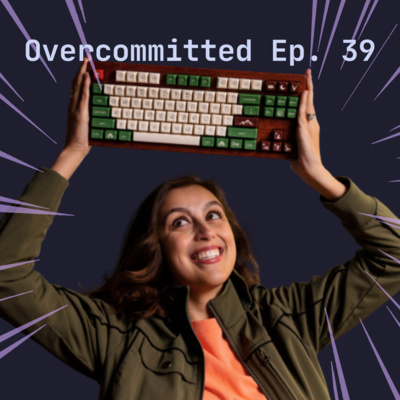
Lifting as you Climb: Cassidy Williams on DevRel, Mentorship, and Building for Developers
Summary
In this episode of the Overcommitted Podcast, hosts Bethany, Brittany, and Erika are joined by Cassidy Williams, Senior Director of Developer Advocacy at GitHub. They discuss Cassidy's journey in the Developer Relations (DevRel) space, her philosophy of lifting others as she climbs, and the evolution of DevRel in the tech industry. Cassidy shares insights on content creation, the importance of community, and her personal experiences with mentorship. The conversation also touches on the challenges and changes in the DevRel landscape, as well as Cassidy's passion for keyboards and her dream typing experience.
Takeaways
- Feedback, even when rough, is a valuable gift for growth.
- DevRel is evolving, adapting to new technologies and community needs.
- Companies should prioritize understanding the developer mindset over follower counts.
- Listening to developers is crucial for effective advocacy and content creation.
- Human problems in tech are often more complex than coding challenges.
- Cassidy's journey showcases the blend of engineering and advocacy roles.
- Mentorship plays a significant role in career development and guidance.
Links
- Cassidy’s website: https://cassidoo.co/
- Microjournal Blog Post: https://cassidoo.co/post/micro-journal/
- Keycaps: https://drop.com/buy/drop-dsa-astrolokeys-keycaps-by-sailorhg-and-cassidoo?defaultSelectionIds=966968
- Cassidy’s mechanical keyboard recs: https://github.com/cassidoo/ama?tab=readme-ov-file#what-mechanical-keyboard-should-i-buy
Hosts
- Overcommitted: https://overcommitted.dev
- Bethany Janos: https://github.com/bethanyj28
- Brittany Ellich: https://brittanyellich.com
- Eggyhead: https://github.com/eggyhead
Writing for Developers with Piotr Sarna
Summary
In this episode of the Overcommitted Podcast, hosts Brittany, Bethany, and Erika engage in a deep conversation with Piotr Sarna, co-author of 'Writing for Developers.' They explore the journey of co-authoring a book, the importance of writing in engineering, and the challenges and joys of technical writing. The discussion also touches on the significance of blogging as a continuation of learning and sharing knowledge, as well as the role of writing culture in engineering teams. The crew kicks off the next book club, where the Overcommitted engineers will be reading Writing for Developers together over the next 2 months!
Takeaways
- Writing a book can be seen as a series of extended blog posts.
- There is a gap in resources for writing engaging blog posts for developers.
- Good writing in tech should have an educational aspect.
- Writing culture in engineering teams enhances clarity and collaboration.
- The book 'Writing for Developers' fills a niche in technical writing resources.
- Embracing cringe-worthy writing experiences is part of the learning process.
Links
- Piotr Sarna on LinkedIn: https://www.linkedin.com/in/sarna-dev/
- Cynthia Dunlop on LinkedIn: https://www.linkedin.com/in/cynthiadunlop/
- Piotr and Cynthia's first book: Database performance at scale: https://bookshop.org/p/books/database-performance-at-scale-a-practical-guide-cynthia-dunlop/f384c1f0d973803c?ean=9781484297100&next=t
- Writing for Developers book: https://bookshop.org/p/books/writing-for-developers-blogs-that-get-read-cynthia-dunlop/af343340c60cd806?ean=9781633436282&next=t
- Write that blog!: https://writethat.blog/
- Writing for Developers GitHub Repo: https://github.com/scynthiadunlop/WritingForDevelopersBook
- Discord community for Overcommitted: https://discord.gg/fxvEjs7f
Hosts
- Overcommitted: https://overcommitted.dev
- Bethany Janos: https://github.com/bethanyj28
- Brittany Ellich: https://brittanyellich.com
- Eggyhead: https://github.com/eggyhead
Being Unreasonable with Jason Lengstorf
Summary
In this episode of the Overcommitted Podcast, hosts Bethany, Brittany, and Erika engage in a deep conversation with Jason Lengstorf about the concept of being unreasonable in the tech industry. Jason shares his journey of embracing unreasonableness to pursue big ideas, the importance of community and networking, and how to navigate risks in career decisions. They discuss the value of non-traditional backgrounds in tech, the process of learning and consolidating information, and the creative approaches that can lead to innovative projects. The conversation wraps up with Jason sharing his future projects and reflections on the tech landscape.
Takeaways
- Being unreasonable and having big audacious goals can lead to unexpected opportunities.
- Surround yourself with ambitious people that can inspire growth.
- Recognize when to pivot in your career.
- Networking is often more valuable than formal education.
- Learning is an active process, not just passive consumption.
- Creative coding can lead to innovative solutions.
- Take (calculated) risks. It can help you achieve your goals.
- Community support is crucial in navigating career changes.
- Being slow to adopt new technologies might not be a bad thing.
Links
- Jason Lengstorf: https://jason.energy
- CodeTV: https://codetv.dev
- All things open talk: https://www.youtube.com/watch?v=goVNPN6fVwQ
- Bytes.dev: https://bytes.dev
- Char Stiles: https://www.instagram.com/charstiles
- Builtin: https://builtin.com
Hosts
- Overcommitted: https://overcommitted.dev
- Bethany Janos: https://github.com/bethanyj28
- Brittany Ellich: https://brittanyellich.com
- Eggyhead: https://github.com/eggyhead
Navigating the future of AI agent security with Dan Moore
Summary
In this episode of the Overcommitted Podcast, Erika and Brittany discuss the evolving landscape of AI agents and their implications for security and identity management. Joined by expert Dan Moore, they explore the challenges posed by non-deterministic agents, the importance of granular permissions, and the need for developers to be aware of security practices as AI technology advances. The conversation also touches on industry standards, the role of developers in navigating these changes, and personal reflections on the future of AI.
Takeaways
- AI agents are changing the landscape of software development.
- Non-deterministic agents present new security challenges.
- Granular permissions are essential for securing AI agents.
- Developers must be aware of security practices in AI.
- Industry standards for AI security are still evolving.
- Separation of concerns can enhance security for agents.
- The role of identity and authorization is critical in AI.
- Business implications of AI agents are significant.
- Developers should stay close to business needs and problem-solving.
- The future of AI will require new skills and awareness.
Links
- Dan Moore on LinkedIn: www.linkedin.com/in/mooreds/
- Dan Moore on Bluesky: https://bsky.app/profile/mooreds.com
- Simon Willison - The Lethal Trifecta: https://simonwillison.net/2025/Jun/16/the-lethal-trifecta/
- FusionAuth: https://fusionauth.io/
- AGNTCY: https://agntcy.org/
- Amazon Bedrock AgentCore: https://aws.amazon.com/bedrock/agentcore/
- FusionAuth Guide to OAuth: https://fusionauth.io/articles/oauth/modern-guide-to-oauth
- MCP and OAuth: https://aaronparecki.com/2025/04/03/15/oauth-for-model-context-protocol
- MCP Specification: https://modelcontextprotocol.io/specification/2025-06-18/basic/authorization
Hosts
- Overcommitted: https://overcommitted.dev
- Brittany Ellich: https://brittanyellich.com
- Eggyhead: https://github.com/eggyhead
Decoding Developer Trends: Inside the Life of a Developer-Focused Analyst with Kate Holterhoff
Summary
Join us for a conversation with Kate Holterhoff, an industry analyst at Redmonk who tracks developer trends from Reddit threads to conference halls. Kate shares her unique journey from earning a PhD in Victorian literature to becoming a self-taught developer and analyst, and discusses Redmonk's "new kingmakers" philosophy that recognizes developers as key decision-makers in tech adoption. We explore current industry trends including JavaScript bundlers, the real story behind AI and developer jobs, why communication skills matter as much as technical expertise, and her experiments with vibe coding across different IDEs.
Takeaways
- Developer-led adoption is the future - Redmonk's "new kingmakers" philosophy recognizes that developers, not executives, are increasingly making purchasing decisions for development tools and platforms.
- AI tools are becoming standard practice - Most developers now use AI code assistants and agentic IDEs, forcing organizations to adapt with proper guardrails and company plans rather than fighting adoption.
- AI isn't taking jobs (yet) - Current tech layoffs are more attributable to post-ZIRP (zero-interest-rate phenomenon) economics and offshoring than AI displacement, though AI has become a convenient scapegoat.
- JavaScript is getting massive - The recent explosion of bundlers like TurboPack, Vite, RS Pack, and Rolldown signals that JavaScript packages have grown significantly since Webpack's creation 10 years ago.
- Industry analysts live in developer watering holes - Understanding real developer sentiment means spending time where developers actually talk: Reddit, Hacker News, Bluesky, conferences, and podcasts.
- Communication skills are as critical as technical skills - Engineers who can bridge technical expertise with business communication and customer interaction have significant advantages in their careers.
- Alternative paths into tech are valuable - Kate's journey from Victorian literature PhD to developer analyst shows how diverse backgrounds bring unique perspectives to understanding technology and its cultural impact.
- Teaching can make coding accessible - Using engaging content like comic books, steampunk, and Victorian literature can make technical concepts more approachable and help students see connections across disciplines.
- Vibe coding is promising but unpredictable - AI-powered development tools show incredible potential but remain inconsistent, with success depending on unclear factors like IDE choice, prompting technique, and model capabilities.
- We need more casual learning communities - The tech industry would benefit from more informal, non-commercial spaces for developers to share experiences, especially around emerging technologies like vibe coding.
Links
- The Monkcast: https://redmonk.com/blog/2023/12/07/the-monkcast/
- Kate on LinkedIn: https://www.linkedin.com/in/kateholterhoff/
- Kate on Bluesky: https://bsky.app/profile/kateholterhoff.com
- Dwarkesh podcast with Andrej Karpathy: https://www.dwarkesh.com/p/andrej-karpathy
Hosts:
- Bethany Janos: https://github.com/bethanyj28
- Brittany Ellich: https://brittanyellich.com
The Art of Storytelling in Leadership with Matt Sinclair
Summary
In this episode, Matt Sinclair, former partner and VP of Engineering at BCG Digital Ventures, explores the critical role of storytelling in effective leadership and shares his journey from building high-performance payment systems to coaching the next generation of engineering leaders. The conversation covers Matt's passion for Elixir as "the most future-proof and AI-aligned language," diving deep into functional programming, immutable data structures, and how modern coding assistants like Claude Code are revolutionizing developer productivity. Matt emphasizes that the first job of leadership is to tell a compelling story that inspires smart people to collaborate, while the art of good management lies in getting out of the way and letting talented engineers solve problems their own way.
Takeaways
- Leadership starts with storytelling: The primary job of leadership is explaining why smart people should get out of bed and contribute to your mission, because without a good story, people will create their own narratives
- Functional programming improves code quality: Immutable data structures and pure functions eliminate approximately 50% of common bugs and make code easier to test and reason about
- Elixir offers comprehensive out-of-the-box solutions: Unlike other tech stacks requiring multiple tools (Kubernetes, Redis), Elixir provides a complete ecosystem that reduces decision fatigue and technical complexity
- AI-assisted coding amplifies productivity: Using Claude Code with Elixir can make a single developer feel like they have a team of five engineers, especially when working with functional programming's predictable patterns
- Management should focus on "what," not "how": Leaders should collaborate with their teams to determine objectives, then trust smart people to figure out implementation details on their own
- Programming language choice impacts team quality: There's a strong correlation between functional programming adoption and high-quality software engineers, possibly due to the steeper learning curve and problem-solving mindset required
- Developer joy matters for sustainability: Working with languages that feel elegant and "just click" reduces exhaustion and maintains long-term passion for coding throughout a career
- Functional code is LLM-friendly: Pure functions with no side effects make it dramatically easier for AI coding assistants to reason about, refactor, and improve code automatically
- Upfront design time pays dividends: Modern AI-assisted development enables more thorough design discussions and rubber duck debugging sessions that lead to better architecture before implementation begins
- Combat surveillance capitalism through decentralization: The future of the web should return to RSS feeds, web rings, and federated networks of special interest communities rather than algorithm-driven data monopolies.
Links
- Matt's Website: https://matthewsinclair.com/
- Matt Sinclair on Medium: https://matthewsinclair.medium.com/
- Intent: https://github.com/matthewsinclair/intent
- I'm a software engineer - What next? podcast: https://whatnext.dev/
- An elegant puzzle by Will Larson: https://www.goodreads.com/author/show/6872433.Will_Larson
- Elixir: https://elixir-lang.org/
- Laksa: https://laksa.io/
Hosts:
- Bethany Janos: https://github.com/bethanyj28
- Brittany Ellich: https://brittanyellich.com
- Eggyhead: https://github.com/eggyhead
Looks Good to Me with Adrienne Braganza
Summary
In this episode of Overcommitted, hosts Erika and Brittany interview Adrienne Braganza, the author of the book Looks Good to Me. The conversation delves into the critical role of communication in code reviews, emphasizing that misunderstandings often lead to issues. It highlights the importance of understanding the purpose behind code reviews rather than just focusing on tools and speed.
Takeaways
- Misunderstandings are at the heart of code reviews.
- It's important to understand the purpose of code reviews.
- Focusing on tools can distract from the main goals.
- Collaboration is key in software development.
- Clear communication can prevent many issues.
- Taking time to reflect on processes is valuable.
- Agreeing on objectives enhances team alignment.
- Code reviews should foster learning and improvement.
- Understanding each other's perspectives is crucial.
- Effective communication leads to better outcomes.
Links
- Adrienne’s Website: https://adrienne.io/
- Adrienne on Bluesky: https://bsky.app/profile/abt.bsky.social
- Adrienne on LinkedIn: https://www.linkedin.com/in/adriennetacke/
- Book: Looks Good to Me: https://www.manning.com/books/looks-good-to-me
Hosts
- Overcommitted Website: https://overcommitted.dev
- Brittany Ellich: https://brittanyellich.com
- Eggyhead: https://github.com/eggyhead
Navigating the Startup Landscape with Rick Turoczy
Summary
In this episode of the Overcommitted Podcast, host Bethany and co-hosts Erika and Brittany welcome Rick Turoczy, a veteran in the Portland tech startup scene. They discuss Rick's journey from a hobbyist developer to a key supporter of startup founders, the unique culture of Portland's tech community, and the importance of mental health for founders. Rick shares insights on the challenges of being a founder, the evolution of startup culture, and the role of PIE in supporting startups. The conversation also touches on local recommendations and the vibrant community in Portland.
Takeaways
- Learning how to learn is a crucial skill for navigating the startup world.
- Portland's tech scene is characterized by a unique culture of humility and creativity.
- Founders often face significant mental health challenges and need support systems.
- The PIE initiative aims to foster collaboration between startups and established organizations.
- Mistakes are a part of the learning process for founders, and experimentation is key.
- The startup landscape has evolved, making it easier to build products but harder to sell them.
- The challenges of being a founder are often underestimated, leading to burnout.
- Understanding the difference between wanting to build a product and wanting to build a company is crucial for founders.
Links
- Rick's LinkedIn: https://www.linkedin.com/in/turoczy/
- Rick's Bluesky: https://bsky.app/profile/turoczy.bsky.social
- Rick's YouTube: https://www.youtube.com/@turoczy_
- PIE Cookbook: https://github.com/piepdx/pie-cookbook/blob/master/docs/pie-cookbook-0.9.md
- Powell’s City of Books: https://www.powells.com/bookstore/powells-city-of-books?srsltid=AfmBOoqCGKjvdY5g6DowX0ReNqRlLARxeI5WKwGyc8P0Pq3O8j9Fd0NQ
- Deadstock Coffee: https://deadstockcoffee.com/?srsltid=AfmBOopNiNhvGUigNJxASlm97jUCcSb6l36xCJ6sZF6mRIkyIseejJQy
- Podcast recommendation from Erika: https://podcasts.apple.com/us/podcast/237-mistake-it-till-you-make-it-learn-faster-and-fail-smarter/id1494989268?i=1000732814742
Hosts
- Bethany Janos: https://github.com/bethanyj28
- Brittany Ellich: https://brittanyellich.com
- Eggyhead: https://github.com/eggyhead
Finding Your Flow - Developer Productivity and The Zone
Summary
In this episode of the Overcommitted Podcast, Erika and Brittany delve into the concept of flow state in software development, exploring its significance for productivity and job satisfaction. They share personal experiences of achieving flow, discuss the balance between challenge and skill, and highlight the importance of psychological safety and team dynamics. The conversation also touches on managing interruptions, the role of pair programming, and strategies for improving flow state within teams. The episode concludes with a fun quiz to engage listeners in reflecting on their own flow experiences.
Takeaways
- Flow state is linked to enhanced productivity and job satisfaction.
- A balance between challenge and skill is essential for achieving flow.
- Cognitive overload can hinder the ability to enter flow state.
- Immediate control over tasks contributes to maintaining flow.
- Psychological safety within teams fosters better performance.
- Managing interruptions is crucial for maintaining focus.
- Pair programming can facilitate flow but may introduce challenges.
- Team dynamics significantly impact individual flow experiences.
- Investing in tools and environments can enhance flow state.
- Regular reflection on flow experiences can lead to improved productivity.
Links
- Developer flow article: https://leadership.garden/developer-flow/
- Podcast: Neuroscience and Developer Productivity: https://podcasts.apple.com/us/podcast/prefrontal-by-cortex/id1760813899?i=1000676601346
- Vibe Engineering by Simon Willison: https://simonwillison.net/2025/Oct/7/vibe-engineering/
- SPACE Metrics: https://getdx.com/blog/space-metrics/
Hosts
- Overcommitted Website: https://overcommitted.dev
- Brittany Ellich: https://brittanyellich.com
- Eggyhead: https://github.com/eggyhead
What all developers should know with Thomas Dohmke
Summary
In this episode of the Overcommitted Podcast, host Brittany Ellich and co-hosts Bethany and Erika welcome Thomas Dohmke, former CEO of GitHub. They discuss Thomas's journey in software development, pivotal moments in his career, the importance of passion and continuous learning, and advice for overcoming career stagnation. The conversation also touches on the future of software development, particularly the impact of AI, and concludes with a fun round of questions about LEGO.
Takeaways
- Thomas grew up in East Germany and discovered coding through a school lab.
- His passion for software development has been a constant throughout his career.
- Mentorship played a crucial role in his transition from university to the automotive industry.
- The importance of continuous learning in a fast-paced tech environment.
- Developers often feel stuck in their careers, but a growth mindset can help overcome this.
- Asking for help and having open conversations with managers can lead to new opportunities.
- Reading books on engineering and leadership can provide valuable insights.
- AI is set to revolutionize the software development landscape again.
- The journey of a developer is filled with ups and downs, but passion keeps them motivated.
- Thomas encourages developers to embrace change and stay curious.
Links
- Thomas on GitHub: https://github.com/ashtom
- Thomas on LinkedIn: https://www.linkedin.com/in/ashtom/
- Thomas on X: https://x.com/ashtom
- The Great Mental Models book: https://www.goodreads.com/book/show/44245196-the-great-mental-models
- An Elegant Puzzle by Will Larson: https://www.goodreads.com/book/show/45303387-an-elegant-puzzle
- Staff Engineer by Will Larson: https://www.goodreads.com/book/show/56481725-staff-engineer
- The Engineering Executive's Primer: https://www.goodreads.com/book/show/199699997-the-engineering-executive-s-primer
- Bricklink: https://www.bricklink.com/v2/main.page
Hosts
- Bethany Janos: https://github.com/bethanyj28
- Brittany Ellich: https://brittanyellich.com
- Eggyhead: https://github.com/eggyhead
Building Search Infrastructure Developers Actually Want to Use with Don MacKinnon
Summary
In this episode of the Overcommitted Podcast, host Erika and co-hosts Bethany and Brittany Ellich engage in a conversation with Don McKinnon, founder of Searchcraft. They discuss Don's journey in software engineering, the challenges faced while building Searchcraft, and the unique features that make it accessible for developers of all levels. The conversation also touches on the integration of AI, market competition, and the path to founding a startup, concluding with a fun segment about walkout songs.
Takeaways
- Searchcraft aims to reduce complexity in search infrastructure.
- Rust was chosen for its efficiency and performance benefits.
- Building Searchcraft took two years of development before launching as a product.
- Searchcraft allows non-technical users to manage search relevancy through a GUI
- AI integration is crucial for modern applications, especially in search.
- The market for search tools is evolving with the emergence of AI.
- Founding a startup involves learning and adapting to new challenges.
- Identifying pain points is key to developing a successful product.
- It's important to focus on solving real problems rather than perfection.
- The journey of building a product can lead to unexpected opportunities.
Links
- Don MacKinnon: https://donmackinnon.dev/
- Searchcraft: https://www.searchcraft.io/
- Article: https://medium.com/@dmackinnon/improving-trust-in-ai-systems-432d61bef7b3
Hosts
- Overcommitted: https://overcommitted.dev
- Bethany Janos: https://github.com/bethanyj28
- Brittany Ellich: https://brittanyellich.com
- Eggyhead: https://github.com/eggyhead
From Engineer to Entrepreneur with Brad Heller
Summary
In this episode of the Overcommitted Podcast, hosts Brittany Ellich and Erika engage with Brad Heller, co-founder and CTO of Tower, discussing his journey from software engineer to startup founder. They explore the evolution of software engineering careers, the challenges of entrepreneurship, and the skills necessary for success in the tech industry. Brad shares insights on the importance of aligning passions with work, the realities of startup life, and advice for aspiring engineers. The conversation also touches on the impact of AI on coding and the importance of understanding the fundamentals of software development.
Takeaways
- Brad's journey from corporate life to startups was driven by a desire for impactful work.
- Working at startups can provide invaluable learning experiences compared to big tech.
- Entrepreneurship requires aligning your passions with your work for true success.
- Delegating tasks is a crucial skill for founders, but often difficult to master.
- Understanding the entire business process is essential for engineers in startups.
- The tech landscape has changed, with many entering the field for financial reasons rather than passion.
- AI is transforming the coding landscape, but understanding the fundamentals remains critical.
- Networking skills developed in big tech can be beneficial in startup environments.
- It's important to recognize when to hire and delegate responsibilities as a founder.
- The romanticized view of entrepreneurship often overlooks the hard work involved.
Links
Hosts
Q3 Goals Recap with Bethany and Brittany
Summary
In this episode of the Overcommitted Podcast, hosts Bethany and Brittany discuss their experiences at recent tech conferences, including Cascadia JS and GopherCon. They reflect on their goals from the past quarter, sharing successes and challenges, and set new objectives for the upcoming quarter. The conversation also touches on the importance of community engagement and personal development in the tech industry, culminating in a fun segment where they share ideas for potential TED talks.
Takeaways
- The importance of community in tech events.
- Reflecting on past goals helps in personal growth.
- Engagement in newsletters can shift focus from self-promotion to sharing others' work.
- Attending conferences can provide fresh insights and networking opportunities.
- Setting realistic goals is crucial, especially during busy times.
- Public speaking can be a rewarding experience despite initial anxiety.
- Finding enjoyment in activities is essential for long-term commitment.
- Quarterly retrospectives can help realign personal and professional goals.
- Exploring new interests can lead to unexpected opportunities.
- Community engagement is vital for mental well-being in remote work environments.
Links
- CascadiaJS
- GopherCon
- MagnoliaConf
- Tech book club Repo
- Overcommitted Discord
Hosts
Lessons from an Interim Engineering Manager with Indrajith Premanath
Summary
In this episode of the Overcommited podcast, the hosts engage in a deep conversation with Indrajith Premanath, an engineer at GitHub, who shares his journey of transitioning from an individual contributor to an engineering manager during an interim manager role while his manager was on leave. Indrajith discusses the challenges and lessons learned during his six-month stint as an interim manager, emphasizing the importance of team dynamics, transparency, and personal growth. The conversation also touches on career aspirations, technical interests, and the significance of building strong relationships within a team. Indrajith offers valuable advice for future managers and reflects on his childhood aspirations, providing a well-rounded perspective on his career journey.
Takeaways
- The shift from coding to management requires a change in mindset and priorities.
- Building relationships with team members is crucial for effective management.
- Transparency in decision-making fosters trust within the team.
- Indrajith found that he became a better individual contributor after his management experience.
- Understanding team members' career goals enhances team dynamics.
- Indrajith emphasizes the importance of long-term planning in management.
- He advocates for rotation programs for aspiring managers to gain experience.
- The role of AI in coding is changing the landscape of software development.
- Indrajith's childhood aspiration was to be a theater kid, not a software engineer.
Links
- Indrajith Premanath LinkedIn
- Charity Majors Engineer/Manager Pendulum Article
- Tech book club Repo
- Overcommitted Discord
Hosts