Tribe Talks: Building Teams That Thrive
By Campfire Company
Discover actionable strategies and inspiring stories on building trust, fostering creativity, and designing powerful team experiences. Whether you’re scaling a startup or leading a corporate team, Tribe Talks offers fresh insights to help you unlock unity and high performance in your workplace.
Come as a team—leave as a tribe.


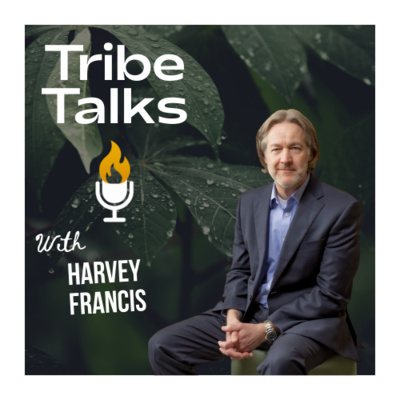
#12 Harvey Francis, Ex Skanska EVP, Chairman Skanska Construction Services Trustee, Executive coach: Navigating Leadership and Culture
Introduction to the Guest
Harvey Francis was a board member of Skanska UK Plc and a member of the Executive Management Team, from 2008 until 2025, with functional leadership responsibility for Human Resources, Communications, Customer Experience and strategy and planning. He retired from Skanska at the end of June 2025. He continues to serve as Chairman of Skanska Construction Services Trustee Ltd, a role he has held since 2011. Harvey joined Skanska in 2007, having spent the early part of his career in general management before moving into HR. He previously held senior HR and general management roles at Pfizer, BT, House of Fraser, and Virgin Group. Harvey featured on HR Magazine’s ‘Most Influential’ list between 2015 and 2021, and in 2022 was inducted into its ‘Most Influential’ Hall of Fame. He was featured on the HR Global 100 index in 2023 and is an editorial panel member of the HR Director magazine. His specialities include business transformation, inclusion & diversity, organisation development, strategy development, HR effectiveness and transformation, and talent management.
Summary
In this insightful conversation, Harvey Francis shares his journey through leadership and company culture, emphasizing the critical role of leadership in shaping organizational culture. He discusses the evolution of company culture, the importance of measuring employee engagement, and the balance between top-down and bottom-up approaches. Harvey also highlights the significance of assessing cultural fit during hiring, fostering collaboration, and navigating the challenges of mergers. He reflects on leadership lessons learned from mistakes and the cultural challenges faced in today's complex workplace.
Takeaways
Leadership is crucial in establishing and maintaining company culture.
Company culture has remained fundamentally the same, focusing on leadership behaviors.
Employee engagement surveys are valuable tools for measuring culture.
Cultural fit should be a key consideration in hiring processes.
Collaboration requires clear goals and understanding among team members.
Addressing non-collaborative behaviors is essential for team success.
Cultural integration during mergers requires careful planning and communication.
Leaders must be honest about the state of their team's culture.
Organizations need to adapt to the changing expectations of employees.
Leadership commitment is vital for successful organizational change.
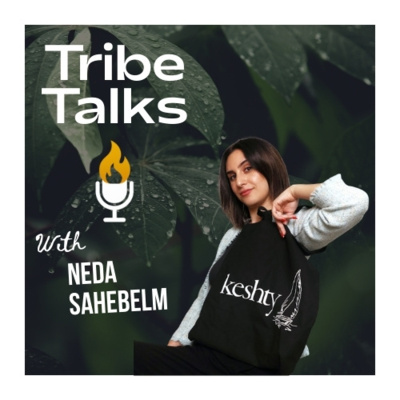
#11 Neda Sahebelm, Fractional COO | Founder, keshty: Scaling with Purpose
Introduction to the Guest
Neda Sahebelm is an I/O Psychologist and seasoned Ops leader who’s helped multiple businesses achieve exponential outcomes. Over the last decade, she’s built and scaled high-performing teams at the likes of FOX and National Geographic EMEA through to their Disney acquisition, and EdTech unicorn, Multiverse, from pre-seed to post Series D. Neda now runs keshty, where she partners with startups as Fractional COO and Scale Advisor with a particular emphasis on minority-led tech for good.
Summary
In this episode of Tribe Talks, Neda Sahebelm shares her journey into organizational psychology, emphasizing the importance of ethical scaling and leadership in creating healthy workplace cultures. She discusses the challenges of mergers and acquisitions, the significance of diagnosing team health, and the role of communication in maintaining trust during rapid growth. Neda also highlights the future of team psychology in the context of remote work and the exciting developments in the tech for good space.
Takeaways
Neda enjoys pottery and exploring new restaurants.
Organizational psychology focuses on building healthy workplaces.
Ethical scaling prioritizes sustainable growth over rapid expansion.
Leadership plays a crucial role in team engagement and culture.
Transparency during exits can improve team morale.
Organizational psychology is about creating high-performing teams.
Mergers can be challenging without clear cultural compatibility.
Data-driven approaches help diagnose team health.
Effective communication fosters trust in remote teams.
Tech for Good is becoming more impactful and profitable.
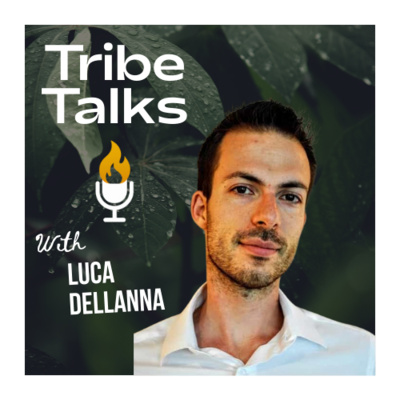
#10 Luca Dellanna, Best Selling Author & Founder of Cultural Change di Dell'Anna Luca: How to Build Anti-Fragile Organizations
Introduction to the Guest
Luca Dellanna is a distinguished management advisor and author of over ten books, recognized for his expertise at the intersection of risk management, operational know-how, and behavioral psychology. Luca began his career at DuPont's consulting unit in Frankfurt, focusing on managerial excellence across Europe. In 2015, he returned to Turin, Italy, to establish a private consulting practice that serves clients globally, including in Italy, France, the United States, India, and Singapore. Luca's work has been featured at prominent conferences and podcasts like Nudgestock and EconTalk, and he is followed by over 25,000 readers worldwide. Known for his practical approach, Luca emphasizes not only what the right actions are but also how to execute them effectively.
Summary
In this conversation, Luca Dellanna discusses how organizations can become more anti-fragile by focusing on both strategic considerations and the importance of individual interactions within the company. He emphasizes that while survival is crucial, the reactions to employee concerns play a significant role in fostering a resilient company culture.
Takeaways
Organizations must ensure they can survive economic downturns.
Cash reserves are essential for enduring tough times.
Strategic considerations are just the table stakes.
The individual manager's role is crucial in resilience.
Encouraging open communication is vital for anti-fragility.
Reactions to employee concerns shape company culture.
A fragile company discourages problem reporting.
Resilience is built through positive interactions.
Anti-fragility requires a proactive approach to management.
Creating a safe space for questions enhances resilience.
#9 Bre McQuade, Director of Operations and Experience at Operations Nation: Misconceptions and Realities of Building Effective Teams
Introduction to the Guest
Bre McQuade is the Director of Operations and Experience at Operations Nation, known for hosting the largest operations conference in Europe. They are an international community-powered knowledge hub for operations leaders. She is passionate about placing people and systems at the heart of organizational growth. Bre specializes in facilitating connections and learning among teams, championing design thinking, and leading transformative courses for aspiring and first-time COOs across an international community. Her approach combines strategic and empathetic elements, focusing on authenticity, vulnerability, and genuine engagement, with a deep understanding of human behavior across cultures.
Summary
In this engaging conversation, Bre McQuade shares her insights on the nuances of company culture versus team culture, the common misconceptions leaders have when building effective teams, and the importance of communication in preventing breakdowns. She emphasizes the need for emotional authenticity in leadership while maintaining structure, and discusses the challenges of fostering psychological safety in diverse teams. Bre also highlights the balance between empathy and strategy in decision-making, and the significance of creating an environment where individuals feel safe to be vulnerable and accountable.
Takeaways
Company culture and team culture are deeply interlinked.
Effective teams require a multitude of elements, not just grand gestures.
Communication breakdowns often stem from a lack of awareness of team needs.
Psychological safety is crucial for team performance and accountability.
Vulnerability in leadership invites others to connect authentically.
Cultural differences can impact how individuals engage in vulnerability.
Empathy and strategy should coexist in decision-making processes.
Intentionality in meetings fosters connection and accountability.
Regular check-ins can enhance team dynamics and trust.
Creating a safe space for conflict can improve psychological safety.
#8 Sarah Sen, Founder of Florescence Consulting: The Invisible Fabric of Company Culture
Introduction to the Guest
Sarah is the founder of Florescence Consulting, a boutique People & Culture Consultancy which partners with organisations to help individuals and cultures flourish. With a background in HR leadership and an MSC in Positive Psychology, Sarah brings a unique blend of scientific insight and real-world experience to her work in people and culture transformation. Sarah specialises in leadership and personal development coaching, working with mid-senior professionals both within organisations and independently. Her work focuses on psychological safety, strengths-based growth, and authentic, values-driven leadership. A former senior HR leader turned consultant and coach, Sarah is passionate about helping people unlock their potential and thrive, both at work and in life.
Summary
In this conversation, Sarah Sen discusses the importance of organizational culture, team dynamics, and the role of leadership in fostering a healthy work environment. She emphasizes the need for intentionality in shaping culture, the significance of psychological safety, and the impact of community on employee engagement. Through various examples and insights, Sarah highlights the challenges organizations face in maintaining a positive culture, especially during periods of growth and change. She also explores the future of work in the context of hybrid models and the influence of technology on human connection.
Takeaways
Embedding new ways of working can increase engagement and productivity.
Healthy culture is where people feel safe, valued, and aligned to a shared purpose.
Culture drives performance and belonging in an organization.
Intentional focus on culture prevents negative default behaviors.
Engagement surveys reveal deeper insights into employee satisfaction.
Regular listening and strengths-based recognition enhance team dynamics.
Leadership vulnerability fosters psychological safety.
Fast-growing organizations often overlook cultural infrastructure.
Community and human connection are essential for a thriving workplace.
Investing in culture leads to better productivity and employee retention.
#7 Pietro Boccaccini, Director at Deloitte Legal: The Key Ingredients for Team Success
Introduction to the Guest
Pietro Boccaccini is a highly accomplished lawyer with 15+ years of professional experience, specializing in privacy, data protection, cybersecurity, and artificial intelligence. He is dedicated to helping clients across various industries manage their data effectively and lawfully. Since 2021, Pietro has led Deloitte Legal's Data Protection Team in Italy, providing comprehensive legal guidance on data protection and valorization. His expertise also includes serving as a Data Protection Officer (DPO) for multinational groups, ensuring top-tier compliance. Beyond his professional role, Pietro is an active member of the legal community, serving as an expert for the European Data Protection Board (EDPB), a lecturer in Legal Informatics at the University of Milan, and a residential affiliate of the Information Society Law Center (ISLC).
Summary
In this conversation, Pietro Boccaccini shares insights on building a thriving team culture within a legal context, emphasizing the importance of happiness, trust, and communication. He discusses the challenges of managing conflicts, the significance of KPIs, and the evolving landscape of data protection and AI. Pietro highlights the need for curiosity and creativity in leadership, especially in adapting to technological changes.
Takeaways
A thriving team culture is built on happiness and trust.
Selecting motivated individuals is crucial for team success.
Conflicts can lead to valuable outcomes if managed well.
Ongoing feedback is more effective than formal reviews.
Team compactness is essential for achieving common goals.
Different perspectives can enhance project outcomes.
AI and data protection are rapidly evolving fields.
Leaders must be curious and creative to adapt to changes.
Monitoring AI technologies is critical for safety.
Building a team from scratch presents unique challenges.
#6 Oleksandr (Sasha) Komarevych, Portfolio Manager at B4i - Bocconi for Innovation: Building Teams Across Cultures
Introduction to the Guest
Oleksandr (Sasha) Komarevych is a seasoned Portfolio Manager at B4i - Bocconi for Innovation, bringing over a decade of experience in the startup ecosystem. He is adept at connecting innovative founders with investors and corporate partners to drive sustainable growth. Sasha has played a crucial role in supporting over 60 startups, which have collectively raised more than €41 million in funding and boast an impressive 85% post-acceleration survival rate. His expertise lies in guiding early-stage companies through critical development phases, from idea validation to achieving product-market fit and securing strategic investments. Additionally, as the founder of StartupReporter.eu, Sasha has documented the journeys of more than 200 European startups, providing valuable insights and visibility to emerging innovations. He is passionate about bolstering Milan's position as a leading innovation hub in Europe.
Summary
In this conversation, Sasha shares insights from his multicultural experiences and how they shape team dynamics in startups. He emphasizes the importance of communication, feedback, and clarity in building effective teams. Sasha discusses patterns observed in thriving teams, the role of leadership in fostering a culture of openness, and the significance of measuring team performance and health. He also highlights the evolution of founders, resilience in funding environments, and the dynamics of scaling teams. Finally, Sasha provides valuable advice for aspiring founders and reflects on current trends in the startup world.
Takeaways
Multicultural experiences enhance understanding of team dynamics.
Team culture is defined by communication styles and practices.
Clarity in communication is crucial for team success.
Fast decision-making is a key trait of thriving teams.
A culture of feedback fosters growth and improvement.
Leaders should listen to their teams but also make decisions.
Measuring team alignment is essential for performance.
Resilience in startups comes from a learning mindset.
Celebrating milestones is important for team morale.
Understanding the 'why' behind a startup is vital for founders.
#5 Julian Stodd, Founder of Sea Salt Learning: Navigating the Social Age
Introduction to the Guest
Julian Stodd, a writer, artist, consultant, and explorer, is the author of The Social Leadership Handbook and Exploring the World of Social Learning. He is the leader of the Social Age movement and is currently conducting research and writing on Dynamic Change and the Landscape of Trust. Stodd's work delves into how systems, societies, and structures—both technical and human—function. His primary focus is the Social Age, where he documents changes and helps make sense of their implications across various domains, including leadership, learning, culture, change, trust, and humility. He founded Sea Salt Learning, a global, cross-sector consultancy, to translate his ideas into practice. Sea Salt Learning acts as a "safe harbor for independent thinkers," boasting a diverse global team that combines traditional strengths with innovative learning approaches. Stodd shares his insights and stories through his blog, which features over 2,000 articles and is updated daily.
He has written fifteen plus books so far, with more on the way.
You can find Julian on Twitter @julianstodd.
Summary
In this conversation, Julian Stodd discusses the evolving landscape of leadership and organizational dynamics in the context of the social age. He emphasizes the importance of social leadership, trust, and team dynamics, and how organizations must adapt to thrive in a rapidly changing environment influenced by technology and societal shifts. Stodd shares insights on building high-performing teams, the significance of trust, and the need for leaders to embrace uncertainty and foster community. He also explores the future of work and the challenges organizations face in navigating change.
Takeaways
The social age is characterized by radical connectivity and diverse technology ecosystems.
Social leadership combines formal authority with social authority, emphasizing trust and community.
High-performing teams require trust, distributed agency, and a culture of dialogue.
Trust is built through explicit communication and shared understanding.
Organizations must adapt to both evolutionary and revolutionary changes in their systems.
Leaders should embrace ambiguity and foster environments that allow for experimentation.
Community building is essential for effective leadership in the social age.
KPIs in the social domain often rely on qualitative measures and community mapping.
Listening to diverse voices within an organization is crucial for identifying issues.
The future of work will involve more distributed organizations and a need for adaptability.
#4 Mike O’Dell Chief Playmaker/Strategist at MiChris Ltd: A thriving team knows its purpose.
Introduction to the Guest
Clients that Mike works with are senior leaders in their company and often the CEO, but include executives heading to the top and high potentials. Mike focuses on one-to-one engagements with his clients to help them identify their personal growth needs so that they can achieve more and excel. He facilitates team workshops to enable business leaders to clarify goals, their personal contribution, and determine the level of personal commitment necessary to achieve them. Mike established himself as an HR leader and executive working at FTSE 100/250 companies prior to moving across to the rapidly evolving Fintech sector. For the past 10 years Mike has focussed on Executive Coaching and building high performance teams. He is skilled in stimulating personal growth and holds a Diploma in Executive Coaching from the AoEC, and the prestigious ICF and EMCC accreditations. He is also licensed to use psychometric, organimetric, and EQ profiling tools.
Summary
In this conversation, Mike shares his insights on building a thriving team culture, the evolution of leadership styles, and the importance of emotional intelligence in organizations. He discusses the disconnect often found in leadership, the role of individual psychology versus collective traits, and the significance of diversity in team dynamics. Mike also emphasizes the need for self-awareness and adaptability in leaders, while sharing tools for diagnosing team health and the potential pitfalls of leadership failures. He concludes with his coaching philosophy and future endeavors.
Takeaways
A thriving team knows its purpose and individual contributions.
Leadership should involve everyone in the decision-making process.
Volunteerism in leadership can lead to powerful outcomes.
Clarity in leadership is essential for team success.
Short-term success can be achieved through coercion, but it's not sustainable.
Self-awareness is crucial for effective leadership.
Diversity in teams enhances problem-solving and creativity.
Emotional intelligence is key to understanding team dynamics.
Leaders should not believe their own hype and remain humble.
Coaching can significantly enhance individual and team performance.
#3 Les Murray, Director at 20-20 Management Ltd: Navigating Leadership Challenges
Introduction to the Guest
Les Murray is a scaleup consultant, executive coach, and leadership team facilitator with over 30 years of experience partnering with CEOs, MDs, and business owners. He helps them achieve clarity on vision and strategy, sharpen organizational structure and operating culture, and develop senior teams. Murray's work focuses on designing strategy and execution, building senior teams, and inspiring leaders. He has worked with over 30 clients at FTSE 250 Board level, including Boots, Sainsbury's, Marks & Spencer, AstraZeneca, Caterpillar, and Rolls-Royce. Murray is also the author of "Lighting the Blue Touch Paper," a book scheduled for release on November 25, 2025, which focuses on how business leaders of scaleups can ignite the energy, clarity, and performance of their senior leadership team.
Summary
In this conversation, Les Murray discusses the importance of team culture, leadership, and organizational health. He emphasizes the need for clarity of purpose, trust, and effective communication within teams. Murray introduces the concepts of 'sowers', 'growers', and 'mowers' to describe different team roles and their fit within various growth stages. He also highlights the significance of radical candor in fostering honest feedback and the dangers of self-sabotage in leadership. The discussion concludes with insights into personal and professional growth, including the importance of building relationships and understanding team dynamics.
Takeaways
Team culture is defined by shared behaviors and communication patterns.
High-pressure situations reveal the true dynamics of team culture.
Clarity of purpose and defined roles are essential for team success.
Different team roles (sowers, growers, mowers) are needed at various growth stages.
Trust and communication are foundational for effective teamwork.
Investing time in team relationships leads to better outcomes.
Radical candor fosters an environment of honest feedback.
Self-sabotage often stems from short-term thinking and ego.
Curiosity and inquiry can help leaders avoid self-sabotage.
Building a strong team culture requires proactive investment in human connections.
#2 David Foster, Change Practice Lead at University of Sussex: Navigating Complexity in Organizations
Introduction to the Guest
David J Foster, an experienced change manager, facilitator, and board-level advisor with an Executive MBA from London Business School. He specializes in diagnosing and solving complex organizational problems through a holistic approach called organizational therapy, which focuses on empowering teams to resolve challenges sustainably. David uses tailored workshops extensively as part of his change management toolkit and has significant teaching and facilitation experience. He currently leads Change Practice within Sussex Projects at the University of Sussex, is a Trustee of Signal Film & Media, and runs select projects under Rally Strategic.
Summary
In this conversation, David discusses the concept of organizational therapy, its relevance in today's complex business environment, and how it differs from traditional consulting. He emphasizes the importance of understanding messy problems, diagnosing team dynamics, and the interplay between cultural and structural issues within organizations. David also shares insights on the common failures in transformation efforts, the dynamics of organizational culture, and the challenges modern teams face, particularly in the context of AI and virtual work. He reflects on his experiences, the importance of maintaining objectivity, and the future of his work in organizational therapy.
Takeaways
Organizational therapy focuses on helping organizations understand themselves.
The approach is more relevant today due to constant changes in the business environment.
Messy problems require a holistic view rather than a linear solution.
Diagnosing team dynamics involves building trust and understanding different perspectives.
Cultural issues and structural problems are intertwined and must be addressed together.
Failure is a natural part of complex systems and should be embraced as a learning opportunity.
Organizational culture can vary between teams, promoting diversity of thought.
Senior leadership buy-in is crucial for cultural change.
Maintaining objectivity is challenging but essential for effective therapy.
AI will highlight the value of human contributions in organizations.
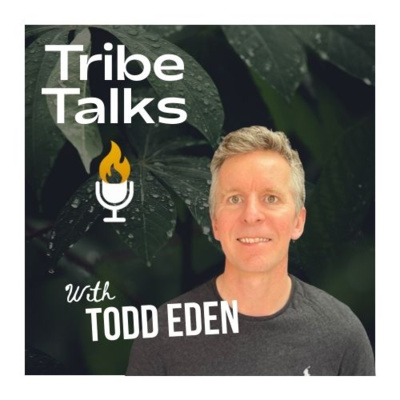
#1 Todd Eden, Founder of Bluestag Leadership: Lead with Presence and Authenticity
Introduction to the Guest
Todd Eden transforms how leaders and teams work— by focusing on deep, practical change that sticks. An award-winning coach, facilitator, and program designer, he has helped senior leaders worldwide build trust, clarity, and performance. Before founding Bluestag, Todd held leadership roles at Rolls-Royce and Britvic, co-founded a social enterprise delivering emotional intelligence programs at UK universities, and taught leadership at Cambridge. He’s the author of the Own Life book series and a Samaritans volunteer, supporting people in crisis. At Bluestag, he helps leaders bring presence, humanity, and impact into the way they lead—every breath, every step, every day.
Summary
In this conversation, Todd Eden discusses the importance of mindfulness, emotional intelligence, and authenticity in leadership. He emphasizes the need for leaders to create space for thoughtful engagement and genuine human connection, especially in a hybrid work environment. Todd shares insights on building strong teams, measuring leadership success, and navigating conflicts through honest conversations. He also explores the role of AI in enhancing human connection and the necessity of being present in our interactions.
Takeaways
Authenticity is essential for effective leadership.
Creating space for thoughtfulness is crucial for leaders.
Emotional intelligence involves awareness of one's emotions and thoughts.
Strong teams thrive on presence and connection.
AI can enhance human connection by handling routine tasks.
Conflict often arises from misaligned goals and communication styles.
Leaders must prioritize quality conversations over tactical discussions.
Mindfulness in leadership fosters a more engaged workforce.
The importance of being present cannot be overstated in team dynamics.
Leadership development should focus on multi-dimensional growth rather than single skills.
Introduction to Tribe Talks
Welcome to Tribe Talks!
Join us as we engage with experts, psychologists, and trailblazing leaders who are redefining what it means to build cohesive and innovative teams.
Discover actionable strategies and fresh perspectives that can help your team move beyond the ordinary and thrive together.
Whether you're leading a startup or managing a corporate team, these episodes offer insights that can transform the way your people connect and achieve together.
Tune in and start reimagining what's possible for your business and your people.