
On Auschwitz
By Auschwitz Memorial
We kindly ask you to support our mission and share our podcast in social media.
Online lessons: lesson.auschwitz.org


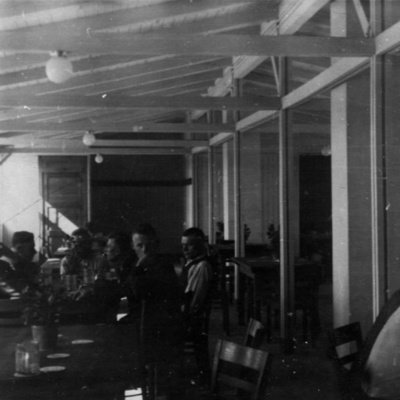
"On Auschwitz" (75): The Leisure Time of SS-Men from the KL Auschwitz Garrison in the Light of Documents from the Auschwitz Memorial Archives
Over the nearly five years of the operation of the Auschwitz camp, around 8,200 SS men and 200 SS female overseers served there. Dr Agnieszka Kita, Deputy Head of theAuschwitz Museum Archive, talks about what their leisure time looked like, what they did after duty, when they returned to the barracks, and what their days off looked like.
=====Voiceovers: Sarah Edwards Weinstein, Kate Weinrieb
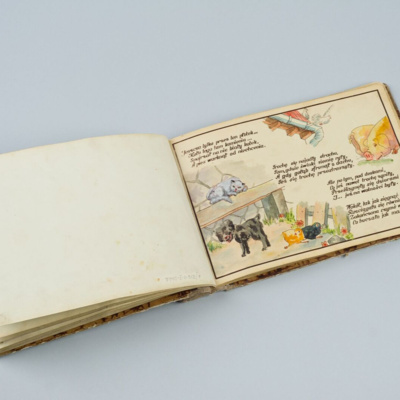
"On Auschwitz" (74): "Fairy Tales from Auschwitz" - unique witnesses to history
Among the unique artifacts held in the collections of the Auschwitz Memorial are fairy tales created while the camp was in operation. Crafted out of a heartfelt need, and in the hope of leaving behind a trace of their authors, these stories were smuggled out the camp. Their creators were prisoners employed in the camp’s Construction Office. With the help of people on the outside, they passed these fairy tales on to their loved ones. The story behind the fairy tales from Auschwitz is told by Jadwiga Kulasza, a retired employee of the Memorial Archives, as well as family members of the authors: Felicjan Świerczyna, son of Bernard Świerczyna, and Andrzej Czulda, son of Henryk Czulda.=====Voiceovers: Greg Littlefield, Michael Takiff, Kate Weinrieb
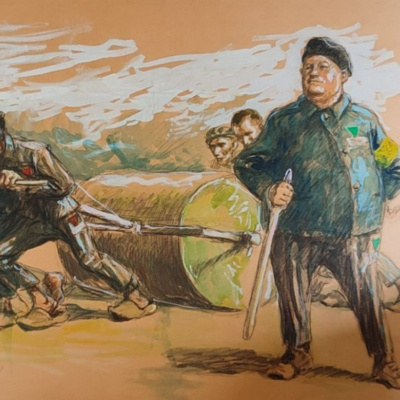
"On Auschwitz" (73): Auschwitz functionary prisoners. Selected postwar fates
We discussed the group of functionary prisoners at Auschwitz in one of our previous podcasts. You can find it at: podcast.auschwitz.org. In this episode Dr. Wojciech Płosa, the head of the Auschwitz Museum Archives will talk about the post war fates of some of the functionary prisoners.
=====
Artwork: Mieczysław Kościelniak, Praca przy walcu (Working on the roller), Auschwitz Memorial Collectons.
=====
Voiceover: Therese Mc Laughlin, Mike Skagerlind
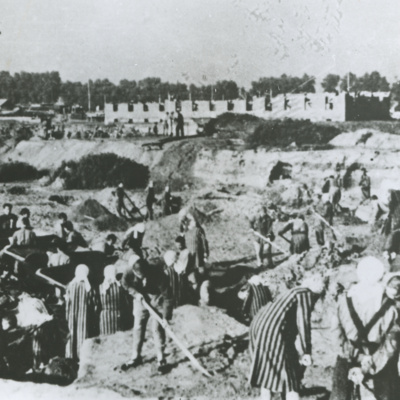
"On Auschwitz (72): The first transports of women to KL Auschwitz
The Germans established the Auschwitz concentration camp in the spring of 1940 for man prisoners. The first women were deported to the camp in March 1942. In total, more than 130,000 women prisoners were registered there during the
camp’s existence. The history of the first transports of women is discussed by Dr. Teresa Wontor-Cichy from the Research Center of the Auschwitz Museum.
======
Online lesson about women in KL Auschwitz
======
Voiceover: Sarah Edwards, Kate Weinrieb
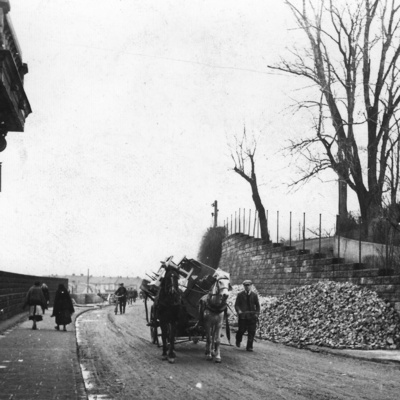
"On Auschwitz (71): Testimonies about expulsions of the local population in connection with the expansion of KL Auschwitz
Before the war, Oświęcim was a town inhabited mainly by Poles and Jews. During the Second World War it was annexed to Germany and the name of the town was changedto Auschwitz. At the end of 1939 the town had a population of over 12,500 people, about half of whom were Jews. Near Oświęcim there were several villages, which in December of 1939 were incorporated into the German administrative unitof Stadtbezirk Auschwitz. About 13,000 people lived in thesevillages.
Due to the establishment and expansion of the Auschwitz camp, several thousand Polish and Jewish residents of Oświęcim and nearby villages were forced to leave their homes. In the “On Auschwitz” podcast, we share fragments oftestimonies from witnesses and their relatives about these events.
=====
The podcast features material from the collections of:
The Auschwitz-Birkenau State Museum Archives:
- account by Zofia Przybyłowska
- account by Piotr Bielenin
- account by Marian Górnicki
- account by Sylwester Szałaśny
- account by Krystyna Szałaśny
- account by Sabina Rosenbach (transcribed, read by a narrator)
- account by Helena Mataniak (written down, read by a narrator)
- account by Helena Hoła (written down, read by a narrator)
Museum of Remembrance of the Residents of the Oświęcim Region:
- account by Helena Grzesło
- account by Aleksander Karkoszka
- account by Józefa Handzlik
- account by Wanda Saternus
- account by Maria Gawron
- account by Janina Stawowy
- account by Wanda Patyna
- account by Henryk Kuczek
- account by Maria Jurczyk
- account by Tadeusz Firczyk
Jewish Museum in Oświęcim:
- account by Abraham and Jerzy Feiner
- account by Lola Bodner
The Emanuel Ringelblum Jewish Historical Institute in Warsaw:
- account by Ewa Neiger (written down, read by a narrator)
- account by Sylwia Bachner (written down, read by a narrator)
- account by Anna Hönig (written down, read by a narrator)
- account by Tauba Grünn (written down, read by a narrator)
=====
Voiceover: Therese McLaughlin, Mike Skagerlind
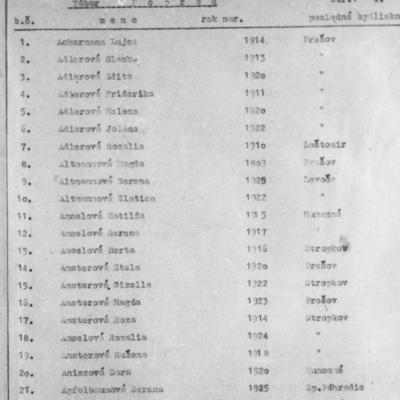
"On Auschwitz" (70): Deportations of Jews from Slovakia
Among the many groups of people deported to the German camp Auschwitz, Slovakian Jews occupied a special place. They were brought to the camp at a time when it was undergoing fundamental, organizational and functional transformation. From a place of concentration and gradual destruction of prisoners through dramatic living conditions and hard labor to a center of mass extermination in gas chambers. Dr. Piotr Setkiewicz, the head of the research center of the Auschwitz Museum, recounts the details of this process.
=====
On-line lesson about the deportations of Jews from Slovakia
=====Voiceover: Michael Takiff
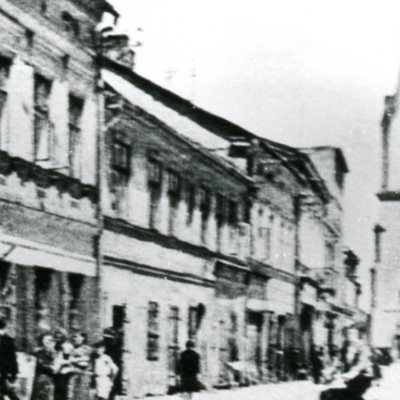
"On Auschwitz" (69): Contacts between SS garrison of KL Auschwitz and the local population of the Oświęcim area (1940-45)
How the demographic structure of the area around the camp changed and what contacts existed between the SS camp garrison members and the local civilian population is discussed by dr. Agnieszka Kita, deputy head of the Auschwitz Museum archives.
=====
Article published in the post-conference publication, "Face of War", Vol. 6, "City and the War".
=====
Voiceover: Therese McLaughlin, Kate Weinrieb
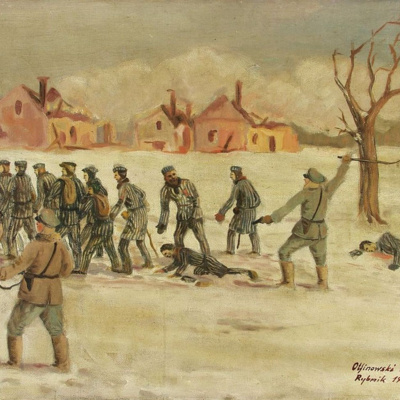
"On Auschwitz" (68): Evacuation marches in the accounts of Survivors and other witnesses
On 17 January 1945, the SS began evacuating the Auschwitz camp. Around 56,000 men and women, prisoners under the escort of armed SS men, marched out from various parts ofthe camp complex in the direction of Wodzisław Śląski and Gliwice. Several thousand people were killed during these so-called Death Marches.
In this episode of the “On Auschwitz” podcast, we quote fragments of eyewitness accounts relating to these events.
=====
Illustration:
Zbigniew Otfinowski, Marsz ewakuacyjny [Evacuation march] (1946). Auschwitz-Birkenau State Museum Collections
=====
Excerpts from accounts read by narrators (Therese McLaughlin & Mike Skagerlind) come from the Auschwitz-Birkenau State Museum Archives:
Teofil Balcarek, APMA-B, Zespół Oświadczenia [Statements],t. 115, k. 204-205.
Israel Berkowski, APMA-B, Zespół Oświadczenia [Statements], t. 35, k. 29.
Wanda Bienioszek, APMA-B, Zespół Oświadczenia [Statements], t. 116, s. 176.
Wanda Błachowska-Tarasiewicz, APMAB, Zespół Wspomnienia [Memories], t. 1, k. 19-20.
Józef Ciepły, APMA-B, Zespół Oświadczenia [Statements], t.86, k. 48, 127-128.
Jan Dziopek, APMA-B, Zespół Oświadczenia [Statements], t.10, k. 29.
Jan Dziopek, APMA-B, Zespół Wspomnienia [Memories], t. 50, k. 138-143
Róża Dryjańska, APMA-B, Zespół Wspomnienia [Memories], t.88, k. 211, 233.
Ilona Engelova, APMA-B, Zespół Oświadczenia [Statements], t. 80, k. 171.
Abraham Dawid Feffer, APMA-B, Zespół Oświadczenia [Statements], t. 16, k. 54.
Jan Gabryś, APMA-B, Zespół Oświadczenia [Statements], t.104, k. 138-140.
Janina Hinczowa, APMA-B, Zespół Wspomnienia [Memories], t. 62, k. 60.
Irena Konieczna, APMAB. Zespół Oświadczenia [Statements],t. 113, k. 130.
Wanda Koprowska, APMA-B, Zespół Wspomnienia [Memories], t. 13, k. 66-68.
Eulalia Kurdej, APMA-B, Zespół Oświadczenia [Statements], t.66, k. 142.
Erwin Olszówka, APMA-B, Zespół Oświadczenia [Statements], t. 72, k. 138.
Antonina Piątkowska, APMA-B, Zespół Wspomnienia [Memories], t. 85, k. 45
Franciszka Pieczka, APMA-B, Zespół Oświadczenia [Statements], t. 88b, k. 133.
Ilona Strusińska, APMA-B, Zespół Oświadczenia [Statements],t. 80, k. 170.
Marii Śleziona, APMAB. Inne Zespoły [Others] (IZ) – 27/3.
Maria Ślisz, APMA-B, Zespół Oświadczenia [Statements], t.61, k. 134.
Zofia Stępień-Bator, APMAB, Zespół Wspomnienia [Memories], t. 74, k. 167.
Maria Świderska, APMA-B, Zespół Wspomnienia [Memories], t. 21, k. 85, 88.
Józef Tabaczyński, APMAB, Zespół Oświadczenia [Statements], t. 44, k. 60-63.
Anna Tytoniak, APMA-B, Zespół Oświadczenia [Statements], t.12a, k. 198
Jan Wawrosz, APMA-B, Zespół Wspomnienia [Memories]t. 1, k. 59.
Franciszek Wieszała, APMA-B, Zespół Oświadczenia [Statements], t. 16, k. 81.
Helena Włodarska, APMA-B, Zespół Wspomnienia [Memories], t. 66, k. 78.
Jadwiga Zając, APMA-B, Zespół Oświadczenia [Statements], t. 139, k. 13-15.
Leszek Zienc, APMA-B, Zespół Wspomnienia [Memories], t. 2, k. 226.
Natan Żelechower, „Siedem obozów”, [in:] Zespół Wspomnienia [Memories], t. 83, k. 68-72, APMA-B.
Maria Żumańska, APMA-B, Zespół Oświadczenia [Statements], t. 4, k. 420.
=====
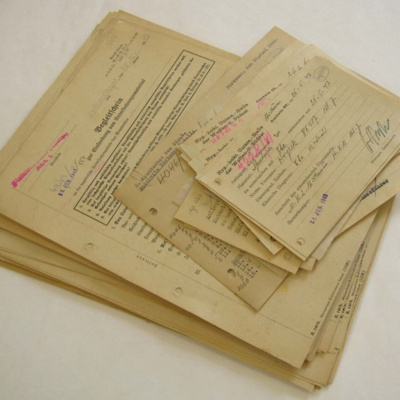
"On Auschwitz" (67): The SS Hygiene Institute
The Waffen-SS and Police Hygiene Institute at Auschwitz was established in the autumn of 1942. Its tasks included conducting hygienic and bacteriological tests for SS units, the German army, the police, and concentration camps, including the entire Auschwitz camp complex. Teresa Wontor-Cichy from the Auschwitz Museum Research Centre talks about the activities of the institute, which used camp prisoners both for labour and as research subjects.
=====
Voiceover: Sarah Edwards, Therese McLaughlin
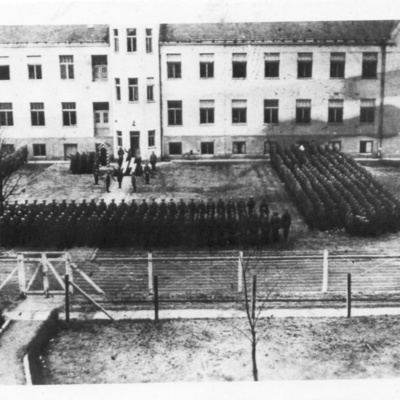
"On Auschwitz" (66): Ideological Training of the SS Garrison of the Camp
What did ideological training for SS personnel at the Auschwitz camp look like, and how did the ideology of national socialism influence the functioning of this SS formation? These questions are addressed in the podcast by Dr. Agnieszka Kita, Deputy Head of the Auschwitz Museum Archives.
====
Voiceovers: Therese McLaughlin and Kate Weinrieb
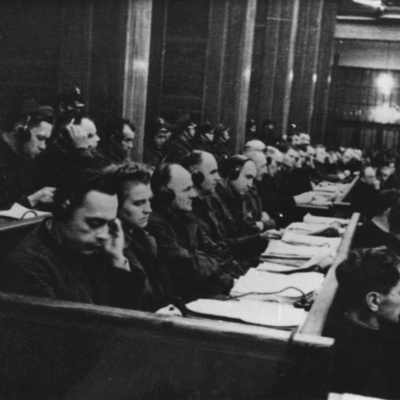
"On Auschwitz" (65): The trial of Rudolf Höss and other SS garrison members of Auschwitz
Some 8,200 SS men and 200 women overseers served in the camp garrison of the German Nazi camp Auschwitz between 1940 and 1945.
How were the perpetrators from Auschwitz, including the first commandant, Rudolf Höss, and other garrison members, held accountable?
Dr. Wojciech Płosa, head of the Archives of the Memorial, explains.
=====
Voiceovers: Greg Littlefield, Mike Skagerlind
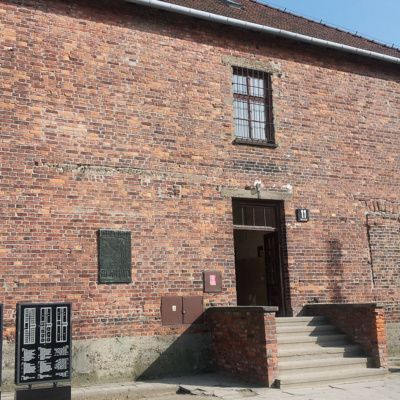
"On Auschwitz" (64): Block no. 11 in KL Auschwitz
Block 11 at Auschwitz I was isolated from the rest of the camp. It served as a prison, an execution site, and the quarters of the penal company. Dr. Adam Cyra from the Auschwitz Museum Research Centre talks about the unique history of the so-called Block of Death.
=====
Voiceovers: Toon Dressen and Grey Stanford.
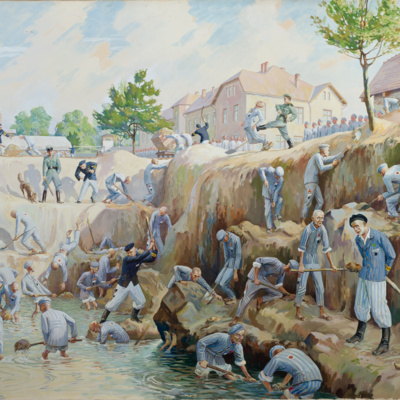
"On Auschwitz" (63): Punishments in KL Auschwitz
At Auschwitz a system of punishments was in place for prisoners who broke camp regulations. In addition to official penalties, SS garrison members and functionary prisoners also imposed so-called unofficial punishments. Dr. Piotr Setkiewicz, head of the Research Center at the Auschwitz Museum, explains the types of punishments and the offenses for which men and women prisoners could be punished.
=====
Voiceover: Tom Vamos, Mike Skagerlind
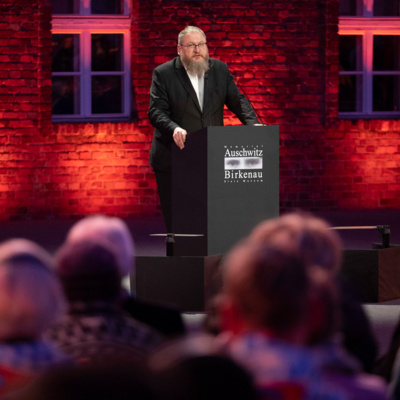
"On Auschwitz" (62): Contemporary challenges of education at the Auschwitz Memorial
The International Center for Education about Auschwitz and the Holocaust, established as a result of the efforts of Auschwitz Survivors, has been operating at the Memorial since 2005. The Museum director Dr. Piotr Cywiński and Education Center director Andrzej Kacorzyk discuss what education at the Memorial looks like today and what challenges it faces in the context of modern times.
=====
Voiceover: Greg Littlefield, Grey Stafford
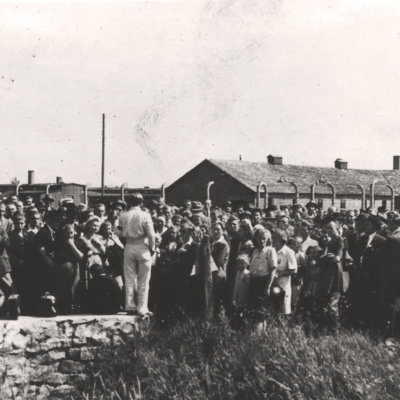
"On Auschwitz" (61): History of education at the Auschwitz Memorial
Education at the Auschwitz Memorial has been carried out since the Museum was established in 1947, and the first guides were Survivors who told visitors about the tragic history of the camp from their personal perspective. It was due to the efforts of the Survivors that the International Center for Education about Auschwitz and the Holocaust was established in 2005. Krystyna Oleksy, the first director of the Education Center, discusses its beginnings, the first educational projects, and significant challenges.
=====
Voiceover: Mary Castillo, Calum Melville
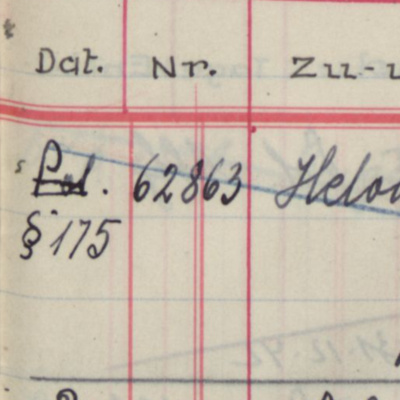
"On Auschwitz" (60): Paragraph 175 prisoners in Auschwitz
Paragraph 175 of the German Penal Code criminalized homosexual contacts between men. One possible punishment was imprisonment in a concentration camp. Also at Auschwitz, there was a small group of men convicted of homosexuality. Dr. Agnieszka Kita, deputy head of the Auschwitz Museum Archives, talks about the persecution of homosexual men in Nazi Germany and the postwar memory of their fate.
English voiceover: Kate Weinrieb
---
Our online lesson about this group of prisoners of Auschwitz by Bogdan Piętka from the Research Center of the Auschwitz Museum.

“On Auschwitz”: First Transport of Poles to Auschwitz in the accounts of Survivors
On June 14, 1940, the Germans deported a group of 728 Poles from a prison in Tarnow to Auschwitz. Among them were soldiers of the September campaign, members ofunderground independence organizations, high school and university students, as well as a small group of Polish Jews. They were registered with nos. from 31 to 758. The podcast "On Auschwitz" presents fragments of testimonies of:- Kazimierz Albin,
- Jan Baraś-Komski,
- Zbigniew Bentkowski,
- Włodzimierz Borkowski,
- Edward Ferenc,
- Adam Jurkiewicz,
- Stanisław Maliński,
- Eugeniusz Niedojadło,
- Wiktor Pasikowski,
- Tadeusz Pietrzykowski,
- Bronisław Wajda,
- Alfred Wilk
- Stanisław Zyguła.
=====
See also our online lesson about this topic:http://lekcja.auschwitz.org/en_17_deportacje/
=====
Voiceovers:Tom Vamos, Greg Littlefield, Grey Stanford, Mike Skagerlind, Michael Takiff, Toon Dressen

"On Auschwitz" (59): Block no. 10 in Auschwitz I and sterilization experiments
Block 10 at the Auschwitz I camp was the so-called experimental block. SS doctors conducted medical experiments there, including those focused on sterilization. Why was this particular block chosen for such experiments, who were the doctors working there, and what happened to their victims? These questions are explored by Teresa Wontor-Cichy from the Research Center of the Museum.
Voiceover: Therese McLaughlin
=====
On-line lesson about medical crimes at Auschwitz: http://lekcja.auschwitz.org/2022_medycyna_en/

"On Auschwitz" (58): Day of a prisoner at Auschwitz
The Auschwitz camp did not have a homogeneous character and was constantly changing during its operation. Dr Jacek Lachendro of the Auschwitz Museum Research Centre talks about what everyday life was like for Auschwitz prisoners, from the morning roll-call, through the hunger that accompanied them all the time, to working beyond their strength.
Voiceover: Ian Manger, Tom Vamos
If you find value in the "On Auschwitz" podcast, please consider subscribing on your favorite platform, leaving a rating to help others discover the podcast, and sharing it on social media.
Your support makes a difference.

"On Auschwitz" (57): Conservation at the Auschwitz Museum
The Auschwitz Memorial covers nearly 200 hectares of land and includes about 300 ruins and 155 buildings, but also a huge number of historical objects, primary traces of Victims of Auschwitz: shoes, suitcases, brushes, or kitchen utensils.
Nel Jastrzębiowska and Andrzej Jastrzębiowski from the Conservation Laboratories of the Auschwitz Museum explain how these priceless items are preserved and talk about the philosophy of conservation of the Memorial today.
=====
We wish to thank Kate Weinrieb, Greg Littlefield, and Mike Skagerlind, who recorded the voiceover for this podcast.
If you find value in the "On Auschwitz" podcast, please consider subscribing on your favorite platform, leaving a rating to help others discover the podcast, and sharing it on social media.
Your support makes a difference.

"On Auschwitz" (56): Holocaust denial - strategies of lies and distortion
Holocaust denial is nothing more than a conspiracy theory built on lies and hatred. Although it resembles flat-Earth claims in its approach to facts, it is, in reality, a dangerous and vile vehicle for antisemitism and hatred. Deniers ignore or manipulate facts solely to attack the memory of the Victims.
Dr. Piotr Setkiewicz and Dr. Igor Bartosik delve into the strategies employed by Holocaust deniers to spread misinformation and falsehoods about the history of Auschwitz.
---
We wish to thank Greg Littlefield, Mike Skagerlind, and Grey Stafford, who recorded the voiceover for this podcast.

"On Auschwitz" (55): The Evacuation and Liberation of Auschwitz in the Accounts of Witnesses
Some 7,500 prisoners of the German Nazi camp Auschwitz, including over 500 children, were liberated on January 27, 1945 by Red Army soldiers.
Listen about the last days of the camp's operation and the moment of liberation. The podcast includes testimonies of:
Anna Tytoniak
Kazimierz Smoleń
Lea Shinar
Irena Konieczna
Józef Tabaczyński
Wanda Błachowska-Tarasiewicz
Louis Posner
Jakub Wolman
Zofia Jankowska-Palińska
Anna Chomicz
Zofia Lutomska-Kucharska
Wanda Dramińska
Edward Czempiel
Jakub Gordon
Andrzej Kozłowski
Tadeusz Mleko
Garnier (first name unknown)
Alfred Fiderkiewicz
Aleksander Vorontsov
Wilhelm Wazdrąg
=====
(English voiceovers: Mary Castillo, Toon Dreessen, Greg Littlefield, Ian Manger, Therese McLaughlin, Calum Melville, Mike Skagerlind, Grey Stafford, Michael Takiff, Tom Vamos, Kate Weinrieb, Sarah Weinstein Edwards).

"On Auschwitz" (54): Soviet prisoners of war at Auschwitz
Soviet prisoners of war are the fourth largest group of victims of the German Auschwitz camp, after Jews, Poles and Roma. A total of 11,964 prisoners of war were registered at the camp. In addition, according to estimates, at least 3,000 Red Army soldiers were deported to the camp and murdered without being entered into the camp records.
Dr. Jacek Lachendro of the Museum's Research Center talks about the history and fate of Soviet POWs at Auschwitz.

"On Auschwitz" (53): Registration documents of Auschwitz prisoners
Upon admission to the camp, prisoners underwent a registration process, during which various documents related to the individual were filled out. Dr. Wojciech Płosa, head of the Auschwitz Museum Archives, talks about the details of this process.
We wish to thank Toon Dressen for recording the English voiceover.

"On Auschwitz" (52): Doctor Josef Mengele and his experiments in the camp
Josef Mengele was a doctor of medicine and philosophy, an assistant to Prof. Otmar von Verschuer in the Institute for Hereditary Biology and Racial Hygiene in Frankfurt, member of the Nazi Party and the SS.
In Auschwitz, he was the chief physician in the Roma and Sinti Family Camp in Birkenau, and from August to December 1944, he was also the chief physician of the entire Birkenau camp.
Mengele was responsible for the experiments on human heredity. He was never punished for his crimes. Dr Agnieszka Kita from the Archives of the Muzeum talks about Josef Mengele.
English voiceover: Therese McLaughlin
---
Online lesson on medicine in Auschwitz: https://lekcja.auschwitz.org/2022_medycyna_en/
Listen to the podcast about medicine in Auschwitz: https://open.spotify.com/episode/2s2Jb91u55L6s80XUlq5JW?si=8kHYPgQXS1mIwabnrRaNqg
The podcast on experiments: https://open.spotify.com/episode/2Ij4icZ6kicc96gWL3f3y0?si=_VwpbejMRiOOhvmIxmBdUA

"On Auschwitz" (51): Illegal letters sent by Auschwitz prisoners
Prisoners of Auschwitz were able to send various types of illegal messages—both within the camp and outside the barbed wire fences. Some were short letters addressed to family members; others were messages and reports for underground resistance organizations. Dr. Wojciech Płosa, the head of the Auschwitz Museum Archives, discusses this unique collection of documents.

"On Auschwitz" (50): Official correspondence of prisoners of Auschwitz
Nazi Germany deported some 1,3 million people to Auschwitz. Only a little above 400 thousand were registered in the camp as prisoners. Some could conduct correspondence with the outside world, however it had a unique character.
Dr. Wojciech Płosa, the head of the Archives of the Museum talks about official prisoners’ correspondence: letters and postcards sent out from the camp and sent to the camp by their relatives.

"On Auschwitz": Interview with Auschwitz Survivor Bogdan Bartnikowski on the 80th anniversary of his deportation to the camp.
Bogdan Bartnikowski was born in Warsaw in 1932. During the Warsaw Uprising, he and his mother were expelled from their home. The Germans initially sent them to a transit camp in Pruszków, and then deported them to Auschwitz where they were separated.
On January 11, 1945, both were evacuated to Berlin-Blankenburg, where they were imprisoned until their liberation on April 22, 1945. After this, they returned to Warsaw.
Bogdan Bartnikowski is the author of memoirs, including "Childhood Behind Barbed Wire.”
In the „On Auschwitz" podcast, we invite you to listen to an interview with Bogdan Bartnikowski about his wartime experiences.

"On Auschwitz" (49): Deportations of Polish people from the uprising Warsaw to Auschwitz
In August and September 1944 - after the outbreak of the Warsaw Uprising - almost 13,000 inhabitants of the occupied capital city and surrounding towns: men, women, the elderly, children, even infants, were deported to Auschwitz by the German authorities. Dr. Wanda Witek-Malicka of the Auschwitz Museum Research Centre talks about their fate in the camp.
---
We wish to thank Kate Weinrieb for her help in the production of the English version of the podcast.
In the picture: Jadwiga and Aleksander Bogdaszewski with their children, photograph taken in 1944, in Warsaw. Apart from two-year-old Basia, who was in hospital when the Uprising broke out, the rest of the family were expelled from Warsaw and then, on 12 August, deported to Auschwitz. Aleksander was next transferred to Flossenbürg, where he died in 1944, whereas Jadwiga was transferred in a women’s transport to another camp in Germany. Their children, Zdzisława, aged 10, and Stanisław, aged 6, were liberated in Auschwitz.

"On Auschwitz" (48): Good examples of literature dedicated to the history of Auschwitz camp.
The first publications about Auschwitz were published during the war, while the camp was still in operation. The immediate postwar years also abounded in numerous publications by witnesses-Survivors of those events. Dr. Wanda Witek-Malicka of the Auschwitz Museum Research Center discusses the advantages of literature written by direct witnesses over literary fiction inspired by the subject of Auschwitz.
---
Books Published before 1950:
ZAREMBINA Natalia, Auschwitz. The Camp of Death (ENG).
SZMAGLEWSKA SEWERYNA, Smoke over Birkenau 1947, (ENG).
ŻYWULSKA Krystyna, I survived Auschwitz (ENG).
BOROWSKI Tadeusz, SIEDLECKI Janusz Nel, OLSZEWSKI Krystyn, We were in Auschwitz, (ENG).
FRANKL Victor, Ein Psycholog Erlebt das Konzentrationslager, 1946 (GER).
NYISZLI Miklos, Dr. Mengele boncoló orvosa voltam az auschwitzi krematóriumban, 1947, (HUN).
NYISZLI Miklos, Auschwitz: A doctor’s Eyewitness Account, 1947; I was Doctor Mengele’s Assistant.
MILLU Liana, Il fumo di Birkenau (IT), 1947.
Published after 1950:
BOROWSKI Tadeusz, This Way for the Gas, Ladies and Gentlemen (ENG)
ZIĘBA Adam, A Piece of Bread (ENG).
GAWALEWICZ Adolf, Reflections in the Gas Chamber’s Waiting Room: From the Memoirs of a Muselmann.
SOBOLEWICZ Tadeusz, But I survived.
BARTNIKOWSKI Bogdan, Childhood Behind Barbed Wire.
DUNICZ-NIWIŃSKA Helena, One of the girls in the band (ENG).
DUNICZ-NIWIŃSKA Helena, Les chemins de ma vie (FRA).
DUNICZ-NIWIŃSKA Helena, Los caminos de mi vida (ESP).
DUNICZ-NIWIŃSKA Helena, Wege meines Lebens (GER)
LEVI Primo, If This Is a Man.
LEVI Primo, The Truce.
WIESEL Elie, Night.
FRANKL Victor, Men’s Search for Meaning.
LAKS Szymon, Music of Another World.
AMERY Jean, At the Mond’s Limits.
LIBLAU Charles, I kapo di Auschwitz (IT).
LIBLAU Charles, Les kapo d’Auschwitz (FRA).
MELMERSTEIN Mel, By Bread Alone: The Story of 4685.
KERTESZ Imre, Fateless.
BUERGENTHAL Thomas, A Lucky Child: A Memoir of Surviving Auschwitz as a Young Boy.
CLING Maurice, Vous qui entrez ici (FRA).
LENGYEL Olga, Five Chimneys.
KORNREICH-GELISSEN Rena, Rena’s Promise.
ROSENBERG Otto, A Gypsy in Auschiwtz.
DELBO Charlotte, None of Us Will Return.
HANAK Vladimir, Mrtwy se vratil (CZECH)
Sonderkommando:
VENEZIA Szlomo, Inside the Gas Chambers.
MULLER Filip, Eyewitness Auschwitz: Three Years in the Gas Chambers.
Children:
BIRENBAUM Halina, Hope is the Last to Die.
ZYSKIND Sara, The Stolen Years (ENG).
KLUGER Ruth, Still Alive: A Holocaust Girlhood Remembered (ENG).
MULLER-MADEJ Stella, A girl From Chindlers List (ENG).
Escapes:
ALBIN Kazimierz, Warrant of Arrest (ENG).
BIELECKI Jerzy, Wer ein Leben rettet… (GER).
KOWALCZYK August, A Barbed Wire Refrain.
About SS men:
Auschwitz Seen by the SS.
The Private Lives of the Auschwitz SS, red. Piotr SETKIEWICZ.

"On Auschwitz" (47): Functionary prisoners at Auschwitz
In the German concentration camps, including Auschwitz, there was a group of so-called ‘functionary’ prisoners, responsible for supervising other prisoners. They were mainly in charge of supervising the work units, keeping order in the blocks or barracks, but also distributing food among the prisoners.
Being a lageraeltester, a block leader, or a kapo meant almost unlimited power over the prisoners. Sometimes the functionary prisoner became the master of life and death.
Dr. Piotr Setkiewicz, the head of the Auschwitz Muzeum Research Centre, talks about the complex history of this group of prisoners at Auschwitz.

On Auschwitz (46): Tattooing numbers at Auschwitz
Auschwitz was the only German concentration camp where tattooing of numbers was applied to prisoners. Dr. Wanda Witek-Malicka of the Auschwitz Museum Research Center talks about why and when such a system was introduced, and whether all prisoners of Auschwitz were tattooed.
We wish to thank Kate Weinrieb for her help in the production of the English version of the podcast.

"On Auschwitz" (45): The story of Witold Pilecki, co-founder of resistance in Auschwitz
Polish soldier, Witold Pilecki was imprisoned in Auschwitz on 22 September 1940.
Pilecki undertook the mission to infiltrate the camp in order to create a conspiracy network there, organize communications, send reliable data about German crimes in the camp, and possibly prepare the camp's prisoners for a possible fight.
In April 1943, Witold Pilecki escaped with two fellow inmates. He wrote reports in which he described the camp terror and the tragic fate of the prisoners, as well as the progressive development of the extermination of the Jewish people in Auschwitz.
Dr. Adam Cyra, the author of his biography, talks about the life, work, and tragic death of Witold Pilecki.

"The Zone of Interest" - discussion with the filmmakers
On 15 February 2024, the Polish premiere of the film 'The Zone of Interest,' directed and written by Jonathan Glazer, was held at the Auschwitz Museum. The film, depicting the family life of Auschwitz camp commandant Rudolf Höss, was awarded the Grand Prix at the Cannes Film Festival last year. It also received two Oscars.
Director Jonathan Glazer, production designer Chris Oddy, and producers Jim Wilson, Ewa Puszczynska, and Bartosz Rainski participated in the post-screening discussion moderated by the director of the Auschwitz Museum Dr. Piotr M. A. Cywiński..
We invite you to listen to extensive fragments of the meeting.
---
We wish to thank Kate Weinrieb who recorded the women's voiceover in the podcast.

"On Auschwitz" (44): Women at Auschwitz
The Auschwitz camp was established in June 1940 for male prisoners. The first groups of women were incarcerated by the Germans more than a year and a half later - at the end of March 1942. Dr. Wanda Witek-Malicka and Teresa Wontor-Cichy of the Museum Research Centre talk about the reasons for the creation of the women's camp in Auschwitz and the circumstances surrounding it.
We wish to thank Jonathan Jetter from the Right Angle Productions & Brooke Stocken as well as Kate Weinrieb for their help in production of the English version of the podcast.

"On Auschwitz" (43): the film Chronicle of liberation of Auschwitz
The Auschwitz camp was liberated on January 27, 1945, by soldiers of the Red Army. Well-known are the scenes captured by Soviet cameramen, which, although not showing the exact moment of liberation, are important documents revealing the crimes committed by the Germans in Auschwitz.
It is essential to remember that some of the film material was created for propaganda purposes. Edyta Chowaniec from the Film Archive of the Museum explains the circumstances of the creation of the so-called Auschwitz Liberation Chronicle
---
We wish to thank Jonathan Jetter from the Right Angle Productions & Brooke Stocken for their help in production of the English version of the podcast.

"On Auschwitz" (42): Death Marches from Auschwitz towards Wodzisław Śląski and Gliwice
On January 17, 1945, SS men began the evacuation of the Auschwitz camp. Approximately 56,000 prisoners – men and women marched, under armed escort, from different parts of the Auschwitz camp complex, towards Wodzisław Śląski and Gliwice. Thousands of people, during the so-called Death Marches, lost their lives. Dr. Jacek Lachendro and Teresa Wontor-Cichy from the Research Center of the Auschwitz Museum talk about details of those tragic events.
We wish to thank Jonathan Jetter from the Right Angle Productions & Brooke Stocken for their help in production of the English version of the podcast.

"On Auschwitz" (41): Art at Auschwitz
The Auschwitz Memorial and Museum is in possession of the largest collection of art related to the Auschwitz camp. This collection is unique on a world scale. The artworks created in conditions of extreme danger are an extraordinary document of history and time that still stir the emotions to this day.
They enable one to discover the feelings and emotions, difficult to reconstruct today, that accompanied the inmates on a daily basis. It is because of this huge historical and emotional value that camp art is extremely precious and provides a universal message which can be understood by every recipient.
Teresa Wontor-Cichy, historian from the Research Center and Agnieszka Sieradzka, curator of the Collections, discuss the art created at Auschwitz.
We wish to thank Jonathan Jetter from the Right Angle Productions & Brooke Stocken for their help in production of the English version of the podcast.
We also recommend our online lesson about art at Auschwitz: http://lekcja.auschwitz.org/en_18_sztuka/

"On Auschwitz" (40): Why prisoners of Auschwitz did not start a revolt?
One of the important questions about Auschwitz is why the prisoners, who outnumbered the SS guards, did not make an attempt of a general revolt or uprising.
Dr. Piotr Setkiewicz and Dr. Wanda Witek-Malicka of the Museum Research Center discuss the first encounter of prisoners with the realities of the camp, their adaptation to the conditions of existence and the possibilities of initiating a revolt among the prisoners.
We wish to thank Jonathan Jetter from the Right Angle Productions & Brooke Stocken for their help in production of the English version of the podcast.

"On Auschwitz" (39): Keeping the functioning of Auschwitz in secrecy
Although the SS took various measures to keep the functioning of the camp secret, especially when Auschwitz became both a concentration camp and extermination center, news about the camp got out.
Dr. Piotr Setkiewicz, the head of the Museum Research Centre, talks about how information about Auschwitz could reach the world.
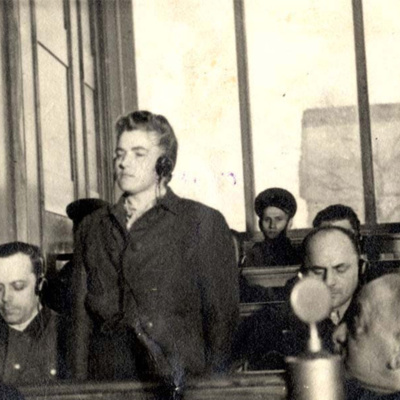
"On Auschwitz" (38): Women supervisors at Auschwitz
Over two hundred women served the SS in KL Auschwitz. They were divided into three groups according to the duties they performed: the biggest group constituted the so-called Aufseherinnen, whose main task was to watch over women prisoners; the second group was formed by women employed in communication services described as SS-Helferinnen working in SS headquarters offices as radiotelegraph operators, stenographers and telephone operators; the last group consisted of nurses.
Dr. Sylwia Wysińska from the Archives of the Museum talks about the women supervivors at Auschwitz
We wish to thank Jonathan Jetter from the Right Angle Productions & Brooke Stocken for their help in production of the English version of the podcast.
(picture: Maria Mandl as a defendant in a trail in 1947)

"On Auschwitz" (37): Different cases of organized resistance at Auschwitz
In the history of Auschwitz, there were instances when prisoners tried to resist. The most famous event is the Sonderkommando revolt that took place at Auschwitz II-Birkenau on 7 October 1944. This story is told in episode 21 of our podcast.
However, there were other cases of prisoners organising resistance in order to attack SS members, or to escape. These included:
-) the revolt and escape of prisoners from the Penal Company
-) tragic events in the women's penal company
-) mass escape of Soviet prisoners of war
-) cases of desperate resistance in the dismantling room of a gas chamber.
Dr Piotr Setkiewicz, the head of the Museum Research Centre, tells the story of different cases or organized resistance at Auschwitz.

"On Auschwitz" (36): The story of Sophie Stippel, the cook of Auschwitz commandant Rudolf Höss
One of the prisoners in the first transport of women to Auschwitz - 999 women transferred from Ravensbrück concentration camp in March 1942 - was Sophie Stippel. She was registered as prisoner number 619.
She was arrested because she belonged to the group of Jehovah's Witnesses.
A few days after arrival, Sophie was employed as a domestic helper in the villa of the camp commandant, Rudolf Höss, which probably saved her life. Her duties included shopping and cooking, and sometimes taking care of the commandant's children.
Teresa Wontor-Cichy of the Auschwitz Museum Research Centre tells about the story of Sophie Stippel.

"On Auschwitz" (35): Plunder of the property of Auschwitz victims
One of the elements of the operation of the Auschwitz camp was looting of the property of people deported to the camp. This was most intensified when Nazi Germany began the extermination of Jews at Auschwitz.
Most of the property - after being sorted and disinfected - was sent to the Third Reich, where it was handed over to various groups of the German population, organizations and institutions.
Dr. Jacek Lachendro, deputy head of the Museum's Research Center, talks about the looting process at Auschwitz.

"On Auschwitz" (34): The first moments at the Auschwitz camp
You have arrived not at a sanatorium but at a German concentration camp in which the only way out is through the chimney. If someone doesn’t like this, he may at once go to the wires. If there are any Jews in this transport, they have no right to live longer than two weeks. If there are any priests, they may live for a month, the rest only three months.
This is how the speech given by Auschwitz camp manager Karl Fritzch was recalled by Jan Karcz in his memoirs.
Teresa Wontor-Cichy of the Museum Research Center talks about the first moments at Auschwitz, when deportees came into contact with the world of death, terror and dehumanization, as well as factors that could help surviving the camp.

"On Auschwitz" (33): Creation of the Auschwitz Memorial
After the liberation of Auschwitz, its two main parts - the former main camp (Auschwitz I) and Auschwitz II-Birkenau - were first placed under the control of the Soviet military authorities. In the first of these, from February to September 1945, Soviet field hospitals and the Polish Red Cross hospital operated, where most of the surviving prisoners were treated. A transit camp for German prisoners of war also operated there from spring to autumn of that year. A similar camp existed at the former Birkenau camp until early 1946. Commissions investigating the crimes committed by Nazi Germany at Auschwitz also began to work at the site of the former camp.
At the same time, survivors began to make efforts to establish an institution at the site of the former camp to commemorate the victims.
Dr Jacek Lachendro, from the Museum Research Centre, talks about the process that led to the creation of the Auschwitz Memorial in 1947.

"On Auschwitz" (32): Documents analysis: how Auschwitz camp attempted to transfer 30 women prisoners from Ravensbrück
The analysis of the surviving documents of the camp administration makes it possible, on the one hand, to trace how the centralised concentration camp system administered by the SS in Nazi Germany functioned, while, on the other hand, it also shows various aspects of the functioning of the camp itself and the members of its garrison.
One example is the surviving correspondence concerning the attempt to transfer 30 women prisoners - Jehovah's Witnesses - from Ravensbrück to Auschwitz, who were to be employed as domestic helpers in the homes of SS men. Listen to Teresa Wontor-Cichy from the Research Center of the Auschwitz Museum talking about this set of documents.

"On Auschwitz" (31): Christian clergy at Auschwitz
The Germans incarcerated at least 464 priests, seminarians & monks as well as 35 nuns in #Auschwitz. Teresa Wontor Cichy, from the Museum’s Research Center talks about the fate of Christian clergy and about religious life in the camp.
See also our online course: http://lekcja.auschwitz.org/en_18_duchowienstwo/

"On Auschwitz" (30): Why the Auschwitz camp was not bombed?
The Auschwitz II-Birkenau gas chambers and crematoria never became targets for Allied bombing, despite reports about their existence forwarded both by the Polish resistance movement and some people who escaped from the camp. Instead, American bombers carried out several strikes against the IG Farben petrochemical installations located at the distance of seven kilometers from Auschwitz.
Dr. Piotr Setkiewicz, the head of the Research Center of the Auschwitz Museum talks about the issue of bombing the camp.

"On Auschwitz" (29): British prisoners of war near the Auschwitz camp
One of the groups of witnesses to the crimes perpetrated at the concentration and extermination camp Auschwitz were British prisoners of war who were forced to work on the construction of the IG Farbenindustrie factory. The building site was located in the immediate vicinity of the Auschwitz III-Monowitz camp and a few kilometers from the Auschwitz I main camp. British prisoners of war were also employed at the mines in Libiąż and Jaworzno, where Auschwitz sub-camps were later established. Dr Piotr Setkiewicz, head of the Auschwitz Museum Research Centre, talks about the history of British POWs near the Auschwitz camp.