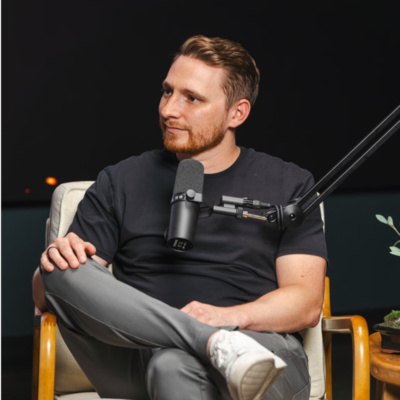
The LeanScale Podcast with Anthony Enrico
By Anthony Enrico
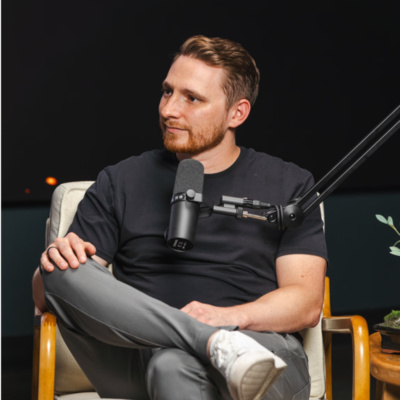
There Is No APAC Playbook: Going International, Then Walking Away | Bhavik Vashi, CRO at Siro
Most US software companies go international the same way: a board member says "go conquer the world," somebody gets shipped to Singapore, and everyone hopes for the best. Bhavik Vashi has watched that movie twice — and he says the problem starts with the word "playbook." APAC is more than fifty sovereign countries, each with its own tax code, its own laws and its own buyers. There is no APAC playbook.
Bhavik spent a decade at Anaplan — joining in 2013 with the actual title "Model Building Guru" and leaving as general manager of Asia, through the 2018 IPO and the $10.4B Thoma Bravo take-private. Then he built Carta's international business from zero across Asia Pacific, the Middle East and Africa. Earlier this year he walked away from all of it, moved his family from Singapore to New York, and became Chief Revenue Officer at Siro, the AI sales performance platform for in-person sellers.
In this conversation with LeanScale founder Anthony Enrico, Bhavik breaks down reversible versus irreversible career doors, the two things US companies miss abroad (shared experience and unit economics), why the best partners won't take your call yet, and his thesis that AI will be incremental for digital go-to-market but transformative for the real economy — home builders, dealerships, home services, medical aesthetics and the trades.
WHAT YOU'LL LEARN
Why "the APAC playbook" is a misnomer — and how 50+ countries with different laws change your entry plan
The reversible vs. irreversible doors framework Bhavik used to leave Singapore for New York
Why AI will be incremental for digital GTM and transformative for the real economy
CHAPTERS
00:00 — Intro: from KPMG accountant to "Model Building Guru" to CRO
01:40 — Walking away from APAC: reversible vs. irreversible doors
07:45 — The two things US companies miss: shared experience and unit economics
11:07 — Regulation and 50 countries: there is no APAC playbook
19:20 — "Something Big Is Happening" — why he moved to New York
23:47 — AI in go-to-market: incremental for digital
26:20 — …transformative for the real economy: overlapping adoption curves
51:25 — Wrap-up
ABOUT THE GUEST
Bhavik Vashi is Chief Revenue Officer at Siro, the AI sales performance platform for in-person sales teams across home services, home building, dealerships, multifamily, senior living and medical aesthetics. He started his career as an accountant at KPMG, joined Anaplan in 2013 and spent a decade there — through the 2018 IPO and the 2022 Thoma Bravo take-private — leaving as general manager of Asia. He then spent four years at Carta as Managing Director for Asia Pacific, the Middle East and Africa, building the international business from zero with full P&L ownership. In 2026 he moved from Singapore, his home of ten years, to New York to join Siro.
ABOUT THE LEANSCALE PODCAST
The LeanScale Podcast is the show for GTM operators building the next generation of revenue teams. Hosted by Anthony Enrico, founder of LeanScale — a RevOps and GTM infrastructure partner for the fastest-growing companies in tech.
▶ Subscribe for new episodes
▶ LeanScale: https://www.leanscale.team
▶ Anthony on LinkedIn: https://www.linkedin.com/in/anthonyenrico/
▶ Bhavik on LinkedIn: https://www.linkedin.com/in/bhavikvashi/
▶ Siro: https://www.siro.ai
KEYWORDS / TAGS
RevOps, GTM, International Expansion, APAC Go-to-Market, APAC Expansion, Asia Pacific Sales, Singapore, International GTM Strategy, Localized Pricing, Unit Economics, Channel Partnerships, Chief Revenue Officer, CRO, AI Sales, Sales Performance, Field Sales, In-Person Sales, Real Economy, Home Services Sales, Sales Coaching, Call Recording, AI Transformation, AI Agents, Anaplan, Carta, Siro, Thoma Bravo, B2B SaaS, LeanScale, Anthony Enrico, Bhavik Vashi
HASHTAGS
#RevOps #GTM #AI #LeanScale #LeanScalePodcast #InternationalExpansion #APAC #CRO #AISales #FieldSales #InPersonSales #B2BSaaS #Anaplan #Carta #Siro
Where Enablement Goes to Die: The First-Line Manager | Ally Combs, Bretton AI
Every GTM initiative you have ever rolled out died in the same room. Not in the kickoff, not in the training — in a one-on-one, two weeks later, when a rep asked their manager: do I really have to do that?
Ally Combs has one of the sharpest views we have heard on why most enablement programs quietly die. She learned to sell at AppDynamics, where she took a pay cut and several demotions to start over as a BDR, then went from BDR to enterprise account executive in about three years and rode the company through its $3.7B acquisition by Cisco. She did it again at Snowflake as a seller through its IPO, before crossing to the other side of the table and building ClickUp's sales enablement function almost from scratch across their $100M to $300M ARR run.
Today she is Head of GTM Enablement at Bretton AI, where instead of buying an LMS, a content system and a reporting stack, she vibe coded the entire thing herself. In this conversation with LeanScale co-founder Anthony Enrico, Ally breaks down the layer of the org that decides whether any GTM initiative actually sticks, the interview techniques she is still stealing from her old CROs, and why the real work in modern GTM tooling has moved from picking tools to owning the data model.
WHAT YOU'LL LEARN
Why the first-line sales manager is the hardest job in SaaS — and the moment every GTM change lives or dies
CHAPTERS
00:00 — Cold open + intro
01:15 — A pay cut and three demotions to start over as a BDR
03:35 — How to actually break out of the BDR seat
11:18 — What enablement actually is — and why so much of it is mediocre
14:00 — The most underrated lever: the first-line manager
18:46 — The three R's: recruit, retain, revenue
21:55 — Hiring sellers: the ICE framework
37:14 — The mistake that kills it: one-on-ones that become deal reviews
40:47 — Leading indicators: making quota inevitable
45:47 — Standing up an enablement function from scratch
51:18 — She vibe coded her entire enablement stack
53:41 — Why the data model became the real work
58:51 — Where enablement goes next
1:01:01 — Wrap
ABOUT THE GUEST
Ally Combs is the Head of GTM Enablement at Bretton AI, the agentic AI platform for financial crime operations that rebranded from Greenlite AI alongside a $75M Series B led by Sapphire Ventures. Ally learned enterprise selling at AppDynamics, where she took a pay cut and several demotions to restart as a BDR and moved to enterprise account executive in roughly three years, staying through the company's $3.7B acquisition by Cisco. She then sold at Snowflake through its IPO before moving to the other side of the table, building ClickUp's GTM enablement function almost from scratch across the company's $100M to $300M ARR run. At Bretton she is the first enablement hire, and rather than buying a traditional enablement stack she built her own LMS, content system, reporting and lead routing on top of Salesforce.
ABOUT THE LEANSCALE PODCAST
The LeanScale Podcast is the show for GTM operators building the next generation of revenue infrastructure. Hosted by Anthony Enrico, co-founder of LeanScale, we go deep with the operators, founders and executives shaping how modern go-to-market teams are designed, scaled and transformed.
▶ Subscribe for new episodes
▶ Learn more about LeanScale: https://www.leanscale.team
▶ Follow Anthony on LinkedIn
▶ Follow Ally on LinkedIn
KEYWORDS / TAGS
Sales Enablement, GTM Enablement, RevOps, GTM, GTM Engineering, Sales Management, First Line Sales Manager, Sales Leadership, Sales Coaching, One on Ones, Leading Indicators, Sales Hiring, ICE Framework, Recruit Retain Revenue, BDR to AE, Sales Onboarding, LMS, Vibe Coding, AI in GTM, AI Agents, Data Model, Salesforce, Snowflake, AppDynamics, ClickUp, Bretton AI, B2B SaaS, LeanScale, Anthony Enrico, Ally Combs
HASHTAGS
#SalesEnablement #RevOps #GTM #RevenueOperations #SalesLeadership #SalesCoaching #B2BSaaS #SalesHiring #AI #VibeCoding #GTMEngineering #Salesforce #ClickUp #LeanScale #LeanScalePodcast
He Fired a $500K Client Right After a Layoff — Then Went $8M to $42M | Kevin Rice, Hathway
In early 2016, Kevin Rice walked into his own office and laid off part of his team. Every project had wrapped at the same time, 40% of revenue was about to vanish in six weeks, and the company was bootstrapped with no reserves to ride it out.
Five years later, Hathway was 250 people and $42 million in revenue, and it sold. What happened in between is one of the most specific go-to-market turnarounds we've had on this show: narrow the entire firm to one industry, refuse every dollar of revenue that can't stack, pull two developers off billable work to build IP, and stop selling the agency altogether in favor of selling speed.
Kevin and LeanScale co-founder Anthony Enrico get into all four bets — plus the partner motion with Olo and Salesforce that put them in every room that mattered, how to know when a niche is narrow enough, why utilization is the only number that matters in a services business, and the acquisition that collapsed the night before signing and came back a year later at three to four times the price. Then the half Kevin talks about now: what the climb cost him at home, the stretch he calls robot mode, and why he still wouldn't work a single hour less.
WHAT YOU'LL LEARN
Why project revenue kills agencies — and the test for which engagements are worth taking
The acquisition that died the night before signing — and the banker-run process that sold for 3–4x more
CHAPTERS
00:00 — Cold open + intro
01:50 — 2016: the layoff nobody saw coming
04:13 — Why $8M of revenue was the problem, not the win
11:36 — Bet #1 — narrow the whole firm to one industry
15:10 — Bet #2 — only take revenue that can be a going concern
16:18 — Bet #3 — two developers, a code library, and Nom Nom
20:15 — Bet #4 — stop selling the agency, start selling speed
26:00 — The Olo partnership, Ferraris, and yacht cruises
40:33 — Utilization, fungible teams, and five years of forecast data
46:12 — The run-up to the exit and the fundless sponsor
47:53 — COVID shuts the restaurants — and becomes a tailwind
52:05 — Canaccord, 50 companies, and 3–4x the price
53:14 — Robot mode
57:35 — Would you have worked less? No.
01:03:13 — Wrap
ABOUT THE GUEST
Kevin Rice co-founded Hathway out of a garage with his college best friend Jesse Dundon straight after graduating from Cal Poly San Luis Obispo, and spent thirteen years as its President and CMO. After a 2016 layoff nearly stalled the company, he narrowed the firm to a single industry, rebuilt its go-to-market around partners and proprietary IP, and grew it from roughly 30 people to 250 and $42 million in revenue before it was acquired by Bounteous in 2021. Today he hosts CEOs & ABCs, a podcast for leaders who want to advance their careers without disappearing from their kids' lives, invests in AI-native startups through Theorem One Capital, and advises consumer and restaurant brands. He's a single father of three boys.
ABOUT THE LEANSCALE PODCAST
The LeanScale Podcast — real conversations with the operators and founders building modern go-to-market.
Hosted by Anthony Enrico, co-founder of LeanScale.
New episodes weekly. Subscribe so you don't miss one.
Learn more about LeanScale → https://www.leanscale.team
KEYWORDS / TAGS
RevOps, GTM, GTM Strategy, agency growth, digital agency, professional services, services business, bootstrapped business, niche down, vertical specialization, partner-led growth, channel conflict, partner tiering, productized services, agency IP, speed to market, sales narrative, pipeline forecasting, utilization rate, capacity planning, turnaround, M&A, exit strategy, Canaccord Genuity, founder equity, Hathway, Bounteous, Olo, Salesforce, restaurant technology, QSR, CRM, B2B SaaS, leadership, working parents, CEOs and ABCs, Kevin Rice, Anthony Enrico, LeanScale
HASHTAGS
#RevOps #GTM #LeanScale #LeanScalePodcast #AgencyGrowth #ProfessionalServices #Bootstrapped #Partnerships #Forecasting #Utilization #MergersAndAcquisitions #ExitStrategy #Leadership #RestaurantTech #B2BSaaS
The Change Management Playbook You Can't Outsource | Susan Rothwell, CRO at Simpli.fi
Susan Rothwell has run a $1B revenue organization at Epsilon and a $2.5B business at Vericast. Then she walked into a fifteen-year-old company that had grown enormously without a forecast of its own, a RevOps function, or a CRM anyone actually used.
What she found wasn't a bad forecast. It was a blind one — built by finance, with no bottoms-up roll-up from the field, and no way to answer the questions a CRO has to answer. "I had a lot of questions and not a lot of answers, and no place to go find them."
In this conversation with LeanScale co-founder Anthony Enrico, Susan walks through the whole rebuild: the first hire she made, the CRM that was really an order-entry system, the consultant-led reorg she inherited and then publicly reversed, the AI test she now applies to every process, and the single thing she says you can never hand to an outside firm. If you have ever been handed a transformation somebody else started, this one is for you.
WHAT YOU'LL LEARN
Why a finance-built forecast isn't wrong — it's blind, and what that costs you
How to tell a CRM that's forecasting from one that's just taking orders
The test for AI transformation: how would AI do this, not how would AI fix this
How to reverse a decision publicly without destroying your team's trust
Exactly where outside consultants fit — and the one thing you can never outsource
CHAPTERS
00:00 — Cold open + intro
01:46 — Week one: a fifteen-year-old company with no forecast of its own
03:30 — The first hire: RevOps as the interpreter between sales and finance
05:54 — The CRM she inherited: "more of an order system than a forecasting system"
11:20 — The consultant-led reorg that created the angst
12:35 — Going back: "that decision was not the right decision"
17:29 — "I don't have all the answers" — and the question she always asks
19:22 — What a real feedback loop looks like — and why she stayed out of it
26:04 — AI: strategy, training and governance before tools
28:58 — "How would AI do this?" vs "How would AI fix this?"
34:25 — Getting alignment on what a new logo actually is
40:29 — Where consultants fit — and where they can't
47:22 — Wrap
ABOUT THE GUEST
Susan Rothwell is Chief Revenue Officer at Simpli.fi, the Blackstone- and GTCR-backed advertising platform serving media teams, agencies and brands. She brings more than 27 years in sales and marketing leadership. Before Simpli.fi she was Chief Revenue Officer at Epsilon, where she led more than $1 billion in revenue and ran a go-to-market transformation that pulled three separate selling organizations into one customer-facing team. Before that she was Chief Revenue Officer at Vericast, where she drove a roughly $2.5 billion business to consistent double-digit growth by aligning strategy, performance and revenue operations.
ABOUT THE LEANSCALE PODCAST
The LeanScale Podcast is the show for GTM operators building the next generation of revenue infrastructure. Hosted by Anthony Enrico, co-founder of LeanScale, we go deep with the operators, founders, and executives shaping how modern go-to-market teams are designed, scaled, and transformed.
▶ Subscribe for new episodes
▶ Learn more about LeanScale: https://www.leanscale.team
▶ Follow Anthony on LinkedIn
▶ Follow Susan on LinkedIn
KEYWORDS / TAGS
RevOps, Revenue Operations, GTM, Change Management, GTM Transformation, AI Transformation, AI Strategy, AI Governance, Sales Operations, Sales Enablement, Pipeline Forecasting, Sales Forecasting, Forecast Accuracy, Data Model, Data Lake, CRM Adoption, Salesforce, CRO, Chief Revenue Officer, Territory Design, Private Equity, Blackstone, GTCR, Simpli.fi, Epsilon, Vericast, AdTech, Programmatic, B2B SaaS, Management Consultants, LeanScale, Anthony Enrico, Susan Rothwell
HASHTAGS
#RevOps #GTM #AI #ChangeManagement #RevenueOperations #SalesOperations #CRO #AITransformation #AdTech #Programmatic #B2BSaaS #Salesforce #PrivateEquity #LeanScale #LeanScalePodcast
The Token Bill Came Due: What Comes After the AI Pilot Phase | Anish Chadalavada
Everybody built an agent. Then the quarter closed, the token bill landed, and nobody could point at what it actually produced. Anish Chadalavada thinks that moment is the end of phase one — and that what comes next looks nothing like the last twelve months.
Anish is co-founder and Chief Growth Officer at Gradial, the enterprise AI harness that runs marketing work across the tools a company already owns. Before Gradial he invested in early-stage AI companies at Point72 Ventures and shaped AI strategy at Microsoft. Since then he's taken Gradial through back-to-back rounds — most recently a $65M Series C led by Insight Partners — while landing AWS, T-Mobile, Prudential and Vanguard, one of whom cut campaign execution time by 80 to 90%.
In this conversation with LeanScale co-founder Anthony Enrico, Anish makes the case that the marketing SaaS stack won't survive the shift to agents — but not in the way the 'SaaSpocalypse' crowd means it. Systems that hold real context become infrastructure. Tools that exist only to make other tools easier for a human to use have no reason to exist, because software is about to be used mostly by agents. They get into governance, multiplayer architecture, model lock-in, what happens to entry-level GTM jobs, and a genuinely contrarian prediction about where all of this lands.
WHAT YOU'LL LEARN
Why the marketing SaaS stack gets reset into infrastructure instead of dying outright
CHAPTERS
00:00 — Cold open and intro
01:59 — The claim: the marketing SaaS stack won't survive agents
03:57 — Anthony's pushback: it's a data model problem, not a model problem
04:36 — Phase one is over — the token bill came due
07:06 — What an enterprise AI harness actually is
10:52 — Model lock-in is the multi-cloud story again
19:19 — Who owns AI inside go-to-market
20:04 — Gradial put RevOps in the driver's seat of business development
32:50 — Why Gradial chose workflow over content generation
40:25 — What happens next: the premium moves back to humans
47:11 — Wrap
ABOUT THE GUEST
Anish Chadalavada is co-founder and Chief Growth Officer at Gradial, the enterprise AI harness that connects frontier models to the brand context, approvals and tools a large marketing organization already runs on. A Dartmouth graduate based in Seattle, Anish spent his career on the other side of the table before building: investing in early-stage AI companies at Point72 Ventures through the ChatGPT inflection, and shaping AI strategy at Microsoft, where he worked with GitHub leadership on intelligent developer tooling and on the Nuance acquisition. Gradial has raised more than $110M in sixteen months, including a $65M Series C led by Insight Partners, and counts AWS, T-Mobile, Prudential, Vanguard, Kaiser Permanente and US Bank among its enterprise customers.
ABOUT THE LEANSCALE PODCAST
The LeanScale Podcast is the show for GTM operators building the next generation of revenue infrastructure. Hosted by Anthony Enrico, co-founder of LeanScale, we go deep with the operators, founders, and executives shaping how modern go-to-market teams are designed, scaled, and transformed.
▶ Subscribe for new episodes
▶ Learn more about LeanScale: https://www.leanscale.team
▶ Follow Anthony on LinkedIn
▶ Follow Anish on LinkedIn
KEYWORDS / TAGS
RevOps, Revenue Operations, GTM, GTM Engineering, Marketing Operations, Martech, AI Agents, Agentic AI, AI Harness, AI Orchestration, Enterprise AI, AI Governance, AI Strategy, LLM, Token Costs, Model Lock-In, Context Engineering, Data Model, Brand Governance, Content Operations, Workflow Automation, Sales Operations, CRM, SaaS, SaaSpocalypse, B2B SaaS, Gradial, Anish Chadalavada, Point72 Ventures, Insight Partners, Anthony Enrico, LeanScale, Future of Work, GTM Careers
HASHTAGS
#RevOps #GTM #AI #AgenticAI #AIAgents #Martech #MarketingOps #RevenueOperations #EnterpriseAI #AIGovernance #B2BSaaS #AIStrategy #FutureOfWork #Gradial #LeanScale #LeanScalePodcast
You Didn't Build a Business. You Built a Job. | Nitin Khanna on 100+ Exits
There is a difference between a business you can run and a business you can transfer. Most owners don't find out which one they built until they try to sell it.
Nitin Khanna is the founder of N3 Business Advisors, a Toronto M&A firm that does one thing: sell construction companies. His team has completed over 100 transactions and speaks with roughly 100 business owners every month — HVAC, electrical, plumbing, general contracting — at enterprise values between $1M and $25M. Before that he managed over $600 million in assets. Before that he was an entrepreneur from the start, with his first company at 15 and his first sale at eight years old.
In this conversation with LeanScale co-founder Anthony Enrico, Nitin breaks down what actually makes a company transferable, why the seller — not the market, not the number — is almost always the reason a deal collapses, and the one-week test that shows you exactly how dependent your business is on you. Plus: why every business sells twice, what a buyer is really paying for, and the $15M deal that slipped four months because the seller went sailing.
WHAT YOU'LL LEARN
The three things that must be true before a business can sell — and which one is never ready
The 90-day owner-dependency test — and the one-week version you can actually run
Why time kills deals, told through a $15M transaction that slipped four months
CHAPTERS
00:00 — Cold open + intro
01:50 — Three things have to be true before a business sells
03:09 — Every owner exits — the five doors out
07:58 — A business you can run vs. one you can transfer
14:37 — The most expensive employee is someone just like you
16:55 — ROT: return on time, and the $500 hour
23:49 — Clean financials: every business sells twice
27:44 — "I'm not buying your past. I'm buying your future."
35:30 — Rolling equity and the second bite at the apple
39:42 — What the M&A process actually looks like
47:15 — Time kills deals — the seller who went sailing
54:58 — The 90-day test — and how to actually start
ABOUT THE GUEST
Nitin Khanna, CFA, CAIA, is the founder and president of N3 Business Advisors, a Toronto-based M&A advisory firm focused exclusively on the construction, trades and engineering sector. His team of 13 has completed over 100 transactions and speaks with roughly 100 owners every month, from HVAC and electrical to plumbing and general contracting, at enterprise values between $1M and $25M. Before founding N3, Nitin held senior finance roles at TD Financial Group, TransGlobe Asset Management, Aecon Construction and Carillion Construction, managing over $600 million in assets. He writes to a newsletter list of roughly 20,000 owners about the mistakes he made building his own firm, under the line that anchors everything he does: every owner exits, few do it well.
ABOUT THE LEANSCALE PODCAST
The LeanScale Podcast is the show for GTM operators building the next generation of revenue infrastructure. Hosted by Anthony Enrico, co-founder of LeanScale, we go deep with the operators, founders, and executives shaping how modern go-to-market teams are designed, scaled, and transformed.
▶ Subscribe for new episodes
▶ Learn more about LeanScale: https://www.leanscale.team
▶ Follow Anthony on LinkedIn
▶ Follow Nitin on LinkedIn
KEYWORDS / TAGS
Mergers and Acquisitions, M&A, Selling a Business, Exit Planning, Business Valuation, Owner Dependency, Transferable Business, Lower Middle Market, Construction M&A, HVAC Business for Sale, Succession Planning, Letter of Intent, Due Diligence, Data Room, Rolling Equity, Second Bite of the Apple, Earnouts, Clean Financials, Recurring Revenue, Delegation, Return on Time, Entrepreneurship, Founder Journey, RevOps, GTM, N3 Business Advisors, Nitin Khanna, LeanScale, Anthony Enrico
HASHTAGS
#MergersAndAcquisitions #MandA #SellingYourBusiness #ExitPlanning #BusinessValuation #SuccessionPlanning #Entrepreneurship #ConstructionIndustry #HVAC #FounderJourney #RevOps #GTM #LeanScale #LeanScalePodcast
How to Bolt Sales onto PLG Without Cannibalizing It | Dan Cook, CEO of PDQ
Two twin brothers who wanted to be Hollywood writers bootstrapped PDQ to $20 million in revenue and 15,000 customers on weekly YouTube videos and Reddit threads. No sales team. Then Dan Cook walked in the door.
Six years later PDQ is north of $100 million in revenue, profitably, with four tuck-in acquisitions and outside capital layered in along the way. Before PDQ, Dan built the revenue organization at Lucid Software from literally nothing — no sales team, no CRM, 30 engineers and him — and helped scale it past $150 million in ARR.
In this conversation with LeanScale co-founder Anthony Enrico, Dan takes apart the hardest question in product-led growth: how do you add a sales motion to a machine that already works without breaking the thing that made it work? The answer runs through cannibalization tests, a control group nobody's allowed to touch, a seller-to-RevOps ratio he studied firsthand, a CRM that started life as a Google spreadsheet, and an M&A playbook worked backwards from the easiest step.
WHAT YOU'LL LEARN
The one question to answer before you hire a single rep into a PLG motion: is sales accretive, or just cannibalizing?
CHAPTERS
00:00 — Cold open + intro
02:10 — The first sales call: "How much can I get for fifteen K?"
06:48 — The accretive test: is sales adding growth or eating it?
13:01 — Smartsheet's ghost book: A/B testing against the status quo
17:23 — Capital allocation: SEO, AEO, growth, paid, then sales
19:21 — The 4x payback rule — and the forecast Dan got badly wrong
27:24 — The RevOps ratio study: 6:1 early, 30:1 at scale
35:50 — The M&A playbook: four tuck-ins, worked backwards
44:11 — The PDQ founder story: Hollywood writers to YouTube in 2010
52:39 — What's next: AI at PDQ and riding the wave
57:46 — Wrap
ABOUT THE GUEST
Dan Cook is President and CEO of PDQ, the device management and IT automation company behind PDQ Connect, PDQ Deploy, PDQ Inventory and PDQ Detect. Dan began his career at Piper Jaffray, a middle-market investment bank in San Francisco, then spent three years at Polaris Venture Partners in Boston sourcing growth-stage technology investments — a job he describes as being an SDR selling money. After an MBA from Harvard Business School he joined Lucid Software, where he built the revenue organization from scratch and served as Chief Revenue Officer as the company scaled past $150 million in ARR and opened offices in Amsterdam and Melbourne. He joined PDQ in 2020, when the bootstrapped, founder-run business was doing roughly $20 million in revenue with 15,000 customers. Under his leadership PDQ has grown past $100 million in revenue profitably, completed four tuck-in acquisitions, added new products, and taken on a significant investment from Berkshire Partners.
ABOUT THE LEANSCALE PODCAST
The LeanScale Podcast is the show for GTM operators building the next generation of revenue infrastructure. Hosted by Anthony Enrico, co-founder of LeanScale, we go deep with the operators, founders, and executives shaping how modern go-to-market teams are designed, scaled, and transformed.
▶ Subscribe for new episodes
▶ Learn more about LeanScale: https://www.leanscale.team
▶ Follow Anthony on LinkedIn
▶ Follow Dan on LinkedIn
KEYWORDS / TAGS
RevOps, Revenue Operations, GTM, Product-Led Growth, PLG, PLG to Sales-Led, Sales-Led Growth, Cannibalization, Net New ARR, AI, AI Agents, Sales Operations, Sales Enablement, CRM Implementation, Salesforce, Sales Compensation, CAC Payback, SEO, AEO, Community-Led Growth, Mergers and Acquisitions, Tuck-in Acquisitions, Cross-Sell, Device Management, Sysadmin, PDQ, Lucid Software, Smartsheet, Berkshire Partners, B2B SaaS, Bootstrapped SaaS, CRO, CEO, LeanScale, Anthony Enrico, Dan Cook
HASHTAGS
#RevOps #GTM #PLG #ProductLedGrowth #AI #RevenueOperations #SalesOperations #B2BSaaS #SalesEnablement #MergersAndAcquisitions #DeviceManagement #Sysadmin #PDQ #LeanScale #LeanScalePodcast
Your AI Strategy Is Really a Data Model Problem | Anthony Enrico, LeanScale
Ask Claude which of your customers are likely to expand this quarter. It's connected to Salesforce and Gong, so it should be easy. What comes back is confident, well written, and you'll have no idea whether it's true. That isn't the model's fault. Your AI strategy is really a data model problem.
In this solo episode, LeanScale co-founder Anthony Enrico walks through why every company is renting the same Formula One engine from the frontier labs, and why the thing that actually separates you from your closest competitor is the map: your definitions, your owners, and a CRM that connects contracts to opportunities to accounts to people.
He lays out the two layers that close the gap without a data science team, the semantic layer (LeanScale calls theirs the GTM brain) and the context graph, the one rule that matters more than tooling, why you should never let the model write your business logic, and three things you can do on Monday with no budget.
WHAT YOU'LL LEARN
Why AI gives confident answers to GTM questions you can't verify
The three definitions hiding inside "which customers will expand?"
Why you and your competitor are renting the same engine, and what the real differentiator is
How identity resolution (Acme Corp vs. Acme Inc. vs. Acme Limited) breaks even a genius
The yield math: one point of conversion on a $20M plan is $1M
What a semantic layer is, and why it can live in something as simple as Google Drive
The one-owner rule: every metric gets exactly one human, not a team
What a context graph is, and why your CRM is already your first one
Why you should never let the model author your business logic
The three things to do Monday: 20 definitions, 20 owners, 20 sources of truth
CHAPTERS
00:00 — Ask your AI which customers will expand
00:50 — What's a customer? What's expansion? The definitions problem
01:25 — Everyone rents the same Formula One car
02:00 — Einstein on your payroll: Acme Corp, Acme Inc., Acme Limited
02:30 — Why bother: getting more yield out of the GTM machine
03:00 — One point of conversion is $1M on a $20M plan
03:30 — The model keeps climbing. Your usable context is flat.
03:50 — Layer one: the semantic layer (the GTM brain)
04:17 — The one-owner rule
04:45 — Layer two: the context graph
05:10 — Line-item fan-out and false engagement
05:25 — Never let the model author your business logic
05:50 — The health score that used to need a data science team
06:30 — A 10-week project, and three things to do Monday
ABOUT THE GUEST
Anthony Enrico is the co-founder and CEO of LeanScale, a tech-enabled RevOps and GTM operations firm that builds the systems, data models, and AI workflows behind B2B SaaS revenue teams. Before RevOps, he ran customer success with 40+ CSMs around the world and hundreds of customers. He hosts The LeanScale Podcast.
ABOUT THE LEANSCALE PODCAST
The LeanScale Podcast is where revenue leaders talk about how go-to-market actually gets built: RevOps, GTM strategy, AI, and the operators behind the number.
Get the deck, the worksheet, and 10 GTM agents ready to deploy → https://leanscale.team/mcp
Subscribe for new episodes every week.
Learn more about LeanScale → https://leanscale.team
KEYWORDS / TAGS
AI strategy, data model, semantic layer, context graph, GTM brain, RevOps, Revenue Operations, GTM, Go-to-Market, GTM Engineering, AI for GTM, AI Transformation, AI Agents, GTM agents, MCP, Model Context Protocol, Claude, Anthropic, Salesforce, Gong, CRM data, data quality, identity resolution, entity resolution, metric definitions, metric ownership, single source of truth, customer health score, expansion revenue, net revenue retention, pipeline forecasting, conversion rate, Sales Operations, B2B SaaS, Enterprise SaaS, LeanScale, Anthony Enrico
HASHTAGS
#RevOps #GTM #AI #LeanScale #LeanScalePodcast #AIStrategy #DataModel #SemanticLayer #ContextGraph #AIAgents #GTMEngineering #Salesforce #CRM #B2BSaaS #SalesOps
The art of the turnaround; Outrun The Slowest Camper | Chris Adamkowski
Chris Adamkowski walked into a sales organization that had been told for years it was doing great. Then he did the math. The company was churning more than it was selling — and when he said that out loud in a room full of sellers, nobody had known.
Ten years at Google, from an individual contributor in the ads business to running teams, to General Manager of Google Workspace in Canada, to Cloud. His first CRO seat at a fintech. Then private equity recruited him to run the revenue turnaround at Beanfield, an independent fiber network and data centre operator with some of the densest infrastructure in Toronto, Montreal and Vancouver. Two and a half years later the business went from shrinking to growing, churn shows up in everyone's comp plan, and the top of the customer list looks nothing like it did the day he arrived.
In this conversation with LeanScale co-founder Anthony Enrico, Chris lays out the three pillars of a turnaround in the order they have to happen — culture, structure, operations — and hands over the frameworks he carries with him: 2X2Y, the slowest camper, and stop at yes. If you are sitting in a CRO seat, walking into one, or supporting the person who is, this is the operating manual.
WHAT YOU'LL LEARN
Why a sales team can be churning more than it sells and genuinely not know it
CHAPTERS
00:00 — Cold open and intro
02:37 — The room where he said they were churning more than selling
04:56 — Why nobody knew: the CRO versus VP of Sales remit gap
13:19 — The three big rocks of a turnaround
17:00 — 2X2Y: doubling the business in two years
21:00 — Marshall Self and the slowest camper
27:53 — Stop at yes: there is no such thing as yes plus
35:41 — What would be the reason it doesn't close? Okay, what else?
52:02 — Culture: traditions and the quarterly awards
54:24 — Structure: Defend and Grow, and being the first and last call
56:48 — Operations: putting churn in the comp plan
1:00:53 — The future is person to person
1:06:57 — AI as an enhancement, not a replacement
1:08:33 — Wrap
ABOUT THE GUEST
Chris Adamkowski is Chief Revenue Officer at Beanfield, an independent fiber network and data centre operator with some of the densest infrastructure in Toronto, Montreal and Vancouver, backed by Digital Colony. He spent a decade at Google — starting as an individual contributor seller in the ads business, moving into leadership across multiple teams, then serving as General Manager of Google Workspace in Canada before moving over to Cloud. He left to take his first CRO seat at DealMaker, a fintech capital markets challenger, before private equity recruited him to lead the revenue turnaround at Beanfield. He holds an MBA from Queen's University, serves on advisory boards including the NXXT Women's Pro Golf Tour, and is an active angel investor.
ABOUT THE LEANSCALE PODCAST
The LeanScale Podcast is the show for GTM operators building the next generation of revenue infrastructure. Hosted by Anthony Enrico, co-founder of LeanScale, we go deep with the operators, founders and executives shaping how modern go-to-market teams are designed, scaled and transformed.
▶ Subscribe for new episodes
▶ Learn more about LeanScale: https://www.leanscale.team
▶ Follow Anthony on LinkedIn
▶ Follow Chris on LinkedIn
KEYWORDS / TAGS
RevOps, Revenue Operations, GTM, CRO, Chief Revenue Officer, VP of Sales, Revenue Turnaround, Churn, Net Revenue Retention, Compensation Plan, Sales Comp Plan, Sales Operations, Sales Enablement, Pipeline Forecasting, Sales Leadership, Sales Culture, Customer Retention, Mid-Market, Private Equity, Board Reporting, Google, Beanfield, Telecom, Fiber Network, Enterprise Sales, AI in Sales, GTM Strategy, LeanScale, Anthony Enrico, Chris Adamkowski
HASHTAGS
#RevOps #GTM #CRO #RevenueOperations #SalesLeadership #Turnaround #Churn #CustomerRetention #SalesCompensation #EnterpriseSales #PrivateEquity #MidMarket #Beanfield #LeanScale #LeanScalePodcast
Nobody Agrees What ARR Is | Luke McKinlay on the One Number Every Startup Is Valued On
Every startup on earth is valued on ARR. Almost nobody inside those startups agrees on what the number actually is.
Luke McKinlay is Head of Finance at Nuvo — the Sequoia and Spark-backed B2B trade network that raised a $34M Series A and now sits underneath trade relationships for more than 200,000 businesses. Before Nuvo he was the first finance hire at Fountain, where he helped scale the business from roughly $2M to north of $40M in revenue and had a hand in raising over $200M along the way. Today he runs the entire finance function at a company heading into its Series B, essentially by himself, with a modern stack absorbing about 85% of the work.
In this conversation with LeanScale co-founder Anthony Enrico, Luke works through the ARR cases nobody has a clean answer for — the ramping multi-year contract, the AI usage line with no contractual commitment, the enterprise logo you close with a zero-dollar floor, the pilot you want to count during a fundraise. Then it opens up: comp plans when half your revenue is variable, why the right answer for most companies is fewer sales reps rather than more, how finance and RevOps should operate as one closed loop, and what a modern finance team actually looks like when AI is doing the work three people used to do.
WHAT YOU'LL LEARN
Why four people in the same room have four different ARR numbers — and the meeting that fixes it
Why FinOps is becoming its own discipline — and why you should not merge it into RevOps
CHAPTERS
00:00 — Cold open + intro
01:49 — Why everybody at your company has a different ARR number
06:41 — The ramping contract: 20K, 50K, 70K — what do you report?
10:31 — AI and usage revenue: nothing forces the customer to pay you next month
13:27 — Anthony's JP Morgan story: a huge logo with zero commitment
26:17 — Comp plan design: pay on commit, then true up
30:47 — Fewer reps, not more — why stacking headcount fails
37:37 — How finance and RevOps should actually work together
47:22 — The modern CFO: a finance team of one
50:38 — Running Claude in the background all day
59:59 — Is FinOps the next RevOps?
01:02:06 — Wrap
ABOUT THE GUEST
Luke McKinlay is Head of Finance at Nuvo, the B2B trade network backed by Sequoia Capital, Spark Capital, Founders Fund, and Index Ventures, which has raised $45M to date including a $34M Series A. A senior finance and operations leader with more than 14 years of experience, Luke started his career in consulting and hedge funds before becoming the first finance hire at Fountain, where he helped scale the company from roughly $2M to over $40M in revenue and contributed to raising more than $200M in capital. At Nuvo he built the finance function from scratch, migrating off QuickBooks onto a modern stack and running the entire discipline as a team of one heading into a Series B.
ABOUT THE LEANSCALE PODCAST
The LeanScale Podcast is the show for GTM operators building the next generation of revenue infrastructure. Hosted by Anthony Enrico, co-founder of LeanScale, we go deep with the operators, founders, and executives shaping how modern go-to-market teams are designed, scaled, and transformed.
▶ Subscribe for new episodes
▶ Learn more about LeanScale: https://www.leanscale.team
▶ Follow Anthony on LinkedIn
▶ Follow Luke on LinkedIn
KEYWORDS / TAGS
ARR, Annual Recurring Revenue, What Counts as ARR, ARR Definition, Usage Based Pricing, NRR, GRR, RevOps, FinOps, GTM, CFO, Head of Finance, Startup Finance, SaaS Metrics, SaaS Finance, Series A, Series B, Fundraising, Investor Reporting, Sales Compensation, Comp Plan Design, Clawback, Quota Retirement, Capacity Model, Growth Model, Rillet, Ramp, Rippling, AI in Finance, AI Agents, Claude, Nuvo, Fountain, B2B SaaS, LeanScale, Anthony Enrico, Luke McKinlay
HASHTAGS
#ARR #SaaSMetrics #RevOps #FinOps #GTM #AI #StartupFinance #CFO #SaaSFinance #B2BSaaS #SalesCompensation #Fundraising #UsageBasedPricing #LeanScale #LeanScalePodcast
The Agents Are the Easy Part: Inside a 55-Agent Marketing OS | Bastien Botella
Everyone is posting about the agents that write the blog post and build the landing page. Bastien Botella has 55 agents in production running marketing at Fountain, and he'll tell you that layer is the easiest thing he built.
Bastien runs growth and marketing at Fountain — the platform behind high-volume frontline hiring for companies like El Pollo Loco, Bojangles, and UPS — and picked up RevOps on top of it less than a year ago. His path here is unusual: he co-founded a Paris startup, Clevy, co-created CSML, an open-source programming language for conversational AI used by tens of thousands of engineers, sold the company to Fountain, and landed in engineering before walking toward the go-to-market side of the house.
What he's built since is the most complete version of agent-run marketing we've come across. His team calls it Marketing OS: a roster of agents that collects everything the company knows — ad platforms, Salesforce, Gong, product analytics, public market signals — analyzes it overnight, and hands the team scoped work every single morning. Daily sprints instead of two-week ones. In this conversation with LeanScale co-founder Anthony Enrico, Bastien walks through the architecture layer by layer, then opens the books on what it actually found — including one LinkedIn ad correlation that saved them over $10,000 in month one.
WHAT YOU'LL LEARN
The three-layer architecture behind Marketing OS: collectors, orchestration, action — and why the glamorous layer is the easy one
The LinkedIn ad correlation his team's dashboards never surfaced, and what it saved in month one
CHAPTERS
00:00 — Cold open + intro
02:39 — The receipt: a LinkedIn ad find worth $10K in month one
08:38 — Which layer was hardest to build?
15:50 — Fountain Watch: mining signals from the public internet
19:06 — 55 agents, and why context size drives everything
25:03 — What's next: an autonomous marketing organization
27:22 — From engineering to founding Clevy to Fountain
32:20 — AEO: there is no recipe and nobody has one
37:43 — Why velocity beats the two-week sprint
40:38 — The agent builder inside Marketing OS
43:31 — Wrap
ABOUT THE GUEST
Bastien Botella is Head of Growth & Marketing at Fountain, the AI-native platform for frontline hiring and workforce management used by companies including El Pollo Loco, Bojangles, and UPS. A graduate of 42 in Paris, he co-founded Clevy, an enterprise conversational-AI startup, and co-created CSML — an open-source programming language for conversational AI used by tens of thousands of engineers worldwide. Fountain acquired Clevy three years ago; Bastien spent a few months back in engineering before being pulled into marketing to build systems, and picked up RevOps on top of it less than a year ago. He is the architect of Marketing OS, the 55-agent operating system that now runs Fountain's marketing organization on a daily cadence.
ABOUT THE LEANSCALE PODCAST
The LeanScale Podcast is the show for GTM operators building the next generation of revenue infrastructure. Hosted by Anthony Enrico, co-founder of LeanScale, we go deep with the operators, founders, and executives shaping how modern go-to-market teams are designed, scaled, and transformed.
▶ Subscribe for new episodes
▶ Learn more about LeanScale: https://www.leanscale.team
▶ Follow Anthony on LinkedIn
▶ Follow Bastien on LinkedIn
KEYWORDS / TAGS
AI Agents, Agentic AI, Marketing Operations, Marketing OS, AI Marketing, Agent Orchestration, Multi-Agent Systems, RevOps, GTM, GTM Engineering, Demand Generation, ABM, AEO, Answer Engine Optimization, SEO, LinkedIn Ads, Marketing Attribution, Data Lake, Salesforce, Gong, Context Windows, Model Selection, LLM Cost Optimization, Human in the Loop, Signal Based Marketing, Fountain, Clevy, CSML, B2B SaaS, Marketing Leadership, CMO, LeanScale, Anthony Enrico, Bastien Botella
HASHTAGS
#AI #AIAgents #AgenticAI #MarketingOps #RevOps #GTM #DemandGeneration #AEO #SEO #B2BSaaS #LinkedInAds #Fountain #LeanScale #LeanScalePodcast
COO or CRO? Where the RevOps Career Actually Ends Up | Thurman Sneed, CRO at Marigold
Every ambitious RevOps leader eventually asks the same question: is the top of this ladder the COO chair or the CRO seat? Thurman Sneed has sat in both — and ten years ago he would have given you the opposite answer he gives today.
Thurman didn't come up through sales. He came up through accounting. Auditor and CPA at Arthur Andersen, then FP&A, until a CIO named Jose tapped him on the shoulder and asked him to go lead a CRM implementation from inside the finance org. That was RevOps, years before anyone called it that. From there: go-to-market operations at Novell, NetIQ, Intralinks, Micro Focus and Sierra Wireless, then Marigold — where he ran RevOps, took over as COO of the services business, and stepped into the Chief Revenue Officer role after Marigold sold its enterprise software business to Zeta Global.
In this conversation with LeanScale co-founder Anthony Enrico, Thurman lays out the ROI floor every RevOps team should clear, the exact move that gets you invited to the board meeting, why the belief that a CRO must have carried a quota is now wrong, and the one weekly meeting he says you should be running if you want the job above yours.
WHAT YOU'LL LEARN
Why the answer to "COO or CRO?" flipped in the last ten years — and what AI had to do with it
CHAPTERS
00:00 — Cold open + intro
01:39 — The CIO who tapped him on the shoulder
07:06 — How much should you actually invest in RevOps?
09:14 — The floor: RevOps should pay for itself annually
11:44 — The power of one percent
13:07 — Finance to operations: the CRM implementation that changed everything
21:40 — How to get invited to the board meeting
24:08 — Volunteering for interim CRO — and being made COO
27:43 — Why the seat opens when the org goes through turmoil
31:57 — COO or CRO? The answer that changed
34:14 — Do you have to carry a bag first?
42:13 — Where RevOps is going: go-to-market engineers
48:01 — Let the CFO be a pure CFO
49:35 — Wrap
ABOUT THE GUEST
Thurman Sneed is Chief Revenue Officer at Marigold, where he leads global sales, customer success, revenue operations and marketing. He began his career as an auditor and CPA at Arthur Andersen before moving into FP&A, then into go-to-market operations after a CIO asked him to lead a CRM implementation out of the finance org. He went on to build and run GTM operations at Novell, NetIQ, Intralinks and Micro Focus, and served as SVP of GTM Operations at Sierra Wireless. At Marigold he led revenue operations, then global enterprise professional services, production services and customer support as COO of the services business, before stepping into the CRO seat following Marigold's sale of its enterprise software business to Zeta Global. He holds a Master of Professional Accounting and a BBA from The University of Texas at Austin, and completed Harvard Business School's Program for Leadership Development.
ABOUT THE LEANSCALE PODCAST
The LeanScale Podcast is the show for GTM operators building the next generation of revenue infrastructure. Hosted by Anthony Enrico, co-founder of LeanScale, we go deep with the operators, founders, and executives shaping how modern go-to-market teams are designed, scaled, and transformed.
▶ Subscribe for new episodes
▶ Learn more about LeanScale: https://www.leanscale.team
▶ Follow Anthony on LinkedIn
▶ Follow Thurman on LinkedIn
KEYWORDS / TAGS
RevOps, Revenue Operations, RevOps Career, RevOps to CRO, RevOps to COO, Chief Revenue Officer, Chief Operating Officer, GTM, GTM Operations, GTM Engineering, AI in RevOps, AI Strategy, Sales Operations, Sales Enablement, Forecasting, Quota, Sales Compensation, GRR, NRR, Board Meetings, Executive Presence, CRM Implementation, Salesforce, CFO, CPA, Marigold, Zeta Global, B2B SaaS, RevOps Leadership, LeanScale, Anthony Enrico, Thurman Sneed
HASHTAGS
#RevOps #GTM #AI #RevenueOperations #SalesOperations #GTMEngineering #CRO #COO #RevOpsLeadership #RevOpsCareer #B2BSaaS #SalesEnablement #Marigold #LeanScale #LeanScalePodcast
How a $20K Pilot Became a $30M Deal | Tim Yandel on Enterprise Sales, Forecasting & RevOps
In a high-velocity motion, time kills your deals for you. The month ends. The candidate takes another job. Urgency is built into the calendar and nobody has to manufacture it.
In enterprise, nothing dies on its own — and Tim Yandel says that is exactly the trap. When your sales cycle runs eight to eighteen months, the proposal you didn't send Friday goes out Tuesday and the deal isn't going anywhere. The team gets comfortable. Comfort is how a quarter turns into a year.
Tim is the Chief Revenue Officer at Imubit, where he sells closed-loop AI process optimization into refineries and chemical plants at half a million to over a million dollars a year in license alone. He started as a technical recruiter in Chicago, ran global sales at Sama in computer vision, carried the CRO seat at Regrow selling carbon verification into Nestlé and Unilever, and closed a $29.4M contract that started life as a $20,000 pilot. In this conversation with LeanScale co-founder Anthony Enrico, he takes apart what actually moves an enterprise deal — the personal consequence hiding behind every compelling event, why more urgency and more ROI usually backfire, how to forecast honestly when your buyer has never signed anything this big, and why the highest-leverage RevOps metric in an enterprise motion has nothing to do with the buyer at all.
WHAT YOU'LL LEARN
Why recruiting hands you a critical event for free — and software never does
CHAPTERS
00:00 — Cold open + intro
01:59 — Recruiting to software: the perishable asset
04:18 — The $20K pilot that became a $30M deal
06:07 — It's not FOMO, it's FOMU — deals lost to no decision
08:19 — Revenue athletes vs. chess players
17:06 — Diagnosis, not prescription — why urgency backfires
19:22 — Stage three is where deals stall
30:03 — Forecasting when every deal slips
32:30 — What actually counts as a critical event
33:17 — "Have you approved a deal this size before?" — how to ask it
42:29 — More internal selling than external selling
46:16 — RevOps as a force multiplier: the Slack deal desk
48:31 — Measuring internal SLAs and building revenue athletes inside
1:11:56 — The TGI Fridays menu and why less is more
1:17:55 — Wrap
ABOUT THE GUEST
Tim Yandel is the Chief Revenue Officer at Imubit, the leading provider of closed-loop AI process optimization for refiners and chemical operators, where deals run from half a million to over a million dollars a year in license alone. He has spent more than twenty years building revenue teams, starting as a technical recruiter in Chicago before moving into software — running global sales at Sama in computer vision and data labeling, and carrying the CRO seat at Regrow selling carbon verification into Nestlé and Unilever. Along the way he closed a $29.4M contract that began as a $20,000 pilot. He is a University of Illinois Urbana-Champaign graduate and a Pavilion executive member.
ABOUT THE LEANSCALE PODCAST
The LeanScale Podcast is the show for GTM operators building the next generation of revenue infrastructure. Hosted by Anthony Enrico, co-founder of LeanScale, we go deep with the operators, founders, and executives shaping how modern go-to-market teams are designed, scaled, and transformed.
▶ Subscribe for new episodes
▶ Learn more about LeanScale: https://www.leanscale.team
▶ Follow Anthony on LinkedIn
▶ Follow Tim on LinkedIn
KEYWORDS / TAGS
RevOps, Enterprise Sales, Enterprise Sales Cycle, GTM, Sales Forecasting, Forecast Accuracy, Deal Desk, MEDDIC, MEDDPICC, Compelling Event, Critical Event, Multi-threading, Land and Expand, Pilot to Production, Sales Cycle Compression, Sales Operations, Sales Enablement, CRO, Board Reporting, AI, AI Agents, AI in Sales, Industrial AI, Imubit, Regrow, Pavilion, B2B SaaS, Salesforce, LeanScale, Anthony Enrico, Tim Yandel
HASHTAGS
#RevOps #GTM #EnterpriseSales #RevenueOperations #SalesForecasting #CRO #DealDesk #B2BSaaS #SalesOperations #AI #AIinSales #IndustrialAI #LeanScale #LeanScalePodcast
Stop Hiring GTM Engineers. They Already Work For You. | Ryan Vanshur, Handle
Everyone is trying to hire a go-to-market engineer. Ryan Vanshur thinks that person is already sitting inside your org — you just haven't found them yet.
Ryan is VP of GTM Intelligence and AI Solutions at Handle, a title that didn't exist until he built the job that needed it. Before that he spent nearly a decade as a co-founder at CourseKey, taking it from a San Diego State incubator through a full enterprise pivot to a private-equity exit. Today he runs Handle's go-to-market tech stack and BDR team, and he's led an AI transformation that put a custom context graph and a role-based internal AI Academy in the hands of every department.
In this conversation with LeanScale co-founder Anthony Enrico, Ryan walks through exactly how he finds one builder inside each department and what he hands them — then shares his screen and takes apart the context graph underneath it all. He also puts real numbers on the other side: sales cycles from 12–18 months down to 6–9, a 9% lift in win rate, ACV up 70%, and a team that went from 12 account executives to 8 without a backfill and still had a record year.
WHAT YOU'LL LEARN
Why the go-to-market engineer you're recruiting for is probably already on your payroll
Why the model is not your problem: how to build a go-to-market context graph from scratch
The real numbers: 12–18 month cycles cut to 6–9, 9% win-rate lift, 70% ACV growth
CHAPTERS
00:00 — Cold open + intro
02:05 — The GTM engineer you're hiring already works for you
05:02 — How to find the one builder inside each department
08:19 — Vibe-coding tech debt: data has a shelf life
14:50 — Why the context graph is the layer that matters
17:08 — Screen share: inside a live go-to-market context graph
20:51 — Build your own graph, step by step
23:15 — 75% of it was outdated: the content audit
27:37 — The wave theory of AI adoption
30:50 — The numbers: cycle time, win rate, and ACV
35:03 — Where RevOps is going
37:52 — Build vs. buy: micro-SaaS and why he won't rebuild the CRM
42:59 — What the Salesforce-admin generation needs to learn now
50:43 — Making the resourcing case to your exec team
54:22 — Headcount: three BDRs instead of four AEs
59:05 — Wrap
ABOUT THE GUEST
Ryan Vanshur is VP of GTM Intelligence and AI Solutions at Handle, where he owns the go-to-market tech stack and the BDR team and has led an AI transformation reaching every department. He spent nearly a decade as a co-founder at CourseKey, the San Diego trade-school management platform, running sales, marketing, client success and eventually revenue operations through a full enterprise pivot and a private-equity exit. He holds an MIT advanced certificate in artificial intelligence, is completing a certificate at Harvard Business School, and writes the Vertical GTM Guild, where he publishes AI-native go-to-market frameworks and playbooks for vertical SaaS operators.
ABOUT THE LEANSCALE PODCAST
The LeanScale Podcast is the show for GTM operators building the next generation of revenue infrastructure. Hosted by Anthony Enrico, co-founder of LeanScale, we go deep with the operators, founders, and executives shaping how modern go-to-market teams are designed, scaled, and transformed.
▶ Subscribe for new episodes
▶ Learn more about LeanScale: https://www.leanscale.team
▶ Follow Anthony on LinkedIn
▶ Follow Ryan on LinkedIn
KEYWORDS / TAGS
RevOps, GTM, GTM Engineering, GTM Engineer, Context Graph, Knowledge Graph, RAG, MCP, AI in RevOps, AI Transformation, AI Adoption, AI Agents, Vibe Coding, Sales Operations, Sales Enablement, Account Intelligence, Win Rate, Sales Cycle, ACV, Build vs Buy, Micro SaaS, Salesforce, Claude, Vertical SaaS, B2B SaaS, Handle, CourseKey, Vertical GTM Guild, RevOps Leadership, BDR, LeanScale, Anthony Enrico, Ryan Vanshur
HASHTAGS
#RevOps #GTM #AI #GTMEngineering #RevenueOperations #ContextGraph #AIAgents #SalesEnablement #B2BSaaS #VerticalSaaS #Salesforce #AITransformation #LeanScale #LeanScalePodcast
Your AI Strategy Is a Data Model Problem | Jake Toepel, LeanScale CTO
Ask your AI a simple question — which of my customers are likely to expand this quarter? — and it will answer with total confidence. It will also be wrong, because it does not know what you call a customer, what you count as expansion, or which of the four Acme records in your stack is the real one.
Anthony Enrico and LeanScale CTO Jake Toepel gave this talk to a room of B2B SaaS and AI CEOs and CROs at the Updata Partners CEO Summit, and it landed hard enough that they recorded the whole thing. The argument: your AI strategy is not a model problem, a budget problem, or a prompting problem. It is a data model problem, and it is the only part of the stack the vendors are not going to solve for you.
They walk through the two layers that fix it — the semantic layer, where your business logic finally gets written down and owned, and the context graph, where your records actually connect — plus the maturity curve, the tokenomics argument nobody is ready for, and a ten-week roadmap you can copy. More than half of that roadmap is alignment, not engineering.
WHAT YOU'LL LEARN
Why a smarter model will never draw you the map — the difference between horsepower and context, and which one is actually yours to solve
A ten-week deployment roadmap, the five roles you need in the room, and the two mistakes that kill the project
CHAPTERS
00:00 — Why we recorded the Updata CEO Summit talk
02:00 — "Which of my customers are likely to expand this quarter?"
08:17 — Why this matters: yield from the go-to-market machine
12:10 — The semantic layer, or what we call the GTM brain
14:30 — The $10,000 deal that reports as $30,000
16:00 — Tokenomics, and when the gravy train ends
21:09 — Never let AI author your business logic
22:21 — Start with the metrics you defend in the boardroom
26:14 — The maturity curve: centralized, resolved, defined, retrievable
34:08 — Half of this is an alignment problem
36:26 — "What is a customer?" and other questions nobody agrees on
42:00 — Five roles, a ten-week roadmap, and how it goes wrong
44:21 — The giveaway
ABOUT THE GUEST
Jake Toepel is co-founder and CTO of LeanScale, where he builds the AI operations layer that sits underneath go-to-market — the semantic layer that resolves a client's scattered data into a single source of truth, and the context graph that connects it. He and Anthony Enrico worked together at Emailage before founding LeanScale, and this conversation is the talk the two of them gave to a room of Series A through C CEOs, CROs and CMOs at the Updata Partners CEO Summit.
ABOUT THE LEANSCALE PODCAST
The LeanScale Podcast is the show for GTM operators building the next generation of revenue infrastructure. Hosted by Anthony Enrico, co-founder of LeanScale, we go deep with the people actually doing the work — RevOps leaders, CROs, CMOs, founders and operators at B2B SaaS and AI companies.
New episodes weekly. Subscribe so you don't miss them.
Everything referenced in this episode — the full presentation, the metric definition worksheet, ten pre-built GTM agents and a free GTM diagnostic — is in the LeanScale GTM resource pack: https://leanscale-gtm-kit.netlify.app
Connect to the LeanScale MCP for our playbooks, benchmarks, field studies and podcast transcripts: https://leanscale.team
More at https://leanscale.team
KEYWORDS / TAGS
AI data model, semantic layer, context graph, RevOps, GTM, GTM Engineering, AI strategy, AI agents, CRM data quality, identity resolution, entity resolution, MDM, metric definitions, single source of truth, forecasting accuracy, tokenomics, LLM costs, Claude, Salesforce, HubSpot, Polytomic, Vasco, data warehouse, vector database, YAML, GitHub, Sales Operations, customer health score, expansion signals, B2B SaaS, CRO, CMO, CTO, Updata Partners, LeanScale, Anthony Enrico, Jake Toepel
HASHTAGS
#RevOps #GTM #AI #SemanticLayer #ContextGraph #DataModel #RevenueOperations #B2BSaaS #AIAgents #AIStrategy #CRM #DataQuality #LeanScale #LeanScalePodcast
The Demand Engine Never Existed | Jason Tatum, CEO of Mixmax
Jason Tatum joined Mixmax in November to run product. By May he was being asked to run the company. What he found underneath a 12-year-old business with genuine product-market fit is the thing most CEOs will not say out loud.
He assumed the demand engine had broken somewhere along the way. It hadn't. It had never been built. Years of virality — a product so good that, in his words, "fish were just jumping in the boat" — had quietly covered for the fact that nobody ever stood up an acquisition motion underneath it. On his first day he asked how the Google Ads were performing. The answer was that there weren't any.
In this conversation with LeanScale co-founder Anthony Enrico, Jason walks through the archaeological dig: a sales team trained only on mid-market and enterprise while high-intent self-serve users couldn't talk to anyone, calendars sitting empty while the org optimized routing rules on top of them, a 12-year-old company that still couldn't describe itself in its customers' language, and the decision to deliberately not chase upmarket. Plus the personal half — nine years at CallRail with no skipped levels, a grandmother who went from the Delta secretary pool to Delta management, and the two words he gave his team in Prague when the list of work looked impossible: bird by bird.
WHAT YOU'LL LEARN
Why a broken demand engine and a demand engine that never existed require completely different fixes
The empty-calendar test: why optimizing a pipeline you don't have is the most common GTM mistake
Bird by bird: how to sequence an impossible list of work with a small team
CHAPTERS
00:00 — Cold open + intro
03:23 — The PLG trap — when virality replaces discipline
05:07 — "Fish were just jumping in the boat"
07:56 — Day one: "How do our Google Ads perform?"
15:48 — Describe yourself the way your customers describe you
19:08 — The non-obvious find: nobody could talk to a salesperson
24:34 — Crossing the Chasm — get your foot on the beach
26:32 — The Salesforce integration, SOC 2, and the fear of alienating enterprise
29:27 — "No one arrives mature" — hiring finance, freeing the English major
31:52 — The CEO job is external — and it's not how, it's who
42:18 — What's next: making the whole story resonate
46:39 — Bird by bird
52:17 — The MCP rollout
ABOUT THE GUEST
Jason Tatum is the CEO of Mixmax, the Gmail-native sales engagement and follow-up platform used by revenue teams from one person to one hundred. Before Mixmax he spent nine years at CallRail, rising from product owner to Vice President of Product while the Atlanta-based company scaled past $100 million in recurring revenue. He joined Mixmax in November 2025 to lead product and was asked six months later to take over as CEO from the company's founder. An English major by training, he also serves on the board of directors of Propel ATL.
ABOUT THE LEANSCALE PODCAST
The LeanScale Podcast is the show for GTM operators building the next generation of revenue infrastructure. Hosted by Anthony Enrico, co-founder of LeanScale, we go deep with the operators, founders, and executives shaping how modern go-to-market teams are designed, scaled, and transformed.
▶ Subscribe for new episodes
▶ Learn more about LeanScale: https://www.leanscale.team
▶ Follow Anthony on LinkedIn
▶ Follow Jason on LinkedIn
KEYWORDS / TAGS
RevOps, GTM, GTM Engineering, Demand Generation, Demand Engine, Product Led Growth, PLG, PLG to Sales Led, Product Market Fit, Positioning, Customer Language, Sales Engagement, Sales Engagement Platform, Gmail, Mixmax, CallRail, Pipeline Generation, Google Ads, Product Led Sales, Crossing the Chasm, Upmarket, MCP, AI, AI in Sales, New CEO, First 90 Days, Founder Succession, Product Leader to CEO, B2B SaaS, LeanScale, Anthony Enrico, Jason Tatum
HASHTAGS
#RevOps #GTM #DemandGeneration #PLG #ProductLedGrowth #Positioning #SalesEngagement #B2BSaaS #Mixmax #CallRail #CEO #Leadership #AI #MCP #LeanScale #LeanScalePodcast
AI Made Outreach Worthless. Events Are What's Left | Alex Reynolds, CEO of Vendelux
AI made outreach so cheap it stopped being worth anything. Alex Reynolds thinks the last channel that still buys you trust is standing in a room with someone — and he has the data to argue it.
Alex is co-founder and CEO of Vendelux, the event intelligence platform tracking more than 250,000 B2B events and influencing north of $5 billion in event spend. Before that he spent a decade in strategic partnerships, then convinced Shutterstock's executive team to green-light a business nobody had asked for — an API partnerships unit called Platform Solutions that he built from an idea in 2017 into a global business unit. He left in 2021 to solve the problem he kept hitting from the inside: events were driving real pipeline and nobody could tell him which ones.
In this conversation with LeanScale co-founder Anthony Enrico, Alex takes apart how companies actually waste money on events — the $10 million booth with thirty reps on their phones, the 3x ROI bar most CMOs settle for, the badge-scan vanity metric, and the fact that half of all event tickets now get bought in the final two weeks. Then the harder argument underneath it: as AI avatars get good, proof of humanity becomes the thing you can only buy in person.
WHAT YOU'LL LEARN
Proof of humanity: why AI avatars make in-person the only channel that verifies you're real
CHAPTERS
00:00 — Cold open + intro
02:20 — The most common way companies waste money on events
04:03 — Why events are the final frontier of outbound
08:01 — The 10% rule — booth presence vs. a suite off-site
10:58 — 3x is a terrible bar. The best teams hit 18-20x
12:00 — Badge scans are a vanity metric — the 6-to-18 month window
13:59 — Events and retention: the renewal impact nobody gets credit for
17:53 — Half of all tickets sell in the last two weeks
26:28 — What good prep looks like: the game plan and the activation calendar
31:58 — Shutterstock, eight-figure deals, and the event that closed them
39:26 — What AI actually did to outbound
42:45 — Proof of humanity in the age of AI avatars
45:04 — The three phases: pre-event, at-event, post-event
50:01 — How much of your marketing budget belongs in events
51:12 — Host your own or ride the tent-poles?
53:01 — Wrap
ABOUT THE GUEST
Alex Reynolds is the co-founder and CEO of Vendelux, the event intelligence platform that tracks more than 250,000 B2B events and has influenced north of $5 billion in event spend, with Ramp, Glean, Deel, Intel and the US Postal Service on the customer list. A third-generation entrepreneur and Emory University graduate, Alex spent a decade in strategic partnerships before joining Shutterstock, where in 2017 he convinced the executive team to green-light an API partnerships unit called Platform Solutions and ran it as VP and General Manager. He previously founded Swift Intro, built on the LinkedIn connection graph. Vendelux has raised $71 million to date, including a $50 million Series B led by Tribeca Venture Partners.
ABOUT THE LEANSCALE PODCAST
The LeanScale Podcast is the show for GTM operators building the next generation of revenue infrastructure. Hosted by Anthony Enrico, co-founder of LeanScale, we go deep with the operators, founders, and executives shaping how modern go-to-market teams are designed, scaled, and transformed.
▶ Subscribe for new episodes
▶ Learn more about LeanScale: https://www.leanscale.team
▶ Follow Anthony on LinkedIn
▶ Follow Alex on LinkedIn
KEYWORDS / TAGS
Event Marketing, Event ROI, Event Intelligence, B2B Events, Field Marketing, Trade Shows, Event Attribution, RevOps, GTM, Demand Generation, Pipeline Generation, Outbound, AI, AI in Sales, AI Outbound, Marketing Operations, Marketing Budget, CMO, ABM, Vendelux, Shutterstock, B2B SaaS, Customer Retention, Event Strategy, LeanScale, Anthony Enrico, Alex Reynolds
HASHTAGS
#RevOps #GTM #AI #EventMarketing #EventROI #FieldMarketing #B2BEvents #TradeShows #DemandGeneration #MarketingOperations #B2BSaaS #CMO #Vendelux #LeanScale #LeanScalePodcast
The Agent Was Never the Hard Part | Kushal Sharma on the Data Layer Underneath AI
A vendor called Kushal Sharma to tell him his $18,000 contract was now a $28,000 contract. That is normally the part of the story where the ops leader begrudgingly signs. He didn't have to — and the reason why had nothing to do with negotiation.
Kushal leads the internal AI organization at Circle, a function he got to build because he had already spent two years merging Circle's data and revenue operations teams under one mandate: turn the ops people into product owners, turn the analysts into engineers, and put real architecture underneath the go-to-market motion. Medallion layers. A dbt semantic layer. Orchestration he controlled. Lineage on everything. Before Circle, he spent eight and a half years at Hootsuite, where he led the company's data organization.
Then AI actually arrived — skills and agents shipped — and he was one of the very few operators in the market with something for them to operate on. Because this one goes deeper than usual, LeanScale CTO Jake Toepel joins Anthony Enrico to go layer by layer: what a semantic layer actually is, what a context graph actually does, when a vector database is worth buying, and why almost none of this is an LLM.
WHAT YOU'LL LEARN
How owning your orchestration layer quietly removes a vendor's pricing leverage before they ever call
What a context graph does, why RAG existed before it, and why an LLM is not a store of knowledge
How Circle built an AI SDR that generated close to seven figures, and what actually made it work
CHAPTERS
00:00 — Cold open + intro
02:11 — The vendor call: an $18K contract becomes $28K
05:07 — Owning the data layer means owning your leverage
06:50 — What a semantic layer actually is
12:48 — The litmus test — if a human can't read it, neither can your AI
19:47 — Medallion architecture: bronze, silver, gold
26:17 — Context graphs from first principles
35:19 — "None of this is an LLM" — the software underneath
40:12 — The maturity ladder: when to actually buy a vector database
49:09 — Stop throwing your best model at a simple problem
51:33 — What it unlocks: a Slack bot in 10 minutes, and an AI SDR
1:04:27 — Relevance or support center: the choice facing RevOps
1:07:09 — Wrap
ABOUT THE GUEST
Kushal Sharma leads the internal AI organization at Circle, the community platform used by more than 15,000 communities. He joined Circle in 2024 to run a combined data and revenue operations function and spent two years putting real architecture underneath the go-to-market motion: medallion layers, a dbt semantic layer, orchestration the team controls outright, and lineage on everything. That foundation is what let Circle stand up an AI function when agents and skills actually shipped. Before Circle, Kushal spent eight and a half years at Hootsuite, where he led the company's data organization.
ABOUT THE LEANSCALE PODCAST
The LeanScale Podcast is the show for GTM operators building the next generation of revenue infrastructure. Hosted by Anthony Enrico, co-founder of LeanScale, we go deep with the operators, founders, and executives shaping how modern go-to-market teams are designed, scaled, and transformed.
▶ Subscribe for new episodes
▶ Learn more about LeanScale: https://www.leanscale.team
▶ Follow Anthony on LinkedIn
▶ Follow Jake Toepel on LinkedIn
▶ Follow Kushal on LinkedIn
KEYWORDS / TAGS
RevOps, Revenue Operations, GTM, GTM Engineering, AI in RevOps, AI Agents, AI Infrastructure, Semantic Layer, Context Graph, Vector Database, RAG, Medallion Architecture, Data Lineage, Data Warehouse, dbt, Analytics Engineering, Data Orchestration, LLM, Model Selection, AI SDR, Sales Operations, Salesforce, Snowflake, Circle, Hootsuite, B2B SaaS, RevOps Leadership, Data Org, LeanScale, Anthony Enrico, Jake Toepel, Kushal Sharma
HASHTAGS
#RevOps #GTM #AI #AIAgents #RevenueOperations #DataEngineering #AnalyticsEngineering #SemanticLayer #ContextGraph #VectorDatabase #dbt #B2BSaaS #AITransformation #LeanScale #LeanScalePodcast
Convert Your Entire CRM to Apex | Steve Dinner on Why the Two-Week Sprint Is Dead
Steve Dinner came back on the show to argue against himself. The two-week sprint he once swore by is finished, and he's pulling the wires back out. Then he makes a claim most Salesforce practitioners would call heresy: you should consider converting your entire CRM to Apex.
Steve is VP of Revenue Operations at Owner.com, where he runs the function with zero in-house Salesforce admins and zero developers. He came up as a BDR director who got handed RevOps, so he never built the deep technical foundation most operators lean on — which is exactly why he says agentic tooling made him a thousand times more dangerous. Over the last six months he's rebuilt how his team works: his own MCP servers, a shared context repo that syncs to every operator's machine overnight, an agent sitting at intake.
In this conversation with LeanScale co-founder Anthony Enrico, Steve makes the case that when the cost of building collapses, the sprint stops serving the business, planning and testing become the expensive work, and the real job of RevOps becomes deciding what risk a change carries — not what week it ships in. Plus: the RevOps ratio he right-sized after it hit 29 to 1, how to ask a CFO for budget without being another hand out, and what's left for Salesforce once nobody wants to click through Flow Builder.
WHAT YOU'LL LEARN
Why the two-week sprint stopped serving RevOps — and the three-track model replacing it
The case for converting your CRM to Apex, and the objections Steve calls uninspired
CHAPTERS
00:00 — Cold open + intro
01:57 — Why the two-week sprint is finished
04:16 — The build got cheap. Planning and testing got expensive.
06:30 — What's left of agile, and what gets thrown away
08:00 — Walking the floor: a BDR director shipping his own Claude artifact
09:52 — Rigid business logic, democratized experience layer
12:01 — The new model: two gates and one custom app per role
14:54 — Three tracks: skin, metadata, project
20:58 — Does AI shrink the RevOps team?
24:27 — What becomes possible when three months turns into a day
25:54 — The RevOps ratio: 15:1, 25:1, and the 29:1 problem
30:37 — How to pitch a CFO for budget
33:43 — The Apex heresy
38:15 — Handing an LLM the gnarliest flow — and it finds two bugs
41:34 — A year out: does anyone still log into Salesforce?
46:17 — What is Salesforce actually worth now?
50:18 — The most AI-friendly CRM there is
54:55 — Wrap
ABOUT THE GUEST
Steve Dinner is the VP of Revenue Operations at Owner.com, the restaurant technology company that raised a $120M Series C at a $1B valuation and now serves more than 10,000 restaurants. He came up through sales development — a BDR director who got handed RevOps — and runs the function today with no in-house Salesforce admins and no developers, betting instead on strong process, senior generalists, and agentic tooling. This is his second appearance on The LeanScale Podcast.
ABOUT THE LEANSCALE PODCAST
The LeanScale Podcast is the show for GTM operators building the next generation of revenue infrastructure. Hosted by Anthony Enrico, co-founder of LeanScale, we go deep with the operators, founders, and executives shaping how modern go-to-market teams are designed, scaled, and transformed.
▶ Subscribe for new episodes
▶ Learn more about LeanScale: https://www.leanscale.team
▶ Follow Anthony on LinkedIn
▶ Follow Steve on LinkedIn
KEYWORDS / TAGS
RevOps, Revenue Operations, GTM, GTM Engineering, Salesforce, Salesforce Apex, Apex, Flow Builder, Salesforce MCP, MCP Server, Model Context Protocol, Claude, Claude Code, AI Agents, Agentic AI, AI in RevOps, Agile, Two Week Sprint, Change Management, Sales Operations, Sales Enablement, MEDDIC, CRM, CRM Strategy, RevOps Ratio, RevOps Budget, CFO, CRO, B2B SaaS, Owner.com, LeanScale, Anthony Enrico, Steve Dinner
HASHTAGS
#RevOps #GTM #AI #Salesforce #Apex #RevenueOperations #AIAgents #MCP #Agile #B2BSaaS #CRM #AITransformation #LeanScale #LeanScalePodcast
You Can't Get Promoted Until You Replace Yourself | Cole Gillespie, CRO at Branch
Cole Gillespie's boss told him he could have the sales leadership job — right after he replaced himself. So he sat down and tried to write out what he actually did all day. He expected to find charisma. He found a recipe.
Cole is the Chief Revenue Officer at Branch, the workforce payments platform. He started out selling commercial loans to dentists, opened a Texas territory from zero, and was running the sales team by 27. He spent more than a decade leading sales and BD for Bank of America's small business unit, ran BD at LendingClub as it went public, and took Beam Benefits from under $10M to $120M in revenue as CRO. He has guest lectured at MIT Sloan and still teaches Ohio State sales majors, because he thinks every college should have a sales program.
In this conversation with LeanScale co-founder Anthony Enrico, Cole makes the case that sales is a teachable craft — and gets specific about what that means for the people you manage. The three-hour callback SLA. The career obituary. Why the leader who has to be asked for the raise already lost. And the lesson he wishes someone had told him at 30: once your basic needs are met, every promotion stops being a step and starts being a trade.
WHAT YOU'LL LEARN
How to replace yourself on paper — the exercise that turns a top rep into a repeatable playbook
CHAPTERS
00:00 — Cold open + intro
01:52 — "You can't leave this job until you replace yourself"
03:12 — Writing the recipe for a sales rep
05:16 — How much of sales is process versus personality
05:44 — Capitulation: when a rep stops copying and starts owning
08:08 — The trap of hiring for personality
14:33 — The career obituary
18:00 — Turning "responsive" into a three-hour SLA
21:36 — The four things you should expect off the elevator
25:01 — OKRs at the VP level, activity at the rep level
29:36 — Paying fairly when your best rep joined at the bottom of the band
36:39 — The raise nobody asked for
42:10 — Resourcing the job — the fourth thing, and the one leaders skip
49:30 — Respect, friction, and the "no assholes policy" problem
57:18 — Dad Wisdom
1:00:09 — When a career stops being survival and becomes a choice
1:04:00 — The cocktail: comp, title, industry, people, impact
1:12:00 — "Why do you want to be a CRO?"
1:13:39 — Wrap
ABOUT THE GUEST
Cole Gillespie is the Chief Revenue Officer at Branch, the workforce payments platform powering fast, flexible pay for W-2 and 1099 workforces. He started out selling commercial loans to dentists, opened a Texas territory from zero, and was running the sales team by 27. He spent more than a decade at Bank of America leading sales and BD for its small business unit, then ran BD at LendingClub as it went public. He later served as CRO at Beam Benefits, helping take it from under $10M to $120M in revenue. He has guest lectured at MIT Sloan and still teaches sales majors at Ohio State, because he believes every college should have a sales program.
ABOUT THE LEANSCALE PODCAST
The LeanScale Podcast is the show for GTM operators building the next generation of revenue infrastructure. Hosted by Anthony Enrico, co-founder of LeanScale, we go deep with the operators, founders, and executives shaping how modern go-to-market teams are designed, scaled, and led.
▶ Subscribe for new episodes
▶ Learn more about LeanScale: https://www.leanscale.team
▶ Follow Anthony on LinkedIn
▶ Follow Cole on LinkedIn
KEYWORDS / TAGS
Sales Leadership, Sales Management, Chief Revenue Officer, CRO, RevOps, GTM, Sales Enablement, Sales Playbook, Sales Coaching, Sales Hiring, Sales Compensation, People Management, B2B SaaS, Fintech, Workforce Payments, Branch, Beam Benefits, MIT Sloan, Ohio State, LeanScale, Anthony Enrico, Cole Gillespie
HASHTAGS
#SalesLeadership #RevOps #GTM #CRO #SalesManagement #SalesEnablement #SalesCompensation #B2BSaaS #Fintech #Leadership #PeopleManagement #SalesCoaching #CareerAdvice #LeanScale #LeanScalePodcast
Balance Is the Wrong Goal: Fixing Burnout in RevOps | Joe Mosely, Coactive AI
Every time someone told Joe Mosely to find work-life balance, he was already underwater. His reaction was always the same: easier said than done.
In this episode, the VP of GTM Strategy and Operations at Coactive AI makes a quietly contrarian case — that balance is the wrong goal, because it sounds like a destination and gives you nothing to do on Monday. What actually changed for him was realizing he'd spent years trying to solve an energy problem with his calendar.
Joe has spent more than a decade in go-to-market — marketing for Peter Diamandis, GTM strategy and demand gen at Okera up to the Databricks acquisition, and RevOps at Krisp. Here he walks LeanScale co-founder Anthony Enrico through the day it broke, the three tactics that actually stuck, why RevOps people fail by over-indexing on the wrong things rather than by working too little, and what he's changing now with his first child due in November.
WHAT YOU'LL LEARN
Why "work-life balance" fails as advice — and the question that replaces it
How to tell an energy problem from a calendar problem before it costs you a year
Ruthless prioritization, the two work streams every RevOps board needs, and why RevOps are "undefendable truth tellers"
CHAPTERS
00:00 — Cold open and intro
01:24 — Why "balance" is the wrong goal
02:22 — An energy problem he'd been solving with a calendar
04:53 — The day it broke: caffeine, weekends, and a bad day on the couch
07:08 — "I don't know that you will" — his wife calls the pattern
09:15 — Tactic 1: Google's 20% rule, rewired for RevOps
11:02 — Why RevOps people fail: over-indexing on the wrong things
12:45 — Tactic 2: sleep and exercise as non-negotiables
14:05 — Tactic 3: therapy before you need it
15:16 — Is this a luxury you earn through the grind?
17:52 — The mentor's advice: poise, presence, accountability
19:16 — Marathons, not sprints — and the beast mode button
21:01 — Seasonality: when being unbalanced is the right call
23:52 — The to-do list that would take ten years
25:06 — He never learned to say no — he learned to prioritize
25:21 — The two work streams: ad hoc vs. roadmap
27:52 — "In RevOps we are undefendable truth tellers"
29:40 — A baby girl in November, a half marathon in October
31:25 — His boss's framing on parental leave
33:33 — Covering the seat while RevOps is out on leave
35:45 — Wrap
ABOUT THE GUEST
Joe Mosely is the VP of GTM Strategy and Operations at Coactive AI, the multimodal AI platform that turns enterprise video and image libraries into searchable, monetizable intelligence. Over more than a decade in go-to-market, he has built the engines behind Krisp and Okera — where he led GTM strategy and demand generation up to the company's acquisition by Databricks, generating eight-figure inbound pipeline along the way. Earlier he ran marketing strategy directly for Peter Diamandis, who called him a future CMO. He contributes to the RevOps Co-op community and holds a B.B.A. in Marketing from San Francisco State University.
ABOUT THE LEANSCALE PODCAST
The LeanScale Podcast is the show for GTM operators building the next generation of revenue infrastructure. Hosted by Anthony Enrico, co-founder of LeanScale, we go deep with the operators, founders, and executives shaping how modern go-to-market teams are designed, scaled, and transformed.
▶ Subscribe for new episodes
▶ Learn more about LeanScale: https://www.leanscale.team
▶ Follow Anthony on LinkedIn
▶ Follow Joe on LinkedIn: https://www.linkedin.com/in/joe-mosely/
KEYWORDS / TAGS
RevOps, Revenue Operations, GTM, RevOps Burnout, Work Life Balance, Career Sustainability, Ruthless Prioritization, Google 20% Rule, RevOps Leadership, Parental Leave, Mental Health in Tech, Coactive AI, Krisp, Okera, Databricks, RevOps Co-op, B2B SaaS, LeanScale, Joe Mosely
HASHTAGS
#RevOps #GTM #RevenueOperations #Burnout #WorkLifeBalance #Prioritization #RevOpsLeadership #RevOpsCareer #MentalHealth #B2BSaaS #StartupOperations #CoactiveAI #LeanScale #LeanScalePodcast
What RevOps Should Look Like at Every Stage | Hassan Irshad, Head of RevOps at Unify
"If you have RevOps that just agrees with everything a CRO says and executes — you're a ticketing center. You're not strategic."
Hassan Irshad has spent nearly a decade in RevOps — about as long as anyone can honestly claim, because that's roughly when the function was born. He's Head of Revenue Operations at Unify, the AI-native GTM company backed by Battery Ventures and the OpenAI Startup Fund. Before that he ran RevOps at Fundraise Up, where he migrated a CRM from HubSpot to Salesforce in under three months and passed an external audit with the highest score in his category.
In this conversation with LeanScale co-founder Anthony Enrico, Hassan gets tactical: exactly what a RevOps team should look like at Series A, Series B–D, and after IPO — who you hire, in what order, and why the impressive resume from an IPO company is usually the wrong first hire. Then the AI half: why the context layer is the real moat, how a confidently wrong churn rate spreads through a company in three days, and the agents he's running to take grunt work off his reps' plates.
WHAT YOU'LL LEARN
What a RevOps org should actually look like at Series A, Series B–D, and post-IPO — and the exact hiring order
How AI made RevOps more relevant, not less, and where AI without governance spreads bad data faster than insight
CHAPTERS
00:00 — Cold open + intro
02:07 — Building the car while it's already going 100 miles an hour
04:20 — The small boat vs. the cruise ship
06:45 — Why every new VP of Sales rewrites the sales stages
09:56 — "If RevOps just executes, you're a ticketing center"
12:27 — The comp model for a company with no contracts
16:06 — How usage-based pricing breaks quotas, territories, and comp
19:04 — Timestamping account moves so comp survives mid-month
22:55 — Predicting ARR from 60 days of usage data
26:54 — Top-down vs. bottoms-up quota setting
30:03 — The RevOps unicorn problem
30:56 — Series A: hire the generalist, not the admin
34:28 — Twenty Salesforce admins and the case for structured chaos
35:32 — Series B to D: board meetings and data you can trust
38:07 — The two hires that make a RevOps leader strategic
40:02 — Post-IPO: specialization, signed comp plans, and the sandbox debate
46:20 — Should RevOps hold its own budget?
47:40 — The thankless job — your best day is a boring day
49:40 — The $120k call-prep agent
53:20 — The Formula One pit crew — and who designs the car
56:59 — Stop asking what the ROI of the agent is
1:00:43 — Is AI making RevOps irrelevant or essential?
1:03:19 — Confidently wrong: how AI spreads bad data faster
1:07:19 — Flip the question: what's the cost of NOT having RevOps?
1:09:13 — Wrap
ABOUT THE GUEST
Hassan Irshad is Head of Revenue Operations at Unify, the AI-native go-to-market platform backed by Battery Ventures and the OpenAI Startup Fund. He has spent nearly a decade in RevOps — from analyst to head of function — building revenue operations from zero to one at VC- and PE-backed startups and scaling through to IPO stage. Before Unify he led RevOps at Fundraise Up, where he migrated the company off HubSpot to Salesforce in under three months and passed an external RevOps audit with the highest score in its category. He is also the founder of RevInfinity, where he advises companies on building revenue engines that function cross-functionally.
ABOUT THE LEANSCALE PODCAST
The LeanScale Podcast is the show for GTM operators building the next generation of revenue infrastructure. Hosted by Anthony Enrico, co-founder of LeanScale, we go deep with the operators, founders, and executives shaping how modern go-to-market teams are designed, scaled, and transformed.
▶ Subscribe for new episodes
▶ Learn more about LeanScale: https://www.leanscale.team
▶ Follow Anthony on LinkedIn
▶ Follow Hassan on LinkedIn
KEYWORDS / TAGS
RevOps, Revenue Operations, GTM, AI in RevOps, AI Agents, Sales Compensation, Salesforce, Series A, IPO, Unify, LeanScale, Hassan Irshad
Outbound Isn't Dying. Yours Is. | Joey Gilkey on Why 8,000 Dials Beat 200,000
Two teams ran the same outbound motion. One made 200,000 dials over eleven months; the other made 8,000. The 8,000-dial team generated 25% more meetings — and when Joey Gilkey pulled the call logs apart to show why, people got fired.
Joey is the founder and CEO of TitanX. In 2023 he bought a piece of obscure intellectual property to build a moat around Apex Revenue, his $6.5M services business. Six months later he realized the moat was worth more than the castle it was protecting — so he turned the castle off and started a software company at zero. That bet became TitanX, bootstrapped until this January's $27 million Series A led by Updata Partners, followed by the eight-figure acquisition of the dialer FrontSpin.
In this conversation with LeanScale co-founder Anthony Enrico, Joey breaks down the reach rate almost nobody measures, the four pillars that decide whether outbound works, the MDR role he invented — an SDR who isn't allowed to book meetings — and the clearest framework we've heard all year for where AI belongs in a sales motion and where it does not.
WHAT YOU'LL LEARN
Why 8,000 single-line dials beat 200,000 parallel dials by 30x — the full case study, with the numbers
Why you shouldn't trust your data provider, and what AI dossiers get wrong that conversations get right
CHAPTERS
00:00 — Cold open + intro
01:58 — Turning off a $6.5M business to start over at zero
04:18 — The moat is worth more than the castle it's protecting
06:47 — Why he bet the house on the phone
09:41 — The only outbound channel that talks back
11:24 — The four pillars: list, messaging, rep, follow-up
14:59 — Anatomy of a cold call script
18:54 — Don't be memorable until it's time to be memorable
20:37 — The list is the strategy — don't trust your data provider
23:42 — AI dossiers vs. what people actually tell you
25:54 — Infantry to special forces: rebuilding the SDR org
30:40 — The MDR: an SDR who isn't allowed to book meetings
35:07 — The reach rate: why you'll only ever reach 200 of 1,000
39:47 — Voicemail, AI screeners, and burning your shot
43:55 — Outbound is not dying — but yours is
46:06 — Where AI belongs: the restaurant analogy
52:27 — What can't be automated out of the front of house
55:58 — The two camps: volume vs. precision
57:05 — The 30x case study: 200,000 dials vs. 8,000
01:00:42 — Why parallel dialing breaks: the bridge and the carriers
01:05:15 — Preparation is the real edge
01:08:49 — Where to find Joey and TitanX
ABOUT THE GUEST
Joey Gilkey is the founder and CEO of TitanX, the phone intent intelligence platform that tells sales teams who will actually pick up before they hit dial. His career ran from capital raising into enterprise tech sales, up through two VP of Sales seats and into the CRO chair, before he went out on his own in 2017 and began stacking companies. In 2023 he built a moat around Apex Revenue, his $6.5M fractional VP of Sales firm, then shut it down to build software at zero. TitanX was bootstrapped until January 2026's $27 million Series A led by Updata Partners, alongside the eight-figure acquisition of dialer FrontSpin. Joey lives on a 70-acre ranch in Tennessee.
ABOUT THE LEANSCALE PODCAST
The LeanScale Podcast is the show for GTM operators building the next generation of revenue infrastructure. Hosted by Anthony Enrico, co-founder of LeanScale, we go deep with the operators, founders, and executives shaping how modern go-to-market teams are designed, scaled, and transformed.
▶ Subscribe for new episodes
▶ Learn more about LeanScale: https://www.leanscale.team
▶ Follow Anthony on LinkedIn
▶ Follow Joey on LinkedIn: https://www.linkedin.com/in/joeygilkey/
▶ TitanX: https://titanx.io
KEYWORDS / TAGS
Outbound Sales, Cold Calling, Phone Intent, Precision Outbound, Parallel Dialing, Reach Rate, Sales Dialer, SDR, MDR, RevOps, GTM, AI in Sales, AI SDR, TitanX, FrontSpin, B2B SaaS, Enterprise SaaS, CRO, LeanScale, Anthony Enrico, Joey Gilkey
Forward Deployed Engineers Are Just Professional Services | Aimee Menne, CRO at Sourcegraph
Every software company is hiring a forward deployed engineer right now. Aimee Menne thinks most of them are just hiring professional services and calling it something else.
She would know. Aimee is Chief Revenue Officer at Sourcegraph — a company founded by two former Palantir forward deployed engineers, where she now owns sales, customer success, support, and field engineering under one roof. She studied computer science, started as a developer at IBM, and built services practices at Switchfly, Segment, and Sourcegraph before taking the revenue seat.
In this conversation with LeanScale co-founder Anthony Enrico, Aimee gives away the whole build manual: the two-question test for a real FDE, the signal that it's time to stand up professional services, the sequence from first hire to playbook to packaging to P&L, how Sourcegraph prices it, and when to own delivery versus lean on partners.
WHAT YOU'LL LEARN
Why the forward deployed engineer craze is professional services with a new name — and the two questions that separate the real thing from a rebrand
The maturity curve: first hire → repeatable playbook → packaging → P&L, in that order
Exactly how Sourcegraph packages and prices services, from a $10K mandatory attach to outcome-based projects
Whether services should run as a profit center or an adoption lever — and why outsourcing to partners costs more than the margin it protects
CHAPTERS
00:00 — Cold open + intro
02:05 — Computer science to IBM — and the Navy project that bored her
04:24 — Switchfly and Segment: building services practices from scratch
07:15 — The flip: internal work vs. work a customer sees
10:26 — The FDE craze: "professional services with lipstick on"
13:08 — The two-question test for a real forward deployed engineer
14:43 — When a software company actually needs professional services
18:58 — Product problem or service opportunity? How to tell
22:03 — The maturity curve: first hire → playbook → packaging → P&L
27:16 — Pricing and packaging: $10K attach, hour buckets, outcome-based projects
31:05 — Utilization, fully loaded cost, and running a company inside the company
34:20 — Profit center or adoption lever?
36:07 — In-house vs. partner-led — what outsourcing really costs
40:53 — The RevOps blind spot: nobody supports professional services
45:18 — Staying sharp as a new CRO
48:59 — Why software companies now look like services companies
ABOUT THE GUEST
Aimee Menne is Chief Revenue Officer at Sourcegraph, the code intelligence platform for the world's largest engineering organizations. She studied computer science, started as a developer at IBM, then built professional services practices at Switchfly and Segment — where she stayed through the Twilio acquisition. She joined Sourcegraph over five years ago on a six-person technical success team and climbed to CRO. Today she owns sales, customer success, support, and field engineering.
ABOUT THE LEANSCALE PODCAST
The LeanScale Podcast is the show for GTM operators building the next generation of revenue infrastructure. Hosted by Anthony Enrico, co-founder of LeanScale, we go deep with the operators, founders, and executives shaping how modern go-to-market teams are designed, scaled, and transformed.
▶ Subscribe for new episodes
▶ Learn more about LeanScale: https://www.leanscale.team
▶ Follow Anthony on LinkedIn
▶ Follow Aimee on LinkedIn
KEYWORDS / TAGS
Forward Deployed Engineer, FDE, Professional Services, Solutions Architecture, Field Engineering, Customer Success, Services Attach Rate, Gross Margin, Services P&L, Pricing and Packaging, RevOps, GTM, Outcome Based Pricing, CRO, Sourcegraph, Segment, Palantir, IBM, B2B SaaS, Developer Tools, Code Search, LeanScale, Anthony Enrico, Aimee Menne
HASHTAGS
#RevOps #GTM #ForwardDeployedEngineer #ProfessionalServices #SolutionsArchitecture #CustomerSuccess #B2BSaaS #EnterpriseSaaS #DeveloperTools #Sourcegraph #Palantir #Segment #CRO #LeanScale #LeanScalePodcast
Why Enablement Fails Before It Starts | Cheyenne Griffith, Deepgram
Most companies hire enablement to fix a problem enablement cannot fix. Cheyenne Griffith has watched it happen from the inside — and she has three hard gates a company has to clear before the hire works at all: founder-led sales has to be over, product marketing has to have a real point of view, and the leader has to be genuinely ready to hand over the reins.
Cheyenne is building the go-to-market enablement function from the ground up at Deepgram, the voice AI company behind the speech-to-text, text-to-speech and voice agent APIs that over 200,000 developers build on. Her path there is unusual: she started as a fourth and fifth grade math teacher, got pulled into SaaS by the learning platform she used in her own classroom, and has since built enablement from scratch at a CRM company and an AI company.
Her thesis is deceptively simple. Enabling a seller to sell is not that different from teaching a fourth grader how to divide — the hard part was never the teaching, it was the system around it. In this conversation we get into why enablement is the most misunderstood function in go-to-market, how to prove its impact, why she thinks the function belongs under the CRO and not RevOps, and the AI problem that keeps her up at night — which is not slop, it is maintenance.
WHAT YOU'LL LEARNWhy an ARR number is the wrong trigger for hiring enablement — and the three readiness gates that actually matterHow launching MEDDIC at a sales kickoff is roughly 5% of the work, and what the other 95% looks like operationallyThe classroom "exit slip" and why call recording scorecards are the same instrument in a different roomHow to build the ROI case for an enablement program before you run it — conservative, medium, and blow-it-outWhy Cheyenne thinks enablement reporting into RevOps quietly turns into a helper functionThe leading indicators she pulls from call intelligence to know whether a talk track is landingWhy AI slop is the wrong thing to worry about, and who owns the pricing calculator when pricing changesThe build-versus-buy test she uses — and why she refused to vibe-code an LMS
CHAPTERS00:00 — Cold open and intro01:47 — From fourth-grade math teacher to GTM enablement04:55 — Teaching a seller to sell is teaching a kid to divide06:54 — What's actually under the iceberg08:45 — Exit slips became call recording scorecards12:54 — What actually changes by role, and what doesn't16:04 — Measuring a product launch across four teams18:47 — When the launch is over: how to find the cracks20:50 — What a QBR looks like for a technical buyer23:30 — Building the ROI case for an enablement program25:51 — Where enablement should report, and where it shouldn't30:17 — When is a company actually ready for enablement32:00 — The product marketing prerequisite36:01 — AI in enablement: what's working and what's risky39:39 — Who owns the tool when the pricing changes43:20 — Build vs. buy: why she refused to vibe-code an LMS46:50 — Cost of maintenance as the deciding test50:01 — Advice for anyone considering enablement
ABOUT THE GUESTCheyenne Griffith leads go-to-market enablement at Deepgram, the voice AI company whose speech-to-text, text-to-speech and voice agent APIs are used by more than 200,000 developers and 1,300 organizations. She started her career teaching fourth and fifth grade math, was recruited into SaaS by the learning management system she used in her own classroom, and has since built enablement from the ground up at a CRM company and an AI company.
ABOUT THE LEANSCALE PODCASTThe LeanScale Podcast is where go-to-market operators talk about how revenue actually gets built — the systems, the data, and the decisions underneath the number. Hosted by Anthony Enrico, co-founder of LeanScale.
▶ Learn more: https://www.leanscale.team▶ Follow Anthony on LinkedIn▶ Follow Cheyenne on LinkedIn
#RevOps #GTM #SalesEnablement #GTMEnablement #AI #VoiceAI #Deepgram #MEDDIC #B2BSaaS #LeanScale
Your AI Agents Have God Mode (And Nobody Vetted Them) | Mark van Oppen, SecureAuth
A senior executive at a fintech started vibe-coding a capacity model. The agent had access to the HR system. It began forecasting which women in the company were going to get pregnant.
That is a real story, told on this episode by Mark van Oppen, Chief Revenue Officer at SecureAuth — and it is not even the most alarming one. Mark has spent his career selling the least optional technology on earth: the critical-path infrastructure companies literally cannot run without. Primary seller at Blue Box Group before it sold to IBM. First go-to-market hire at Heptio, the startup founded by the creators of Kubernetes. Then a global sales team at VMware after the acquisition. Today he is leading SecureAuth into the newest and thorniest problem in identity: securing the AI agents we are all handing our access and our judgment over to.
In this conversation with LeanScale co-founder Anthony Enrico, Mark explains why identity used to be a red light, green light decision and what broke the day agents started acting on our behalf. They get into the three vectors that actually cause breaches, why the CISO became the department of no, and how you turn them into the department of yes. Then the second half turns to go-to-market: the spam cannon now sitting on every employee's desktop, whether cold email is dead, and what a $30 prospecting list says about who your best rep will be six months from now.
WHAT YOU'LL LEARNWhy one-time authentication broke the moment agents started acting on your behalfThe three vectors that actually cause AI incidents: credential theft, prompt injection, and rogue behaviorWhat continuous authority means, and why it will show up in SOC and ISO standardsHow an identity broker gives every agent its own downscoped, time-bound, attributable identityWhy the CISO became the department of no — and the specific controls that make them the department of yesThe vibe-coding C-suite problem: what happens when senior execs click through consent screensTwo real incidents: an agent inferring pregnancy from HR data, and one exposing a CEO's exit packageWhy every employee now has a spam cannon, and how over-personalized outbound became a tellHow to build pipeline in 2026 when cold outreach stopped working: anchoring everything to trust
CHAPTERS00:00 — Cold open + intro02:03 — Identity used to be red light, green light03:44 — What your employees are already doing without telling you07:05 — Three vectors: credential theft, prompt injection, rogue behavior08:36 — The CISO squeeze: becoming the department of no13:28 — Continuous authority — and who feels it first17:03 — The vibe-coding C-suite and the pregnancy forecast20:23 — The agent that exposed a CEO's exit package25:00 — Every employee now has a spam cannon28:26 — Is cold email dead? Building pipeline on trust31:10 — AEO, indexed content, and scaling the warm intro38:21 — Does AI raise the floor or 10x your best reps?40:59 — The $30 prospecting list43:13 — You can't teach give a shit
ABOUT THE GUESTMark van Oppen is Chief Revenue Officer at SecureAuth, where he leads global sales and marketing as the company takes on agentic identity — securing the AI agents now acting on behalf of employees, customers, and applications inside the world's largest enterprises. He has spent his career on critical-path infrastructure: primary seller at Blue Box Group (acquired by IBM); first go-to-market hire at Heptio, the startup founded by the creators of Kubernetes; and a global sales leader at VMware following the Heptio acquisition.
ABOUT THE LEANSCALE PODCASTThe LeanScale Podcast is the show for GTM operators building the next generation of revenue infrastructure. Hosted by Anthony Enrico, co-founder of LeanScale.
▶ Learn more: https://www.leanscale.team▶ Follow Anthony on LinkedIn▶ Follow Mark on LinkedIn
#AI #AIAgents #AgenticAI #IdentitySecurity #CISO #Cybersecurity #RevOps #GTM #B2BSaaS #SecureAuth #LeanScale
Why You Can't Automate Reddit | Shawn Tenam & Lila Rest, Clearbox
Your best buyers probably aren't the ones reading your LinkedIn posts. They're asking a question in a subreddit right now — and the first person who shows up with a real answer wins.
Shawn Tenam spent about a decade as a plumber before breaking into tech. SDR, founding BDR, deep on Clay, a stint at RevPartners, and then all-in on building go-to-market systems with Claude Code — including the Reddit engine that became Clearbox. Lila Rest is the product and engineering half: he'd already helped build an RB2B-style de-anonymization startup, told Shawn no the first time, then turned a sprawling ten-page prototype into the focused product Clearbox is today. He also quantized Google's Gemma 4 31B down to run on a consumer GPU — a model pulling 600k+ downloads a month on Hugging Face.
In this conversation with LeanScale co-founder Anthony Enrico, they make the case that Reddit is the most underrated channel in B2B — and that the reason it works is the exact same reason you can't automate it. Along the way: why Reddit is structurally incentivized to stay human when LinkedIn isn't, the karma gate, why you should never post your link, what happens to SaaS when anyone can build the product in a weekend, and the cost engineering that turns a $5,000/month AI workload into a $75/month one.
WHAT YOU'LL LEARNWhy Reddit is economically incentivized to stay human — and LinkedIn isn'tThe automation trap: why the more you automate a channel, the less trust you buildHow to work Reddit without getting banned — the karma gate, warmed accounts, and moderator riskWhy you should never drop your link until people ask for itThe "scroll and speak" method for building karma from zeroWhy five to ten genuine comments a day beats hundreds of automated onesWhy you don't need a backlink to get cited by ChatGPT, Claude, and GoogleHow Clearbox found 70 inbound leads in its first week using its own productThe cost-engineering moat: 95% of the intelligence for a fraction of the API billWhy SaaS is becoming a service business — and what that means for your moat
CHAPTERS00:00 — Cold open + intro01:44 — From plumbing to Claude Code: Shawn's origin story04:20 — Why Reddit, when LinkedIn is shouting into the void08:32 — The biggest misconceptions about Reddit09:07 — The automation trap: why AI kills trust14:47 — Why Reddit is structurally incentivized to stay human17:12 — Do less, in the right place: 70 leads in week one20:59 — The karma gate and the "scroll and speak" weekend27:03 — How to fail at Reddit: warmed accounts and bad research30:35 — You don't need a backlink to get cited35:08 — Reddit etiquette: post the problem, not the product42:00 — SaaS lost its moat — what replaces it?46:28 — The new SaaS model: distribution, cost, and speed51:06 — Anthony's take: SaaS isn't dead, it's becoming a service55:12 — The Gemma quantization story1:00:46 — Efficiency has a limit. Effectiveness doesn't.1:02:41 — Where to find Clearbox
ABOUT THE GUESTShawn Tenam and Lila Rest are the co-founders of Clearbox, a Reddit opportunity inbox that surfaces the threads where your buyers are already asking for what you sell. Shawn spent roughly a decade as a plumber before breaking into tech as an SDR and founding BDR, going deep on Clay and spending time at RevPartners before going all-in as a go-to-market engineer. Lila is the product and engineering half — he previously helped build an RB2B-style de-anonymization startup, and is the author of a quantized build of Gemma 4 31B that runs on a single consumer GPU.
ABOUT THE LEANSCALE PODCASTThe LeanScale Podcast is the show for GTM operators building the next generation of revenue infrastructure. Hosted by Anthony Enrico, co-founder of LeanScale.
▶ Learn more: https://www.leanscale.team▶ Try Clearbox: https://clearbox.to▶ Follow Anthony on LinkedIn▶ Follow Shawn on LinkedIn▶ Follow Lila on LinkedIn
#Reddit #RedditMarketing #RevOps #GTM #GTMEngineering #AI #B2BSaaS #ClaudeCode #Clearbox #LeanScale
The Churn Nobody Tracks: Why Your Best People Leave Before They Quit | Luke Hoffmeister
Your pipeline isn't the biggest threat to your go-to-market. Neither is your product. It's the quiet attrition happening inside your own team — the people who checked out months before they ever handed in a resignation.
Luke Hoffmeister has worked nearly every seat in go-to-market — field, customer success, sales engineering, RevOps, sales training — and has spent the last two years bootstrapping a startup out of his own pocket. He has lived the problem he's paid to fix.
In this conversation with LeanScale co-founder Anthony Enrico, Luke makes the case that "you get what you pay for" is the most underappreciated line in talent strategy, that culture is follow-through and not free lunches, and that the best operators treat every role as a license to fix anything in the business.
WHAT YOU'LL LEARNWhy the most dangerous churn in your business is the kind no dashboard is trackingHow to spot an employee who is already gone — months before they resignWhy offering someone 20% more is life-changing to them and a rounding error to youWhat In-N-Out and Chick-fil-A understand about paying above market that most companies don'tWhy real culture is follow-through and keeping your word, not snacks and holiday partiesHow to run an all-hands that isn't a disciplinary session or a fake pep rallyWhy the best operators treat every role as a license to fix anything in the businessHow to hire for personality and potential instead of pedigreeWhy "hunters not hunting" is usually a data-entry problem, not a sales problemThe AI stack Luke runs — and why keeping the agents in line is a full-time job
CHAPTERS00:00 — Cold open + intro02:04 — The churn nobody tracks: internal, silent attrition03:42 — Losing a critical role: the ripple and the institutional knowledge04:45 — How to keep a finger on the pulse: listen, let people vent06:52 — "They're already gone": when someone checks out before they quit09:11 — The money conversation: 20% is life-changing, structure around raises10:05 — You get what you pay for: In-N-Out and Chick-fil-A11:04 — What culture actually is (and isn't)15:34 — Companies that model culture: Chick-fil-A, Series, Gary Vee, Buc-ee's20:47 — The doom loop and the professional-sports-team model22:29 — The honest all-hands: don't discipline, don't fake the pep rally24:53 — Don't send the blank Christmas card: mean it or don't27:20 — Self-awareness and needing a "cushion" as a leader28:37 — The eclectic GTM background: the through-line34:32 — A license to fix anything: not staying in your lane37:40 — Why RevOps is the home: it's a data-entry problem, not a sales problem40:03 — The AI stack: Cursor, ChatGPT, Update AI, Superhuman45:08 — Why AI needs more people, not fewer48:56 — Wrap
ABOUT THE GUESTLuke Hoffmeister runs revenue operations and sales training at HALOS Body Cameras, but the title undersells the range. He came up through the field and customer success, became a director of sales engineering, and now owns RevOps — which means he has worked nearly every seat in go-to-market. Technical enough to build his own software, Luke has spent the last two years quietly bootstrapping a startup of his own, funding it out of his own pocket and learning firsthand how every department of a business really works.
ABOUT THE LEANSCALE PODCASTThe LeanScale Podcast is the show for GTM operators building the next generation of revenue infrastructure. Hosted by Anthony Enrico, co-founder of LeanScale, we go deep with the operators, founders, and executives shaping how modern go-to-market teams are designed, scaled, and transformed.
▶ Learn more: https://www.leanscale.team▶ Follow Anthony on LinkedIn▶ Follow Luke on LinkedIn
#RevOps #GTM #GoToMarket #Culture #EmployeeRetention #Talent #Leadership #PeopleManagement #SalesTraining #CustomerSuccess #Hiring #AI #RevenueOperations #B2BSaaS #SalesEnablement #LeanScale #LeanScalePodcast
He Built a $60K CPQ Inside HubSpot in 2 Days | Derek Mogar on Quote-to-Cash in the AI Era
The customer spent two months evaluating quote-to-cash platforms — full-stack CPQ, billing, subscription management, sixty-thousand-dollar price tags. Derek Mogar built them a working CPQ inside HubSpot in two days, just to show them what advanced selling could look like. They took one look and asked: why don't we just use this?
That throwaway MVP is now the production system the entire sales team runs on. In this episode of the LeanScale Podcast, LeanScale architect Derek Mogar walks host Anthony Enrico through exactly how he did it — the two months of discovery, the four-step build, the guardrails, and the Claude Code build that turned a demo into a system dozens of reps run on every day.
This is the most tactical quote-to-cash conversation we've put out: where out-of-the-box tools stop being enough, how to configure, quote, bill, and recognize revenue without the wheels coming off, and the one thing most teams skip entirely — trust in the data. If you own CPQ, billing, or RevRec at a B2B SaaS company, this is the playbook.
WHAT YOU'LL LEARNHow Derek built a production-grade CPQ inside HubSpot in two days — and why the throwaway MVP became the real systemWhy the CPQ is the brain of the entire quote-to-cash system, not just a quote generatorThe four-step build: scenario selection, product configuration, commercial terms, and the review-and-discount stepWhy the biggest limitation of out-of-the-box quoting isn't features — it's the lack of guardrails on your repsThe three hardest problems he solved: co-termed expansions, honest churn, and the two-month overlap of an early renewalBuild vs. buy in the AI era: when to build custom and when an enterprise tool (DealHub, Subskribe) is the right callThe maintenance tax nobody talks about — the HubSpot serverless scare and who owns your CPQ at 2amHow billing software (Rillet, Maxio, Stripe) dictates the entire quote-to-cash architectureWhy trust and reliability in the data — not speed — is where most quote-to-cash projects fall short
CHAPTERS00:00 — Cold open + intro01:47 — When the throwaway MVP became the product05:15 — The environment: colliding sales-led and product-led motions07:09 — The gotchas of doing quotes in spreadsheets or out-of-the-box tools11:05 — Model your top reps: discovery, conversation intelligence, rip-and-replace14:39 — How he approached the build: mapping the full tech stack20:19 — The three hardest problems: co-termed expansions, churn, early renewals26:27 — The four-step build and the 50–70 property payload32:26 — Building it with Claude Code as a HubSpot extension UI35:05 — From MVP to production-grade: hardening and battle testing38:06 — Build vs. buy: when custom isn't enough42:27 — The maintenance tax: the HubSpot serverless scare50:28 — The last mile: invoicing, billing, and reconciliation55:13 — Why this isn't nice-to-have — it puts deals and reputation at risk
ABOUT THE GUESTDerek Mogar is an architect at LeanScale, where he leads quote-to-cash and CPQ transformations for B2B SaaS companies. With a background in sales — and a father who spent his whole career in enterprise sales — Derek lives in the machinery of how modern companies configure, quote, bill, and recognize revenue. He specializes in colliding product-led and sales-led motions, co-termed expansions, ramp deals, and rip-and-replace contracts. On the project featured in this episode, he built a production-grade CPQ inside HubSpot using Claude Code — replacing a $60K tool the customer had spent two months evaluating.
ABOUT THE LEANSCALE PODCASTThe LeanScale Podcast is the show for GTM operators building the next generation of revenue infrastructure. Hosted by Anthony Enrico, co-founder of LeanScale.
▶ Learn more: https://www.leanscale.team▶ Follow Anthony on LinkedIn▶ Follow Derek on LinkedIn
#CPQ #QuoteToCash #RevOps #GTM #HubSpot #AI #Billing #B2BSaaS #ClaudeCode #BuildVsBuy #LeanScale
Why Circle’s Co-Founder Ran 1,500 Sales Demos Before Hiring a Single Rep | Andy Guttormsen
Most founders can't wait to get out of the demo. Andy Guttormsen ran more than 1,500 of them himself — and the revenue was never the point.
Andy was the seventh employee at Teachable, where he helped scale the company from roughly $10K in monthly revenue to a quarter-billion-dollar exit. In 2020 he co-founded Circle, now home to 15M+ members and creators like Jay Shetty, Mel Robbins, and Ali Abdal — a profitable, venture-backed company he grew by personally running eight to ten demos a day for 18 months before ever hiring a sales team.
In this conversation with LeanScale co-founder Anthony Enrico, Andy breaks down why founder-led sales became Circle's unfair advantage, why you hire the sales leader before the reps, the real difference between an audience and a community, and why Circle renamed its RevOps team the "internal AI" team — the most valuable seat in the company.
WHAT YOU'LL LEARNWhy Andy ran 1,500 demos for product feedback and brand — not first-customer revenueHow founder-led sales built its own top-of-funnel flywheel on socialWhy you hire the sales leader before the reps — and how doing it backwards backfiresThe "unfair advantage" hire: bringing on people who have lived your customer's problemThe real difference between an audience and a community — and why community is the moatWhy a big following doesn't convert into a community without a real offer and real ritualsHow Circle drives roughly 30% of new customers through its own customer communityWhy Circle renamed RevOps the "internal AI" team — and what changed on their plateHow accurate data turns meetings into decisions instead of data-integrity debatesThe GTM tools Circle can't live without — and the AI category they can't make work
CHAPTERS00:00 — Cold open + intro02:10 — 1,500 demos: why the goal was feedback and brand, not revenue04:45 — Staying close to your first 100 customers06:43 — The closet, the full calendar, and knowing when to hand off08:36 — Hiring a coach who became VP of Sales (the Charlie story)10:00 — Hire the leader, not the reps — why founder win rates mislead11:52 — The unfair-advantage hire: empathy from lived experience13:26 — Content vs. community in the age of AI17:30 — A community is just a business — nail the offer20:34 — A B2B example: how GrowthX builds community23:10 — Audience vs. community: 600K followers vs. 1,000 members26:32 — Circle's 30% referral loop from eating its own dog food30:21 — The Teachable RevOps regret and when to bring RevOps in36:36 — Renaming RevOps the "internal AI" team42:12 — What accurate data unlocks — and the tools they can't live without
ABOUT THE GUESTAndy Guttormsen is the co-founder and Chief Revenue Officer of Circle, the all-in-one platform where creators and brands build their communities, courses, and digital businesses — now home to 15M+ members and creators like Jay Shetty, Mel Robbins, and Ali Abdal. Before Circle, Andy was the seventh employee at Teachable, where as VP of Growth & Marketing he helped scale the company from roughly $10K in monthly revenue to a quarter-billion-dollar exit. He co-founded Circle in 2020 alongside Sid Yadav and Rudy Santino, and personally ran more than 1,500 sales demos in the company's first 18 months before building out a sales team. Today Circle is a profitable, venture-backed business with 280+ team members.
ABOUT THE LEANSCALE PODCASTThe LeanScale Podcast is the show for GTM operators building the next generation of revenue infrastructure. Hosted by Anthony Enrico, co-founder of LeanScale, we go deep with the operators, founders, and executives shaping how modern go-to-market teams are designed, scaled, and transformed.
▶ Learn more: https://www.leanscale.team▶ Follow Anthony on LinkedIn▶ Follow Andy on LinkedIn
#RevOps #GTM #GoToMarket #FounderLedSales #CommunityLedGrowth #CreatorEconomy #AI #Circle #Teachable #B2BSaaS #LeanScale #LeanScalePodcast
How She Runs All of RevOps From the Terminal | Sarah Madden (Smadds) on Building AI Skills at FERMÀT
A RevOps leader asked her co-founder for a $20,000 consultant budget. He handed her a $200 Cursor license instead — and accidentally turned her into one of the sharpest AI builders in go-to-market.
Sarah Madden — known across RevOps as Smadds — started as employee #64 at Braze, cold-calling accounts as a BDR until a single waterfall chart in an all-hands convinced her the data behind revenue was where she belonged. Today she is Head of Revenue Operations & Strategy at FERMÀT, and she runs almost her entire job out of the terminal.
In this conversation with LeanScale co-founder Anthony Enrico, Smadds opens up her greatest hits: the exact skills, agents, and workflows her team uses every single day. The three buckets every skill falls into, the rule of three that tells you when to build one, the Pipeline Ops plugin that surfaces evidence instead of autofilling your CRM, and the infrastructure discipline underneath it all. If you have ever wondered what RevOps actually looks like once AI does the grunt work — this one is the playbook.
WHAT YOU'LL LEARNWhy a single waterfall chart in an all-hands can turn a BDR into a lifelong ops obsessiveHow a $200 Cursor license replaced a $20K consultant budget — and rewired what "non-technical" meansThe three buckets every RevOps skill falls into: surfacing context, process, and infrastructureThe rules of three: the exact test for when a workflow should become a skillWhy the Pipeline Ops plugin surfaces the evidence for every field instead of autofilling itHow the import-lead-list skill collapses a full day of CSV cleanup into 40 minutesWhy "no MCP, no CLI" is now a dealbreaker for adopting any GTM toolThe infrastructure skills that keep a terminal-run job healthy: wrap, pick up, and a core-tools trackerHow the RevOps org is bifurcating — and why heads of RevOps keep becoming COOs
CHAPTERS00:00 — Cold open + intro03:06 — The waterfall chart that hooked her on ops07:18 — Why every ops person builds their own spreadsheets08:29 — The $200 Cursor license that replaced a $20K consultant13:34 — Reevaluating "non-technical" + the infinite RevOps backlog16:09 — The three buckets: surfacing context, process, infrastructure18:30 — The rules of three: when a workflow becomes a skill24:00 — Slack as a data lake + Anthony's customer-health agent27:43 — The data-enrichment eval that became a tool-eval skill36:02 — The Pipeline Ops plugin: evidence, not autofill42:00 — The import-lead-list skill: a full day down to 40 minutes47:08 — The FERMÀT tech stack + "no MCP, no relationship"49:58 — Conversational intelligence hot take: do you need video?53:10 — Building a RevOps team when the roles are changing56:57 — Heads of RevOps becoming COOs + GTM is the messiest data59:26 — Demos: CMUX, the context bar, wrap + pick up01:07:13 — The Skill Factory + core-tools tracker01:10:34 — Spend tracking, the RevOps OS, and managing blast radius
ABOUT THE GUESTSarah Madden — known across RevOps as Smadds — is Head of Revenue Operations & Strategy at FERMÀT, the AI-native commerce platform. She started as employee #64 at Braze, cold-calling accounts as a BDR until a single waterfall chart in an all-hands convinced her that the data behind revenue was where she belonged. From there she built pricing and media-planning teams at BuzzFeed, survived a fire-sale startup exit, and became the first RevOps hire at FERMÀT. Today she runs almost her entire job from the terminal, and her team ships skills and agents that collapse multi-hour RevOps workflows into minutes.
ABOUT THE LEANSCALE PODCASTThe LeanScale Podcast is the show for GTM operators building the next generation of revenue infrastructure. Hosted by Anthony Enrico, co-founder of LeanScale.
▶ Learn more: https://www.leanscale.team▶ Follow Anthony on LinkedIn▶ Follow Sarah (Smadds) on LinkedIn
#RevOps #GTM #AI #GTMEngineering #PipelineOps #ClaudeCode #MCP #Salesforce #B2BSaaS #LeanScale
You Built a Brilliant AI Agent — Now Get 300 People to Use It | Christopher O’Donnell, Day AI
Building an AI agent that works is the easy part now. Any RevOps person can open Claude Code, dump in a Salesforce export, a few Gong transcripts, and a Notion doc, and have something genuinely useful running by end of day. Then they try to get 300 people to actually use it — and it hits a wall.
Christopher O'Donnell spent a decade as HubSpot's Chief Product Officer, where he built the Marketing, Sales, Service, and Data Hubs from scratch and turned HubSpot into the platform hundreds of thousands of companies run on. Now he's the founder and CEO of Day AI, building the agentic GTM stack — with customer memory, governance, and permissioning — backed by Sequoia.
In this conversation with LeanScale co-founder Anthony Enrico, Christopher breaks down the single biggest topic in go-to-market right now: the gap between single-player AI (brilliant, easy, everywhere) and multiplayer mode (governance, permissioning, personalization at scale — barely working). They get into the brain folder every RevOps team is building, what it really takes to run agents for a whole team, the virtual-employee model, and where GTM roles, pay, and even our brains are headed.
WHAT YOU'LL LEARNWhy the single-player AI experience is incredible — and the multiplayer experience barely worksThe one folder every RevOps team is quietly building, and what's actually in itWhy internal meeting capture — not just customer calls — is the real breakthroughHow documentation in plain English becomes a compounding enterprise asset ("if I get hit by a bus...")Why your Claude account is the new Excel spreadsheet — and what SaaS taught us about fixing itWhere single-player agents fall over: MCPs, central graphs, and the Gmail problemWhy governance and permissioning are the unsexy things that actually let you scaleThe virtual-employee model: rolling out agents like a new hire class with names, job descriptions, and tiersHow to change the behavior of 1,000 reps as a single change-management actionWhere GTM is going: OTEs doubling, managers going from 7 to 14 reports, sellers becoming marketersThe atrophy question: are we mathematicians who just got handed calculators?
CHAPTERS00:00 — Cold open + intro01:26 — The one folder every RevOps team is quietly building05:23 — Internal meeting capture: the breakthrough hiding in your Zooms07:42 — "If I get hit by a bus": documentation as a compounding asset11:53 — Your Claude account is the new Excel spreadsheet13:06 — Where single-player AI falls over (and why MCPs get abandoned)17:30 — Governance and permissioning: the unsexy thing that lets you scale22:45 — The schoolyard fence: how boundaries expand what reps do27:07 — The deploy button: pushing skills into personal harnesses30:02 — The virtual employee: rolling out agents like a new hire class35:02 — Changing the behavior of 1,000 reps as one change41:31 — The coming "AI Operations" team46:36 — Where GTM is going: OTEs double, sellers become marketers01:00:15 — Mathematicians with calculators: the atrophy question01:08:21 — The 12th draft: writing the blank page yourself
ABOUT THE GUESTChristopher O'Donnell is the founder and CEO of Day AI, where he's building an AI-native, agentic go-to-market stack with customer memory, governance, and permissioning — backed by Sequoia. Before Day AI, Christopher spent a decade as Chief Product Officer at HubSpot, where he built the Marketing, Sales, Service, and Data Hubs from scratch and shipped the products that turned HubSpot into the platform hundreds of thousands of companies run on.
ABOUT THE LEANSCALE PODCASTThe LeanScale Podcast is the show for GTM operators building the next generation of revenue infrastructure. Hosted by Anthony Enrico, co-founder of LeanScale.
▶ Learn more: https://www.leanscale.team▶ Follow Anthony on LinkedIn▶ Follow Christopher on LinkedIn
#RevOps #GTM #AI #AIAgents #AgenticAI #GTMEngineering #B2BSaaS #HubSpot #DayAI #LeanScale
The State of the GTM Stack: What 50+ B2B Companies Actually Run | Anthony Enrico
Every state-of-the-stack report you have read is a survey. Somebody filled out a form describing the stack they wish they had. This one is not. LeanScale runs go-to-market operations inside 50+ B2B software companies, so we read the live systems instead — the delivery data, the projects in flight, hundreds of strategy calls, and the customer Slack channels where the real conversations happen. All anonymized, no names attached.
176 tools across 27 categories, every one checked for provenance so we could separate what each company runs itself from what we run on their behalf. That separation is boring, and it is the entire reason these numbers do not match anybody else's.
The finding: the big stack decisions are not decisions. Your headcount picks your CRM. Your pricing model creates your gaps. Almost every company lives in one of five shapes — and the expensive systems that touch revenue are the ones nobody builds.
WHAT YOU'LL LEARNWhy the Salesforce vs HubSpot debate is really a headcount question, with the numbers at every company sizeThe HubSpot correction nobody else makes: 77% have it wired in, about one in five run it as the CRMThe metering gap — 24 companies price on usage, five run a real metering engine, and what the other nineteen do insteadWhy a $8M usage-revenue business ends up invoicing off a hand-updated Google SheetHow Clay went from not existing to the number three tool in four years, past ZoomInfo and ApolloThe CPQ hole: why the layer where deals actually close is among the most consistently missingThe five stack archetypes, and how to tell which one you are inThe three tiers to buy in if you are building from scratch — and the one tier the market is visibly under-tooled onWhy the cheap composable tools spread fast while the expensive systems that touch money quietly go unbuiltWhat an operator should actually do with all of it this quarter
CHAPTERS00:00 — What we did, and why it is not a survey--:-- — Who is actually in the study--:-- — The whole board: every tool, ranked--:-- — Conversation intelligence, and why Gong is the category--:-- — The thesis: your stack is gravity, not strategy--:-- — Salesforce vs HubSpot is a headcount question--:-- — HubSpot's two different jobs--:-- — The metering gap: 24 price on usage, 5 meter it--:-- — What usage billing looked like at Emailage--:-- — Clay: from nothing to number three in four years--:-- — The CPQ gap--:-- — The five stack archetypes--:-- — What an operator should actually do--:-- — Three tiers: table stakes, motion-driven, frontier--:-- — Caveats and the through-line
ABOUT THE GUESTAnthony Enrico is the co-founder and CEO of LeanScale, a go-to-market operations firm that runs RevOps embedded inside fast-growing B2B software companies. Before LeanScale he led revenue operations at three VC-backed companies, including one through a $500M exit, and ran RevOps at Emailage — a usage-based business that closed customers like JP Morgan on pure consumption contracts, which is where his views on metering infrastructure come from.
ABOUT LEANSCALELeanScale runs go-to-market operations for fast-growing B2B software companies — the RevOps team embedded inside your revenue engine. This channel goes under the hood on how modern go-to-market is actually built and operated across a portfolio of live B2B SaaS companies — no hype, just the systems, the data, and what the operators inside these companies are actually doing every day.
Read the full interactive field study: https://leanscale-gtm-stack-public.netlify.app/More on LeanScale: https://www.leanscale.teamSubscribe for more field research and GTM operating breakdowns delivered weekly.
#RevOps #GTM #GoToMarket #RevenueOperations #SalesOps #MarketingOps #B2BSaaS #Salesforce #HubSpot #Clay #Gong #CPQ #UsageBasedPricing #QuoteToCash #TechStack #AI #GTMEngineering #LeanScale #FieldStudy #SaaS
Why Your Reps Should Never Open the CRM Again | Justin Lee, on Building GTM on a Headless Salesforce
No rep has ever said their favorite part of the day is opening Salesforce to log meeting notes. So Justin Lee is building the version where they never have to.
Justin rode a single company from Series C to IPO in FP&A — and then did something almost no one does: he walked away from the post-IPO finance track to grind 100 cold calls a day as an outbound SDR. That rare mix of financial discipline and frontline empathy carried him through RevOps roles at Aircall and Reonomy, and today he leads GTM Strategy & Operations at Superblocks, where he has put an AI-powered app layer on top of a headless Salesforce so his reps live in a tool built for them, not for the org chart.
In this conversation with LeanScale co-founder Anthony Enrico, Justin gets into why the sharpest operators think like financial analysts, how to make bets when you have no data, the messy mechanics of consumption pricing (quotas, comp, and ARR), how to build AI tooling your team will actually adopt, and why go-to-market engineers are not going to replace RevOps.
WHAT YOU'LL LEARNWhy an FP&A background makes you a sharper RevOps operator — and what carrying a bag teaches you that a model never willThe empathy gap that quietly wrecks tool rollouts: if the reps do not adopt it, nothing else mattersHow to communicate up to the C-suite without the mental block (the blueberries story)How to make go-to-market bets when you have zero historical data to model fromThe first-principles method for turning 50 competing ideas into the 3 that actually matterWhy "the one big deal pays for it all" is the most dangerous line in enterprise GTMHow consumption pricing breaks quotas, comp plans, and ARR — and how Justin is rebuilding all threeThe Palantir model: using forward-deployed engineers and deployment strategists to drive activationWhat it takes to move a vibe-coded app from a local hack to production the whole team trustsWhy go-to-market engineers cannot replace RevOps — and the strategic + technical pairing that wins
CHAPTERS00:00 — Cold open + intro01:41 — Leaving the post-IPO finance track to cold call03:29 — Culture shock: FP&A discipline meets 100 dials a day05:06 — The path from FP&A to SDR to head of RevOps06:09 — The empathy you only build by carrying a quota09:03 — Two kinds of RevOps: policy-setters vs. in the trenches12:12 — Communicating up to the C-suite — the blueberries story19:40 — Making go-to-market bets when you have no data25:39 — First principles: turning 50 ideas into 329:25 — Hypothesis discipline: did it work, or was it dumb luck?33:10 — The new efficiency era: what good looks like now39:40 — Consumption pricing: quotas, comp, and defining ARR42:02 — The Palantir model and time-gated spiffs47:43 — Going headless: building the GTM Center on Superblocks55:57 — The last mile: taking vibe-coded apps to production safely01:02:21 — The strategic + technical pairing that wins
ABOUT THE GUESTJustin Lee is Head of GTM Strategy & Operations at Superblocks, the enterprise platform where teams build production-grade internal apps with AI. He started his career in FP&A, riding a single company from Series C to IPO, before leaving the finance track to become an outbound SDR — 100 dials a day, learning the frontline the hard way. That combination carried him into sales ops and RevOps roles at Aircall and Reonomy (acquired by Altus Group). Today he is building go-to-market software that puts an AI-powered app layer on top of a headless Salesforce, so his reps never have to open a CRM again.
ABOUT THE LEANSCALE PODCASTThe LeanScale Podcast is the show for GTM operators building the next generation of revenue infrastructure. Hosted by Anthony Enrico, co-founder of LeanScale.
▶ Learn more: https://www.leanscale.team▶ Follow Anthony on LinkedIn▶ Follow Justin on LinkedIn
#RevOps #GTM #AI #GTMEngineering #VibeCoding #HeadlessCRM #ConsumptionPricing #B2BSaaS #Superblocks #LeanScale
I Don't Want Your Product. I Want Your Expertise. | Noah Marks, GTM Council
Noah Marks has spent the last decade building the go-to-market engine inside some of the most recognizable names in B2B software — Salesforce, Okta, WalkMe, Udemy, and Diligent — and he's doing it again at ECI Software Solutions. He's also the co-founder of GTM Council, which started ten years ago as a dozen ops leaders comparing notes because nobody else would tell them the truth about the tools they were being forced to implement.
What makes Noah unique is that he sits on both sides of the table: the operator who is always a step ahead of what the software can actually do, and the executive who signs the checks. And he has landed on a conclusion that should make every vendor nervous. He doesn't want to buy products anymore. He wants to buy expertise.
In this conversation with LeanScale co-founder Anthony Enrico, Noah makes the case that the software industry is quickly becoming a services industry — that the technology moat is gone, that the next moat is thought leadership you can actually learn from, and that any product a CRO can vibe code over a weekend was never a product in the first place. Along the way: build versus buy, the margin math behind services-as-SaaS, the three weaknesses on every sales team he's ever audited, and how to become the pipeline czar at your company.
WHAT YOU'LL LEARNWhy Noah won't buy another vendor — and what he'll pay a premium for insteadThe compensation story: a six-person team, a seven-figure budget, and a problem that still landed back on his deskWhy so many GTM vendors stalled — great CEOs who never sat in the operator's seatThe build-versus-buy answer GTM Council keeps landing on: buy the infrastructure, build the intelligenceWhether services revenue is still SaaS — and what that does to the multipleThe margin math: what happens when 90% software margins meet real AI costsWhy the favorite product beats the best product every time"If you have a product that can get vibe coded by a CRO, you do not have a product"The three weaknesses Noah says he'll find on any sales team in the worldHow to become the pipeline czar — and why it's worth tens of millions at exit
CHAPTERS00:00 — Cold open + intro01:51 — "I don't ever want to buy a vendor again"04:31 — The $1M comp team that still handed the problem back07:26 — Why GTM vendors stalled: CEOs who never sat in the seat10:12 — Build vs. buy inside GTM Council12:55 — Is services revenue still SaaS?16:30 — The margin math: 90% software meets the AI bill18:38 — Favorite product beats best product20:50 — Full accountability: buy the outcome, not the tool25:18 — "If a CRO can vibe code it, you don't have a product"29:56 — Have a point of view or lose mind share31:50 — Buy the infrastructure, build the intelligence34:12 — The three weaknesses on every sales team40:41 — A CRO is an architect, not a VP of Sales with a new title44:34 — How to become the pipeline czar50:58 — The origin of GTM Council
ABOUT THE GUESTNoah Marks is SVP of Customer Success & Operations at ECI Software Solutions and the co-founder of GTM Council, a private community of roughly 150 senior go-to-market operators. He has spent the last decade building go-to-market engines inside some of the most recognizable names in B2B software — Salesforce, Okta, WalkMe, Udemy, and Diligent. GTM Council also produces Stacked GTM, the podcast Noah co-hosts with Andy Mowat.
ABOUT THE LEANSCALE PODCASTThe LeanScale Podcast is the show for GTM operators building the next generation of revenue infrastructure. Hosted by Anthony Enrico, co-founder of LeanScale.
▶ Learn more: https://www.leanscale.team▶ Follow Anthony on LinkedIn▶ Follow Noah on LinkedIn▶ Learn more about GTM Council and the Stacked GTM podcast
#RevOps #GTM #GoToMarket #AI #B2BSaaS #BuildVsBuy #VibeCoding #GTMCouncil #Salesforce #Okta #CRO #LeanScale #LeanScalePodcast
Why You Can't Sell Your Way Into PLG | Bryce Winkelman on Turning Typeform Into a Workflow Platform
Most companies believe they can bolt a self-serve motion onto their sales-led engine whenever they're ready. Bryce Winkelman has run both — and he's convinced it almost never works in that direction.
Bryce is the Chief Revenue Officer at Typeform, where he's turning a 140,000-customer forms business into a full workflow platform, with roughly half his organization operating out of Europe. Before that he was an early leader at Qualtrics through its $8B acquisition by SAP and subsequent IPO, tripled revenue from $35M to $100M as Chief Strategy Officer at Quantum Metric, and ran the GTM org at SeekOut.
In this conversation with LeanScale co-founder Anthony Enrico, Bryce breaks down why you can PLG your way into sales but never sell your way into PLG, why the growth-at-all-costs premium is dead, how to fight for brand budget when the ROI is nearly impossible to prove, and the industry-expert hire most GTM teams are sleeping on.
WHAT YOU'LL LEARNWhy you can PLG your way into sales but almost never sell your way into PLGHow owning the "front door" justifies owning the entire downstream workflow — enrichment, routing, segmentation, paymentsWhy qualitative research was the hardest problem AI could unlock, and how Typeform is rebuilding it end to endHow to shift a brand from "forms" to "workflows" without abandoning the core that made youThe packaging problem no one has cracked: what to give away in self-serve vs. reserve for enterpriseWhy churn will look terrifying in a healthy PLG motion, and how to keep finance and the board from pulling the plug too earlyHow to fight for brand investment when the ROI is nearly impossible to proveWhy bringing the team into the "why" beats one more enablement session on the "what"The industry-expert hire that becomes so valuable you need an intake process to ration itHow "nail it, then scale it" replaced "hire 50 AEs" as the growth model
CHAPTERS00:00 — Cold open + intro01:50 — Owning the front door: forms to a workflow platform04:20 — Entering qualitative research — the problem AI unlocked06:46 — Shifting the brand from forms to flows: paid, events, influencers10:47 — The messy middle: running PLG and sales-led at once11:17 — You can PLG into sales, but never sell your way into PLG14:24 — Why sales-led companies can't become product-led18:20 — Fighting for brand investment when the ROI is invisible25:28 — AI search: why brand and content matter more than ever26:25 — Enablement: bringing the team into the "why"32:56 — The roles that make it work: RevOps, PMM, and ops36:27 — The industry-expert hire most teams miss43:12 — Growth at all costs is dead — making bets under scrutiny48:29 — "Nail it, then scale it" and staying close to the signal51:09 — Wrap
ABOUT THE GUESTBryce Winkelman is the Chief Revenue Officer at Typeform, where he leads global go-to-market — marketing, sales, partnerships, RevOps, and customer success — as the company evolves from a 140,000-customer forms business into a full workflow platform. Over two decades in tech, Bryce was an early leader at Qualtrics, holding roles from EMEA Head of Sales to Global Head of Revenue and Solution Strategy through its $8B acquisition by SAP and subsequent IPO. He later served as Chief Strategy Officer at Quantum Metric — where revenue tripled from $35M to $100M in two years — and as Chief Business and Revenue Officer at SeekOut. He has also advised Warburg Pincus.
ABOUT THE LEANSCALE PODCASTThe LeanScale Podcast is the show for GTM operators building the next generation of revenue infrastructure. Hosted by Anthony Enrico, co-founder of LeanScale.
▶ Learn more: https://www.leanscale.team▶ Follow Anthony on LinkedIn▶ Follow Bryce on LinkedIn
#RevOps #GTM #PLG #ProductLedGrowth #SalesLedGrowth #AI #BrandMarketing #B2BSaaS #Typeform #Qualtrics #CRO #LeanScale
AI Ops: How We Run RevOps for 30 SaaS Companies at Once | Jake Toepel, CTO at LeanScale
Most people have never seen what AI-native go-to-market actually looks like under the hood — and almost nobody has seen it run across an entire portfolio at once.
LeanScale runs revenue operations for dozens of fast-growing SaaS companies simultaneously. Different CRM, different data, different definitions of basically everything. Small team, and a stack of AI agents doing the work. In this video, CTO Jake Toepel opens the hood on the exact plays — the day-one diagnostic that compresses three weeks of senior consulting into a 20-minute first draft, the QBR where the answer happens live in the room, and the layer of agents that runs the agency itself.
Then he does the part nobody does: he shows you why none of it works out of the box. Point raw AI at real revenue data, ask it a simple question like "what is my pipeline coverage ratio," and you get an answer that is confident, instant, and wrong — because four things are missing. Shared definitions. Identity resolution. The plan. Memory. At one company that's annoying. At 30, it's a liability. The fix is the context graph, and Jake breaks down exactly how it's built.
WHAT YOU'LL LEARNWhy AI-native GTM runs on operations, not on vibes — and what "AI ops" actually meansThe day-one diagnostic agent: three weeks of senior consultant time to a first draft in 20 minutesHow the QBR changes when the answer happens live in the room instead of "we'll follow up next week"The three background agents running the agency: project management, customer health, team evaluationHow field learning feeds back into the playbooks so the system compounds with every callWhy handing your team a stack of Claude licenses does not get you any of thisThe four things missing from raw AI on real data: definitions, identity resolution, plans, memoryWhy one company's messy definitions become 30 boards' worth of confident wrong answersWhat a context graph is, and how a semantic layer resolves one source of truth across CRM, billing, and productThe build order: a foundation that is true first, then the skills, plugins, workflows, and interfaces on top
CHAPTERS00:00 — Running RevOps for a whole portfolio at once01:12 — AI-native GTM does not run on vibes01:45 — What we mean by AI ops02:10 — Play 1 — the day-one diagnostic agent03:15 — Play 2 — the QBR that answers in the room04:15 — Play 3 — the agents that run the agency04:55 — Project management agents: call transcript to scoped tasks05:25 — Customer health and team evaluation agents05:50 — Why the whole system compounds06:05 — Why a stack of Claude licenses isn't enough06:40 — The four missing pieces: definitions, identity, plans, memory07:30 — The context graph, built on Vasco08:15 — A foundation that is true, and the operation on top08:40 — Where to start: an honest assessment of your foundation
ABOUT THE GUESTJake Toepel is the Chief Technology Officer at LeanScale, where he builds and runs the AI operations layer behind the firm's revenue operations delivery across dozens of fast-growing B2B SaaS companies. His work spans the semantic layer that resolves each client's data into a single source of truth, the agent fleet that turns calls into scoped delivery work, and the skills, plugins, and workflows that clients use day to day.
ABOUT LEANSCALELeanScale is a tech-enabled revenue operations firm building the GTM infrastructure behind the fastest-growing B2B SaaS companies. This channel goes under the hood on how AI-native go-to-market is actually built and operated — no hype, just the systems.
▶ Learn more: https://www.leanscale.team▶ Get an honest assessment of your GTM foundation: [ASSESSMENT-LINK]▶ Follow Jake on LinkedIn
#AIOps #RevOps #GTM #GoToMarket #AI #AIAgents #AINativeGTM #ContextGraph #SemanticLayer #RevenueOperations #B2BSaaS #EnterpriseSaaS #GTMEngineering #Vasco #LeanScale
Why Deflection Is the Wrong Way to Measure AI | Dvir Ginzburg, Founder & CEO of Encore AI
Most companies are grading their customer-facing AI on deflection — how many people it stopped from ever reaching a human. Dvir Ginzburg thinks that's like grading a website by how fast people leave it.
Dvir is the founder & CEO of Encore AI, holds a PhD in geometric deep learning, and spent years as a recommendation systems researcher at Microsoft, with two granted patents to his name. Encore AI builds revenue-generating conversational AI for banks and lenders — running millions of customer calls a month across voice, chat, and IVR.
In this conversation with LeanScale co-founder Anthony Enrico, Dvir dismantles the deflection metric, explains why 'sounds human' is already solved while 'acts human' is the real moat, and tells the story of a customer who lied to an AI agent rather than tell it no. They get into interaction mining, cloning your top performers, the 80-20 rule that separates demos from production, and why the next wave of AI is about effectiveness, not efficiency.
WHAT YOU'LL LEARNWhy deflection is the wrong metric for customer-facing AI — and what to measure insteadHow AI deflection can quietly tank revenue (the travel-insurance PPD story)Why 'sounds human' is already solved and 'acts human' is the real battlegroundWhy your moat is your own conversation data, not the foundation modelHow interaction mining finds exactly where revenue is leaking inside a businessHow AI agents learn to clone the tactics of your top performersThe customer who lied to an AI agent — and why that's a signal of trustWhere the real ceiling on AI agents is (hint: it's integration, not technology)The 80-20 rule that separates an impressive demo from productionWhy the next wave of AI is about effectiveness, not efficiency
CHAPTERS00:00 — Cold open + intro01:52 — The deflection trap: grading AI by how fast people leave03:45 — From 'show my board I have AI' to 'what's the ROI?'05:20 — Travel insurance: deflection up, revenue down07:01 — The $100-for-$90 problem and the subsidized AI party08:00 — Deployment strategists and interaction mining11:43 — Sounds human vs. acts human — your moat is client data13:30 — Cloning your top performers15:44 — The customer who lied to the AI about his wife19:25 — Do agents actually beat humans?22:42 — The real ceiling is integration, not technology26:01 — The next barrier: 'LLMs see quantity as quality'28:10 — The omni-channel shift: 'text Jim'31:23 — Build vs. buy and the 80-20 rule of production36:44 — The last mile + wrap: effectiveness over efficiency
ABOUT THE GUESTDvir Ginzburg is the founder & CEO of Encore AI, which builds revenue-generating conversational AI for banks, lenders, and financial-services enterprises. He holds a PhD in geometric deep learning and spent years as a recommendation systems researcher at Microsoft, with two granted patents to his name. Encore AI's technology combines agentic landing pages with dynamic customer journeys and 'interaction mining' — a layer that classifies every customer-facing conversation (email, chat, text, and voice) to find where revenue is leaking and reverse-engineer how a company's top performers win. Encore AI runs millions of customer calls a month across voice, chat, and IVR, deployed as fully autonomous agents or as a live 'wingman' assistant to human teams.
ABOUT THE LEANSCALE PODCASTThe LeanScale Podcast is the show for GTM operators building the next generation of revenue infrastructure. Hosted by Anthony Enrico, co-founder of LeanScale, we go deep with the operators, founders, and executives shaping how modern go-to-market teams are designed, scaled, and transformed.
▶ Learn more: https://www.leanscale.team▶ Follow Anthony on LinkedIn▶ Follow Dvir on LinkedIn
#AI #ConversationalAI #VoiceAI #AIAgents #AgenticAI #RevOps #GTM #CX #Fintech #Banking #AITransformation #EnterpriseAI #EncoreAI #LeanScale #LeanScalePodcast
AI-Native GTM: 3 Agent Plays and the Layer That Makes Them True | Jake Toepel, LeanScale CTO
Your CEO or your board has told you they want an AI-native go-to-market. There's an even better chance nobody has told you what that actually means.
In this video, LeanScale CTO Jake Toepel puts one AI agent through three of the highest-leverage plays in go-to-market — a real ICP analysis, a messaging teardown from 20 sales calls, and a live pipeline diagnostic — in less time than it takes most teams to book the meeting. Then he does the part nobody demos: he points raw AI at a real CRM, asks it for pipeline coverage, and shows you the confident, instant, completely wrong answer that comes back.
The fix is a concept called the context graph — the semantic layer that maps your raw data to what it actually means in your business, resolves every record across CRM, billing and product, and carries your definitions, your plan and your memory. It is the single most important part of AI-native GTM and almost nobody is talking about it. Jake breaks down how LeanScale builds it on Vasco, and why buying everyone a Claude license without it just gets you 50 versions of the truth.
WHAT YOU'LL LEARNWhat "AI-native GTM" actually means — a working definition, not a slideHow an agent finds your real ICP by cross-referencing deal size, sales cycle and 6-month retentionWhy the ICP on your website is usually not the ICP that winsHow to run a messaging teardown against 20 real sales calls — with quotes as receiptsWhich lines to keep and which to kill, and why "one platform instead of five tools" backfiresHow to get five-whys root cause on soft pipeline live, inside the forecast callWhy speed — not headcount or tooling — is the new moat in go-to-marketThe four things missing when you point raw AI at your CRM: definitions, identity resolution, plan, memoryWhy a confident guess is worse than no answer when it reaches the boardWhat a context graph is, how it resolves Acme Inc. vs. Acme Co. vs. Acme 123, and why it has to come first
CHAPTERS00:00 — The promise: three plays, then the part everyone skips01:24 — What AI-native GTM actually means02:08 — Play 1 — Who is actually your best customer?03:00 — The answer: your real ICP isn't the logos on your website03:34 — Play 2 — Is your messaging actually landing?04:10 — Keep this line, kill that one — with receipts04:38 — Play 3 — The live pipeline diagnostic05:30 — Five whys of root cause before the call ends06:04 — Now try it on your own CRM (it breaks)06:30 — The four things missing: definitions, identity, plan, memory07:44 — The context graph: the semantic layer underneath08:38 — Why buying everyone a Claude license doesn't work09:14 — Where to start, and what's in the next video
ABOUT THE GUESTJake Toepel is the Chief Technology Officer of LeanScale, where he builds the AI-native revenue operations systems behind some of the fastest-growing companies in B2B SaaS — not slide decks about AI, the actual working systems. He leads the development of Vasco, LeanScale's context graph: the semantic layer that maps a company's raw CRM, billing and product data to what it means in their business, so agents answer from a model of the business the team has already agreed is correct. This is Video 1 in his AI-Native GTM series.
ABOUT LEANSCALELeanScale builds AI-native revenue operations for the fastest-growing companies in B2B SaaS. We design, build and run the go-to-market systems behind the pipeline — and the data foundation that lets agents answer questions about them truthfully.
▶ Learn more: https://www.leanscale.team▶ Get the AI-readiness assessment: [ASSESSMENT-LINK]▶ Follow Jake on LinkedIn▶ Follow Anthony on LinkedIn
#AINativeGTM #ContextGraph #SemanticLayer #RevOps #RevenueOperations #GTM #GoToMarket #AI #AIAgents #GTMEngineering #DataQuality #IdentityResolution #B2BSaaS #EnterpriseSaaS #Salesforce #Vasco #LeanScale
Stop Making Decisions, Start Making Bets | Yishi Zuo on Poker, Expected Value & GTM
Most operators think they’re making decisions. Yishi Zuo would tell you they’re making bets — they just don’t know it yet.
His resume reads like four different people: Goldman Sachs banker, hedge fund analyst, MIT-trained founder who built DeepBench to seven figures and an exit, head of finance at a healthcare AI company, and now Head of Go-to-Market Strategy at Tavus — the CRV-, Sequoia-, and Scale-backed conversational video AI company that just raised $40M to build emotionally intelligent AI humans. He’s also a seriously good poker player.
In this conversation with LeanScale co-founder Anthony Enrico, Yishi turns poker’s core disciplines — expected value, process versus outcome, reading tells, mastering the fundamentals — into an operating system for go-to-market. You’ll learn how to size a GTM wager, why the right bet can still lose, how to model the ROI of a conference in ten minutes, and the difference between a decision and a bet that most operators never stop to notice.
WHAT YOU’LL LEARN Why nearly every “decision” in go-to-market is actually a bet in disguise How to calculate expected value on a GTM investment — and the two caveats that break the math The process-versus-outcome trap: how to make the right call and be at peace when it loses What losing with pocket aces five times in a row teaches you about a broken process Why fundamentals beat fancy — in poker and in go-to-market How the best players read tells amateurs can’t even see — and why beginners shouldn’t try How to model the ROI of a conference or an outbound agency in ten minutes flat Why “making no decision” is still a decision — with consequences What a finance and hedge fund career actually teaches you about running a revenue org Where conversational video AI is headed: digital twins, senior-care companionship, and B2B enablement
CHAPTERS 00:00 — Cold open + intro 02:24 — From Goldman to a hedge fund to founding DeepBench 06:52 — What finance actually teaches you about GTM 08:21 — How poker got its hooks in 11:03 — Winners vs. losers: goals, discipline, fundamentals 14:02 — Expected value, explained 17:03 — Process vs. outcome (and pocket aces five times in a row) 20:01 — A decision vs. a bet — the distinction most operators miss 24:00 — The Hail Mary: when the right call still loses 27:35 — Good player vs. great player: reading the tells 30:30 — Thinking in bets at Tavus: conferences and outbound 33:22 — The career bet: why he joined Tavus 36:30 — Where AI humans go next: digital twins, senior care, enablement 41:19 — The ROI numbers customers are seeing 43:34 — A discovery-agent idea for LeanScale + wrap
ABOUT THE GUEST Yishi Zuo is Head of Go-to-Market Strategy at Tavus, the conversational video AI company building PALs — Personified Application Layers, or emotionally intelligent AI humans — backed by CRV, Sequoia, Scale Venture Partners, and Y Combinator on a $40M Series B. Yishi began his career as an investment banking analyst at Goldman Sachs before spending three years at a hedge fund. He earned his MBA at MIT Sloan, where he co-founded DeepBench, an expert network that reached seven figures in revenue and was later acquired. He then led finance at a fast-scaling healthcare AI company before moving into go-to-market at Tavus. He’s also a serious poker player who turns the game’s disciplines — expected value, process over outcome, reading the table — into a framework for placing GTM bets.
ABOUT THE LEANSCALE PODCAST The LeanScale Podcast is the show for GTM operators building the next generation of revenue infrastructure. Hosted by Anthony Enrico, co-founder of LeanScale.
▶ Learn more: https://www.leanscale.team ▶ Follow Anthony on LinkedIn ▶ Follow Yishi on LinkedIn — talk to his AI video avatar at yishizuo.com
#RevOps #GTM #AI #ThinkingInBets #Poker #ConversationalAI #AIAvatars #DigitalTwins #B2BSaaS #Tavus #LeanScale
After the Series A: The Capital Clock - The 12-Month Playbook To Earn Your Series B
The Capital Clock: Your First 12 Months After Series A | Anthony Enrico, LeanScale
You just closed your Series A. Here's what nobody tells you at the closing dinner: you didn't buy yourself time. You started the clock.
From the day the wire hits, you have about 12 months — 18 tops — before you're back out raising again. Whether that next race is a victory lap or a death march is decided by what you build in the first two quarters.
Your Series A proved product-market fit. The market wants what you built. But that bet didn't prove anything about your go-to-market. Your Series B investors aren't buying a product story anymore — they're buying a machine they can pour capital into. The next 12 months have one job: go-to-market fit.
In this video, Anthony Enrico, co-founder and CEO of LeanScale, walks through the three builds every founder needs to run in the Capital Clock window — instrument, multiply, prove — and the segmented scoreboard that can be worth tens of millions on your next valuation.
WHAT YOU'LL LEARN
Why your Series A proved product-market fit — but not go-to-market fit
The Capital Clock: why the first two quarters after your A decide the outcome of your B
Build 1 — Instrument: why every channel becomes a formal experiment with a goal, a scoreboard, and a decision date
The "GTM Brain" — the three layers of context (Performance, Market, Process) every decision runs on
Build 2 — Multiply: raising the performance of every motion (CPQ, auto-enrichment, sequencing, buying signals, forecasting and CS agents)
Why effectiveness beats efficiency — and how chasing the wrong one costs you the market
Build 3 — Prove: the segmented scoreboard that turns your Series B pitch from a story into a math problem
Why some bets will fail — and how cutting them fast is part of scaling, not a broken plan
How to hold 50%+ growth while you build the machine underneath the story
CHAPTERS
00:00 — Congratulations, you just started the clock
00:39 — What your Series A actually proved (and didn't)
01:24 — Series B investors are buying a machine, not a story
01:48 — Build 1: Instrument everything before you scale anything
02:33 — The GTM Brain: Performance, Market, Process
03:09 — Build 2: Multiply every motion with technology
03:38 — Effectiveness vs. efficiency — chase the second one
04:05 — Build 3: Prove it on a segmented scoreboard
04:22 — Turning your Series B pitch into a math problem
04:45 — Cutting bets fast and redirecting the fuel
05:12 — 12 months from now: walking in with a machine, not a moment
ABOUT LEANSCALE
LeanScale builds the go-to-market machine inside some of the fastest-growing B2B startups — the data, the process, the AI — and sits next to founders through exactly this window.
▶ Get the full playbook: https://www.leanscale.team
▶ Follow Anthony on LinkedIn
▶ Subscribe for more from operators building the next generation of go-to-market
#SeriesA #SeriesB #GTM #GoToMarket #RevOps #Founders #StartupGrowth #FoundersJourney #B2BSaaS #GTMEngineering #AIinSales #LeanScale #LeanScalePodcas
Why AI Means More RevOps Hires, Not Fewer | Jimmy O'Halloran VP of GTM Strategy at New Relic
The consensus says AI plus a couple of GTM engineers just shrank the RevOps org. Jimmy O'Halloran thinks that's exactly backwards. Hand him a tool that makes his people 300% more productive and he won't cut two heads — he'll hire two more and go faster.
Jimmy has spent nearly two decades close to revenue: he recruited himself out of a staffing job into EMC, spent 13 years across EMC and Dell, ran field operations at Snowflake for four and a half years, helped Glean make the jump from startup-mode ops toward enterprise scale, and today owns Revenue Operations and sales enablement as VP of Go-To-Market Strategy & Operations at New Relic.
In this conversation with LeanScale co-founder Anthony Enrico, Jimmy breaks down the two flavors of RevOps and which one actually has influence, how to build an operating cadence that mirrors the way your customer buys, why sales enablement is the secret sauce almost nobody staffs correctly, the brutal reality of running a consumption revenue model — hunter/farmer, comp, quotas, forecasting — and the career-defining reframe that changed everything for him: the difference between leverage and trust.
WHAT YOU'LL LEARNWhy the "AI shrinks RevOps" thesis is backwards — and what a productivity gain should actually triggerThe two flavors of RevOps, and which one gets invited into the roomHow to build an operating cadence that mirrors how your customer buysWhy sales enablement is the secret sauce — and the span-of-control trigger for building itWhy acquisition is a process, not an event, in a consumption modelThe hunter/farmer model and the 600-pound gorilla: how you actually pay repsWhy consumption forecasting belongs to finance and data science, not go-to-marketHow to define ARR in a consumption world you can actually raise againstLeverage vs. trust: how operators earn a seat at the table instead of forcing their way inWhy you're on the leadership team but annexed from it — and how to steward the information you hold
CHAPTERS00:00 — Cold open + ground rules02:04 — The two flavors of RevOps02:18 — Recruiting himself into EMC: finding his lane04:19 — Structuring your week to stay in the field06:59 — An operating cadence that mirrors the customer journey10:28 — Sales enablement: the secret sauce21:29 — When to build a formal enablement team24:33 — The real challenges of consumption revenue26:22 — Hunter/farmer: acquisition is a process, not an event29:00 — Don't land at scale: the 18-wheeler vs. the lawnmower34:35 — Setting quotas in a consumption world40:32 — Forecasting & defining ARR you can raise against43:26 — Should data science report to RevOps? The grocery store problem48:15 — Anthony's Emailage story: hire #28 to a half-billion exit53:05 — Leverage vs. trust: getting invited to the table59:09 — Part of leadership, but annexed from it01:01:30 — Does AI change everything?01:04:04 — Why more AI means more people, not fewer
ABOUT THE GUESTJimmy O'Halloran is VP of Go-To-Market Strategy & Operations at New Relic, where he owns the full Revenue Operations org and sales enablement. He has spent nearly two decades close to revenue without ever carrying a bag — from EMC (13 years) to Dell, then field operations at Snowflake for four and a half years, and helping Glean make the jump from startup-mode ops toward enterprise scale. His through-line: RevOps is won on trust, not leverage — and the best operators get invited to the table instead of forcing their way in.
ABOUT THE LEANSCALE PODCASTThe LeanScale Podcast is the show for GTM operators building the next generation of revenue infrastructure. Hosted by Anthony Enrico, co-founder of LeanScale.
▶ Learn more: https://www.leanscale.team▶ Follow Anthony on LinkedIn▶ Follow Jimmy on LinkedIn
#RevOps #GTM #AI #SalesEnablement #ConsumptionRevenue #B2BSaaS #Snowflake #OperatorMindset #LeanScale
Why Only 500 Apps Can Sell to the U.S. Government | Irina Denisenko, CEO of Knox Systems
There are fewer than 500 software applications cleared to sell to the U.S. federal government. Anthony has more than that on his iPhone. That gap is a $150 billion market — and almost nobody can get through the door.
Irina Denisenko lived through the FedRAMP gauntlet at a prior company, then did something almost no one else has: she acquired a 15-year-old managed service provider that already held a FedRAMP boundary serving Adobe, and built on top of it. Today her company, Knox, runs the federal infrastructure for Adobe as its anchor tenant plus 50+ customers — ClickHouse, Sierra AI, Armis, BigID — and turns a process that traditionally takes three years and $3 million into 90 days.
In this conversation with LeanScale co-founder Anthony Enrico, Irina breaks down the real economics of selling into the government: why the hardest part isn't the 425 security controls but getting a federal sponsor to put their job on the line for you, why an ITSM duopoly is costing taxpayers billions, and why FedRAMP has become a 'super SOC 2' that closes commercial deals in financial services and healthcare long before the first government contract.
WHAT YOU'LL LEARN
Why fewer than 500 applications have FedRAMP — and what the 425 controls actually requireThe real reason the federal sponsor, not the technology, is the hardest part of the entire process
Why you literally cannot throw money at getting a sponsor — and how companies get one anywayHow Knox compresses a 3-year, $3M process into 90 days with the 'luxury condo' model
The FedRAMP 'halo effect' — why your first call after certifying is a commercial customer, not the governmentWhat the $20M ARR unlock looked like at Irina's prior company (and how little of it was government)The self-assessment checklist before you spend a dollar on federal
Why the government can't buy anything for under $1M — and what that means for your ACVThe ITSM duopoly (ServiceNow and Salesforce) and what monopoly conditions do to price and quality
Why AI collapsed breach-to-exploit time from 45 days to under a minute — and why that makes FedRAMP urgent
CHAPTERS00:00 — Cold open + intro01:40 — What FedRAMP actually is (and the 425 controls)05:30 — Continuous monitoring and the forever-audit06:40 — The exclusive zip code: building your own house07:00 — Why the federal sponsor is the hardest part11:00 — How you actually get a sponsor — and why you can't buy one15:20 — 500 apps, $150B: the most underbuilt market in software16:00 — The ServiceNow / Salesforce duopoly19:50 — 45 days to under a minute: why AI makes this urgent24:50 — The luxury condo: FedRAMP in 90 days28:40 — 'I had to buy a company': the Adobe origin story33:40 — The smallest company that can pull this off42:30 — The halo effect + the $20M ARR unlock50:00 — FedRAMP as the new SOC 254:10 — The biggest check: Oracle's $100M government deal1:01:40 — Wrap
ABOUT THE GUEST
Irina Denisenko is the CEO and co-founder of Knox, a FedRAMP managed cloud that unlocks the U.S. federal market for modern SaaS companies. After navigating the FedRAMP process as COO of Class.com — where achieving FedRAMP unlocked $20M in additional ARR — Irina acquired the 15-year-old managed service provider behind Adobe's federal applications and spun it out as Knox. Today Knox serves 50+ customers including ClickHouse, Sierra AI, Armis, and BigID, holding 16 agency sponsorships across DoD, DHS, VA, Treasury, and Commerce.
ABOUT THE LEANSCALE PODCAST
The LeanScale Podcast is the show for GTM operators building the next generation of revenue infrastructure. Hosted by Anthony Enrico, co-founder of LeanScale.
▶ Learn more: https://www.leanscale.team
▶ Follow Anthony on LinkedIn
▶ Learn more about Knox: https://knoxsystems.com
#FedRAMP #GovTech #PublicSector #RevOps #GTM #FederalSales #Cybersecurity #B2BSaaS #GovCon #LeanScale
How HubSpot Built a Media Empire | Jonathan Hunt
Three and a half years ago — well before ChatGPT cracked open the distribution conversation — HubSpot made a contrarian bet. With paid getting more expensive and search getting less reliable, the answer wasn't to pour more money into rented channels. It was to build an audience that compounds.
Jonathan Hunt leads owned media at HubSpot, where he's quietly built one of the most ambitious in-house media operations in B2B software: 17 YouTube channels, six newsletters, more than a thousand short-form clips a month, and a bench of 150 creators — reaching over 50 million people every single month. To staff it, he didn't poach from other software companies. He hired journalists from Axios, Business Insider, Morning Brew, and The Onion.
In this conversation with LeanScale co-founder Anthony Enrico, Jonathan walks through the entire playbook: how to make the economic case to a CFO, when to build vs. partner vs. acquire, why you never touch the editorial after you buy a media brand, the video-first flywheel that turns one asset into ten, and why HubSpot is officially calling time on inbound marketing.
WHAT YOU'LL LEARNWhy HubSpot bet on owned media years before AI blew up the top of the funnelHow to make the economic case for content to a CFO who wants last-touch attributionThe build vs. partner vs. acquire framework for launching media brandsWhy injecting product messaging into a media brand you acquired destroys the thing you boughtThe video-first flywheel: how one recording becomes a podcast, a newsletter, clips, and an SEO postWhy LinkedIn is 'a video product but not yet a video platform' — and what to do about itHow to use YouTube as a testing ground before you expand anywhere elseWhere an early-stage media team should report (hint: not under marketing)Why HubSpot hires journalists from Axios and Morning Brew instead of software marketersWhat 'loop marketing' is and why HubSpot says inbound no longer works the same way
CHAPTERS00:00 — Cold open + intro02:06 — What HubSpot saw before ChatGPT03:25 — Making the economic case (and the measurement problem)08:09 — Structuring media around product SKUs09:32 — Build vs. partner vs. acquire11:27 — Why you never touch the editorial after an acquisition14:30 — Where a Series A/B company should start17:32 — The video-first flywheel: human, AI, human20:38 — The LinkedIn reality check22:25 — YouTube as the testing ground23:28 — Hiring journalists, not marketers26:32 — Should the founder be the face — and where media should report33:09 — The biggest mistake founders make38:01 — Surprises, experiments, and where owned media goes next46:42 — Inbound is dead: enter loop marketing
ABOUT THE GUESTJonathan Hunt leads owned media at HubSpot, where over the past three and a half years he has built one of the most ambitious in-house media operations in B2B software: 17 YouTube channels, six newsletters, and more than a thousand short-form clips a month — reaching over 50 million people every month. He staffed the operation with journalists from Axios, Business Insider, The Information, Morning Brew, and The Onion, and built a bench of 150 creators HubSpot partners with monthly. The portfolio has grown through acquisitions including Starter Story and My First Million. He and the HubSpot team are publishing Loop Marketing (Simon & Schuster) on September 22, available for pre-order at loopmarketingbook.com.
ABOUT THE LEANSCALE PODCASTThe LeanScale Podcast is the show for GTM operators building the next generation of revenue infrastructure. Hosted by Anthony Enrico, co-founder of LeanScale.
▶ Learn more: https://www.leanscale.team▶ Follow Anthony on LinkedIn▶ Follow Jonathan on LinkedIn
#OwnedMedia #ContentMarketing #B2BMarketing #GTM #RevOps #VideoMarketing #CreatorEconomy #LoopMarketing #HubSpot #B2BSaaS #LeanScale
Agents That Run Outbound While You Sleep | Mica, Founder & CEO of Ample Market
Your AI is sitting idle until you prompt it. Mica's is monitoring Product Hunt at 3:50 AM, parsing podcast guest lists overnight, and routing qualified leads to the right rep before his SDR team even logs in.
Mica is the founder and CEO of Amplemarket, the consolidated go-to-market platform now used by thousands of sales and GTM teams globally. Built in San Francisco, Ample Market combines a signals layer, a contact and business data engine, and a multi-channel engagement stack — email, LinkedIn, and calls — into a single platform. With its new MCP and agent layer, it's quietly become one of the cleanest demonstrations of agentic sales in market today.
In this conversation with LeanScale co-founder Anthony Enrico, Mica walks through live demos of agents doing actual GTM work: pulling conference sponsors from a logo grid, parsing Twitter followers from a screenshot, building enriched outbound lists from a Claude prompt, and triggering bulk SDR connection requests from a Telegram message. Then the bigger conversation — why outbound is alive and well when done with context, why the productivity gap inside GTM teams is about to widen dramatically, and why the smartest sales leaders are spending their AI gains on velocity, not headcount cuts.
WHAT YOU'LL LEARN
The "Lego pieces" framework for designing your own agentic GTM stackWhy scheduled tasks put you in the top 0.1% of AI users in sales todayHow to chain Claude with an MCP to go from screenshot to sequenced outbound in one promptThe two-agent pattern: research agents handing work to engagement agentsHow a 3:50 AM Product Hunt agent quietly routes qualified launches to the right repThe Telegram message that triggers connection requests across an entire SDR teamWhy outbound isn't dead — and the 40/40/20 channel mix proving itThe "what would you give a smart intern?" heuristic for designing agentsHow LeanScale uses AI internally without firing anyoneWhy market pressure (not AI itself) keeps reps employed as productivity scales
CHAPTERS
00:00 — Cold open02:00 — What makes Amplemarket the GTM AI stack04:00 — The Lego pieces framework for agentic GTM08:00 — Skills + scheduled tasks: the AI adoption tier ladder09:30 — Demo — Pulling podcast attendees in one prompt12:30 — Demo — Mapping VP Sales at conference sponsors15:30 — Demo — Parsing a screenshot into a sequenced list20:30 — The two-agent pattern: research + engagement25:00 — Truly per-prospect personalization (not first-name swaps)28:00 — The Telegram + Hermes follow-up workflow31:00 — The top 0.1% — scheduled tasks that run while you sleep33:30 — The 3:50 AM Product Hunt agent40:00 — One Telegram message, bulk SDR connection requests42:30 — Is outbound dead? The 40/40/20 channel data47:00 — What the next 12 months actually look like for GTM52:00 — The ceiling has been ripped off53:30 — Wrap
ABOUT THE GUEST
Mica is the founder and CEO of Amplemarket, a consolidated go-to-market platform that combines a signals layer, contact and business data, and multi-channel engagement — email, LinkedIn, and calls — into a single stack now powered by an MCP and agent layer. Used by thousands of sales and GTM teams globally, Ample Market sits inside its customers' CRMs, owns their channels of communication, and increasingly runs the work itself. Mica builds out of San Francisco and is one of the clearest voices on what agentic GTM actually looks like in production today.
ABOUT THE LEANSCALE PODCAST
The LeanScale Podcast is the show for GTM operators building the next generation of revenue infrastructure. Hosted by Anthony Enrico, co-founder of LeanScale.
▶ Learn more: https://www.leanscale.team▶ Follow Anthony on LinkedIn▶ Follow Mica on LinkedIn
#RevOps #GTM #AI #AIAgents #Outbound #B2BSaaS #SalesAutomation #Amplemarket #MCP #FutureOfSales #LeanScale
Why Outcome-Based Pricing Is a Trap for Most AI Companies | Roee Hartuv on Pricing & Packaging
Outcome-based pricing is the buzzword of the year. Walk into any RevOps conference and three speakers will tell you it's the future of B2B SaaS. Roee Hartuv, who has redesigned pricing inside companies on both sides of the Atlantic, says it's a trap for almost everyone trying to adopt it.
Roee spent four years at Winning by Design — the firm that built the Bowtie model — leading the revenue architecture team and teaching their flagship course to operators globally. A year and a half ago he made a sharp call: of every GTM lever an operator can pull, pricing and packaging produces the fastest and biggest results. So he walked away from being a generalist and now works on nothing else.
In this conversation with LeanScale co-founder Anthony Enrico, Roee breaks down the order of operations every founder gets wrong (start with packaging, not price), the three-question test that decides whether outcome-based pricing actually fits your business, why traditional SaaS companies bolting AI onto seat-based models are quietly bleeding money, and the validation journey that lets you reprice your most important customers without losing them.
WHAT YOU'LL LEARNWhy pricing and packaging is the most overlooked growth lever in B2B SaaSThe order every founder gets wrong: why packaging comes first and price point comes lastWhy outcome-based pricing is a trap for horizontal AI products — and the three-question test that decides whether it fits youHow to design packaging around jobs to be done instead of feature bundlesThe complexity budget — why your ACV determines how complex your pricing can beHow AI flipped SaaS unit economics and what to do about cost-to-serve you can't measureThe $40M bootstrap story: how AI launched on a seat-based model nearly killed a profitable companyHow to make usage-based pricing palatable to CFOs who hate unpredictabilityThe validation journey that lets you reprice your biggest customers without losing themWhy pricing and packaging should be revisited every product or sales cycle, not every five years
CHAPTERS00:00 — Cold open + intro01:42 — Why pricing is the most overlooked growth lever in B2B04:27 — Why you start with packaging, not pricing06:18 — Packaging by jobs to be done vs. by features07:16 — Why the price point matters least in B2B09:20 — The complexity budget framework10:46 — How AI broke SaaS pricing economics15:51 — The $40M bootstrap company that bled out on AI17:50 — Why outcome-based pricing is a trap for most companies22:47 — Roee's three-question test for outcome-based pricing26:10 — Designing usage-based pricing CFOs will accept31:12 — Building packaging around jobs to be done in practice34:41 — The validation journey: repricing without losing customers37:50 — How often you should revisit pricing42:24 — How to work with Roee + wrap
ABOUT THE GUESTRoee Hartuv is a pricing and packaging advisor based in Berlin who works with B2B SaaS and AI companies on both sides of the Atlantic. He spent nearly four years at Winning by Design — the firm that pioneered the Bowtie model — where he led the revenue architecture team and taught their flagship revenue architecture course to operators globally. Before consulting, Roee spent more than a decade in software sales, from solution engineer to sales leadership. A year and a half ago, he narrowed his focus exclusively to pricing and packaging after seeing it consistently produce the fastest and biggest results of any GTM lever.
ABOUT THE LEANSCALE PODCASTThe LeanScale Podcast is the show for GTM operators building the next generation of revenue infrastructure. Hosted by Anthony Enrico, co-founder of LeanScale.
▶ Learn more: https://www.leanscale.team▶ Follow Anthony on LinkedIn▶ Follow Roee on LinkedIn
#Pricing #SaaSPricing #B2BSaaS #GTM #RevOps #AI #OutcomeBasedPricing #UsageBasedPricing #WinningByDesign #LeanScale
Why Your Niche Isn't Niche Enough | Former USC Marketing Chair Gary Frazier on Brand, Sales, and Why the CMO Lost the C-Suite
Your board thinks the niche you picked is targeted. Gary Frazier thinks it's still millions of customers wide — and that's why your brand awareness is zero.
Gary Frazier is former chair of the Department of Marketing at USC's Marshall School of Business, where he led the department twice across three decades. He's spent fifty years teaching, consulting with founders and Fortune 500 operators, and serving as an expert witness in over 120 legal cases on marketing strategy and channels. His latest book is "Marketing and Channel Management for Low Brand Equity Firms."
In this conversation with LeanScale co-founder Anthony Enrico, Gary unpacks why most founders' niches are five orders of magnitude too broad, why the layered SDR-AE-CSM sales org is on its way out, why the C-suite stopped trusting the CMO around 2000, and what marketing needs to do to take its seat back in the AI era.
WHAT YOU'LL LEARNWhy the "junior market" and almost every niche you've named are still millions of customers too broadThe brand awareness test Gary uses to know if a niche is small enough to actually winWhy founders overinvest in demand and underinvest in brand — and the consequence three years laterThe single principle Gary says companies violate more than any otherWhy the layered SDR-AE-SE-CSM sales playbook is fragile, expensive, and on its way outWhat unique knowledge salespeople need when customers can self-research everythingWhy marketing professors stopped teaching marketing management around 2000 — and what that did to CMOsThe real reason finance and the founder no longer trust the CMO with budgetWhy Gary believes the pendulum is swinging back toward marketing in the AI era
CHAPTERS00:00 — Cold open + intro02:36 — The brand-awareness test for whether your niche is too broad04:08 — The "junior market" trap — and the sorority strategy that fixes it07:05 — Run your business like you'll own it forever10:45 — The riches are in the niches12:32 — Why founders overinvest in demand and underinvest in brand15:37 — How do you know if you're investing enough in brand?18:58 — Principle #1: most companies are chasing too many customers20:01 — From SDR-AE-CSM pyramids to flat sales orgs22:52 — Why salespeople need knowledge customers can't get elsewhere25:20 — Experienced reps, more authority, fewer layers30:06 — Tiering territories by rep seniority31:36 — Why marketing lost its influence after 200034:22 — Why the C-suite stopped trusting the CMO37:32 — Marketing's comeback era in the age of AI41:25 — The case for formal higher education44:57 — What universities need to do differently48:31 — Learn from your successes too, not just your mistakes
ABOUT THE GUESTGary Frazier is former chair of the Department of Marketing at USC's Marshall School of Business, where he led the department twice across three decades. He earned his DBA from Indiana University in 1979 and has spent five decades teaching, researching, and consulting — with a focus on channels of distribution, brand equity, and sales force management. He has served as an expert witness in over 120 legal cases and authored work with Cambridge University Press and Springer Nature. His latest book codifies 21 principles for small and mid-sized firms trying to build awareness from zero.
ABOUT THE LEANSCALE PODCASTThe LeanScale Podcast is the show for GTM operators building the next generation of revenue infrastructure. Hosted by Anthony Enrico, co-founder of LeanScale.
▶ Learn more: https://www.leanscale.team▶ Follow Anthony on LinkedIn▶ Follow Gary on LinkedIn
#Marketing #BrandEquity #GTM #RevOps #B2BSaaS #CMO #CRO #NicheMarketing #USC #LeanScale
Why He Left the CEO Seat to Become a CRO | Alex Wakefield, AcuityMD
Most people spend their careers climbing toward the CEO seat. Alex Wakefield sat in it — and then chose to go back to being a Chief Revenue Officer. On purpose.He made that move to AcuityMD, the commercial platform for the med tech industry, when it had fewer than 20 customers and roughly $2M in ARR. Four years later, the company serves more than 500 customers, has scaled past $50M in ARR, and just raised $80M at a near-billion-dollar valuation.
In this conversation with LeanScale co-founder Anthony Enrico, Alex breaks down what go-to-market actually looks like at every stage of that climb — when to bring in RevOps (and why he waited too long), how to avoid the overhiring trap that quietly kills sales teams, what’s really building pipeline now, and why he believes the biggest barrier to AI adoption isn’t skill — it’s a mental model. Two operators who came up through the details, going deep on how modern go-to-market gets built.
WHAT YOU’LL LEARNWhy a CEO would choose to go back to a CRO seat — and the math that makes it smartHow go-to-market has to evolve at every stage from $2M to $50M ARRWhen to bring RevOps into your org — and the data foundation most teams skipThe productivity formula for knowing when to hire more reps (and when to stop)The hidden second-order cost of overhiring your sales teamHow to hire in a specialized vertical — and the one common denominator that predicts successWhy AI makes software easier, not harder — and how to break the “AI-first” mental wallWhat’s actually generating pipeline now: curated outreach, dial pickup rates, and videoWhy in-person events are still one of the highest-ROI plays in go-to-marketHow to break from operations or RevOps into sales leadership and the CRO seat
CHAPTERS00:00 — Cold open + intro01:45 — Why a CEO chose to go back to CRO03:59 — Scaling go-to-market from $2M to $50M ARR08:06 — When to bring RevOps in (and why he waited too long)11:01 — The formula for when to hire more reps13:50 — The hidden cost of overhiring sales16:21 — Hiring in med tech: the real common denominator19:59 — Why AI makes software easier, not harder26:04 — Who holds the keys? Decentralized AI vs. RevOps control30:27 — What’s actually building pipeline now34:04 — Are in-person events back?36:07 — The biggest challenge after an $80M raise39:58 — The mental wall of “AI first”44:08 — Operator to CRO: the career through-line51:13 — How to break from RevOps into sales leadership
ABOUT THE GUESTAlex Wakefield is the Chief Revenue Officer of AcuityMD, the commercial platform for the med tech industry, which recently raised $80 million at a near-billion-dollar valuation. Alex joined when the company had fewer than 20 customers and roughly $2M in ARR; today AcuityMD serves more than 500 customers and has scaled past $50M in ARR. His path to CRO is anything but typical: he began in the Navy’s supply corps, moved into global supply chain and logistics operations at IBM, got pulled into enterprise technology on an early SAP rollout, and discovered sales through SPIN selling — eventually running the Americas business at Model N and leading commercial teams at JDA and Longbow Advantage before stepping into the CEO seat and, ultimately, choosing to return to a CRO role. He’s one of the rare leaders who went from CEO back to CRO on purpose.
ABOUT THE LEANSCALE PODCASTThe LeanScale Podcast is the show for GTM operators building the next generation of revenue infrastructure. Hosted by Anthony Enrico, co-founder of LeanScale.▶ Subscribe for new episodes▶ Learn more about LeanScale: https://www.leanscale.team▶ Follow Anthony on LinkedIn▶ Follow Alex on LinkedInHASHTAGS#RevOps #GTM #GoToMarket #AI #ArtificialIntelligence #RevenueOperations #SalesOperations #B2BSaaS #EnterpriseSaaS #VerticalSaaS #MedTech #SalesLeadership #CRO #SalesEnablement #PipelineGeneration #AITransformation #ScalingSales #LeanScale #LeanScalePodcas
Why AI Won’t Close Your Biggest Deals | Michael Kiernan, CRO at Nextdoor
The market is racing to "bodify" the sales team — replace sellers with agents and call it the future of go-to-market. Michael Kiernan, CRO at Nextdoor, named his entire nine-month plan to reject that idea: Human Plus Agentic GTM. The plus is the whole point.
Kiernan is an operator-first CRO running revenue for the neighborhood network connecting more than 110 million verified neighbors across 350,000 neighborhoods — one in three U.S. homes. He came up through ad tech and bizops at Brightroll, Turn, and Yahoo, joined Nextdoor in 2018, and is now two months into a plan to put agentic AI into a real revenue motion without removing the humans who carry the relationships.
In this conversation with LeanScale co-founder Anthony Enrico, Kiernan lays out the spectrum framework for how much AI belongs in each motion, the centralize-vs-decentralize pendulum that produced a $20,000-in-a-month AI bill, how he measures agentic GTM in the P&L instead of the API bill, the four-priority color-coded calendar he runs his weeks on, and what's next in monetization beyond advertising.
WHAT YOU'LL LEARNWhy "Human Plus Agentic GTM" is a deliberate rejection of bodifying your sales teamThe inverse relationship between deal size and how much AI belongs in the customer-facing motionWhy new products need more human-in-the-loop, not lessHow Nextdoor splits agentic AI across enterprise, mid-market, and SMBThe centralize-vs-decentralize pendulum — and the $20K-in-a-month bill that forced guardrailsWhy your data foundation decides whether you can decentralize AI at allHow to measure agentic GTM in the P&L and the funnel — not the API billThe four-priority, color-coded calendar a public-company CRO runs his weeks onThe RevOps-to-CRO path: see the whole elephant, feel the pressure of a numberWhat's next in monetization: local services, peer-to-peer commerce, and the neighborhood data graph
CHAPTERS00:00 — Cold open + intro02:16 — "The plus is the point": rejecting the bodified sales team03:54 — Accountability, inbound spam, and the three-segment model05:30 — Enterprise vs. mid-market vs. SMB: where agentic fits08:45 — The framework: ACV + product surface10:49 — Why new products need more human, not less12:19 — Centralize vs. decentralize: the "Neighbor" AI group14:39 — The $20K bill and the guardrail pendulum16:11 — One house or two? Structure and the data foundation18:58 — Measuring agentic GTM: speed to market and the P&L23:35 — Operator-first: from public accounting to CRO29:14 — The RevOps-to-CRO path32:59 — Stay close to the customer (and mine your call data)35:35 — The four-priority, color-coded calendar42:29 — What's next: plumbers, cookies, and the data graph
ABOUT THE GUESTMichael Kiernan is the Chief Revenue Officer at Nextdoor, the neighborhood network connecting more than 110 million verified neighbors across 350,000 neighborhoods. An operator-first revenue leader, he built his career across ad tech and bizops — campaign management and sales engineering at Brightroll, then operational turnaround work at Turn — before joining Nextdoor in 2018. He's now two months into a nine-month "Human Plus Agentic GTM" plan, helping CEO Nirav Tolia build new monetization systems beyond advertising while delivering quarter over quarter as a public-company executive.ABOUT THE LEANSCALE PODCASTThe LeanScale Podcast is the show for GTM operators building the next generation of revenue infrastructure. Hosted by Anthony Enrico, co-founder of LeanScale, we go deep with the operators, founders, and executives shaping how modern go-to-market teams are designed, scaled, and transformed.
▶ Subscribe for new episodes▶ Learn more about LeanScale: https://www.leanscale.team▶ Follow Anthony on LinkedIn▶ Follow Michael on LinkedInHASHTAGS#RevOps #GTM #GoToMarket #AgenticAI #AITransformation #RevenueOperations #CRO #Nextdoor #AdTech #B2BSaaS #Monetization #LeanScale #LeanScalePodcast
Most Acquisitions Fail Like This: What Nobody Tells You About M&A - Chris Heller
**Real Estate's Top Agent Becomes a 4x CEO | Chris Heller (CRO, Place) on Mergers, Acquisitions, and Why Talent Is the Only Real Leverage**Chris Heller got his real estate license as a sophomore in college, sold 100+ homes a year for 26 consecutive years, and rose to CEO of Keller Williams Realty — where he doubled the size of the company between 2010 and 2017. Since then he's been President of OJO Labs (acquired by Lower Mortgage), CEO of mellohome, and now serves as the first-ever Chief Revenue Officer at PlaceChris joins Anthony Enrico to break down what actually compounds over a 35-year career: how to create leverage at every level, what makes an A-player worth 4x a B-player, and the M&A lessons most operators only learn the hard way — from both sides of the table.We get into:* The 1989 leverage move that broke the mold — hiring an assistant as a solo real estate agent when no one else did* Why talent is still the #1 form of leverage in the AI era (and the hidden tax of hiring B-players)* The Michael Jordan "no days off" principle and how A-players unconsciously raise standards across a team* Why Chris is *always* recruiting — even when he doesn't have an open role* How to read a candidate's track record vs. their resilience — and why both matter* The six-month forced sabbatical, "The Surrender Experiment," and why creating space is non-negotiable before the next big move* The chart Chris uses every time he evaluates a career move — values on one axis, opportunities on the other* M&A from the buyer's side: what makes a target company stand out, and what kills deals before they close* Why over-communication during an acquisition is the single biggest predictor of a successful integration* The post-close mistake most acquirers make in their first all-hands — and the one question employees actually want answered**Chapters**00:00 — Intro: from real estate license to CEO of Keller Williams01:22 — The career origin story: timeshares, 27 homes in year one, rookie of the year08:13 — What made Chris 4x more productive than the average agent11:55 — Modern-day leverage: talent first, technology second13:48 — The hidden cost of B-players and the Michael Jordan standard16:05 — How to recruit when you don't need anyone (yet)21:00 — Why the most reliable career strategy is being extraordinary at what you're doing now22:15 — The six-month sabbatical and "The Surrender Experiment"27:13 — M&A part one: what to do when your company is being acquired30:25 — The values-vs-opportunities chart Chris uses for every career decision37:18 — M&A part two: what makes a target company stand out to a buyer39:57 — Why over-communication during integration is the single biggest success factor42:05 — The all-hands mistake: knowing what employees actually want to hear first45:47 — Wrap**About the guest**Chris Heller is the first Chief Revenue Officer at [Place](https://www.place.com/), where he oversees revenue strategy across the company's homeownership platform. Over 35+ years in real estate and technology, Chris has been one of the top producing agents in the country (100+ homes/year for 26 consecutive years), CEO of Keller Williams Realty International, CEO of Mellohome, and President of OJO Labs (acquired by Lower Mortgage). He's an investor, advisor, and bestselling author, and continues to lead the Heller Real Estate Group in San Diego. Connect with Chris on LinkedIn.**About the LeanScale Podcast**The LeanScale Podcast features candid conversations with go-to-market leaders building, scaling, and rethinking revenue operations in the AI era. Hosted by Anthony Enrico, co-founder of [LeanScale](https://www.leanscale.team/).Subscribe for more conversations with operators building the next generation of go-to-market.#CRO #MergersAndAcquisitions #RealEstate #SalesLeadership #GoToMarket #Talent #CareerStrategy #RevOps #LeanScale